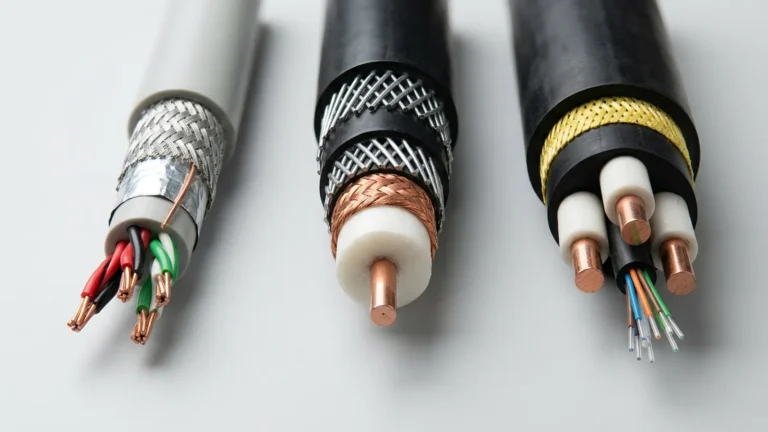

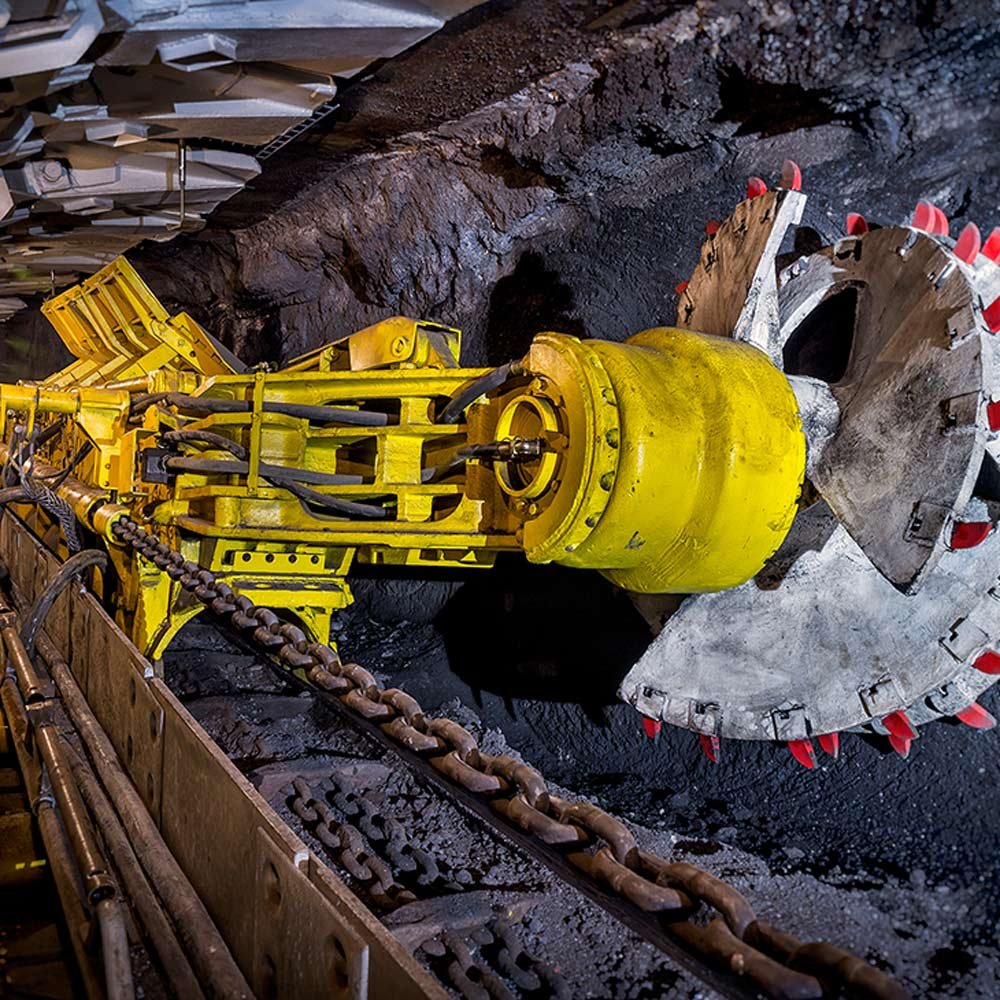
A mining cable selection guide should begin with the route, not a catalogue designation. The same voltage and conductor size can serve very different duties: a fixed feeder in a protected drift, a trailing cable behind a loader, a reeling cable on a stacker, or a submersible pump lead. Each route changes the mechanical load, grounding arrangement, environmental exposure and evidence that a buyer must request.
This guide is written for mine electrical engineers, EPC teams, maintenance managers and procurement staff preparing an RFQ. It shows how to convert site conditions into a cable specification that a manufacturer can review. It does not replace the mine electrical engineer’s calculations, local regulations or equipment approval requirements.
Why route-first selection reduces RFQ errors
A request such as “3 × 70 mm² mining cable” describes only part of the electrical construction. It does not tell the supplier whether the cable is stationary, dragged over rock, pulled through guides, stored on a reel, exposed to standing water or required to carry a ground-check circuit. The missing information can change conductor flexibility, reinforcement, shielding, jacket system, overall diameter and compatible terminations.
The route-first method documents every condition between the supply point and the machine. It then separates mandatory project requirements from preferences. This gives the supplier a traceable basis for proposing a cable and gives the buyer a practical way to compare offers.
| Route type | Questions to record | Likely design emphasis |
|---|---|---|
| Protected fixed route | Support spacing, tray or conduit, fire and moisture conditions | Electrical rating, installation protection and documented fixed-use suitability |
| Trailing on ground | Drag distance, surface, vehicle crossings, tension and relocation frequency | Flexible stranding, robust jacket, reinforcement and repair strategy |
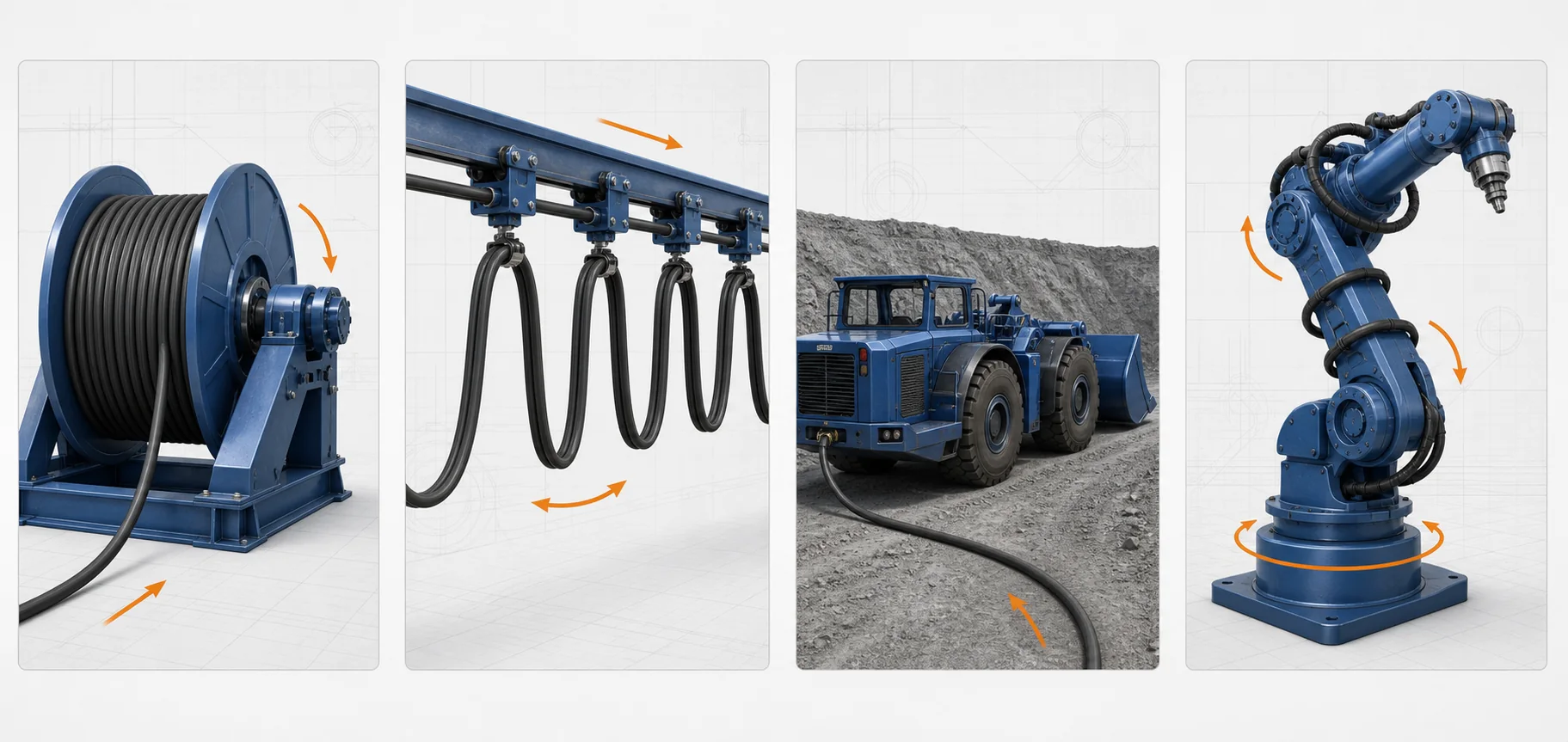
| Reeling | Reel type, speed, acceleration, layers, tension and guidance | Repeated bending, torsion control, dimensional stability and reel compatibility |
| Festoon or suspended loop | Loop depth, trolley spacing, travel speed and self-weight | Flex life, support method and tensile load |
| Wet or submersible section | Water depth, pressure, duration, entry points and termination sealing | Verified water-duty construction and sealed accessories |
Step 1: map movement along the complete cable route
Divide the route into sections and label each one fixed, occasionally moved or continuously moving. Record the smallest bend, direction changes, guides, rollers, sharp edges and points where the cable contacts the ground or machine. A cable can be stationary for most of its length but fail at the short section that bends at every operating cycle.
For a trailing route, describe pulling force, abrasion surface, run-over risk and whether the cable is manually or mechanically handled. For a reel, provide drum diameter, fleet angle, payout speed, number of layers and whether the cable is energized while stored. For torsional duty, state the rotation angle and cycle frequency. “Flexible” alone is not a measurable duty.
Step 2: define the electrical system
State the system voltage, maximum continuous load, starting or transient current, phase arrangement, frequency, protective-device details and permitted voltage drop. Include the one-way route length and explain the current path used in calculations. A preliminary conductor size should be checked for ampacity, voltage drop, short-circuit withstand and coordination with protection—not chosen from load current alone.
Use the site installation method and applicable code when calculating current capacity. The cable ampacity calculation guide, voltage-drop calculation guide and cable resistance formula explain these separate checks. Long mine routes or high motor-starting currents can require a larger conductor even when steady-state ampacity appears adequate.
Record grounding and monitoring functions explicitly
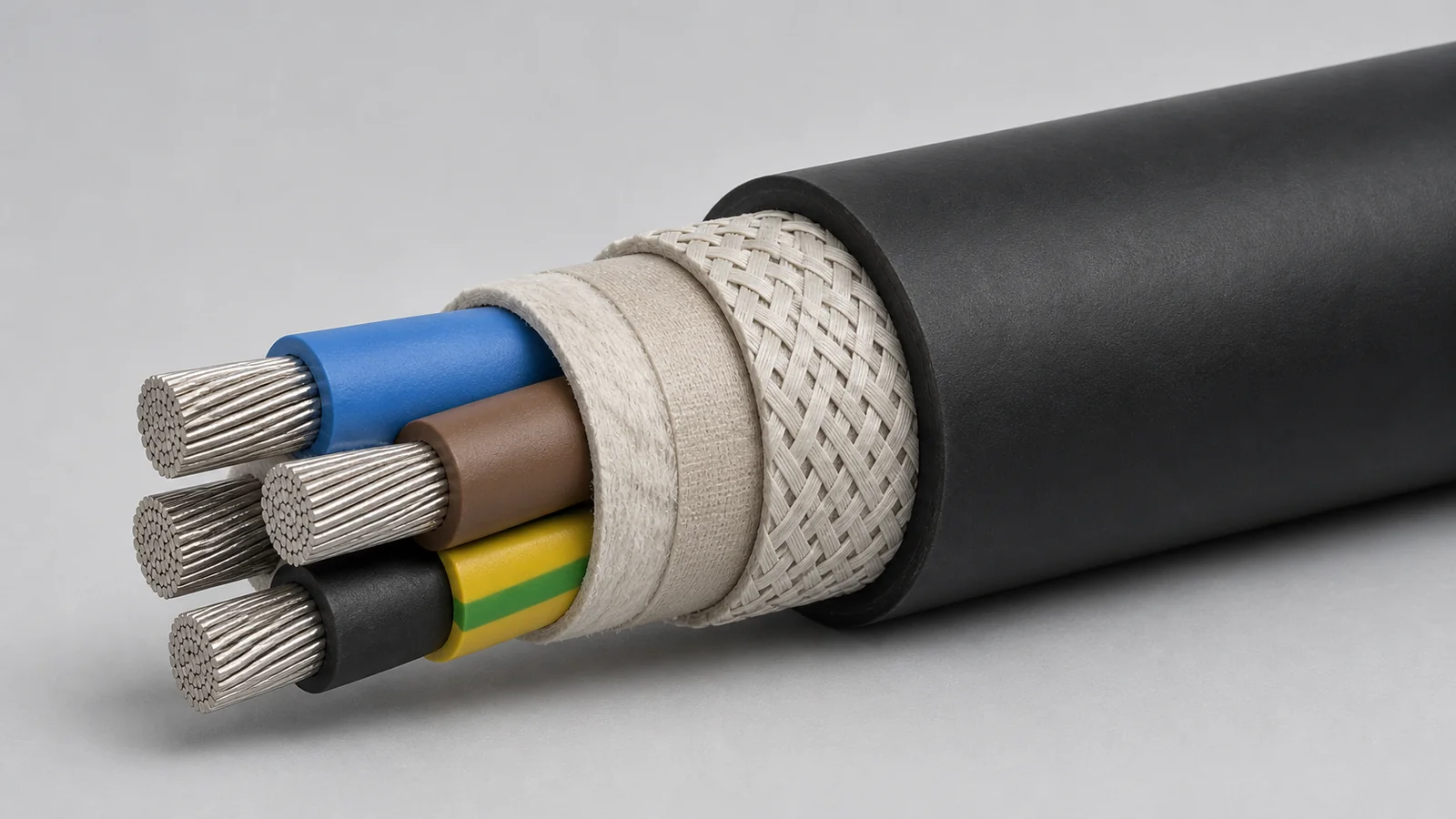
Do not reduce grounding to “with earth.” State the number and size of grounding conductors, whether a ground-check conductor is required, and how the protection system monitors continuity. Medium-voltage circuits may also require individually shielded power conductors and a defined shield/grounding arrangement. These functions influence the cable construction and termination kit.
For North American mine projects, ANSI/ICEA S-75-381 covers portable and power-feeder cables used in mines and similar applications; the current edition and project adoption must be confirmed from the ICEA standards catalogue. In the United States, mine operators must also work within applicable MSHA requirements. For example, the published text of 30 CFR 75.804 addresses grounding, shielding and ground-check conductors for high-voltage underground trailing cables, but the authority having jurisdiction determines what applies to a particular mine.
Step 3: describe the mechanical duty in numbers
Provide the minimum installed and dynamic bend radius required by the equipment, available space, maximum pulling tension, expected cycles and unsupported length. Do not assume a catalogue bend-radius value remains valid during energized reeling or under tension. The manufacturer should identify the conditions attached to each value.
Also record crushing, impact, cut-through and abrasion hazards. A thick jacket can help in some environments, but construction is a system: conductor lay, fillers, reinforcement, separator layers, shields and jacket must work together. Increasing stiffness to improve one property may reduce handling performance elsewhere.
Step 4: document the actual environment
List normal and extreme ambient temperatures, sun exposure, water, mud, oils, fuels, hydraulic fluids, chemicals and cleaning agents. Name the fluid when possible and distinguish splash, repeated wetting and continuous immersion. “Oil resistant” or “outdoor cable” is not a complete requirement because test fluids, exposure times and acceptance limits vary.
Include altitude, ventilation and grouping conditions where they affect thermal performance. If the cable sits on a reel while energized, state the permissible loading arrangement because heat dissipation can be very different from a cable laid out in free air.
Step 5: match a construction family to the duty
Only after the route and system are documented should a construction family be shortlisted. For example, a shielded SHD-GC mining cable may be relevant where medium-voltage power, conductor shielding and ground-check functions are required. A Type G-GC cable addresses a different portable mining power arrangement. European-style trailing projects may instead start from a NTSCGEWOU flexible trailing cable specification.
Those designations are not interchangeable shortcuts. Voltage range, shielding, grounding, jacket, standards and approval evidence must be compared line by line. The mining equipment cable selection guide provides equipment-specific examples, while the underground mining cable guide focuses on confined routes and operating hazards.
Step 6: request evidence, not general assurances
| RFQ evidence | What the document should identify | Buyer check |
|---|---|---|
| Product data sheet | Construction, dimensions, ratings and declared standard | Matches the offered part number and revision |
| Compliance or certificate record | Issuer, product scope, standard edition and validity | Covers the exact cable family, not merely the factory |
| Routine or lot test plan | Tests, acceptance criteria and reporting format | Agrees with the contract and quantity |
| Cable marking sample | Manufacturer, type, voltage, standard and traceability | Meets site identification requirements |
| Drum and packing plan | Length, drum dimensions, ends and transport protection | Compatible with handling and installation equipment |
| Termination data | OD, conductor, shields, earths and preparation method | Accessories fit the exact construction |
A standards statement should identify the edition and the part of the product it governs. A test report should be traceable to the offered construction. Where a listed or approved product is required, verify the product identity through the issuing body’s database rather than relying on a logo in a quotation.
A practical mining cable RFQ sequence
- Attach a route sketch with lengths, movement zones and connection points.
- Provide the single-line electrical data, load profile and protection details.
- State grounding, ground-check, shielding and monitoring requirements.
- Quantify bend, tension, speed, cycles, abrasion and impact conditions.
- List environmental exposures and their duration.
- Name the governing jurisdiction, project specification and required standards.
- Define documents, inspections, testing, marking, drum length and delivery needs.
- Ask the supplier to list every assumption and deviation.
The result is an RFQ that can be engineered and audited. It also helps TEBAOFLEX review whether an existing mining cable construction fits, requires modification, or should be declined because essential duty data is missing.
Common selection mistakes
The most frequent mistake is copying a previous cable designation without confirming that the route, equipment or jurisdiction is unchanged. Other risks include treating a flame test as proof of overall mine approval, confusing conductor operating temperature with ambient temperature, ignoring voltage drop, and buying cable before the termination arrangement is agreed.
Another costly error is asking for an unrealistically small outside diameter while also demanding high voltage, shields, extra grounding conductors and heavy reinforcement. If dimensional limits are critical, state them early so trade-offs can be reviewed before manufacture.
Send a complete route record for review
TEBAOFLEX supplies flexible and heavy-duty cable constructions for mining and tunnelling applications. A responsible recommendation depends on verified service data. Send the route drawing, electrical schedule, movement description, environmental exposures, applicable standards and document requirements through the contact and RFQ form. The technical team can then compare the duty with available constructions and identify any information still needed before quotation.
Technical note: final cable selection, installation and protection must be approved by the responsible engineer and authority having jurisdiction. Product suitability cannot be established from a generic guide alone.