
Rubber cable temperature is not one number. A data sheet can contain a maximum conductor operating temperature, ambient range, minimum installation temperature, dynamic flexing range, emergency rating and short-circuit limit. These values describe different conditions and cannot be substituted for one another.
This guide helps electrical engineers, OEMs and buyers interpret temperature data before selecting a flexible rubber cable. It explains how heat changes ampacity, resistance, voltage drop, mechanical life and material performance. The final design must use the exact product data and governing installation rules.
Five temperature values buyers should keep separate
| Temperature term | What it describes | Common selection mistake |
|---|---|---|
| Maximum conductor operating temperature | Permitted temperature at the conductor/insulation interface in defined service | Treating it as the maximum surrounding air temperature |
| Ambient temperature | Temperature of air, ground, water or enclosure around the cable | Ignoring solar or nearby equipment heat |
| Minimum installation temperature | Lowest temperature for handling, pulling or bending during installation | Using a static storage limit while flexing the cable |
| Dynamic flexing range | Temperature range for repeated movement under stated conditions | Assuming any “flexible” cable can reel at the minimum static temperature |
| Emergency/short-circuit limit | Temporary abnormal temperature for a defined duration | Using it as a continuous operating rating |
Conductor temperature is produced by load and cooling
Current creates I²R loss in the conductor. The resulting temperature depends on conductor resistance, cable construction and how effectively heat escapes into the surroundings. A cable in free air, grouped in a tray, buried in hot soil, immersed in water or wound on a reel can reach different conductor temperatures at the same current.
This is why a temperature rating is not an ampacity table. The responsible designer must apply the installation method and correction factors required by the governing code or standard. IEC 60287-1-1 provides calculation methods for steady-state cable current rating and losses. The cable ampacity guide explains the practical inputs.
Ambient temperature changes allowable current
As ambient temperature rises, the thermal margin between the environment and the conductor limit becomes smaller. The permissible current will usually decrease unless the installation dissipates heat more effectively. Conversely, low ambient temperature can improve thermal headroom but may reduce jacket flexibility or increase the risk of cracking during handling.
Record measured normal and extreme ambient values at the cable route—not just regional weather data. Include radiant heat from furnaces, sun on dark surfaces, hot machinery, ventilation failure and sections inside enclosures. If several cables are bundled or layered on a reel, document that arrangement.
Operating temperature also changes conductor resistance
Copper and aluminium conductor resistance increases as temperature rises. Higher resistance increases voltage drop and I²R loss at the same current. A calculation based only on 20°C resistance can understate operating voltage drop in a hot cable.
Use the manufacturer’s maximum DC resistance and an appropriate temperature correction. The cable resistance formula guide explains the relationship, while the cable power-loss guide shows why current and resistance must both be controlled.
Low-temperature flexibility is a separate mechanical requirement
A cable that can remain stored at a low temperature may not be safe to bend, drag or reel at the same temperature. Elastomers stiffen as temperature falls, and the complete construction can experience higher stress at conductors, insulation, fillers and jacket. Ask for minimum installation and minimum dynamic-flexing values separately.
For cold mobile equipment, provide bend radius, movement speed, cycles, tension and cold-start procedure. Warming a cable or limiting movement during startup may be part of the equipment operating plan, but such measures require manufacturer and site approval.
Material names do not establish a complete rating
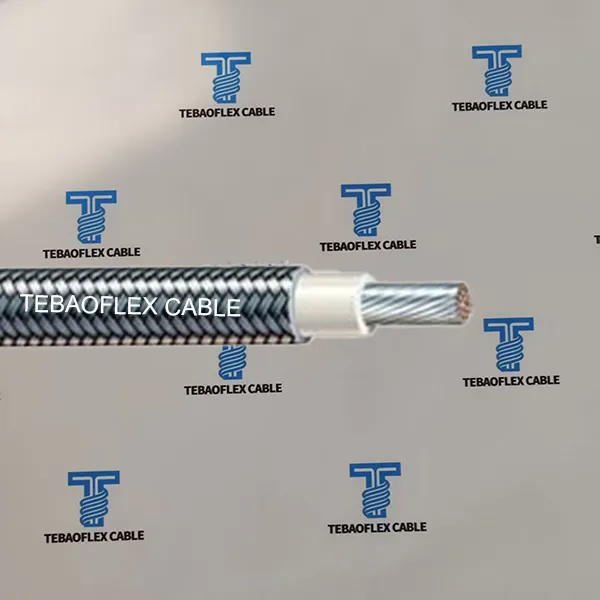
EPR, EPDM, neoprene-type compounds, silicone rubber and other elastomers cover many formulations. Temperature capability depends on the exact compound, thickness, ageing criteria and cable design. A silicone-insulated lead may tolerate higher heat than a heavy-duty rubber portable cord but have different mechanical protection needs.
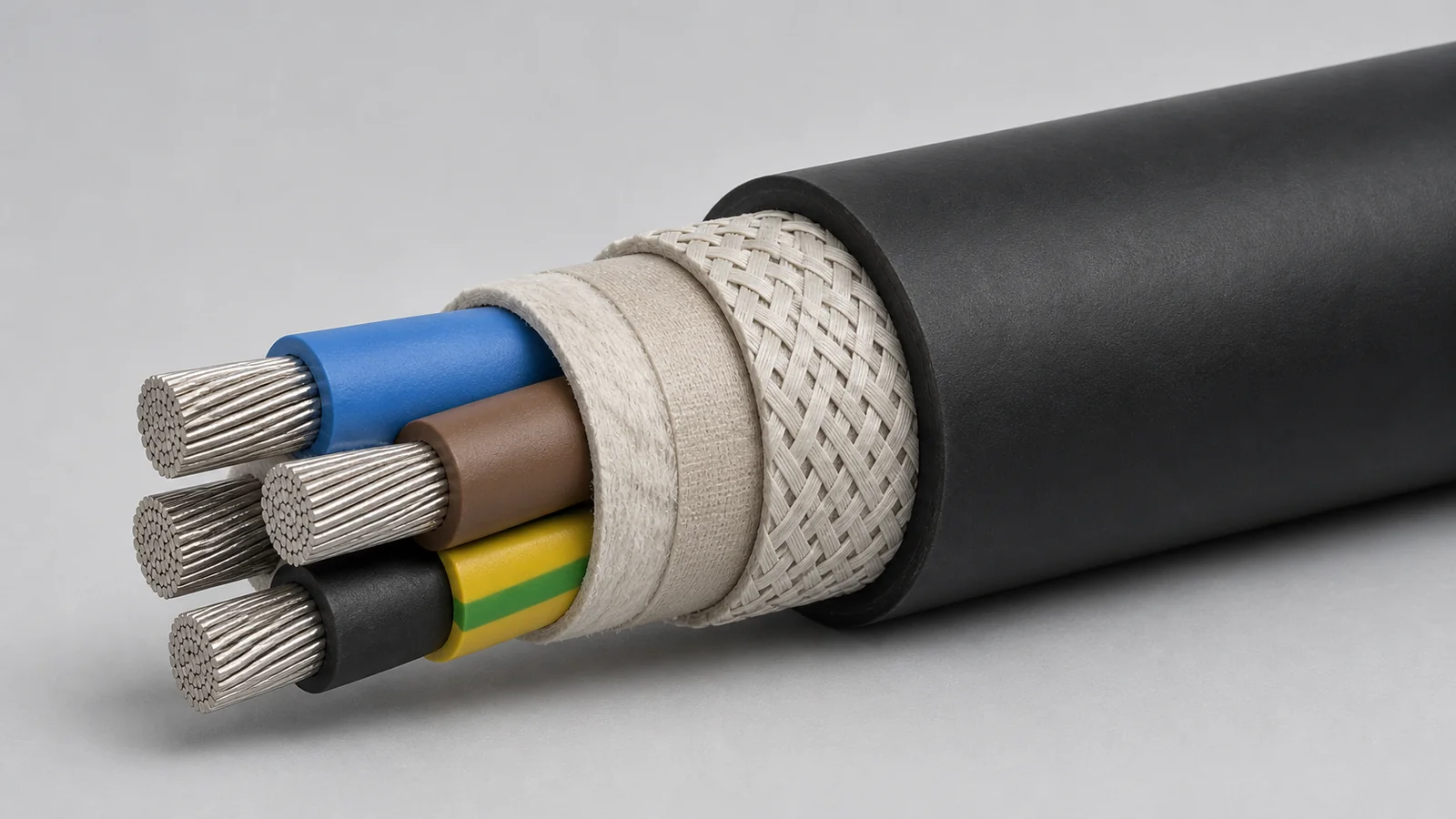
Likewise, a PUR jacket can offer valuable abrasion or oil performance but does not automatically raise the conductor temperature rating. The insulation around the conductor and the applicable product standard are central. Always read the finished-cable data sheet rather than extrapolating from a raw-material brochure.
How standards help—and where they stop
IEC 60245-1 covers rubber-insulated rigid and flexible cables with rated voltages up to and including 450/750 V; IEC 60245-4 gives particular requirements for cords and flexible cables. The current official scopes are available from the IEC 60245-1 page and IEC 60245-4 page.
A standard can define construction, ageing tests and ratings for its scope. It does not know the project’s bundle, enclosure, reel, solar load or motion. The RFQ should therefore name the standard and separately document installation conditions.
Temperature data to request from a supplier
| Requested value | Condition that must accompany it | Use in design |
|---|---|---|
| Continuous conductor limit | Applicable standard and insulation system | Ampacity and thermal-life assessment |
| Ambient service range | Fixed or moving installation | Environmental screening |
| Minimum installation temperature | Handling and bend conditions | Pulling and termination plan |
| Dynamic flex range | Bend radius, speed and cycles | Reel, festoon or trailing operation |
| Emergency rating | Maximum temperature, duration and frequency | Contingency study only |
| Short-circuit rating | Initial/final temperatures and time basis | Protection and fault-withstand check |
| Resistance data | Conductor size, reference temperature and tolerance | Voltage-drop and loss calculations |
Worked selection logic: a hot mobile equipment route
Consider a flexible cable supplying equipment near a hot process. The air temperature alone is not sufficient. First measure local ambient and radiant conditions. Then calculate current and voltage drop using the installed route and appropriate resistance. Next confirm the cable’s continuous conductor rating and apply temperature/grouping factors. Finally, check dynamic bend performance at both normal and maximum cable temperatures.
If oil is also present, add fluid identity, exposure duration and temperature using the oil-resistant cable workflow. If the route is long, apply the cable length and voltage-drop method. The outcome may be a larger conductor, a different cable family, better route shielding or reduced load.
Compare cable families by application, not temperature alone
H07RN-F heavy-duty rubber cable can be a starting point for suitable 450/750 V flexible equipment applications. S07BQ-F PUR flexible cable serves a different material and duty profile. High-temperature lead wires use other insulation and protection systems.
Do not select the highest temperature number automatically. Consider voltage, ampacity, flexibility, abrasion, fluids, flame behaviour, water, UV, terminations and approvals. A high-temperature cable that cannot survive the route’s repeated bending is not a better cable.
Frequent specification errors
- Writing “90°C cable” without identifying conductor, ambient or emergency conditions.
- Using a short-circuit temperature as a continuous rating.
- Ignoring increased resistance and voltage drop at operating temperature.
- Assuming storage temperature equals minimum flexing temperature.
- Applying a free-air ampacity to a bundled or reeled cable.
- Selecting by jacket material while ignoring insulation and complete construction.
Temperature-rating questions from project teams
Can the cable operate continuously at its maximum conductor temperature?
The value may be a continuous insulation limit under stated conditions, but using it as the normal design target can reduce thermal margin and influence material life. Project rules may require a lower design temperature. Ampacity calculations, load profile and expected service life should be reviewed together rather than setting the conductor permanently at its limit.
Does a higher temperature rating always provide more ampacity?
Not necessarily. The allowable circuit ampacity can be limited by terminations, equipment ratings, installation rules or other materials with lower temperature limits. A higher-rated insulation does not automatically permit more current through an existing connector. Use the lowest applicable system limitation.
How should temperature be measured on an operating cable?
Surface temperature is not the same as conductor temperature. Thermal imaging can identify unusual hot spots, but emissivity, reflections and loading conditions affect results. Direct conductor-temperature estimation requires an approved method and safe procedure. Trend readings at comparable loads and investigate local heating at joints separately from uniform cable heating.
Can a cable be moved immediately after cold storage?
Only if its handling and flexing limits allow it. A reel stored outdoors can remain colder than the work area for hours. Follow the manufacturer’s conditioning guidance, avoid shock loading and confirm that the cable and accessories have reached an acceptable temperature before bending or paying off.
Send a temperature profile with the RFQ
TEBAOFLEX can review flexible cable options when the thermal and mechanical conditions are separated clearly. Send voltage, load, route, installation, local ambient extremes, heat sources, movement, bend radius, fluid exposure and required standards through the contact and RFQ form. The technical review can then identify the relevant ratings and any derating or application data still required.
Engineering note: published temperature limits are conditional ratings, not permission to operate any installation at that value. Final ampacity, protection and mechanical suitability require project-specific approval.
Record the assumed load, ambient condition and installation arrangement with every thermal calculation so later changes can be checked against the original design basis.