
PNCT, 2PNCT & 3PNCT Rubber Cable Series for Reeling and Festoon Systems
PNCT, 2PNCT and 3PNCT rubber cables are flexible cable families specified for moving industrial equipment where ordinary fixed-installation cable is not an appropriate choice. TEBAOFLEX helps procurement and engineering teams match conductor size, core arrangement, insulation, sheath construction and movement conditions to port, crane and mobile-machine duties.
What Is PNCT Cable?
PNCT cable is a market designation commonly used for flexible rubber cable constructions serving mobile equipment. Buyers may search for PNCT cable meaning or PNCT cable full form; in practice, the useful specification is the actual construction and service duty rather than an assumed expansion of the letters. Therefore, state the voltage, core layout, conductor size, insulation and sheath materials, and the required motion when requesting a quotation.
Depending on the selected construction, PNCT-series cable can be reviewed across 300/500 V, 450/750 V, 600/1000 V, 3 kV, 6 kV and 10 kV classes. Copper conductors may be supplied in Class 2, Class 3 or Class 4 flexibility grades. Insulation and sheath materials can include EPR, EPDM, CPE, chloroprene rubber, nitrile rubber or silicone rubber, subject to the approved design and application requirements.
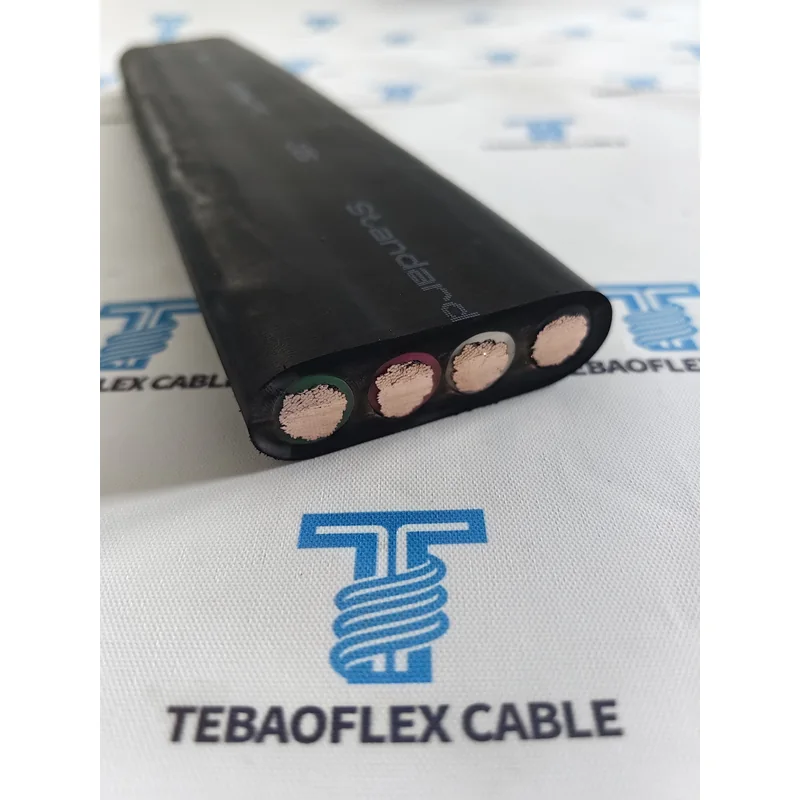
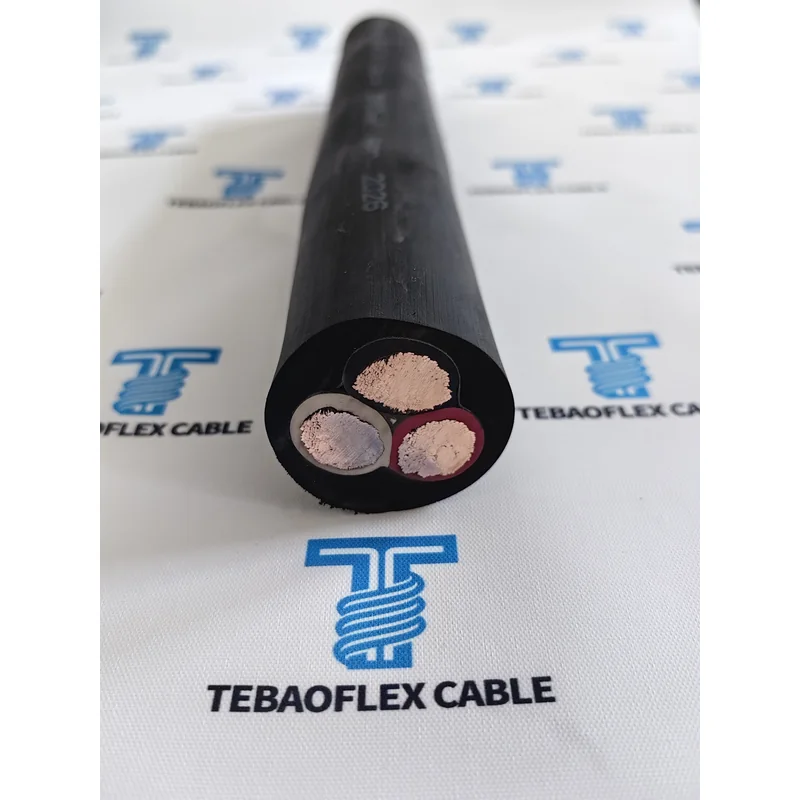
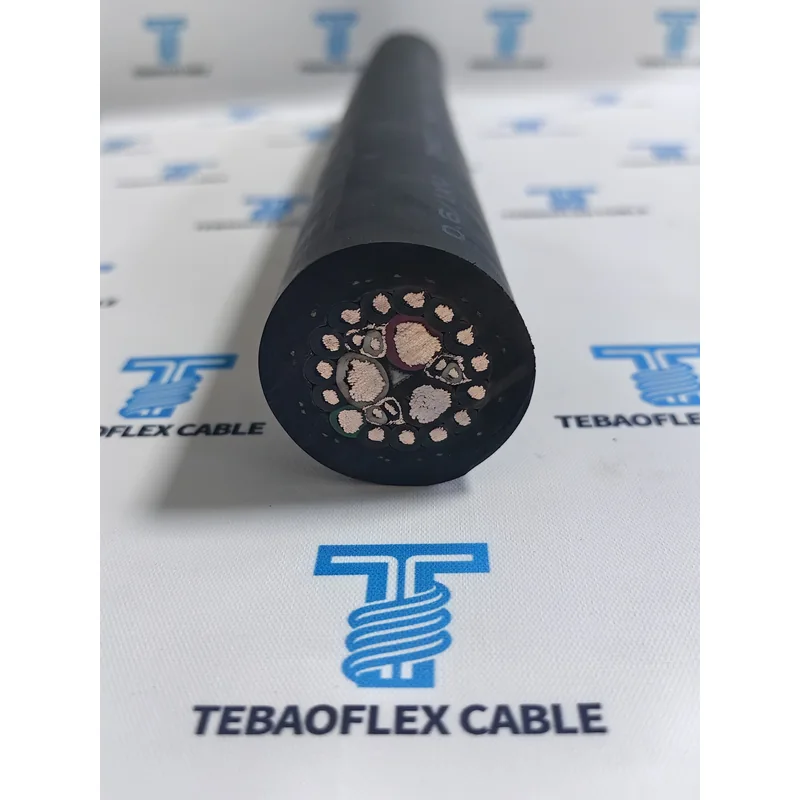
PNCT, 2PNCT and 3PNCT Series at a Glance
| Series / construction direction | Typical motion duty | Selection focus |
|---|---|---|
| PNCT | Flexible power or control connection for mobile industrial equipment | Confirm voltage, conductor size, core count and environmental exposure. |
| 2PNCT | Heavy-duty reeling and power/control duties | Review tension, reeling speed, drum geometry and anti-torsion requirements. |
| 3PNCT | Flexible moving equipment, including shielded or reinforced construction options | Review movement mode, shielding or reinforcement needs and cable route. |
| PNCT-F / flat construction | Festoon and trolley systems | Check trolley spacing, bend path, conductor arrangement and travel speed. |
| CUR / reeling construction | Reeling routes requiring resistance to side pressure and repeated bending | Confirm reel, roller, guide and winding conditions before approval. |
These labels describe a family of available construction directions, not interchangeable ratings. For example, a cable selected for a festoon system should not be assumed suitable for a carrier drum or high lateral-pressure reeling duty without an engineering review.
How to Choose a PNCT Cable by Motion Type
Festoon systems and travelling trolleys
For container-crane, RMG, STS and overhead-hoist festoon systems, a flat or suitably flexible PNCT arrangement can help organise moving conductors on the trolley route. The cable should be selected around the actual loop geometry, carrier spacing, acceleration, travel speed and ambient exposure. A smaller bend path can be an advantage, but it must be verified against the finished cable dimensions and installation arrangement.
Reeling drums
For reel-fed equipment, selection must account for repeated bending, tensile loading, side pressure, winding pattern, roller design and reel diameter. Reeling versions can be specified with robust rubber-sheath constructions and, where required, reinforcement or other measures appropriate to the project. Provide the duty cycle and equipment details so that the proposed construction aligns with the operating route.
Vertical lift, torsion and mobile machinery
Where cable movement includes rotation, lifting or twisting, core movement must be considered as carefully as electrical sizing. Depending on the approved design, individually taped cores and rubber-sheath construction may be used to support the intended motion. The final selection should identify the direction and frequency of torsion, the suspended length, any guide wheels and the minimum operational temperature.
600V 3PNCT-SB and CUR-3PNCT-SB Construction Reference
The following reference drawings show the layered elements that can appear in the supplied 600V 3PNCT-SB and CUR-3PNCT-SB constructions. The labelled details are construction references; actual conductor arrangement, reinforcement and dimensions vary by approved size and project specification.
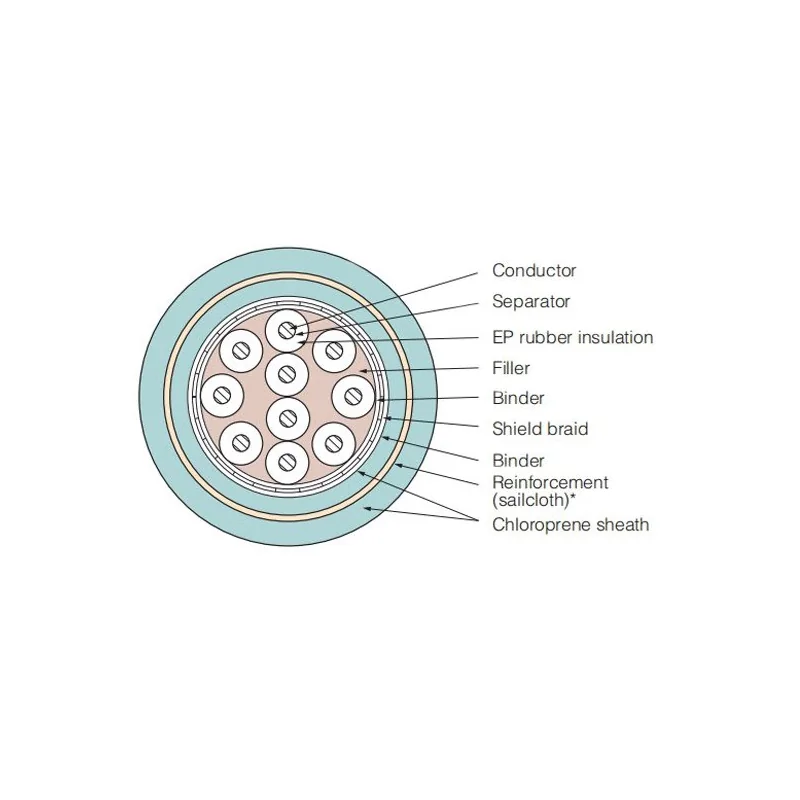
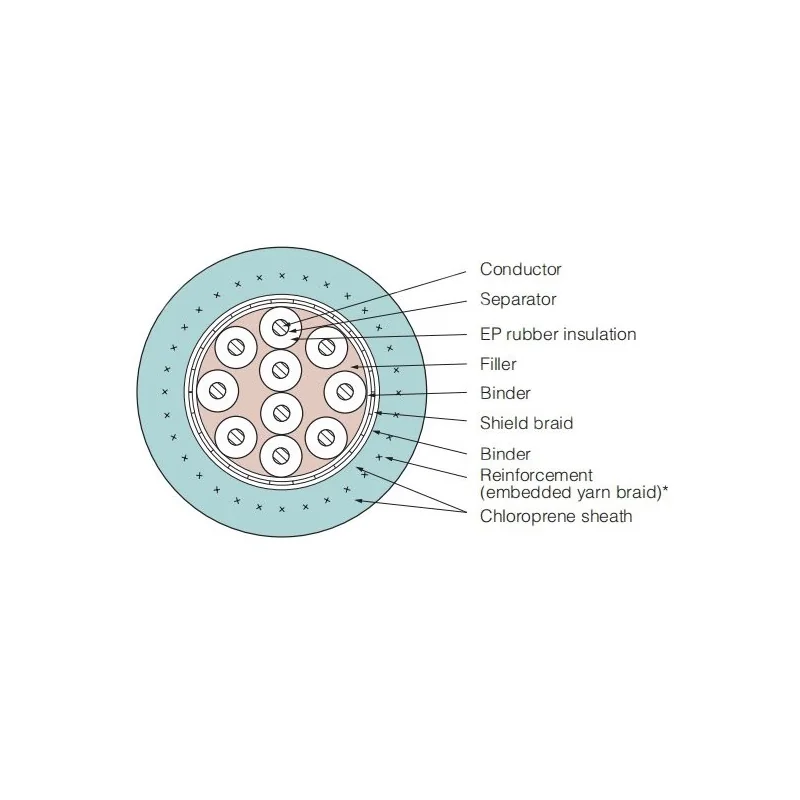
600V 3PNCT-SB / CUR-3PNCT-SB reference sizes
Values below are transcribed from the supplied source reference. An unclear source row between 185 mm² and 300 mm² has been omitted pending confirmation. These values are for preliminary comparison only; confirm the final data sheet, tolerances and applicable construction with the quotation.
| Core × area (mm²) | Max. strand dia. (mm) | Conductor OD (mm) | Insulation (mm) | Sheath (mm) | Cable OD (mm) | Reference weight (kg/km) |
|---|---|---|---|---|---|---|
| 3 × 10 | 0.26 | 4.8 | 1.1 | 2.1 | 13.0 | 670 |
| 3 × 16 | 0.26 | 6.0 | 1.2 | 2.3 | 15.0 | 930 |
| 3 × 25 | 0.26 | 7.4 | 1.2 | 2.5 | 17.5 | 1,290 |
| 3 × 35 | 0.26 | 8.7 | 1.2 | 2.7 | 18.0 | 1,650 |
| 3 × 50 | 0.26 | 10.4 | 1.5 | 3.0 | 21.0 | 2,290 |
| 3 × 70 | 0.26 | 12.5 | 2.0 | 3.4 | 25.0 | 3,250 |
| 3 × 95 | 0.26 | 14.5 | 2.0 | 3.7 | 27.5 | 4,170 |
| 3 × 120 | 0.26 | 16.2 | 2.0 | 4.0 | 30.0 | 5,090 |
| 3 × 150 | 0.26 | 18.2 | 2.0 | 4.2 | 32.0 | 6,150 |
| 3 × 185 | 0.26 | 20.2 | 2.5 | 4.6 | 36.0 | 7,710 |
| 3 × 300 | 0.26 | 26.0 | 2.5 | 5.4 | 43.5 | 11,990 |
| 4 × 10 | 0.31 | 4.8 | 1.1 | 2.1 | 12.5 | 870 |
| 4 × 16 | 0.31 | 6.0 | 1.2 | 2.5 | 15.0 | 1,300 |
| 4 × 25 | 0.31 | 7.4 | 1.2 | 2.7 | 17.0 | 1,790 |
| 4 × 35 | 0.31 | 8.7 | 1.2 | 2.9 | 18.5 | 2,290 |
| 4 × 50 | 0.31 | 10.4 | 1.5 | 3.2 | 21.5 | 3,160 |
| 4 × 70 | 0.31 | 12.5 | 2.0 | 3.7 | 25.5 | 4,470 |
| 4 × 95 | 0.31 | 14.5 | 2.0 | 4.0 | 28.0 | 5,720 |
| 4 × 120 | 0.31 | 16.2 | 2.0 | 4.3 | 30.5 | 6,980 |
| 4 × 150 | 0.31 | 18.2 | 2.0 | 4.6 | 33.0 | 8,450 |
| 4 × 185 | 0.31 | 20.2 | 2.5 | 5.1 | 37.0 | 10,690 |
| 4 × 240 | 0.31 | 23.3 | 2.5 | 5.6 | 41.0 | 13,650 |
PNCT Cable Applications
PNCT cable constructions are commonly reviewed for port and terminal equipment such as ship-to-shore container cranes, rail-mounted gantry cranes, rubber-tyred gantry cranes, travelling trolleys, hoists, hoppers, unloaders, stacker reclaimers and other mobile material-handling machinery. They may also be considered for equipment where a flexible rubber cable must tolerate repeated motion under a project-defined route.


PNCT Cable Specification Checklist
To prepare an accurate PNCT cable specification, send the following information with your inquiry: required voltage; conductor size and core count; equipment type; route length; whether the cable runs in a festoon, reel, carrier, trolley or vertical lift; travel speed; minimum bend path; tension; expected torsion; temperature; exposure to sunlight, oil, salt spray or chemicals; preferred sheath; and required drum length. This allows TEBAOFLEX to review the construction before confirming a quotation.
Related PNCT Cable Products
- Flat PNCT Rubber Cable for Port Crane Festoon Systems — for port-crane festoon routes, STS, RMG and overhead hoist applications.
- 600V 2PNCT-H-U Rubber Reeling Cable — a multi-core reeling-cable configuration for RTG equipment and other defined moving applications.
PNCT Cable FAQ
What does PNCT cable mean?
PNCT is a market designation used for flexible rubber cable constructions for mobile equipment. Instead of relying on a generic letter expansion, specify the required voltage, core layout, materials and operating movement.
What is the difference between PNCT, 2PNCT and 3PNCT cables?
They identify related construction families and options. The appropriate choice depends on duty: voltage, conductor size, core arrangement, reeling or festoon motion, tension, side pressure and environmental conditions.
Can PNCT cable be used in a crane festoon system?
A flat or suitable flexible PNCT construction can be reviewed for festoon use. The final design must match the trolley system, bend path, speed, cable weight and exposure.
Can PNCT cable be used on a reeling drum?
Some reeling-oriented constructions can be reviewed for that duty. However, confirm the drum diameter, winding pattern, side pressure, tension and movement cycle before selecting the cable.
What information is needed for a PNCT cable quotation?
Provide size, voltage, equipment, cable length, installation route, motion type and site conditions. Then TEBAOFLEX can review the proposed construction and packing length.
Request PNCT Cable Information
Send your required size, voltage, operating equipment and movement conditions to receive a project-specific PNCT cable recommendation.