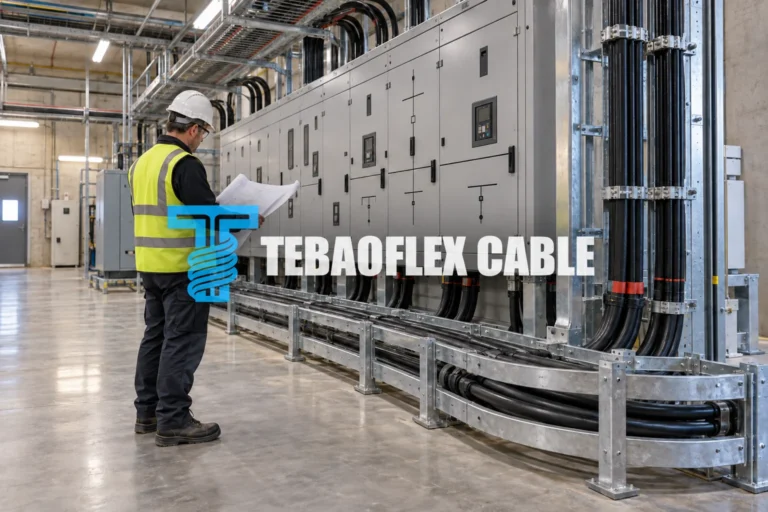
Fine-Stranded Cable Termination Guide: Lugs, Glands and Switchgear
A practical interface checklist for matching fine-stranded AWG, mm² and kcmil power cables with verified lugs, glands, switchgear terminals and supported routes.

Learn about advanced cable technologies, materials, designs, and performance characteristics for demanding industrial environments.
A practical interface checklist for matching fine-stranded AWG, mm² and kcmil power cables with verified lugs, glands, switchgear terminals and supported routes.
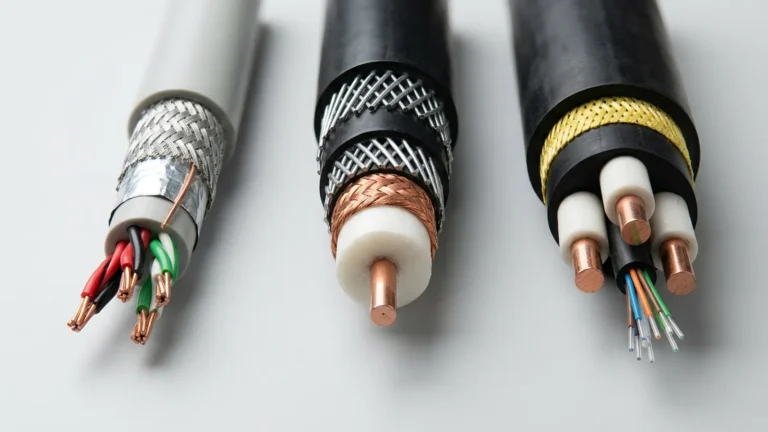
Calculate decibel signal loss (dB/100m and dB/km) across screened instrumentation, stranded drag-chain Ethernet, subsea coax, and composite fibre-optic crane reeling cables.
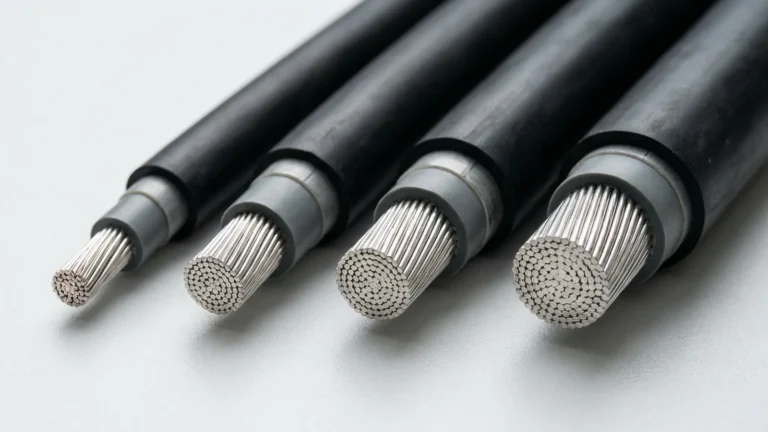
Convert standard 250–2000 kcmil (MCM) and flexible 262.6–1111.1 kcmil DLO conductor sizes into exact metric mm², compare bare stranding diameters, and avoid 5.3% metric undersizing traps.
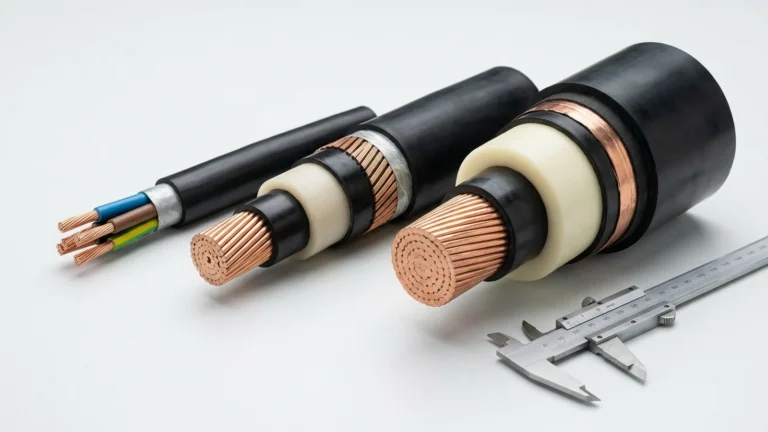
Decode IEC and DIN VDE U0/U (Um) cable voltage ratings from 450/750 V and 0.6/1 kV through 18/30 kV alongside North American NEC/ICEA 600 V to 35 kV classes, 100% vs 133% insulation levels, and MV semiconductive screening.
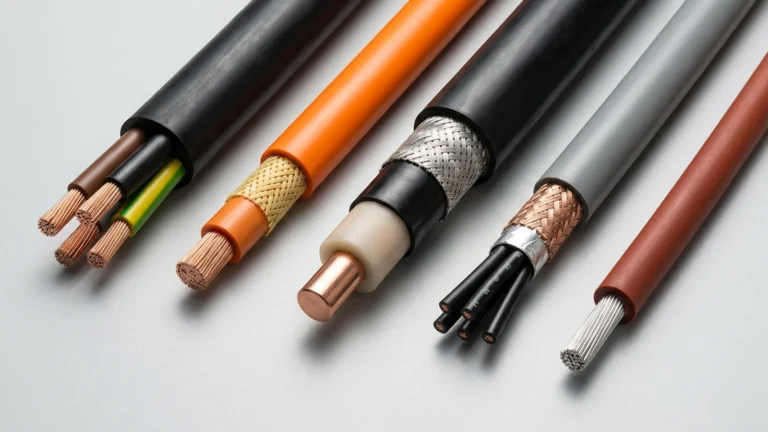
Classify electrical and industrial cables across four engineering axes: circuit function (power, control, instrumentation, hybrid FO), voltage class, insulation/sheath chemistry (EPR, PCP, PUR, LSZH, silicone), and static versus dynamic reeling, trailing, or drag-chain duty.
Verify cable short-circuit withstand (I²t ≤ k²S²) using prospective fault current, protection clearing time, and documented phase/PE construction per IEC 60949 and IEC 60724. Includes reference k-factors and an industrial flexible-cable RFQ checklist.
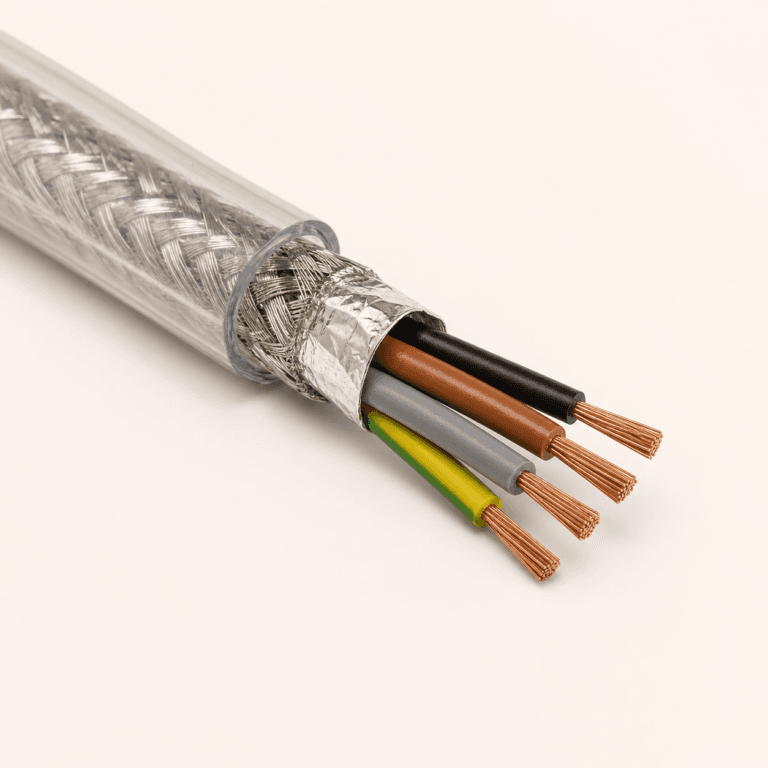
How to specify a protective earth conductor in flexible power, reeling and trailing cables without confusing PE, ground-check cores and cable screens.
Learn how VFD motor cable length affects reflected-wave voltage, dV/dt, cable capacitance, motor insulation and EMC, and how to evaluate reactors, filters and cable construction.
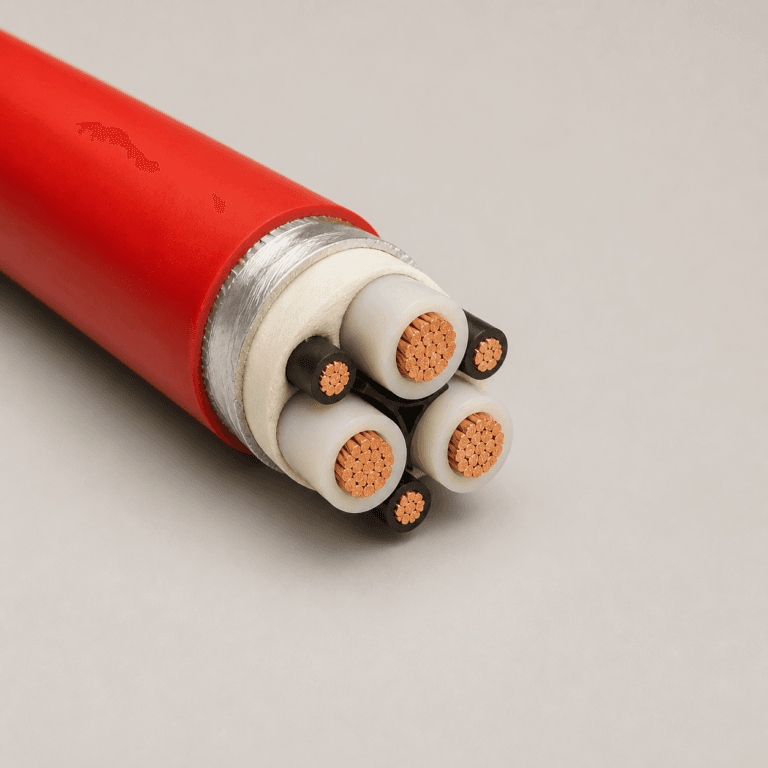
Understand cable resistance, reactance and impedance, including AC voltage drop, frequency effects, motor circuits, VFD cable behaviour and the difference between series and characteristic impedance.
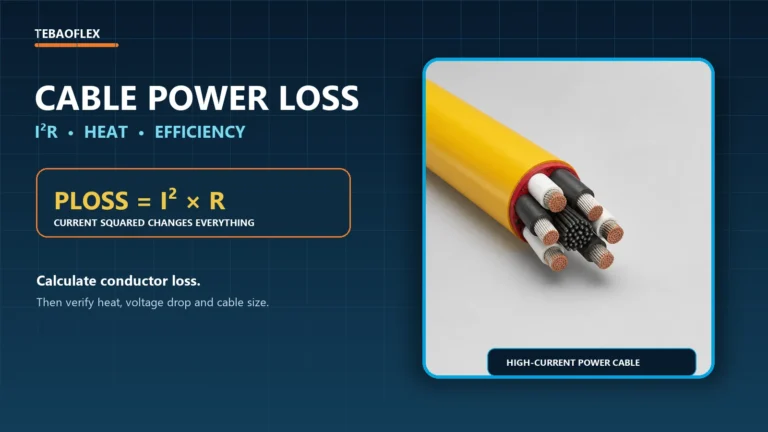
Calculate cable power loss with I²R and see how current, resistance, length, conductor size and temperature affect heat, voltage drop and energy use.