
Quick answer: North American Type W (ICEA S-75-381 / UL 1650) and DLO (Diesel Locomotive Cable, UL 44 RHH/RHW-2) are 2000 V (2 kV) 90 °C EPR-insulated flexible power cables, but they are not interchangeable: Type W uses a reinforced two-layer portable trailing jacket (1 to 5 cores), whereas DLO is a single-conductor fine-stranded tinned-copper cabinet and skid feeder. Closest international counterparts include DIN VDE 0250-812 (N)SHÖU (0.6/1 kV), NSGAFÖU (1.8/3 kV), and AS/NZS 1802 Type 209 (1.1/1.1 kV).
Applicable standards: ICEA S-75-381 / NEMA WC 58, UL 1650, UL 44, CSA C22.2 No. 96 / No. 38, 30 CFR Part 18 (MSHA).
How Do Type W and 2 kV DLO Differ in Construction?
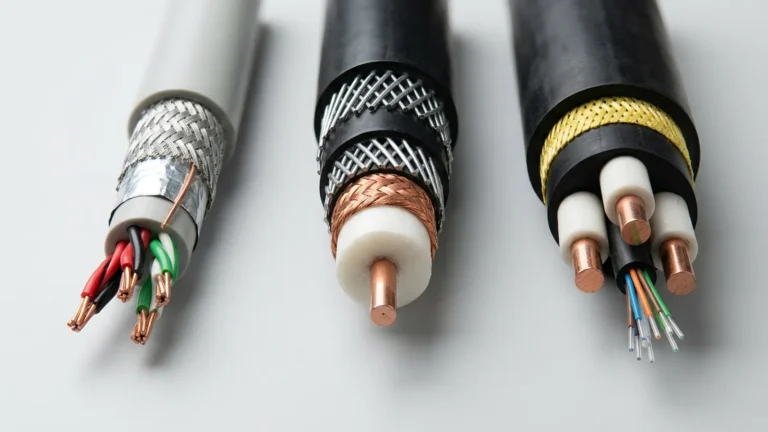
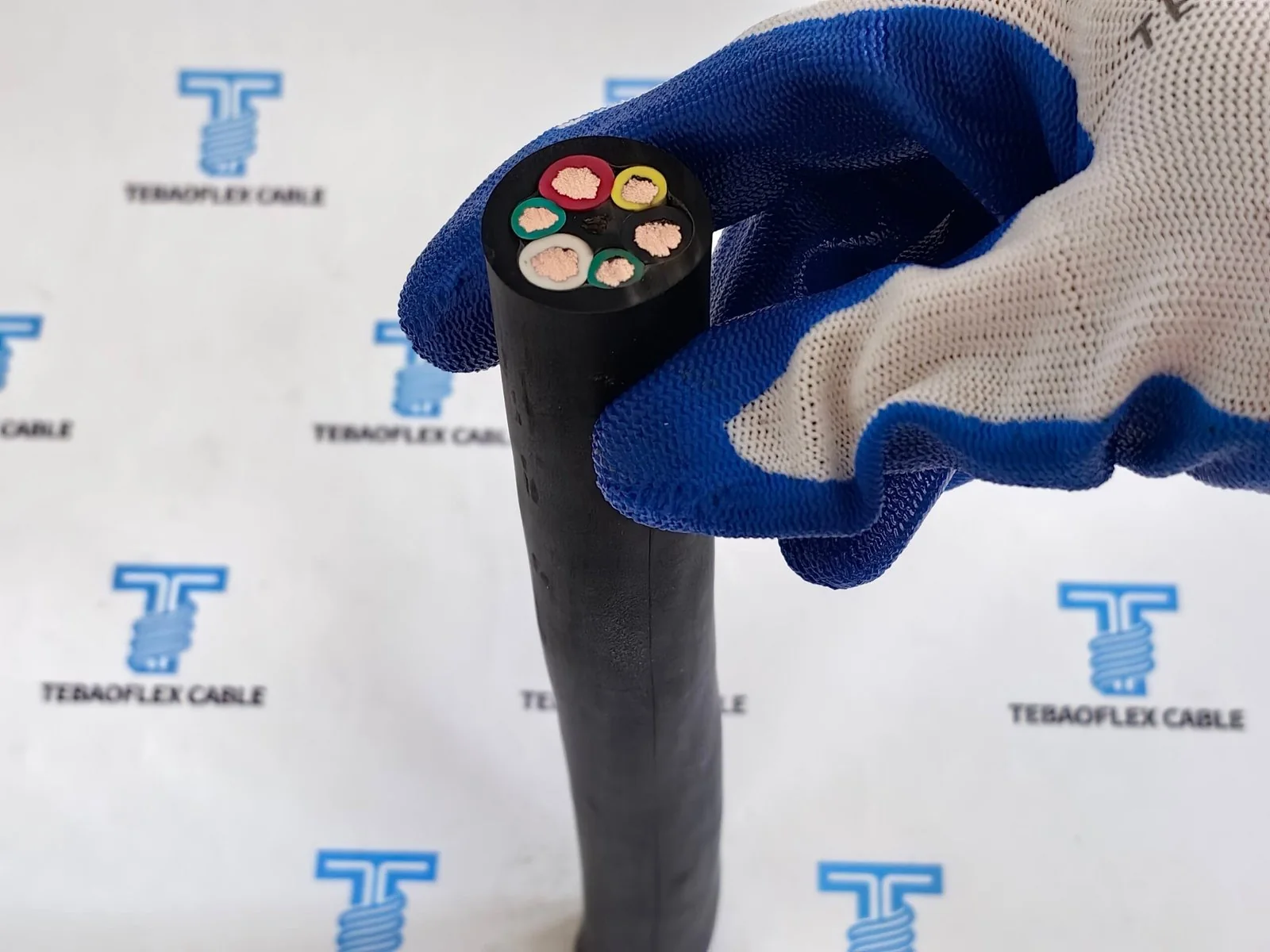
Although both Type W and DLO carry a 2000 V rating, 90 °C wet/dry EPR dielectric, and thermoset elastomer jackets, their mechanical architectures target completely different mechanical duties. DLO is built for tight cabinet bends on vibrating engines and battery skids, whereas Type W incorporates reinforced double-extruded jacketing for portable ground dragging and crane magnet reels.
| Parameter | Type W Portable Power Cable | 2 kV DLO (Diesel Locomotive Cable) |
|---|---|---|
| Governing Standards | ICEA S-75-381 / NEMA WC 58, UL 1650, CSA C22.2 No. 96 | UL 44 (RHH / RHW-2), CSA C22.2 No. 38 (RW90), NEMA WC 70 |
| Core Count & Range | Single-conductor (8 AWG to 500 kcmil) or multi-core 2C to 5C | Strictly single-conductor (14 AWG through 1111.1 kcmil) |
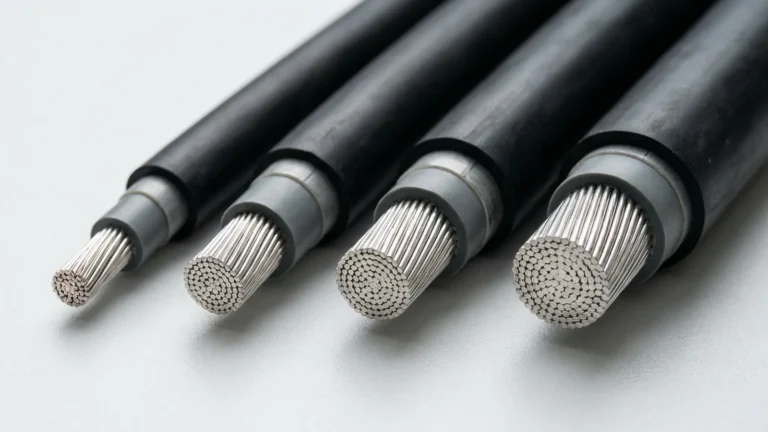
| Conductor Stranding | ASTM B172 rope-lay bare or tinned annealed copper | Extra-flexible rope-lay 24 AWG tinned copper strands |
| Jacket Reinforcement | Two-layer heavy-duty CPE/PCP jacket with integral reinforcement braid | Single-extruded or integral XL-CPE / CSP elastomer jacket (unbraided) |
| Primary Mechanical Duty | Portable power drops, lifting magnet reels, generators, and trailing runs | Fixed or vibrating trays, switchgear bus drops, drilling rigs, BESS, and traction motors |
How Do Type W and DLO Cross-Reference Across Global Standards?
Engineers exporting North American skids or sourcing local replacements on international sites must carefully check rated voltage: Type W and DLO are rated 2000 V, whereas most European and Australian low-voltage rubber cables top out at 450/750 V or 0.6/1 kV (1.1/1.1 kV).
| Standard / Region | Closest Public Designation | Voltage Rating | Core Geometry | Insulation & Jacket | Critical Substitution Boundaries |
|---|---|---|---|---|---|
| ICEA S-75-381 / UL 1650 (North America) | Type W | 2000 V | 1C or 2C to 5C (no GC pilot) | 90 °C EPR; reinforced CPE/PCP | Reference heavy-duty unscreened portable power cable; MSHA flame-accepted for non-ground-monitored circuits. |
| UL 44 / CSA C22.2 (North America) | DLO / RHH / RHW-2 | 2000 V (UL 1000 V/2000 V) | Single-core only (14 AWG to 1111 kcmil) | 90 °C EPR; XL-CPE / CSP | Reference single-core high-ampacity flexible feeder; do not substitute for multi-core trailing Type W on rough ground. |
| ICEA S-75-381 (North America Mining) | Type G-GC | 2000 V | 3 power + 2 split ground + 1 GC pilot | 90 °C EPR; reinforced TSE jacket | Mandatory upgrade over Type W wherever MSHA 30 CFR requires continuous ground-check pilot monitoring. |
| DIN VDE 0250-812 (Germany / Europe) | (N)SHÖU-J / -O | 0.6/1 kV (Um 1.2 kV) | 1C to multi-core Class 5 Cu | 3GI3 EPR; 5GM3/5GM5 PCP rubber | Closest heavy-duty European portable rubber feeder, but limited to 0.6/1 kV—cannot replace 2 kV circuits above 1000 V AC. |
| DIN VDE 0250-602 (Germany / Switchgear) | NSGAFÖU | 1.8/3 kV (Um 3.6 kV) | Single-core Class 5 tinned Cu | 3GI3 EPR; 5GM2 PCP outer layer | Matches DLO 2 kV voltage margin inside cabinets and rail vehicles, but intended for protected routing rather than open ground drag. |
| EN 50525-2-21 (Europe / IEC 60245) | H07RN-F | 450/750 V | 1C to multi-core Class 5 bare Cu | EI4 EPR; EM2 PCP rubber | Valid only on 400 V / 480 V low-voltage circuits; DLO or Type W can step down to replace H07RN-F if glands fit the thicker 2 kV wall. |
| AS/NZS 1802 (Australia / NZ Mining) | Type 209 / Type 241 | 1.1/1.1 kV to 11/11 kV | 3 phase + split earth + pilot | R-EP-90 EPR; HD-85-PCP rubber | Australian mines mandate screened phase cores and pilot monitoring rather than unscreened multi-core Type W. |
Which TEBAOFLEX 2 kV or VDE Construction Fits Your Equipment?
Selecting the right feeder across our mining and portable power cable range depends on whether your installation runs fixed single-core jumpers, crane magnet drums, or ground-monitored mining machinery.
| Product Model | Rated Voltage | Core & Ground Configuration | Recommended Application |
|---|---|---|---|
| 2 kV DLO Flexible Power Cable | 2000 V | 1C (14 AWG to 1111.1 kcmil) | Generator skids, oil & gas top-drives, battery storage (BESS), and switchgear bus drops. |
| 2000 V Type W Magnet Crane Cable | 2000 V | 2C / multi-core aramid-reinforced | Scrap-yard lifting magnets, heavy spring/motorized reels, and portable 480 V–2000 V shore/site power. |
| Type G-GC 2 kV Mining Power Cable | 2000 V | 3 power + 2 split ground + 1 GC | Underground drill jumbos, portable substations, and conveyors requiring ground-continuity trip relays. |
| (N)SHÖU-J / -O Rubber Power Cable | 0.6/1 kV | 1C to multi-core Class 5 Cu | European CE/VDE heavy construction sites, quarry crushers, and mobile 400 V / 690 V feeders. |
For ampacity tables and kcmil sizing details, consult our 4/0 DLO cable ampacity and weight guide and SHD-GC vs. Type W mining duty comparison.
What Must Match Before Approving a Type W or DLO Substitute?
Substituting between North American kcmil cables and metric IEC/VDE cables—or swapping DLO for Type W—causes overheating at compression lugs and non-compliance during mine safety inspections unless five technical checks are completed upfront.
Engineering boundary: never crimp standard Class B lugs onto fine-stranded DLO or Type W
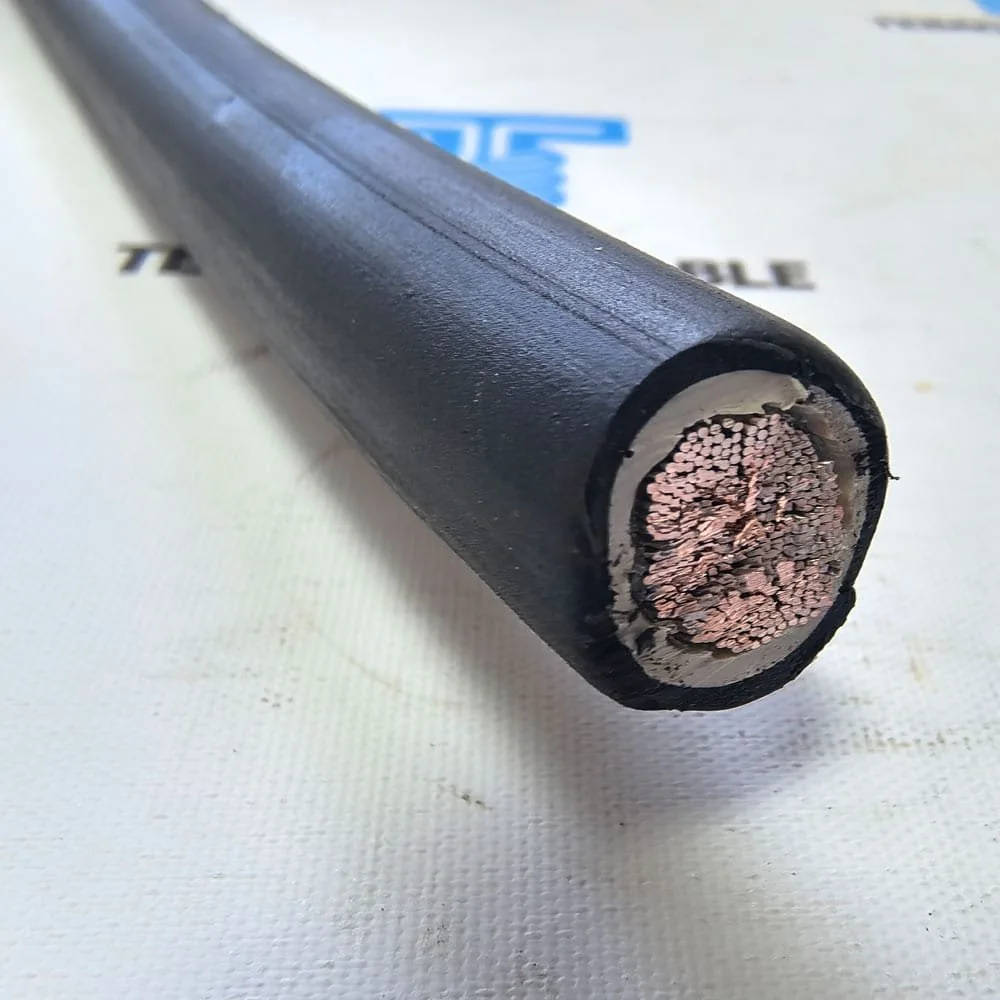
Fine-stranded rope-lay conductors (24 AWG strands in DLO and ASTM B172 strands in Type W) have a larger bundle diameter and springback than 19-wire or 37-wire Class B building cable. Always use UL-listed flared-barrel compression lugs and matched hex dies rated for fine-stranded flexible conductors (such as DLO/Class I/Class K).
- 1. Operating voltage vs. 2000 V insulation ceiling: Never replace a 2 kV Type W or DLO circuit operating at 1000 V–2000 V AC/DC (common on traction drives, 1500 V DC solar/BESS skids, and drill rigs) with a 450/750 V H07RN-F or 0.6/1 kV (N)SHÖU cable.
- 2. Ground-check pilot monitoring (MSHA compliance): Multi-core Type W has no ground-check pilot conductor. If the trailing circuit feeds mobile mining face equipment requiring fail-safe pilot monitoring, reject Type W and specify Type G-GC (up to 2 kV) or Type SHD-GC (above 2 kV).
- 3. Conductor tinning in corrosive atmospheres: DLO uses 100% tinned copper strands as standard to prevent sulfur blackening from rubber curing and H2S corrosion on oil rigs; European H07RN-F and standard (N)SHÖU typically use bare copper unless tinned copper is explicitly ordered.
- 4. NEC free-air vs. tray/conduit ampacity tables: High single-conductor DLO ampacity figures (for example, 405 A for 4/0 AWG in free air at 90 °C) do not apply inside enclosed raceways or multi-conductor Type W assemblies where NEC Table 310.16 / 400.5(A)(2) derating governs.
- 5. Non-standard locomotive kcmil sizes: Locomotive kcmil gauges such as 262.6 kcmil (133 mm²), 373.7 kcmil (189 mm²), 444.4 kcmil (225 mm²), 535.3 kcmil (271 mm²), and 777.7 kcmil (394 mm²) do not match standard metric 120, 185, 240, or 300 mm² dies—confirm exact lug barrel bore before substituting.
Frequently Asked Questions About Type W and DLO Cross-References
Maintenance and procurement teams regularly ask whether DLO can be pulled in cable trays, dragged across quarry floors, or swapped with European H07RN-F. Review the four engineering answers below to prevent field failures.
Can single-core DLO directly replace single-core Type W?
In fixed cable trays, generator enclosures, and protected conduit runs (where DLO carries UL RHH/RHW-2 and CT tray markings), DLO is widely used. For exposed portable ground dragging, temporary festoons, or reeling drums, retain braid-reinforced Type W for higher tear resistance.
Can H07RN-F replace Type W on a 480 V North American industrial machine?
Electrically, 450/750 V H07RN-F covers 480 V AC, but NEC/OSHA inspections in the United States and Canada normally require UL 1650 (Type W) or UL 62 (SOOW) listed markings, and Type W provides a thicker, braid-reinforced 2 kV jacket for harsh crush zones.
When must Type W be upgraded to Type G-GC or Type SHD-GC?
Upgrade to 2 kV Type G-GC whenever MSHA or site safety rules require continuous ground-check pilot monitoring on 480 V to 2000 V mobile equipment, and upgrade to shielded Type SHD-GC whenever system voltage exceeds 2000 V or per-phase electrostatic shielding is required.
What details should be included in a Type W or DLO cross-reference request?
Include existing jacket print, operating voltage (AC or DC), AWG/kcmil or mm² conductor size, core count, fixed tray vs. portable trailing/reeling motion, required UL/CSA/MSHA markings, lug barrel series, and total drum footage.
Verify Your Type W, DLO, or Metric Equivalent Specification
Share your existing cable marking, AWG/kcmil or metric size, system voltage, and installation duty. TEBAOFLEX engineers will verify outer diameter, lug compatibility, and UL/ICEA/VDE standard alignment with a factory-direct quote within 24 hours.
Request Technical Cross-Reference ReviewTechnical references & review record: Technical specifications cross-checked against ICEA S-75-381 / NEMA WC 58, UL 1650, UL 44 (RHH/RHW-2), CSA C22.2 No. 38 & No. 96, 30 CFR Part 18 (MSHA), DIN VDE 0250-812 / 0250-602, and AS/NZS 1802. Technical review updated October 2026 by TEBAOFLEX Engineering.