
Oil resistant cable should be specified by the fluid, exposure pattern, temperature, mechanical duty and verified test method—not by the words “oil resistant” alone. A jacket that performs well in brief contact with one mineral oil may behave differently under hot immersion, repeated flexing, fuel splash or contact with synthetic hydraulic fluid.
This guide helps engineers and industrial buyers turn a vague oil-resistance request into an auditable cable specification. It is relevant to machine tools, cranes, mines, ports, workshops, generators and oil-and-gas facilities. Chemical compatibility and safe installation must still be confirmed for the exact product, fluid and jurisdiction.

What “oil resistant” actually tells a buyer
The phrase indicates an intended property, but it does not identify the test fluid, temperature, immersion time or acceptable change in tensile strength, elongation, volume or mass. It also does not prove suitability for every petroleum product or chemical. To compare cables fairly, the RFQ must connect the claim to a published test or project-specific validation.
IEC 60811-404 describes mineral-oil immersion tests for cable sheath compounds. The official IEC 60811-404 scope confirms that the method applies to cross-linked and thermoplastic compounds. A passing result under that method is useful evidence, but it should not be stretched into a universal chemical-compatibility claim.
| Exposure description | Information the buyer should add | Why it changes selection |
|---|---|---|
| Occasional splash | Fluid name, frequency and cleanup time | Short contact may not represent long-term swelling |
| Repeated wetting | Cycles, dwell time and drying method | Ageing can accumulate over many maintenance cycles |
| Continuous immersion | Depth, temperature, duration and fluid circulation | Requires specific immersion evidence and sealed accessories |
| Oil mist | Concentration, ventilation and hot surfaces | Mist can reach areas not obvious from the cable route |
| Mixed fluids | Lubricant, coolant, cleaner and hydraulic-fluid identities | Compatibility with one fluid does not establish compatibility with a mixture |
Step 1: identify the actual fluid
Use the commercial product name and obtain its safety data sheet where possible. Distinguish mineral oil, diesel, gasoline, hydraulic oil, cutting fluid, coolant, grease, transformer oil, synthetic ester and cleaning solvent. Even products in the same general category can contain different additives.
Provide the fluid supplier’s compatibility information and concentration. If the formulation can change, state the allowed range. For a new or critical application, ask the cable supplier whether a representative sample is needed for a compatibility assessment. Never infer compatibility from jacket colour or from a similar-looking cable.
Step 2: quantify time and temperature
Material change depends strongly on temperature and exposure duration. Record normal fluid temperature, maximum upset temperature, ambient temperature and whether the cable is energized during contact. Hot oil can accelerate swelling, softening or loss of mechanical strength. Low temperature can make an already aged jacket less tolerant of flexing.
Separate continuous service from cleaning events and accidental spills. If a cable is expected to remain immersed, say so plainly. “Oil present in area” does not tell the supplier whether contact lasts seconds or months.

Step 3: add movement and mechanical damage
Oil exposure rarely acts alone. A cable may flex in a drag chain, trail over a workshop floor, wind onto a reel or rub against machine guards. Fluid can reduce friction and change how a cable moves; absorbed fluid can also alter jacket dimensions or strength. State bend radius, travel speed, cycles, tensile load, abrasion, crushing and torsion.
For dynamic routes, compare constructions designed for the specific movement. A PUR robotic drag-chain control cable addresses a different movement pattern from a H07RN-F heavy-duty rubber cable or a mining trailing cable. Material family alone does not determine flex life.
Step 4: separate jacket performance from whole-cable suitability
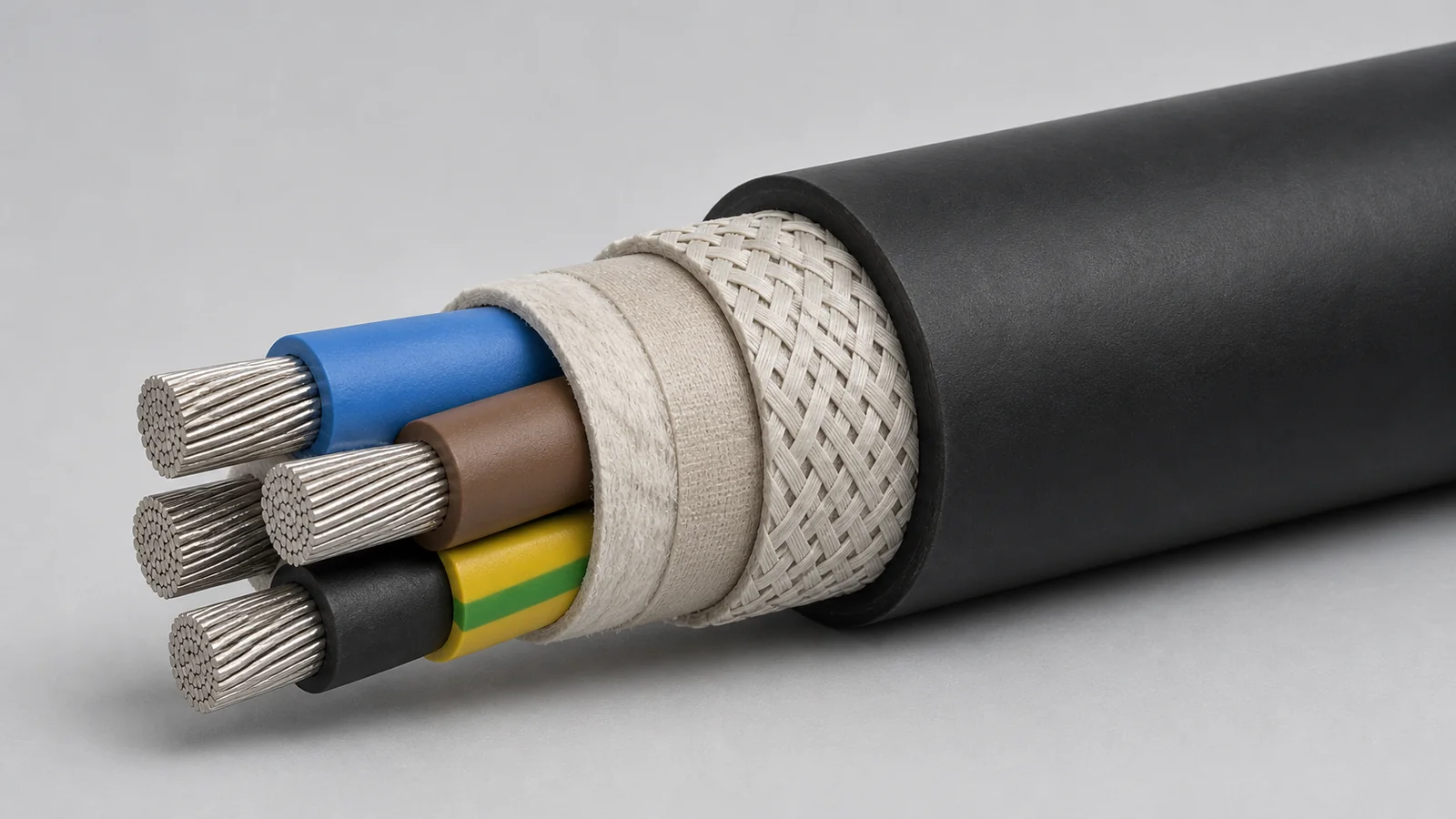
The outer jacket receives direct exposure, but a complete cable also includes conductor, insulation, fillers, tapes, shields and reinforcement. Fluid can enter through a damaged jacket or poorly sealed termination. The final assessment should therefore cover construction, accessories, installation method and inspection—not just a jacket compound data sheet.
Common jacket families include rubber compounds, chlorinated elastomers, thermoplastic elastomers and polyurethane. Each family includes many formulations. Avoid rules such as “PUR is always better” or “rubber handles every oil.” Ask for the exact declared property and its test basis.
How to read oil-resistance evidence
| Evidence item | What to verify | Warning sign |
|---|---|---|
| Test standard | Number, edition, test liquid and clause | “Tested to international standards” with no detail |
| Specimen condition | Jacket or insulation compound; original or aged specimen | Results presented without identifying the material |
| Exposure | Temperature, duration and immersion method | No connection to the site exposure |
| Acceptance result | Property measured and pass/fail limit | A marketing adjective with no numeric criterion |
| Product traceability | Report linked to the offered cable/compound | Generic report for a different construction |
Where UL flexible-cord requirements are specified, UL identifies flexible cord and cable under UL 62 in its wire and cable category scope table. The exact type, suffixes, listing and surface marking must be verified through official records. A UL reference does not automatically cover every fluid named by a project.
Electrical and thermal checks still apply
An oil-resistant jacket cannot compensate for an undersized conductor. Determine load current, installation method, grouping, ambient temperature and permitted voltage drop. Use the applicable code or standard for ampacity and derating. For long runs, work through the cable length and voltage-drop method; for initial sizing, see the amps-to-cable-size workflow.
Temperature deserves special attention because conductor heating and hot fluid exposure can occur together. The cable’s declared temperature limits must be interpreted for the relevant condition. The rubber cable temperature guide distinguishes conductor, ambient, installation and flexing temperatures.
Choose a product family only after the exposure is defined
For portable industrial equipment, the shortlist might include SOOW or SJOOW portable cord where the specified type, voltage and listing fit the project. Construction tools may require a S07BQ-F PUR flexible cable. Offshore power systems may begin from project-specific constructions such as BFOU fire-resistant power cable.
These are starting points, not automatic substitutes. Verify voltage, conductor size, approvals, flame performance, flexibility, fluid test evidence and termination compatibility for the offered item.
Write the RFQ so suppliers can answer unambiguously
- Name every expected fluid and attach available safety data sheets.
- State splash, mist, repeated wetting or immersion.
- Give normal and maximum fluid and ambient temperatures.
- Describe cleaning agents and wash-down pressure.
- Provide voltage, load, cores, conductor size and grounding needs.
- Quantify movement, bend radius, cycles, tension and abrasion.
- Identify the required test method, edition and acceptance criteria.
- Request product data, marking sample, certificates and lot-test documentation.
- Ask the supplier to state exclusions and assumptions.
Inspection and maintenance after installation
Create a baseline record of jacket colour, diameter, surface condition and flexibility. Inspect high-contact zones, entries, glands and moving bends. Warning signs include swelling, softening, hardening, cracking, blistering, loss of print, jacket movement at glands and exposed reinforcement. Remove damaged equipment from service using the site’s safe-isolation process; do not keep operating a cable simply because electrical continuity remains.
Clean the cable only with methods compatible with the declared jacket. Solvents used to remove oil can create a second chemical exposure. Record the fluid, duration and corrective action after a spill so recurring failures can be traced.
Practical questions about oil-resistant cable
Does an oil-resistant marking mean the cable can be immersed?
No. A marking or test can relate to a defined oil exposure without establishing continuous immersion. Immersion also challenges glands, joints and damaged areas. State depth, duration, fluid temperature and whether the cable moves, then request evidence that covers the complete intended assembly.
Can a buyer compare percentage changes from two different tests?
Only after confirming that test liquid, temperature, duration, specimen preparation and measured property are the same. A small change after a mild test is not automatically better than a larger allowed change after a harsher test. Compare like with like and retain the standard clause with the result.
What should be done after an unknown spill?
Follow the site’s isolation and hazardous-material procedures. Identify the fluid before cleaning or returning the cable to service. Inspect the jacket and terminations, document contact time and obtain guidance from the cable and fluid suppliers. Where safety is uncertain, replace or professionally assess the cable rather than relying on a visual check.
Is a thicker jacket always more oil resistant?
No. Thickness can add mechanical reserve, but chemical response is governed by the compound and exposure conditions. A thick incompatible material can still swell or lose strength. Jacket thickness, material formulation, test evidence and route protection should be reviewed together.
Ask for an exposure-based cable review
TEBAOFLEX can compare an industrial cable request with available rubber, PUR and project-specific constructions when the duty is documented. Send the fluid identity, temperature, exposure cycle, movement, electrical data, route and required test evidence through the contact and RFQ form. If compatibility cannot be supported by existing evidence, the limitation should be identified before the cable is ordered.
Selection note: this guide does not establish chemical compatibility for a specific product. Final approval requires the offered cable’s documentation, the actual fluid data and review by the responsible engineer.