
H07RN-F Cable FAQ: Most Common Questions
The H07RN-F cable is one of the most widely used industrial rubber cables, but engineers and buyers often have questions about its specifications, installation, and maintenance. This H07RN-F FAQ addresses the most frequently asked questions from TEBAOFLEX customers.
For complete specifications, see our H07RN-F specifications guide. For additional questions, contact our engineering team.
Installation FAQ
Q1: What is the minimum bending radius for H07RN-F cable?
A: The minimum bending radius for H07RN-F is:
- Fixed installation: 6 × overall cable diameter (6D)
- Flexing / moving applications: 10 × overall cable diameter (10D)
For example, a cable with 15mm overall diameter should not be bent tighter than 90mm radius when fixed, or 150mm when flexing. Exceeding the minimum bending radius causes internal damage to insulation and conductor strands.
Q2: Can H07RN-F cable be installed outdoors?
A: Yes. H07RN-F has a polychloroprene (neoprene) sheath with carbon black filling, providing good UV resistance for outdoor use. It is suitable for outdoor installations with typical service life of 10-15 years depending on UV intensity and climate. For installations requiring 20+ years outdoor exposure, consider H07BN4-F (CSM sheath) which has superior weathering.
Q3: What cable glands should I use with H07RN-F?
A: Use weatherproof cable glands designed for rubber-sheathed cables:
- PG thread: Standard European cable glands (PG7 to PG48)
- Metric thread: M12 to M63 metric glands
- NPT thread: For North American installations
- IP rating: Minimum IP54 for indoor, IP65/IP67 for outdoor or wet locations
- Material: Nickel-plated brass or stainless steel for industrial use; plastic for lighter duty
Ensure the gland’s clamping range matches the cable’s overall diameter.
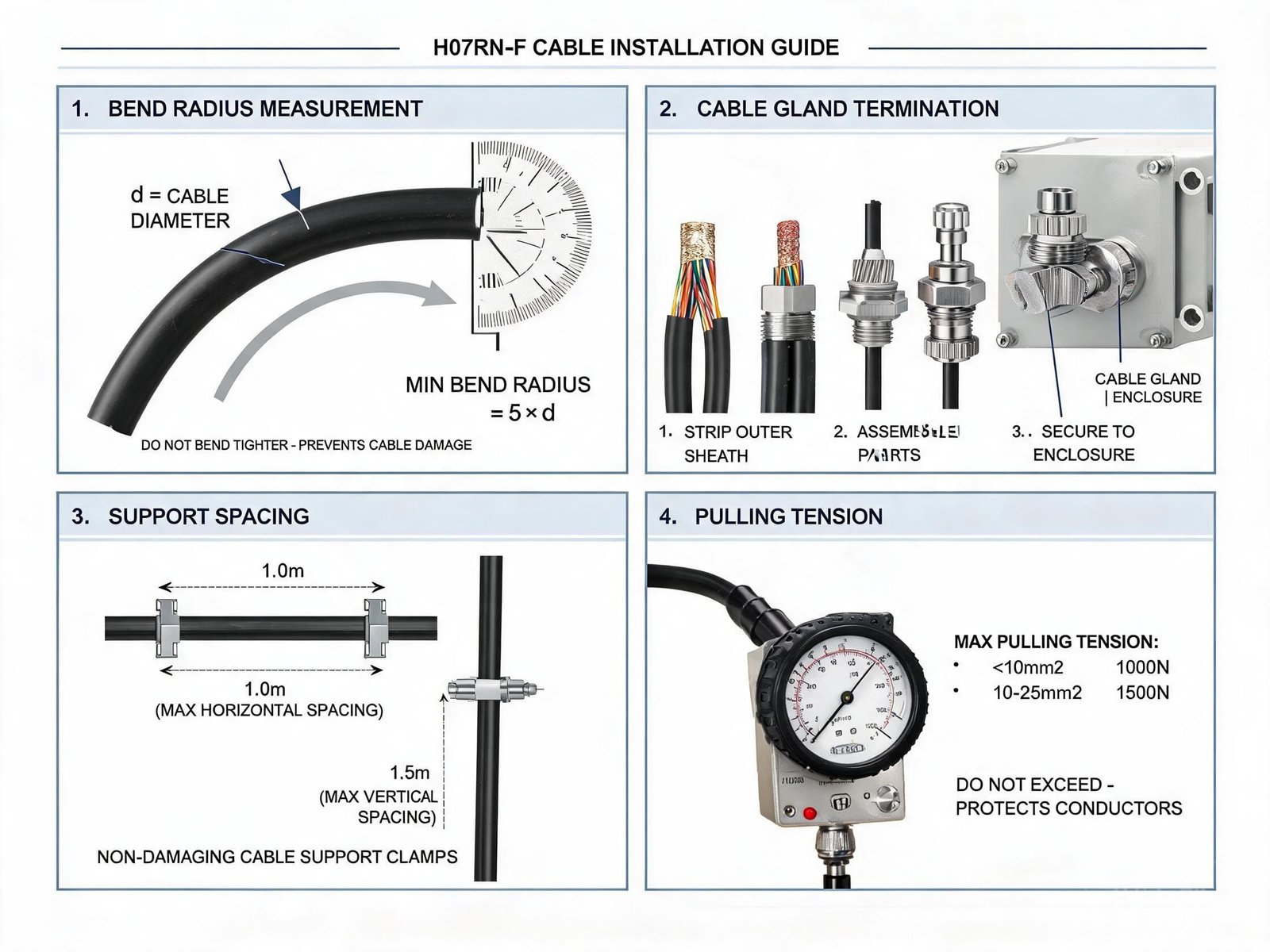
Q4: What is the maximum pulling tension for H07RN-F?
A: The maximum pulling tension should not exceed 50 N/mm² of conductor cross-sectional area. For example:
- 3G×2.5mm² cable: max pull = 3 × 2.5 × 50 = 375 N (~38 kg)
- 3G×6mm² cable: max pull = 3 × 6 × 50 = 900 N (~92 kg)
- 3G×16mm² cable: max pull = 3 × 16 × 50 = 2400 N (~245 kg)
Always use a cable grip (mesh sock) that distributes force over the cable sheath rather than pulling on the conductors.
Q5: At what temperature can I install H07RN-F?
A: The minimum installation temperature is -15°C (5°F). Below this temperature, the neoprene sheath becomes brittle and may crack when bent. For cold climate installations below -15°C, warm the cable in a heated area before installation, or use a specially formulated low-temperature rubber compound. The maximum installation temperature is +60°C.
Performance FAQ
Q6: Is H07RN-F cable oil resistant?
A: Yes, H07RN-F has good oil resistance (IR2 per EN 50363-1). The polychloroprene sheath resists most mineral oils, fuels, and lubricants encountered in industrial environments. However, for continuous immersion in oil or exposure to aggressive solvents, consider PUR (H07BQ-F) or specialty cables. Always test compatibility with specific chemicals if exposure is severe.
Q7: Is H07RN-F flame retardant?
A: Yes. H07RN-F is self-extinguishing and meets IEC 60332-1-2 flame retardancy requirements. The polychloroprene sheath naturally resists flame propagation. However, H07RN-F is not a fire-resistant cable (does not maintain circuit integrity during fire). For fire-resistant applications, use BFOU fire-resistant cable. H07RN-F is also not LSZH — for low smoke zero halogen requirements, use H07ZZ-F.
Q8: Can H07RN-F be submerged in water?
A: H07RN-F has good water resistance for occasional exposure and wet environments. However, it is not designed for continuous submersion. For applications involving permanent water immersion (submersible pumps, underwater equipment), use H07RN8-F (enhanced water-resistant version) or dedicated submersible cables.
Maintenance and Troubleshooting FAQ
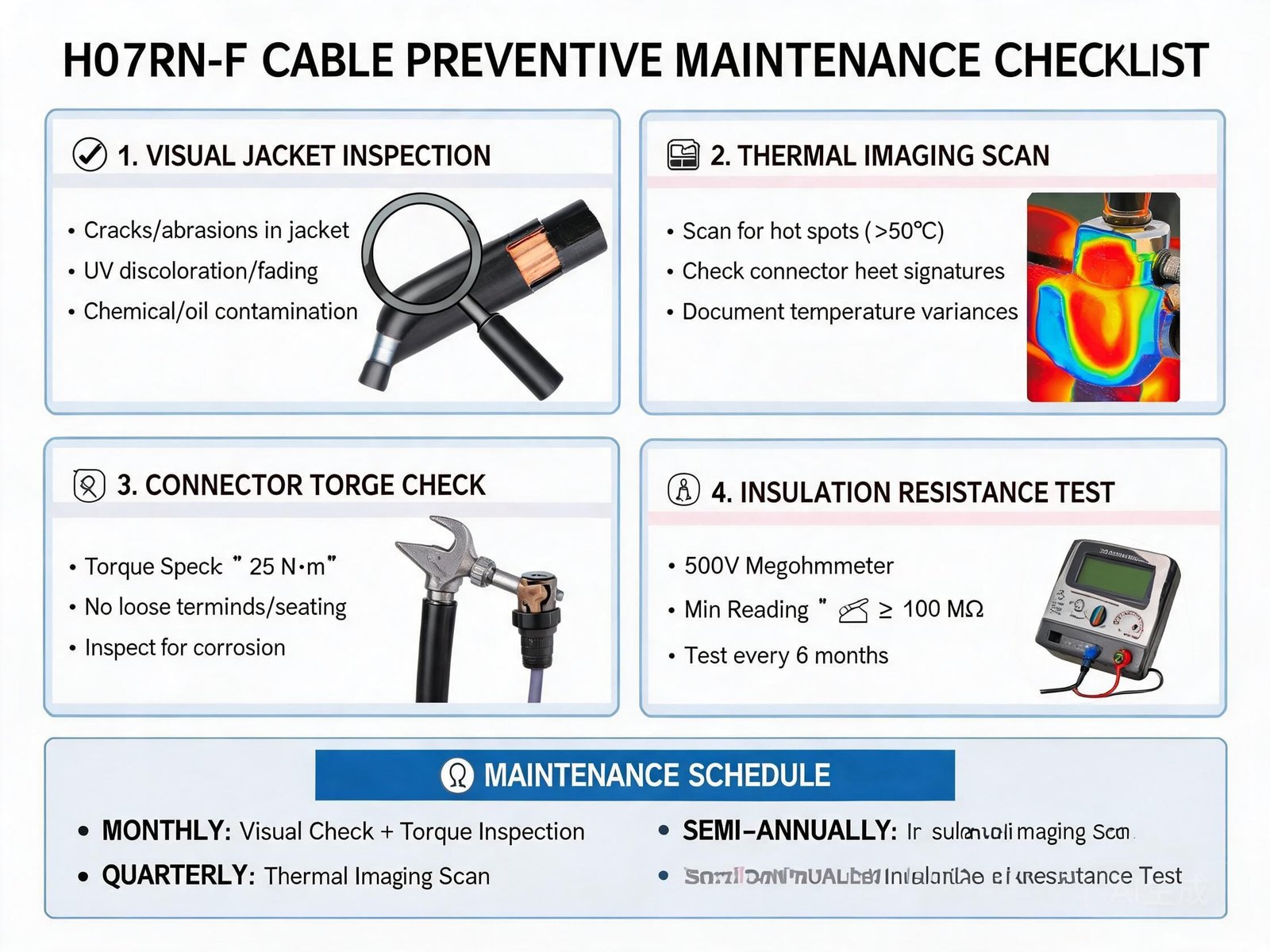
Q9: How often should I inspect H07RN-F cables?
A: Inspection frequency depends on the application:
- Portable/flexible cables: Visual inspection before each use, thorough inspection monthly
- Fixed industrial installation: Visual inspection every 6 months, insulation test annually
- Outdoor installation: Visual inspection every 3 months, insulation test annually
- Harsh environment (mining, construction): Weekly visual inspection, quarterly insulation testing
For comprehensive guidance, see our cable maintenance guide.
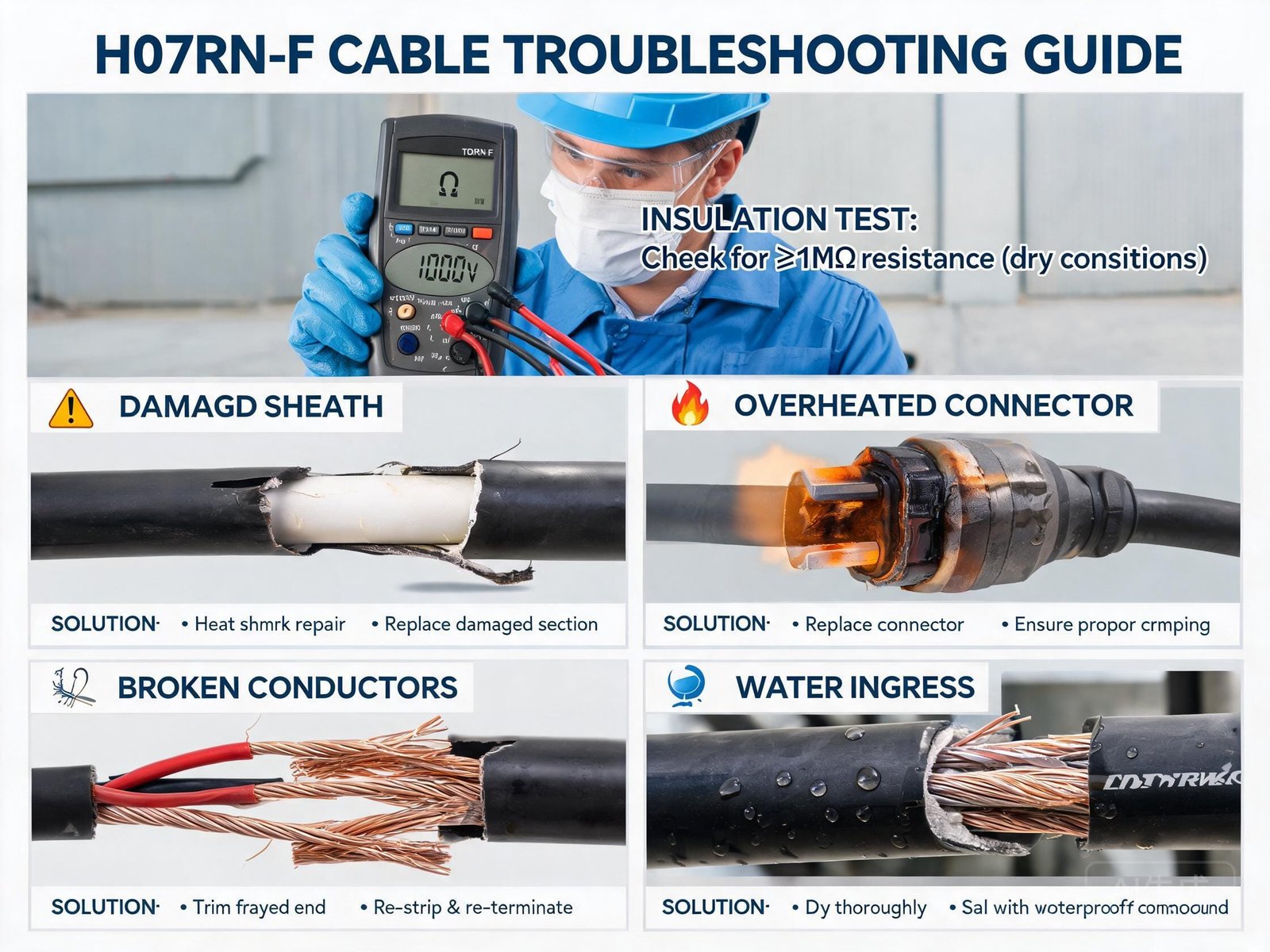
Q10: How do I test H07RN-F cable insulation?
A: Use a 500V or 1000V DC insulation resistance tester (Megger):
- Disconnect both ends of the cable
- Test each conductor to ground and between conductors
- Apply test voltage for 1 minute
- Minimum acceptable: 1 MΩ per kV of rated voltage + 1 MΩ (i.e., ~2 MΩ for 450/750V cable)
- For new installations: expect >100 MΩ
- Compare with previous readings — a 50%+ drop indicates degradation
Always discharge the cable after testing by shorting conductors to ground.
Q11: What are the common causes of H07RN-F cable failure?
A: The most common failure modes are:
- Sheath damage from mechanical abuse: Cuts, abrasion, crushing from vehicles or equipment
- Termination failure: Loose connections causing overheating at lugs and terminals
- Excessive flexing: Beyond the cable’s flex life, causing conductor strand breakage
- UV degradation: Long-term outdoor exposure causing sheath cracking (after 10-15+ years)
- Oil/chemical attack: Prolonged exposure to incompatible chemicals
- Thermal aging: Operating above rated 60°C conductor temperature
- Water ingress: Through damaged sheath or improperly sealed terminations
Q12: Can a damaged H07RN-F cable be repaired?
A: Yes, depending on the extent of damage:
- Minor surface cuts: Repair with self-amalgamating rubber tape and weatherproof overwrap
- Sheath damage (conductor exposed): Use a rubber cable splice kit with heat-shrink tubing
- Conductor damage: Install an inline junction with proper compression connectors and sealed enclosure
- Severe damage: Replace the cable section entirely — do not attempt field repair of structural damage
Always follow manufacturer repair guidelines and applicable electrical codes. Repairs must maintain the original IP rating and electrical safety of the cable system.
Q13: What is the service life of H07RN-F cable?
A: Service life depends on operating conditions:
- Indoor, fixed, normal conditions: 25-30+ years
- Outdoor, fixed, moderate climate: 15-20 years
- Outdoor, tropical/desert climate: 10-15 years (consider H07BN4-F for longer life)
- Portable/flexible use: 5-10 years depending on flex cycles and handling
- Harsh industrial (mining, construction): 3-8 years depending on mechanical abuse
Q14: How do I identify genuine H07RN-F cable?
A: Check for:
- Cable marking: Should be printed “H07RN-F” along with manufacturer name, voltage (450/750V), standard (EN 50525-2-21), and year of manufacture
- CE mark: Required for European compliance
- VDE mark: For German market compliance
- Datasheet: Should reference EN 50525-2-21 and provide conductor class (Class 5)
- Factory test certificate: Request from manufacturer
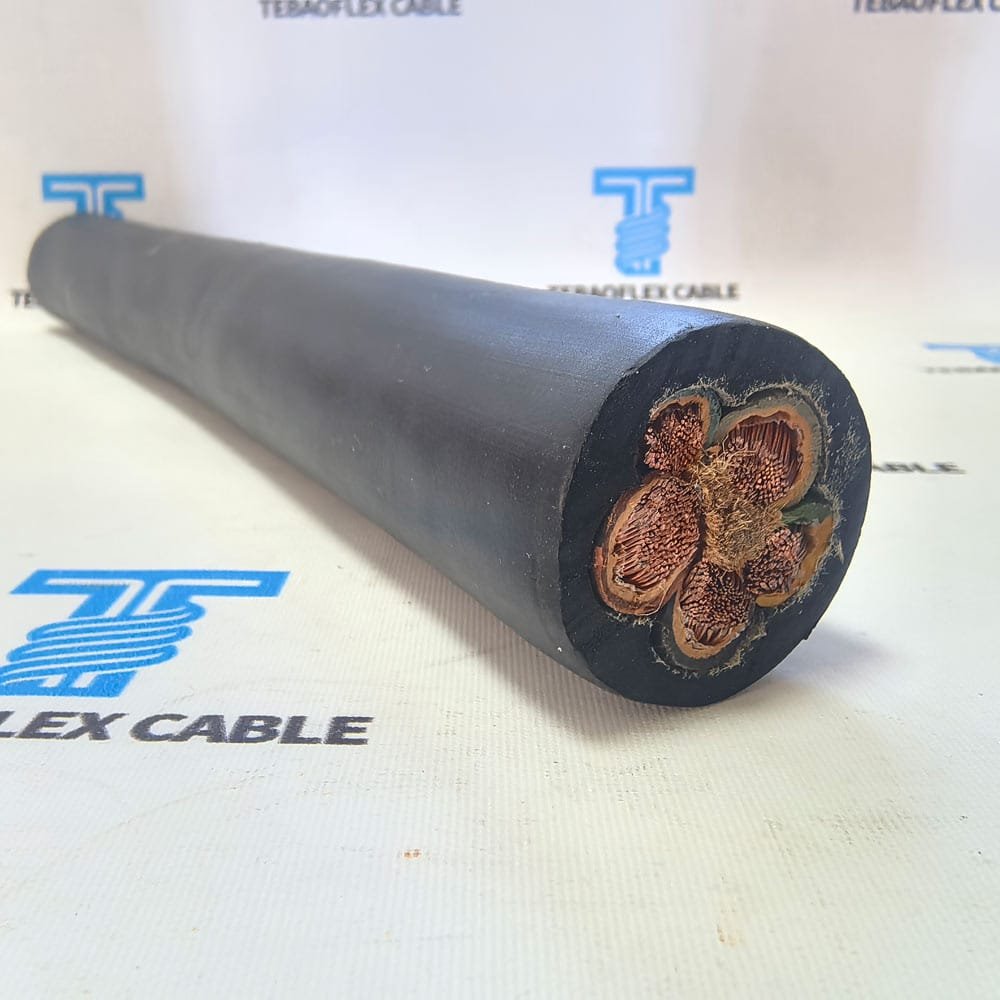
- Physical inspection: Fine-stranded copper conductor, rubber insulation, neoprene sheath (burn test: neoprene has characteristic smell)
Still Have Questions?
TEBAOFLEX technical support is available to answer your H07RN-F cable questions:
- Cable sizing and selection for your application
- Custom configurations and special requirements
- Certification and compliance documentation
- Installation guidance and best practices
- Quotation and delivery timeline
Contact TEBAOFLEX engineering team for expert assistance and competitive pricing on H07RN-F cable.