
H07RN-F vs H07BN4-F: What’s the Difference?
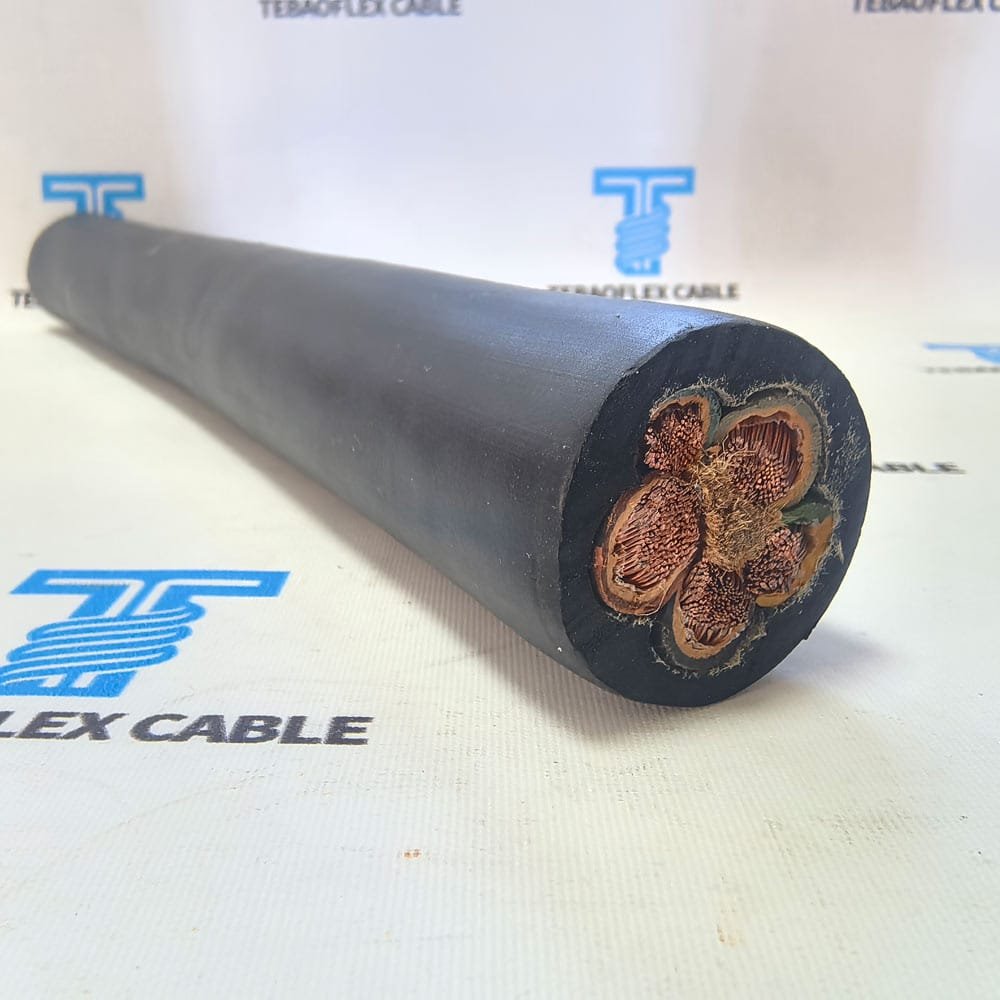
Both H07RN-F and H07BN4-F are heavy-duty rubber-insulated flexible cables rated 450/750V with Class 5 fine-stranded copper conductors. The key difference lies in the sheath material: H07RN-F uses polychloroprene (CR/neoprene), while H07BN4-F uses chlorosulfonated polyethylene (CSM/Hypalon). This difference in sheath material leads to distinct performance characteristics that determine which cable is best for each application.
TEBAOFLEX manufactures both types. This H07RN-F vs H07BN4-F comparison will help you select the right cable. Contact us for project-specific recommendations.
Designation Breakdown
| Element | H07RN-F | H07BN4-F |
|---|---|---|
| H | Harmonized cable | Harmonized cable |
| 07 | 450/750V rated | 450/750V rated |
| Insulation (R/B) | R = EPR/CR rubber | B = EPR rubber |
| Sheath (N/B) | N = Polychloroprene (CR) | B = CSM/Hypalon |
| N4 | — | N4 = CSM type designation |
| F | Class 5 fine-stranded | Class 5 fine-stranded |
| Standard | EN 50525-2-21 | EN 50525-2-11 |
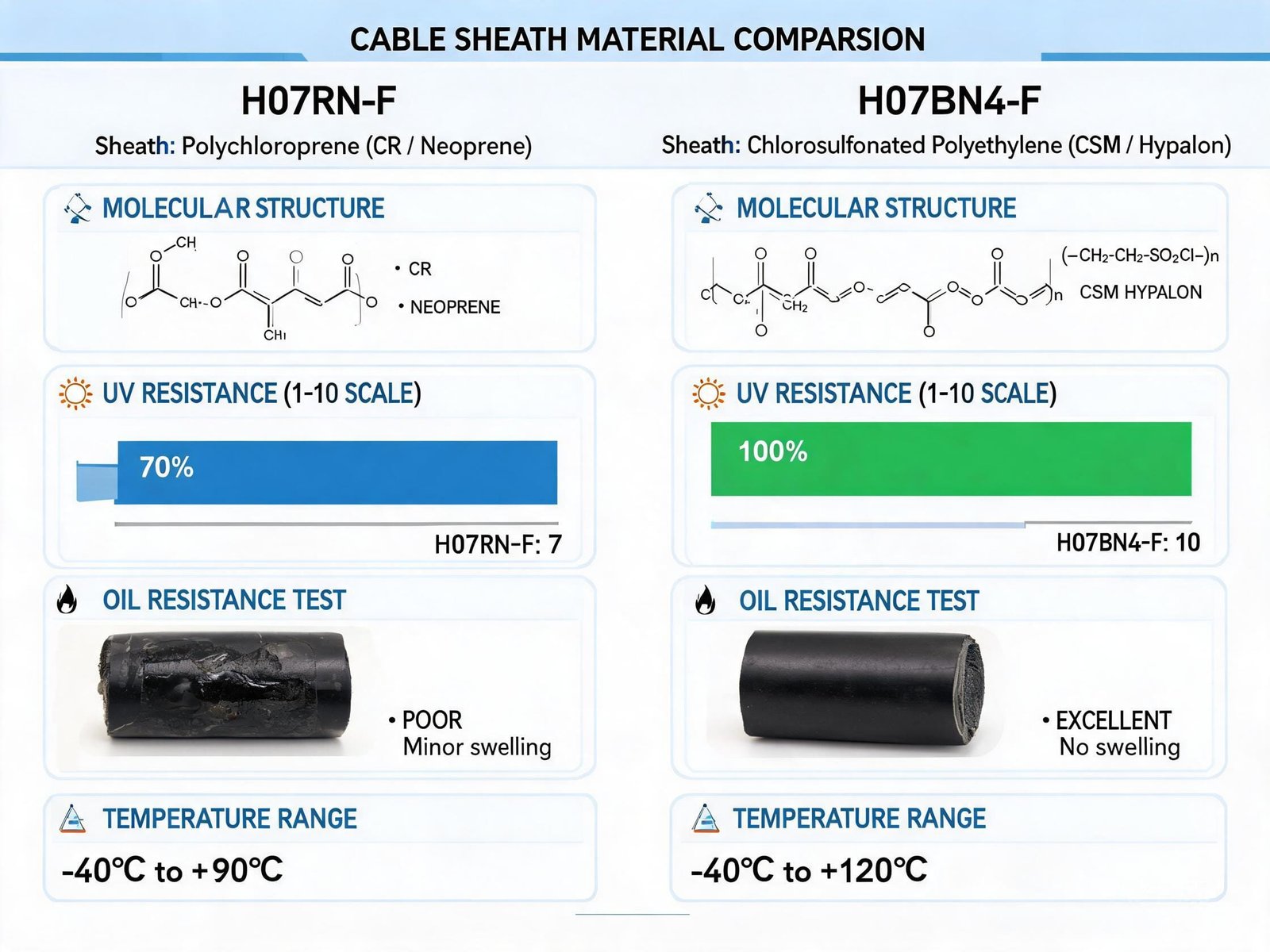
Performance Comparison
| Property | H07RN-F (CR) | H07BN4-F (CSM) | Winner |
|---|---|---|---|
| Max conductor temp | 60°C | 60°C | Tie |
| Min operating temp | -25°C | -25°C | Tie |
| Abrasion resistance | Very good | Very good | Tie |
| Oil resistance | Good (IR2) | Good (IR2) | Tie |
| UV / weathering | Good | Excellent | H07BN4-F |
| Ozone resistance | Good | Excellent | H07BN4-F |
| Heat aging | Good | Excellent | H07BN4-F |
| Flame retardancy | Self-extinguishing | Self-extinguishing | Tie |
| Tear resistance | Excellent | Very good | H07RN-F |
| Water resistance | Good | Good | Tie |
| Cost | Lower | Higher (~15-25% more) | H07RN-F |
| Availability | Widely available | Less common | H07RN-F |
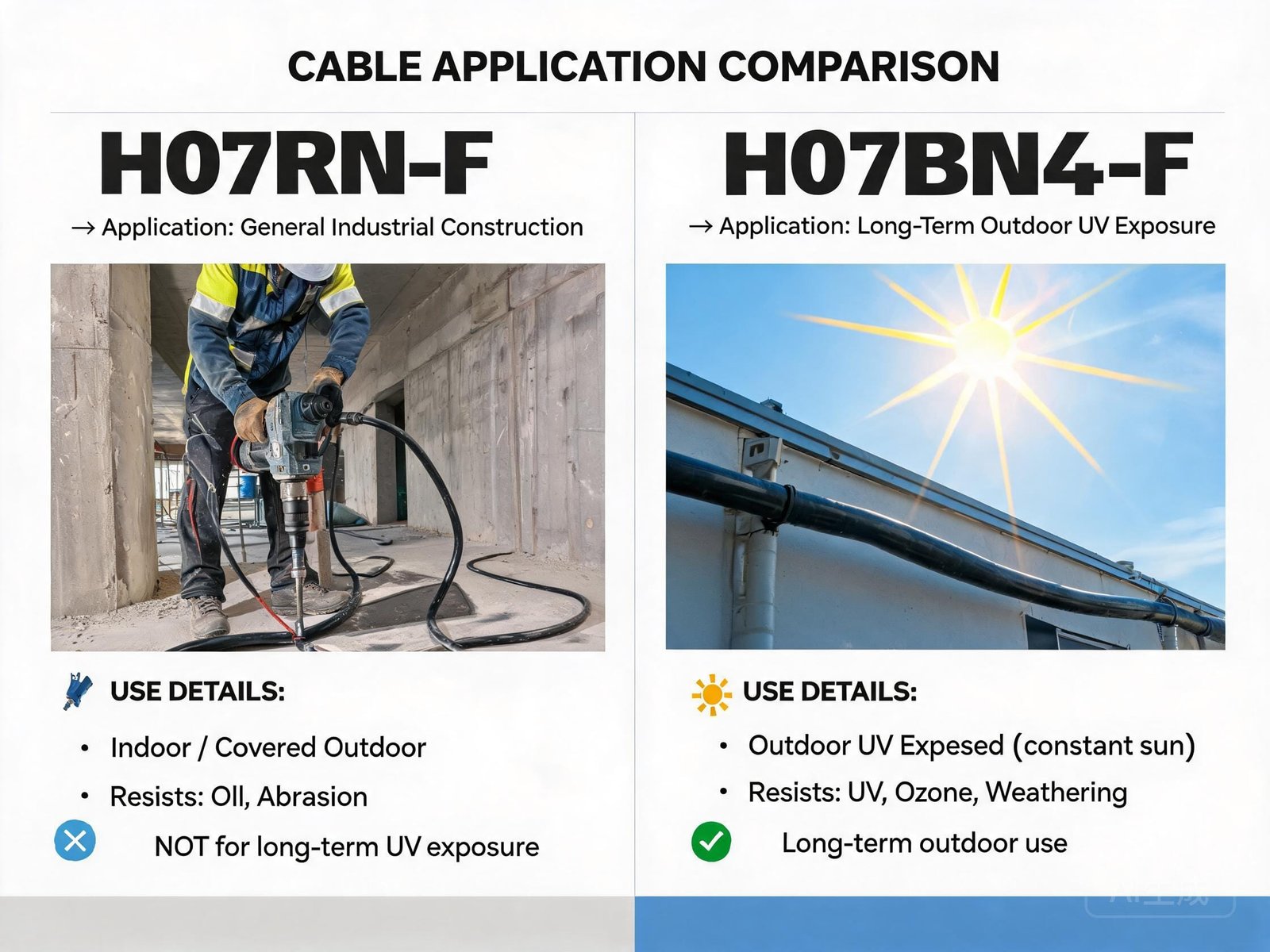
When to Choose H07RN-F
- General industrial applications: The workhorse cable for most environments
- Construction sites: Standard choice for temporary power distribution
- Cost-sensitive projects: Lower cost with adequate performance for most uses
- Indoor / semi-outdoor: Where UV exposure is limited or intermittent
- Applications requiring frequent handling: Superior tear resistance for coiling/uncoiling
- When availability matters: H07RN-F is the most commonly stocked rubber cable
View H07RN-F complete specifications →
When to Choose H07BN4-F
- Long-term outdoor exposure (10+ years): CSM has superior UV and ozone resistance
- Tropical / desert climates: Better heat aging for hot, sunny environments
- Coastal / marine atmosphere: Better resistance to salt spray and ozone
- Chemical plant outdoor wiring: CSM resists a wider range of chemicals
- Permanent installations: Where the cable will not be moved and must last decades
- High ozone environments: Near high-voltage equipment that generates ozone
Cost Comparison
H07BN4-F typically costs 15-25% more than H07RN-F due to:
- Higher raw material cost of CSM vs CR
- Lower market volume (less economy of scale)
- More specialized manufacturing process
For most applications where the cable is not exposed to extreme UV for 10+ years, H07RN-F provides better value. The premium for H07BN4-F is justified only when its superior weathering and aging performance provides measurable lifecycle benefit.
Can H07RN-F and H07BN4-F Be Interchanged?
In many applications, yes — both cables share the same voltage rating, conductor class, and overall dimensions. However:
- Always verify that the chosen cable meets project specifications and applicable codes
- Some projects specifically require CSM sheath for long-term outdoor performance — do not substitute
- Check with the specifying engineer before making substitutions
- Both cables use the same cable glands, terminations, and installation methods
Summary: Which Cable Should You Choose?
| If your application is… | Recommended cable |
|---|---|
| General industrial, indoor/semi-outdoor | H07RN-F |
| Construction site temporary power | H07RN-F |
| Portable equipment and tools | H07RN-F |
| Long-term outdoor (10+ years UV) | H07BN4-F |
| Tropical/desert climate permanent | H07BN4-F |
| High ozone / chemical outdoor | H07BN4-F |
| Cost-sensitive general purpose | H07RN-F |
Need help deciding? Contact TEBAOFLEX engineering for expert cable selection assistance and competitive pricing on both H07RN-F and H07BN4-F cables.