Confirm STS, RTG, RMG, harbour crane, ship loader, ship unloader or stacker-reclaimer duty.

Port & Crane Cable Solutions
Port Crane Cable Solutions for Container Terminals & Material Handling
TEBAOFLEX provides flexible cable solutions for STS, RTG and RMG cranes, mobile harbour cranes, ship loaders, unloaders and other port material-handling equipment. Cable construction is selected according to the actual movement system—including drum reeling, festoon travel, vertical lifting, spreader baskets and cable chains—together with voltage, travel speed, tensile load and outdoor operating conditions.
Equipment
STS, RTG, RMG, loader, spreader
Movement
Reeling, festoon, basket, chain
Environment
Salt air, UV, water, oil, abrasion
Electrical
LV/MV, power, control, signal, fibre
The crane type identifies the application. The cable movement defines the construction.
Selection framework
Start with the Operating System, Not Only the Cable Size
A port crane cable should be reviewed as one part of the machine's motion and power-delivery system. Four groups of information establish the right starting point for a technical discussion.
Drum reeling, festoon loops, vertical lifting, basket coiling and drag-chain routes impose different stresses.
Review salt-laden air, sunlight, rain, oil, guide contact, abrasion and the intended temperature range.
Specify voltage, power cores, control conductors, signal pairs, screening and fibre-optic requirements.
Port equipment
Cable Solutions for Port and Terminal Equipment
Begin with the machine and cable position. A single crane can require several cable constructions because gantry travel, trolley movement, spreader lifting and communication links do not operate in the same way.
Ship-to-shore
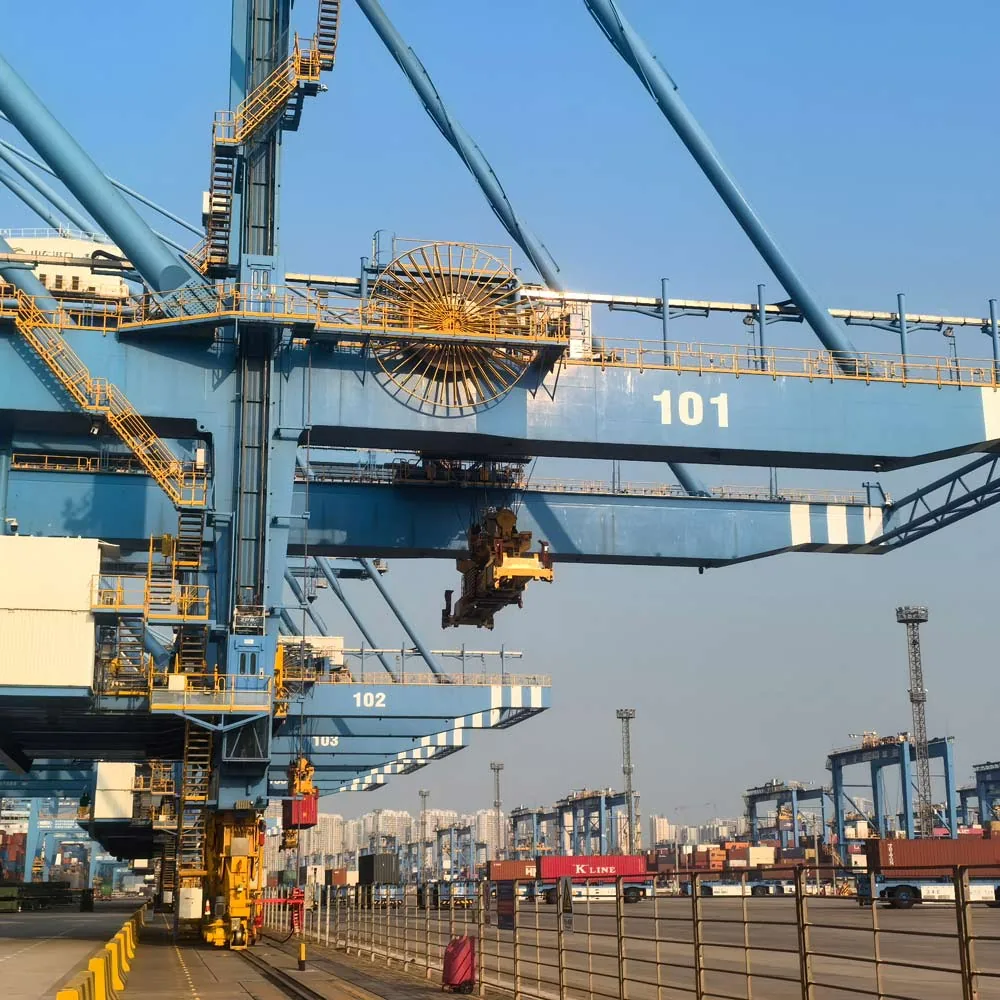
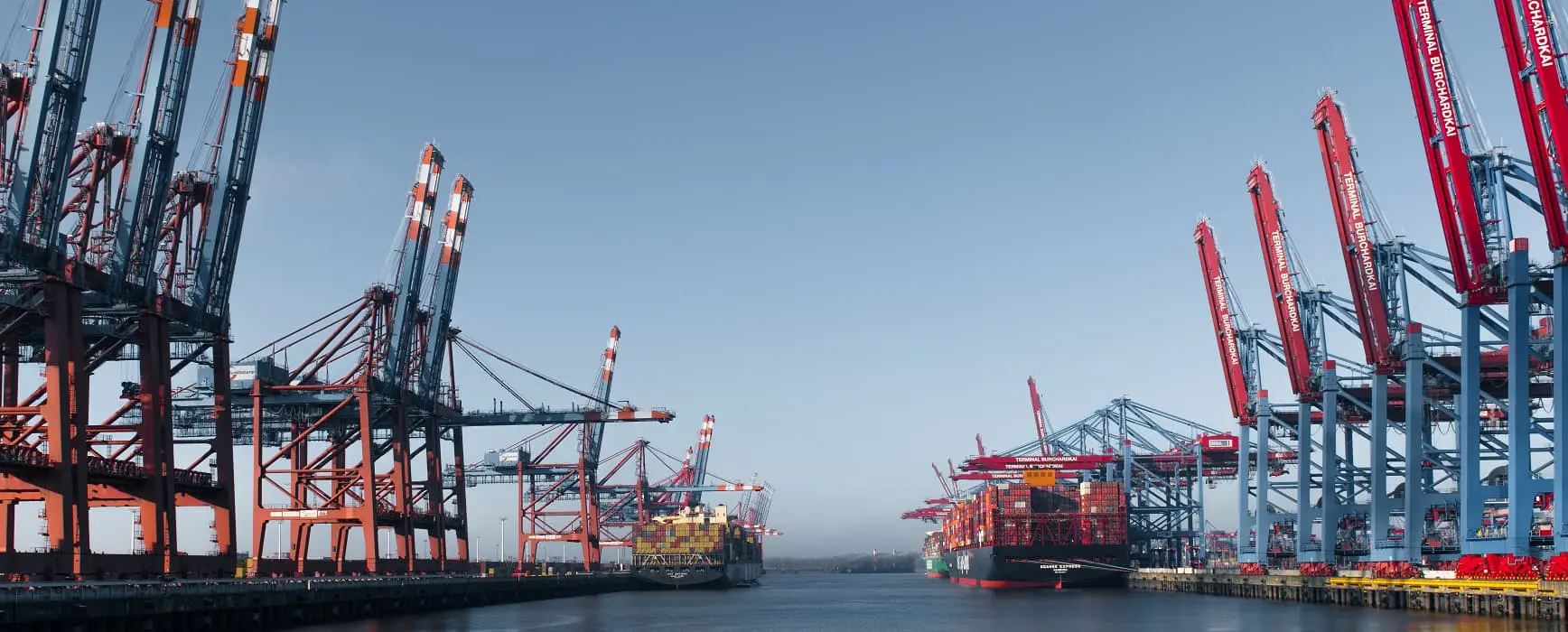
STS Cranes
Gantry travel, trolley systems, boom movement, spreader lifting and reel-fed power.
Yard handling
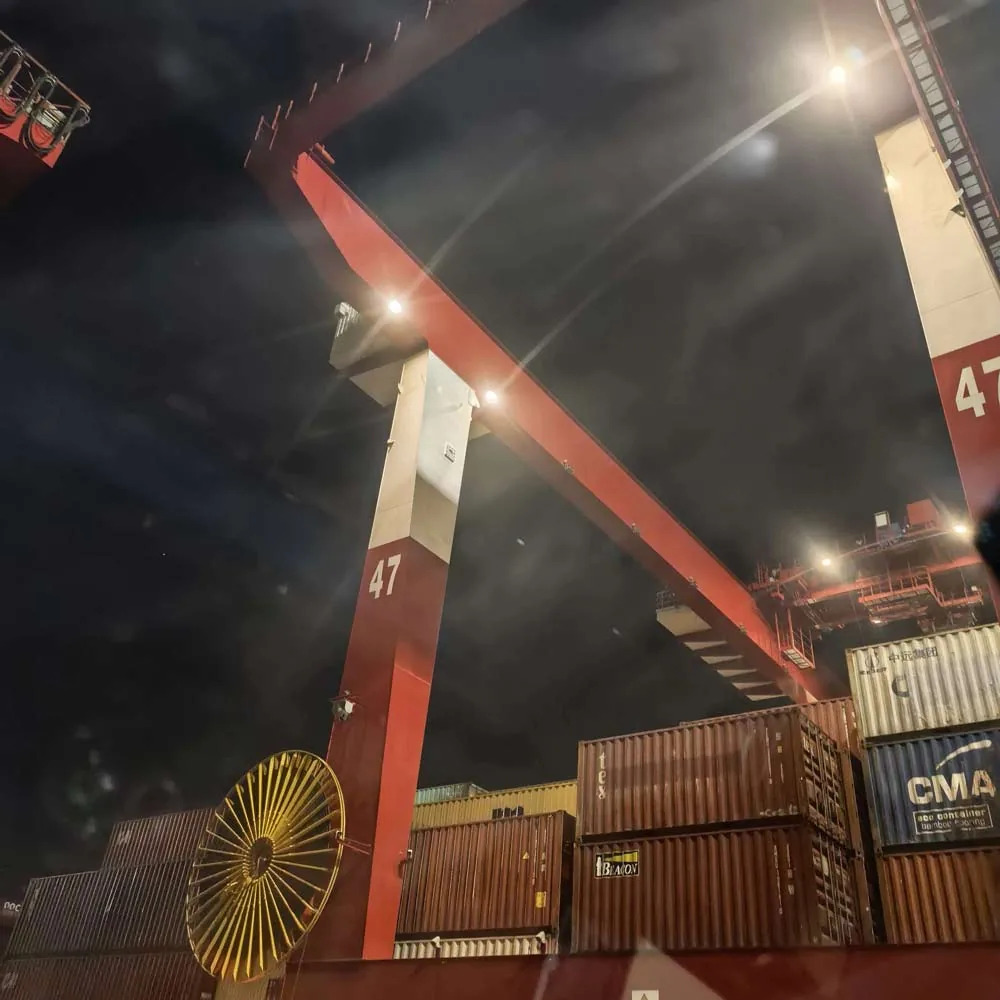
RTG Cranes
Frequent gantry travel, motorised reels, baloney cable arrangements and outdoor duty.
Rail-mounted
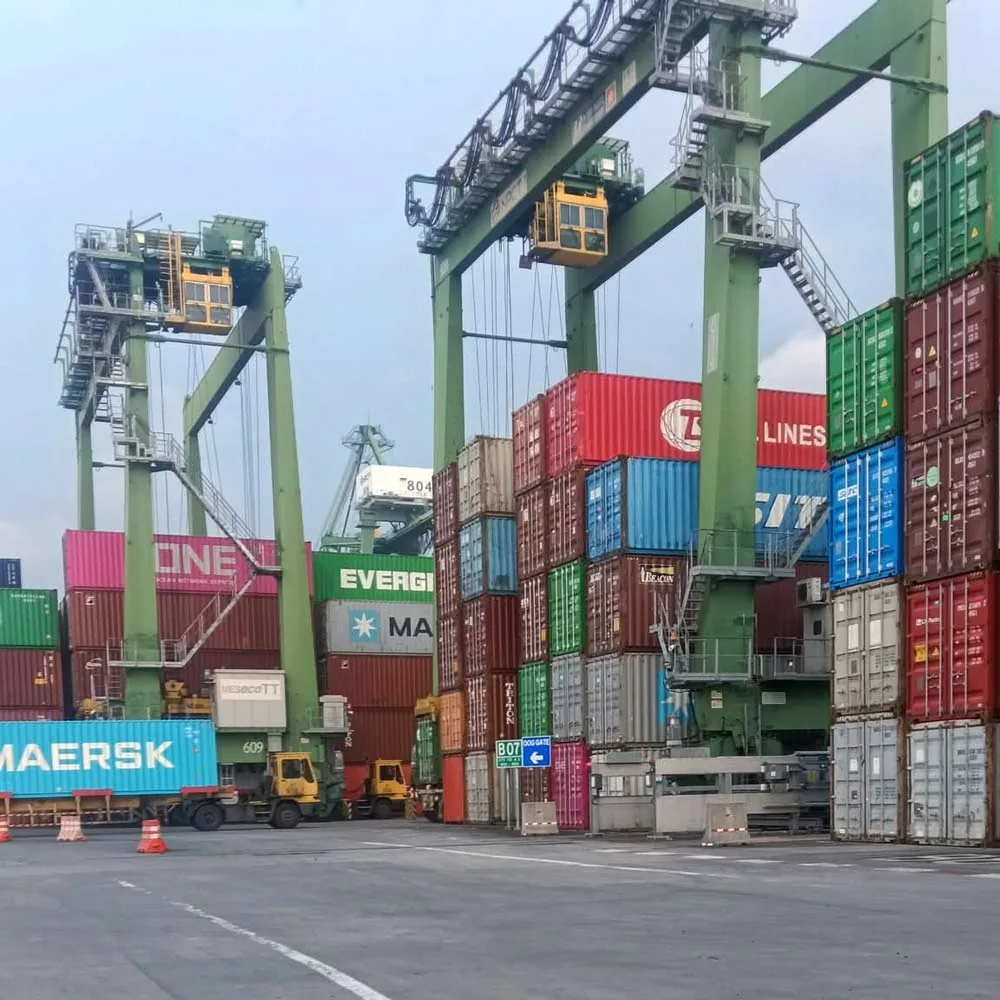
RMG Cranes
High-cycle horizontal travel using festoon, reel or cable-chain systems.
Flexible handling
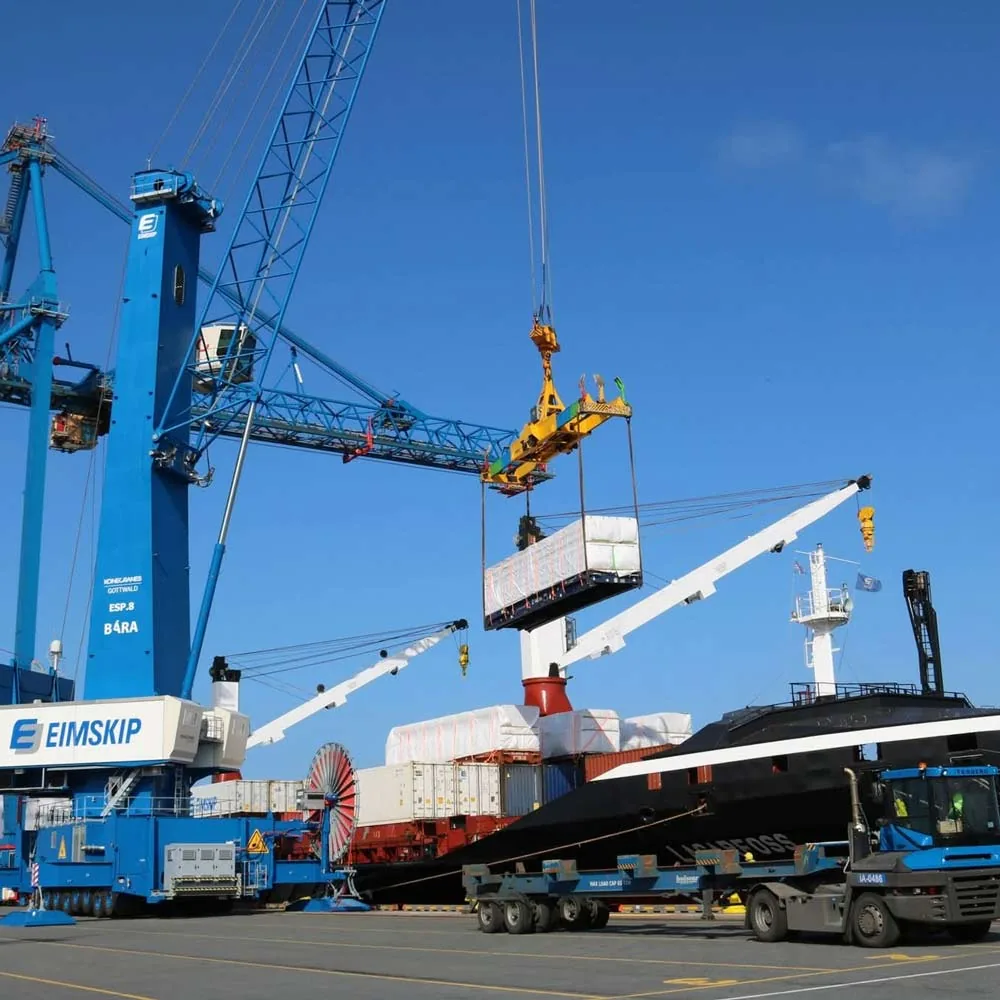
Mobile Harbour Cranes
Vertical reeling, hoist functions and combined power, control and signal needs.
Bulk terminals
Ship Loaders & Unloaders
Long travel, boom movement, medium-voltage supply and dynamic cable routes.
Stockyard equipment
Stacker-Reclaimers
Outdoor long-travel systems where reel geometry and MV supply are central to selection.
Cable motion systems
Match the Cable to the Crane Movement
“Crane cable” is not one construction. The storage method, bend direction, acceleration, hanging length and tensile load determine whether the application needs a reeling, festoon, basket, vertical-reeling or chain cable.
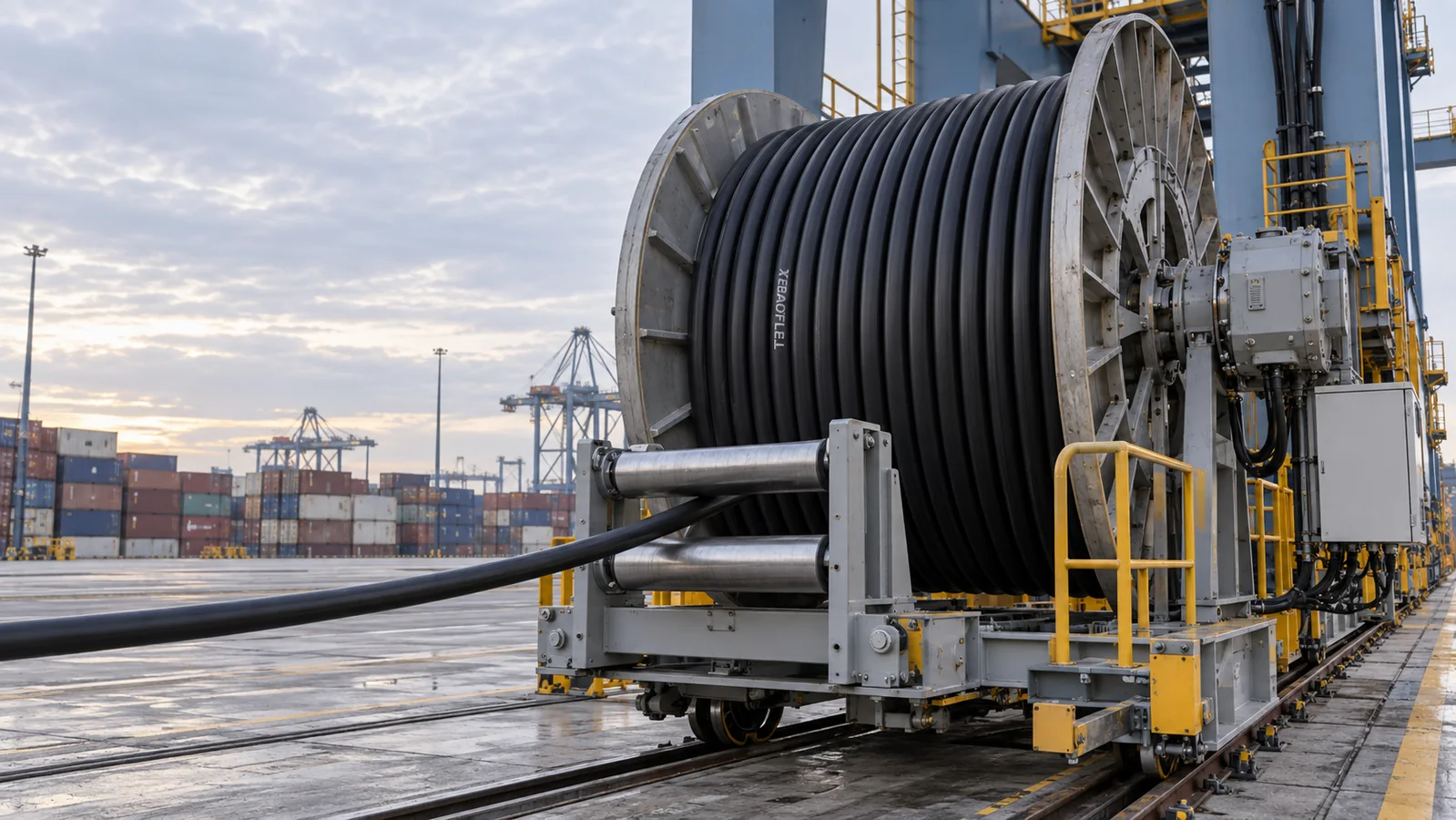
01 / DRUM REELING
Cable Reel Systems for Long Travel
The cable winds and unwinds from a motorised or spring-driven drum as the machine travels. Reel diameter, travel distance, speed, acceleration, tensile load, guide layout and the number of winding layers must be considered together.
Explore reeling cable selection →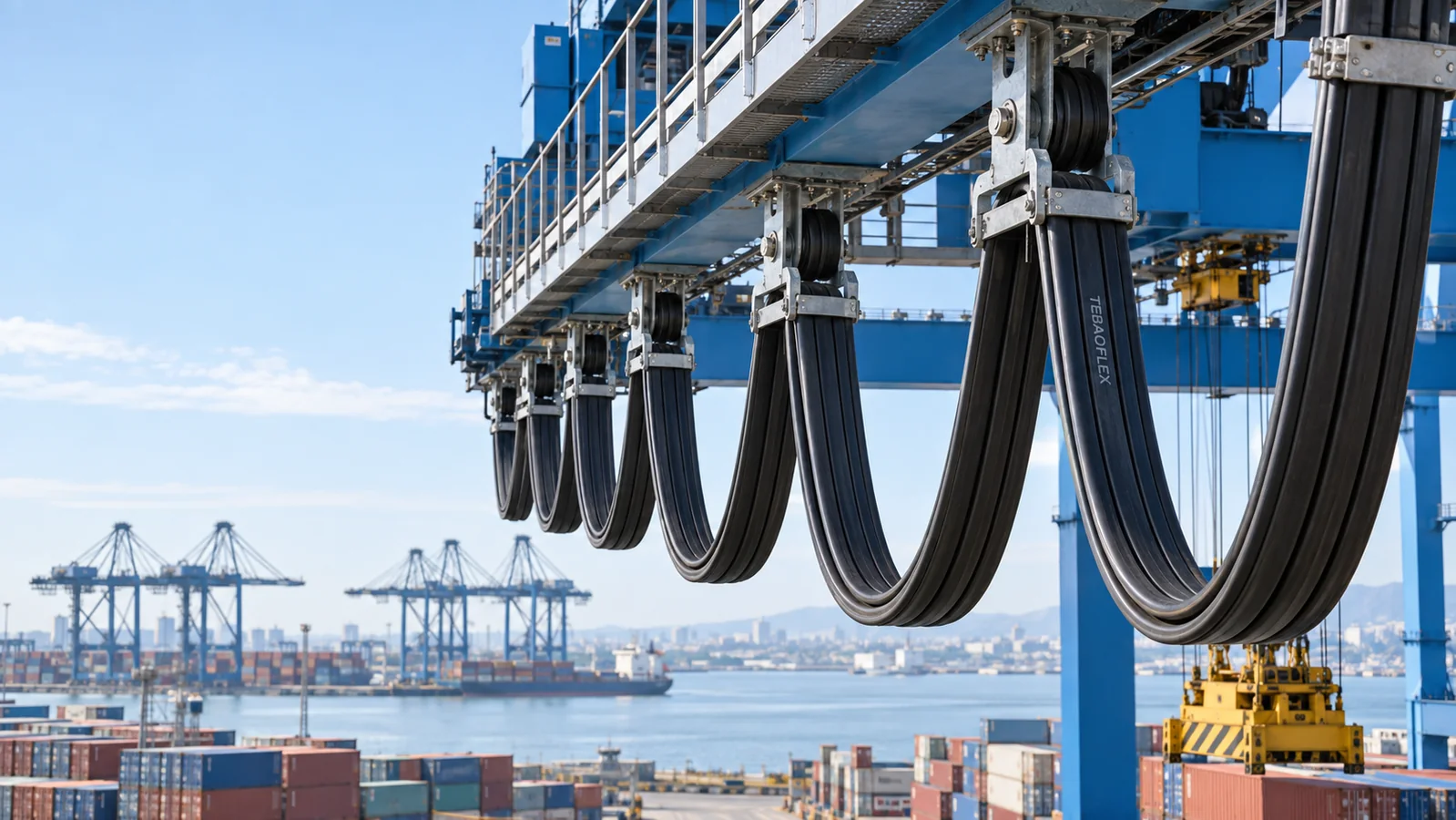
02 / FESTOON
Flat and Round Cables for Trolley Travel
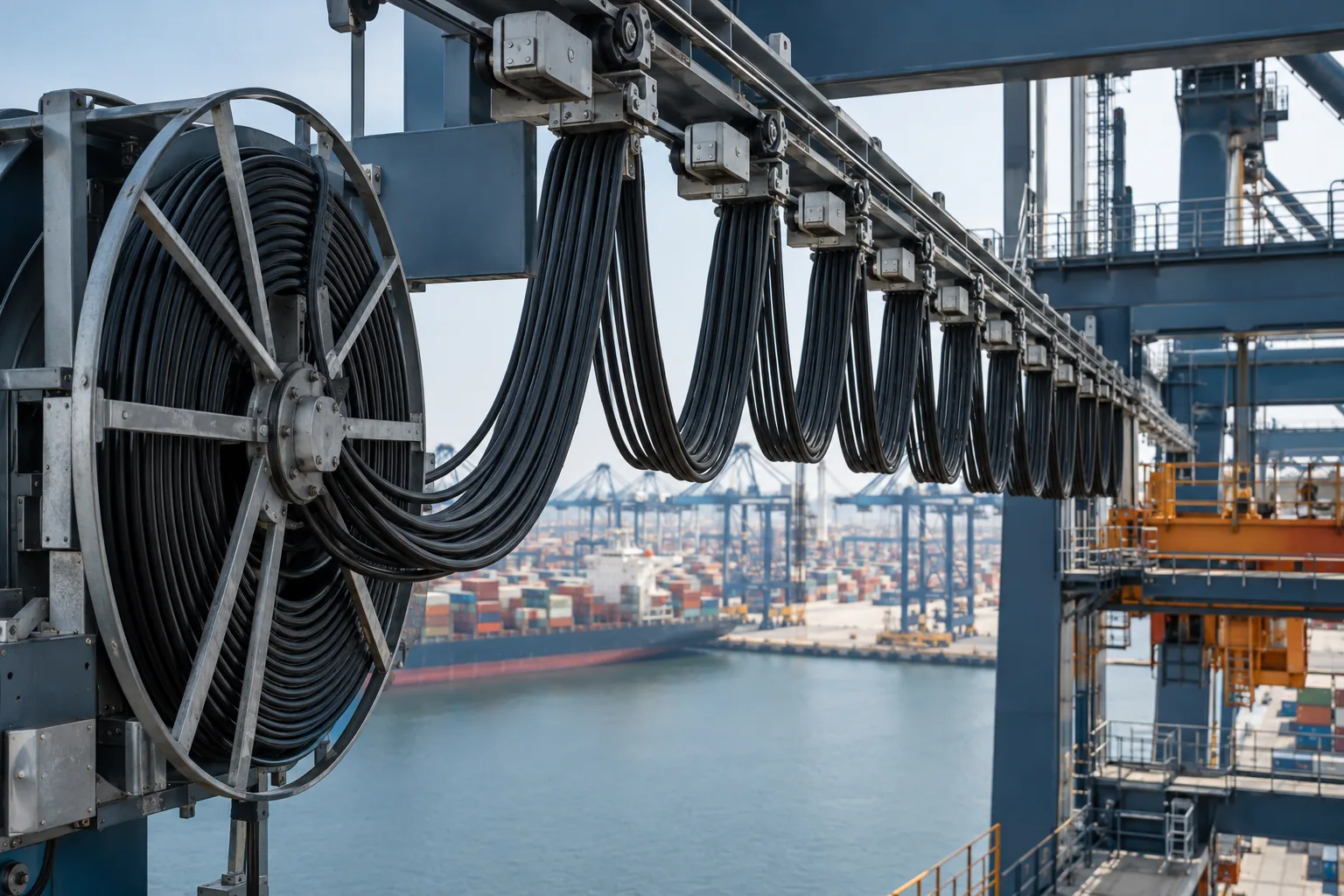
Festoon cables move in suspended loops supported by cable trolleys. Their repeated horizontal bending pattern differs from drum reeling, so loop depth, trolley spacing, travel speed, cable weight and whether a flat or round construction is preferred all matter.
View (N)GRDGÖU festoon cable →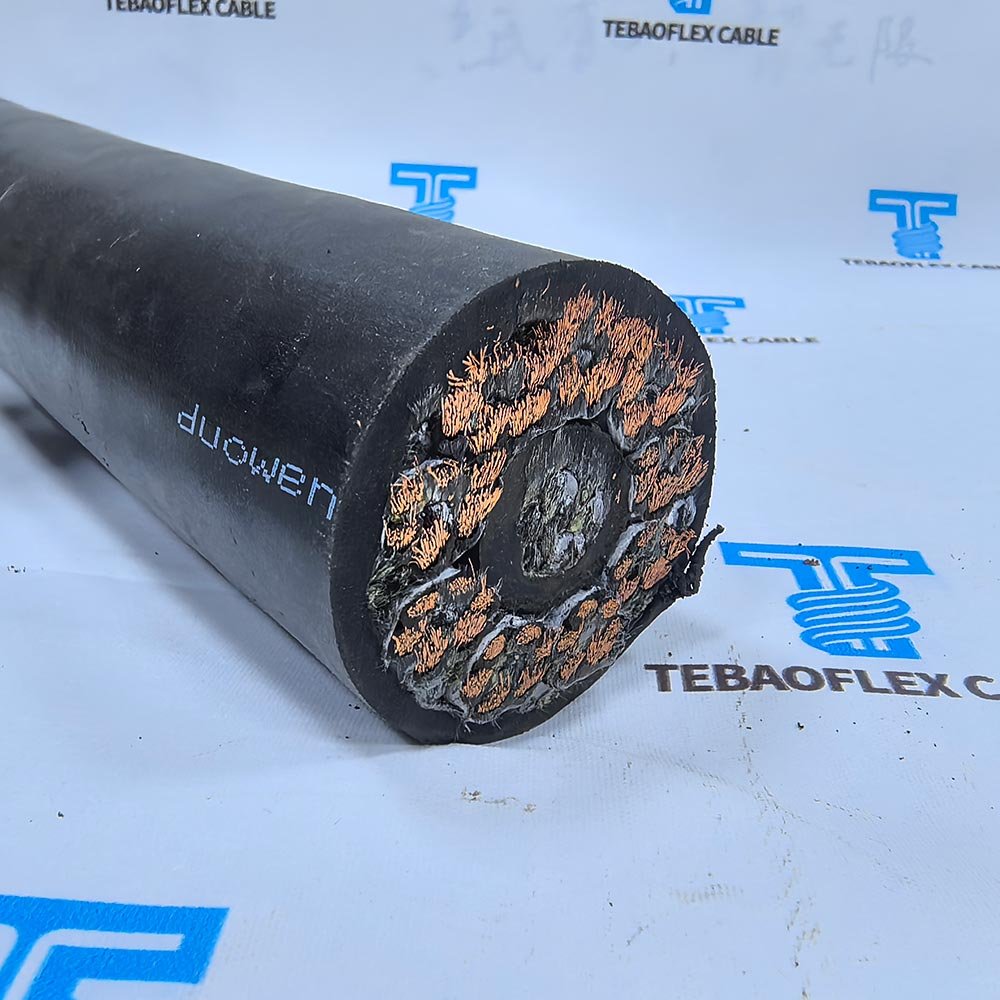
03 / SPREADER BASKET
Free-Coiling Cable for STS Spreader Systems
A spreader basket cable hangs vertically from the trolley and coils into a collector basket as the spreader rises. Cable weight, free-coiling behaviour, lifting speed, hanging length, tensile load and the integration of power, control or data functions are primary inputs.
View spreader basket cable →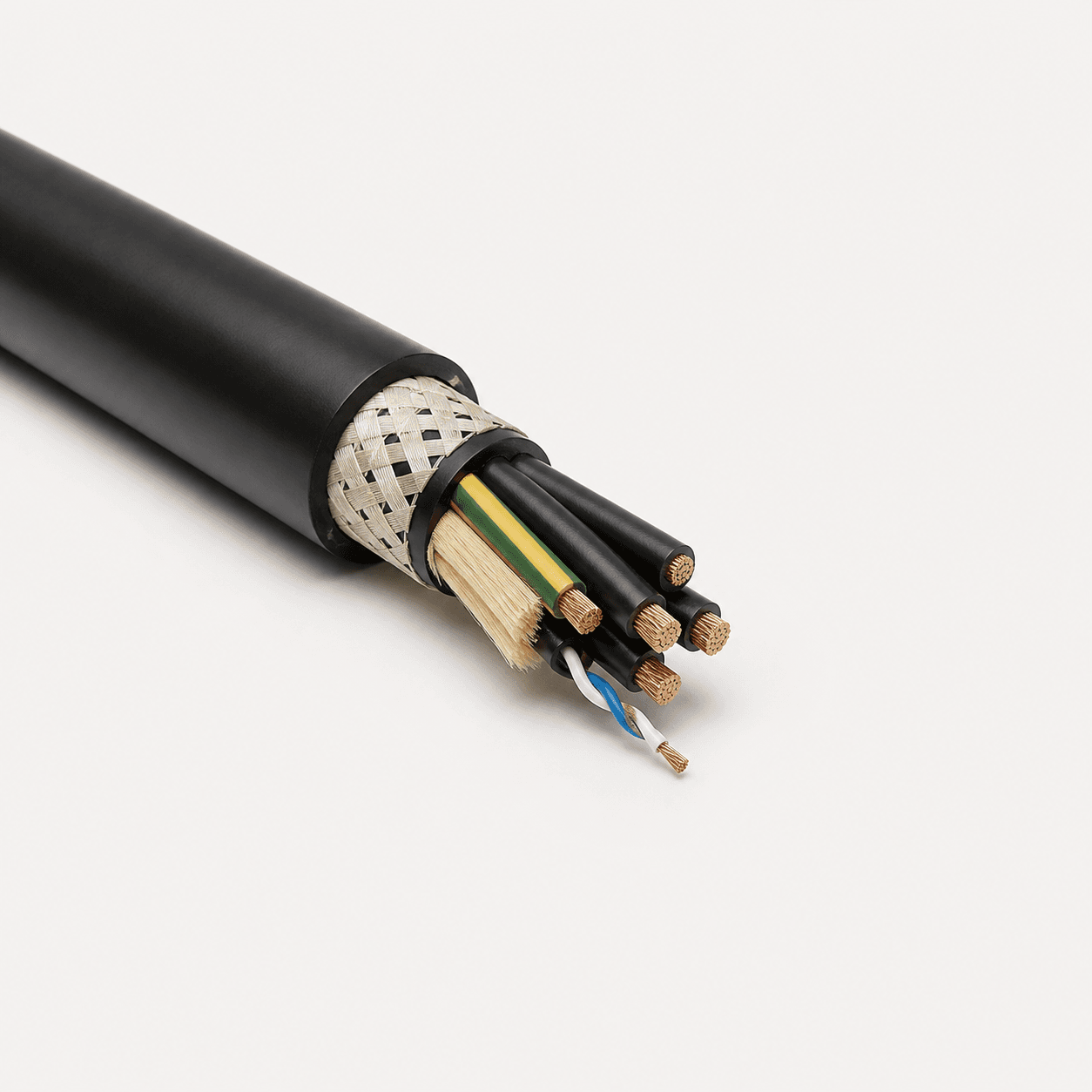
04 / VERTICAL REELING
Supported Construction for Hoist and Vertical Travel
Vertical movement can combine repeated bending with the cable's own suspended weight. The required support or reinforcement, reel path, lifting height, speed and sheath material should be reviewed for mobile harbour cranes, hoists and selected spreader arrangements.
View (N)SHT11Y →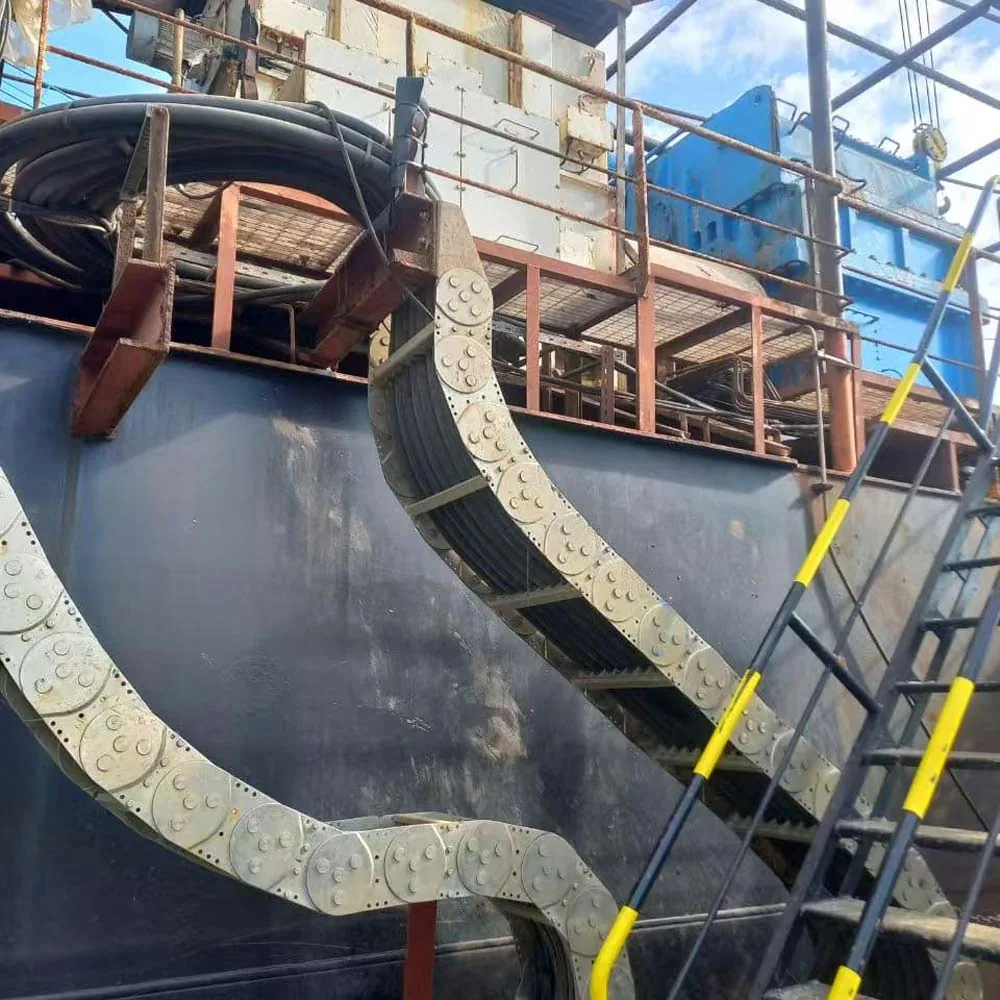
05 / CABLE CHAIN
Controlled Routing for Compact Machine Travel
Cable chains guide power, control and data cables through a defined bend radius during trolley, boom or horizontal machine travel. The cable must suit repeated bending, acceleration, installation space, chain dimensions and the required electromagnetic compatibility.
Discuss a chain-cable requirement →
Application matrix
Port Crane Cable Application Guide
Use this matrix to identify a likely cable family before the exact construction, conductor arrangement and documents are confirmed.
| Equipment / Position | Movement | Main Requirement | Typical Cable Solution |
|---|---|---|---|
| STS gantry travel | Drum reeling | Long travel, tensile load, outdoor exposure | LV or MV reeling cable |
| STS trolley | Festoon or chain | High speed and repeated bending | Flat/round festoon or chain cable |
| STS spreader | Basket or vertical | Hanging load and high-speed lifting | Spreader basket cable |
| RTG gantry | Drum reeling | Frequent travel and reel duty | RTG multicore reeling cable |
| RMG trolley | Festoon | Repeated horizontal travel | Flat or round festoon cable |
| Mobile harbour crane | Vertical reeling | Tensile load and vertical movement | Reinforced vertical reeling cable |
| Ship loader | Drum reeling | Long travel and higher power demand | Medium-voltage reeling cable |
| Ship unloader | Reeling or festoon | Dynamic boom and travel movement | Reeling or festoon cable |
| Stacker-reclaimer | MV reeling | Long travel and exposed operation | Medium-voltage reeling cable |
Engineering context
Why Motion Data Changes the Cable Construction
Two cranes with the same voltage and conductor size can require different cables when their movement systems are different. A multi-layer reel introduces repeated winding pressure and changing tensile forces as the effective drum diameter changes. A monospiral reel lays the cable in a controlled single layer but still requires the minimum bend radius, speed and pull to match the cable. A festoon system distributes the cable into suspended loops, so cable weight, loop depth, trolley spacing and acceleration influence the mechanical duty.
Vertical systems introduce another set of variables. The cable may carry more of its own weight as lifting height increases, while fast spreader movement adds dynamic load. Reinforcement, conductor flexibility, core lay, central support and sheath material must therefore be reviewed as part of the whole system. This is why TEBAOFLEX asks for movement and geometry data before treating an existing cable marking as a complete replacement specification.
System-level selection
Cable Positions Across Container and Bulk Terminals
Selection becomes more accurate when each moving cable position is mapped separately instead of assigning one cable type to the entire crane.
STS Crane Cable Solutions
An STS crane can combine several motion systems on one machine. Gantry travel may use a reeling cable, trolley travel may use festoon or chain routing, and the spreader may require a basket or vertical cable. Power, control and fibre-optic communication can also be integrated where the confirmed design requires it.
Gantry: LV/MV reeling cable
Trolley: festoon or chain cable
Spreader: basket or vertical cable
Automation: power, control, signal and fibre
RTG & RMG Systems
RTG duty often centres on motor-driven reel or multicore baloney cable arrangements with frequent start-stop movement. RMG systems can use reels, festoons or guided chains depending on the trolley and gantry design.
View 2PNCT-H-U RTG cable →Bulk Port Handling Equipment
Ship loaders, unloaders, stacker-reclaimers, conveyors and grab unloaders may require long-travel medium-voltage reeling cables, flexible boom connections or festoon systems for exposed material-handling duty.
Review a bulk terminal application →
Representative products
Recommended TEBAOFLEX Port Cable Solutions
These representative cable families provide practical starting points. The final model, voltage, core arrangement, reinforcement and sheath should be confirmed against the crane position and operating data.
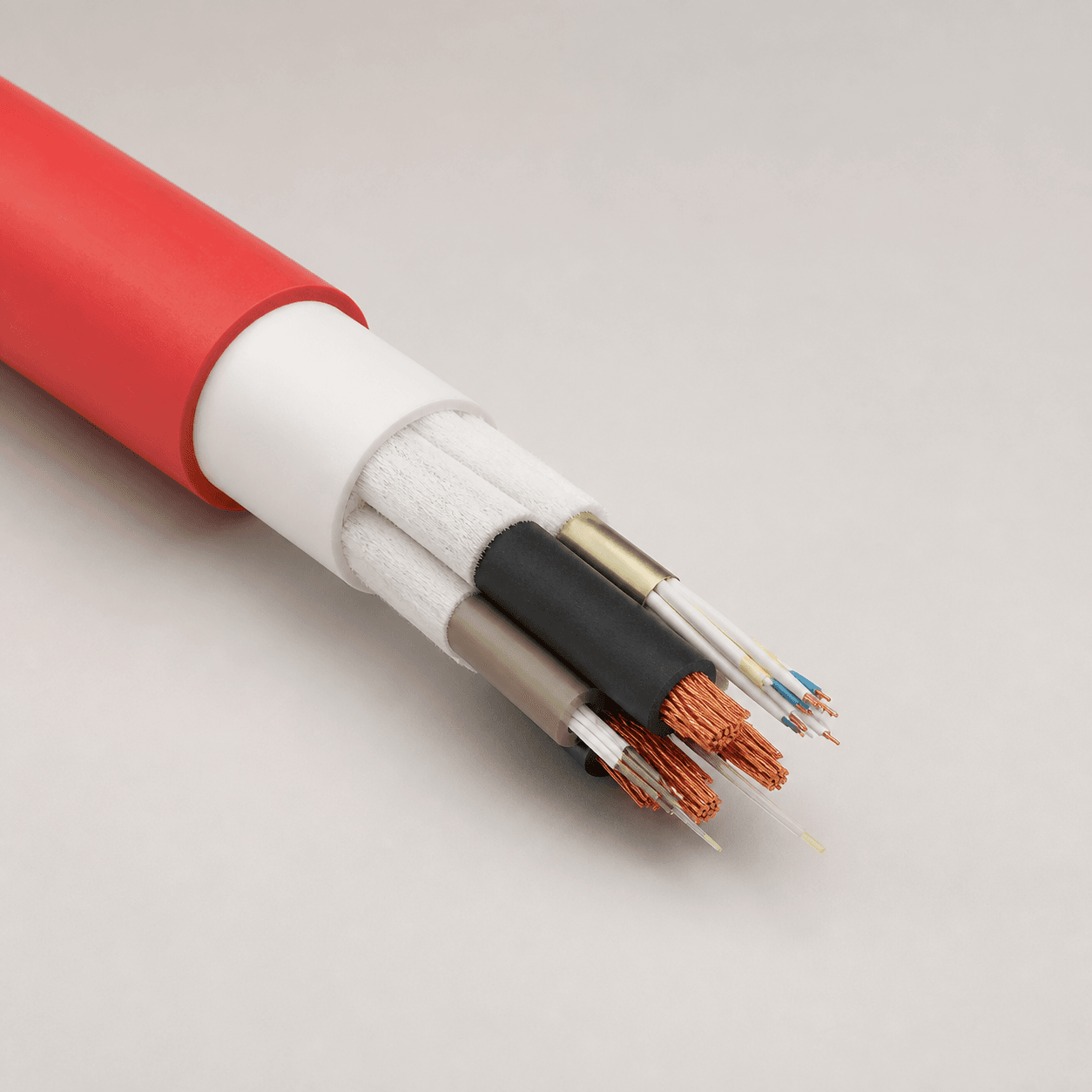
MV reeling + fibre
(N)TSCGEWOEU LWL WR
For reel-fed power and communication functions on suitable crane and material-handling systems.
View product →
Vertical reeling
(N)SHT11Y
Reinforced PUR cable for suitable vertical reeling, hoist and mobile harbour crane duties.
View product →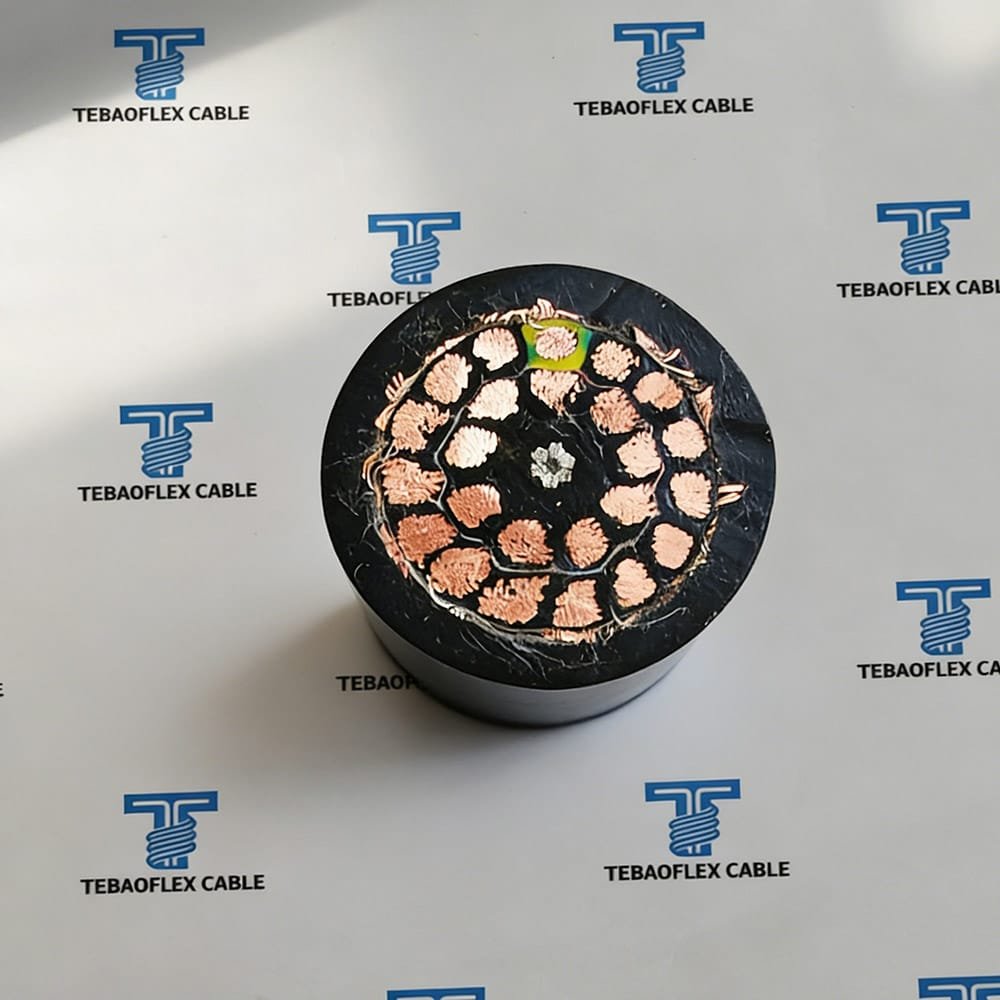
RTG reel duty
2PNCT-H-U
Multicore rubber reeling cable for confirmed RTG reel and baloney cable arrangements.
View product →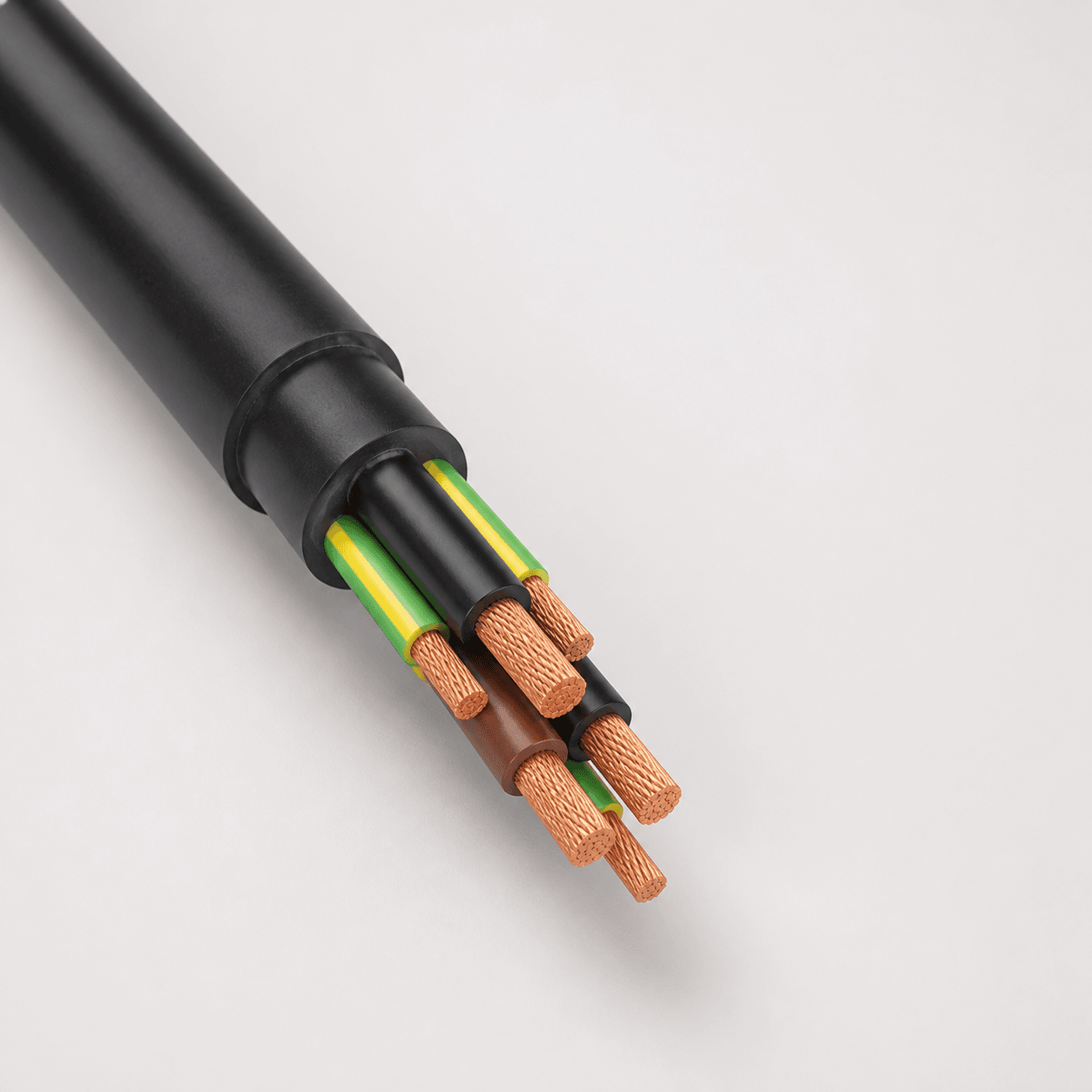
Round festoon
(N)GRDGÖU
Round rubber cable for suitable festoon trolleys, travelling cranes and material-handling routes.
View product →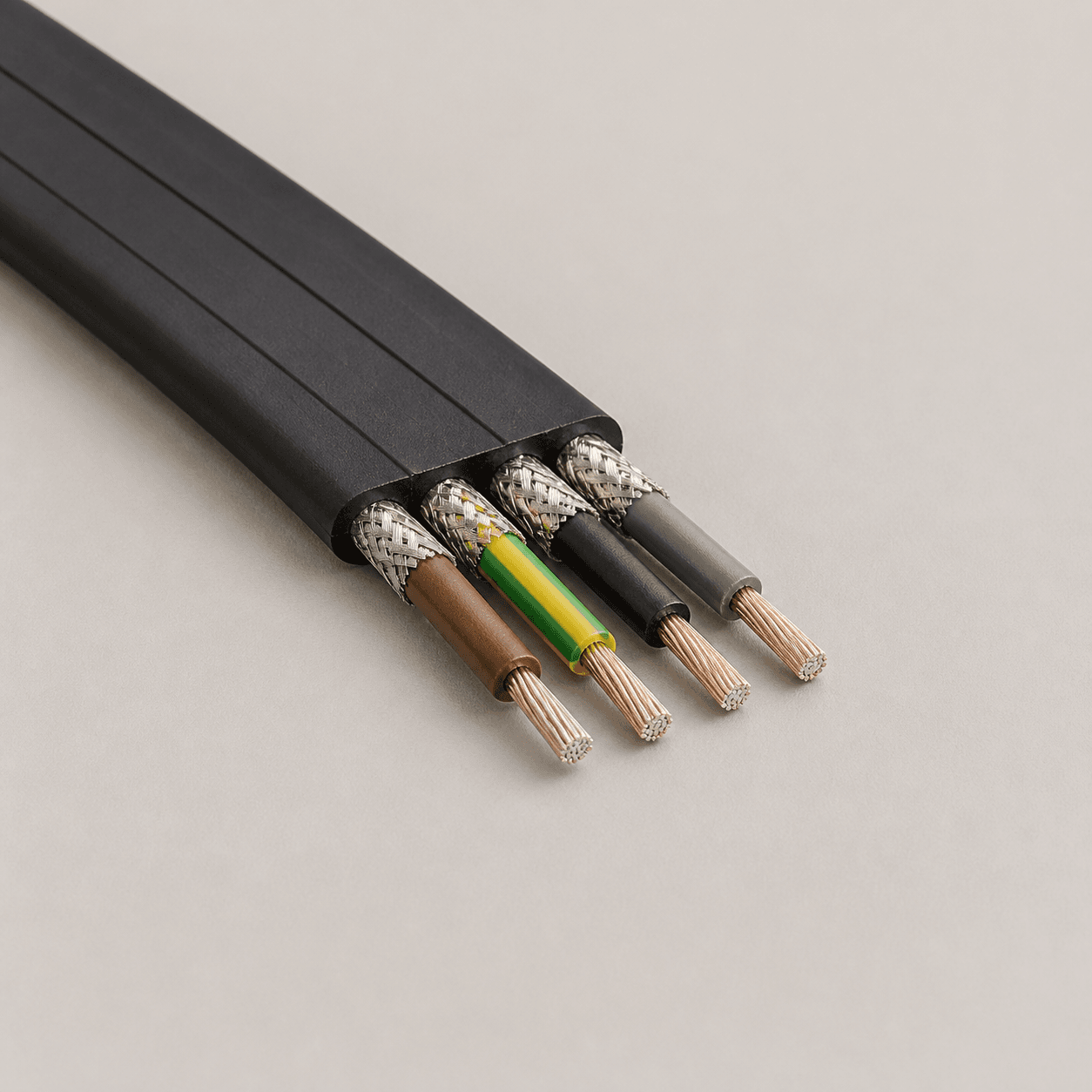
Screened flat festoon
(N)GFLCGÖU
Flat screened construction for applicable crane, conveyor and festoon cable systems.
View product →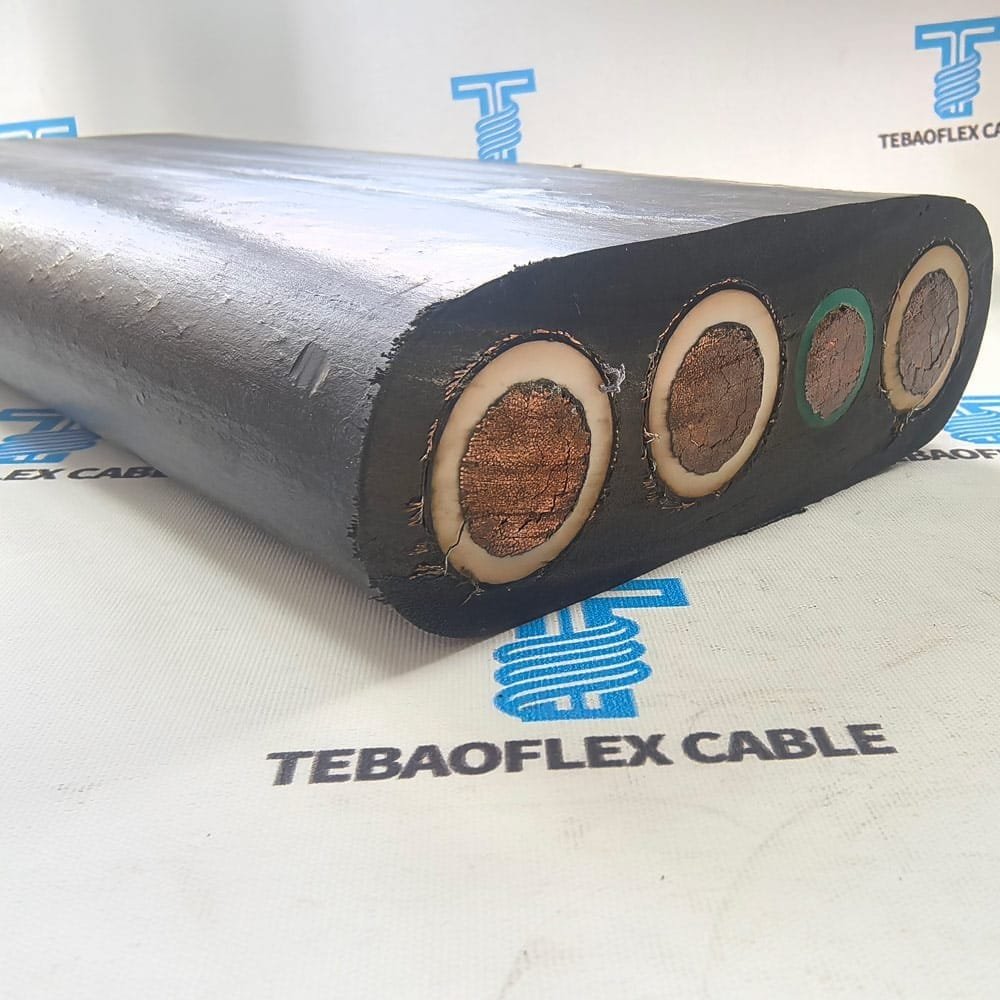
Flat rubber cable
Flat PNCT
Flexible flat cable for suitable port crane, container handler and material-handling routes.
View product →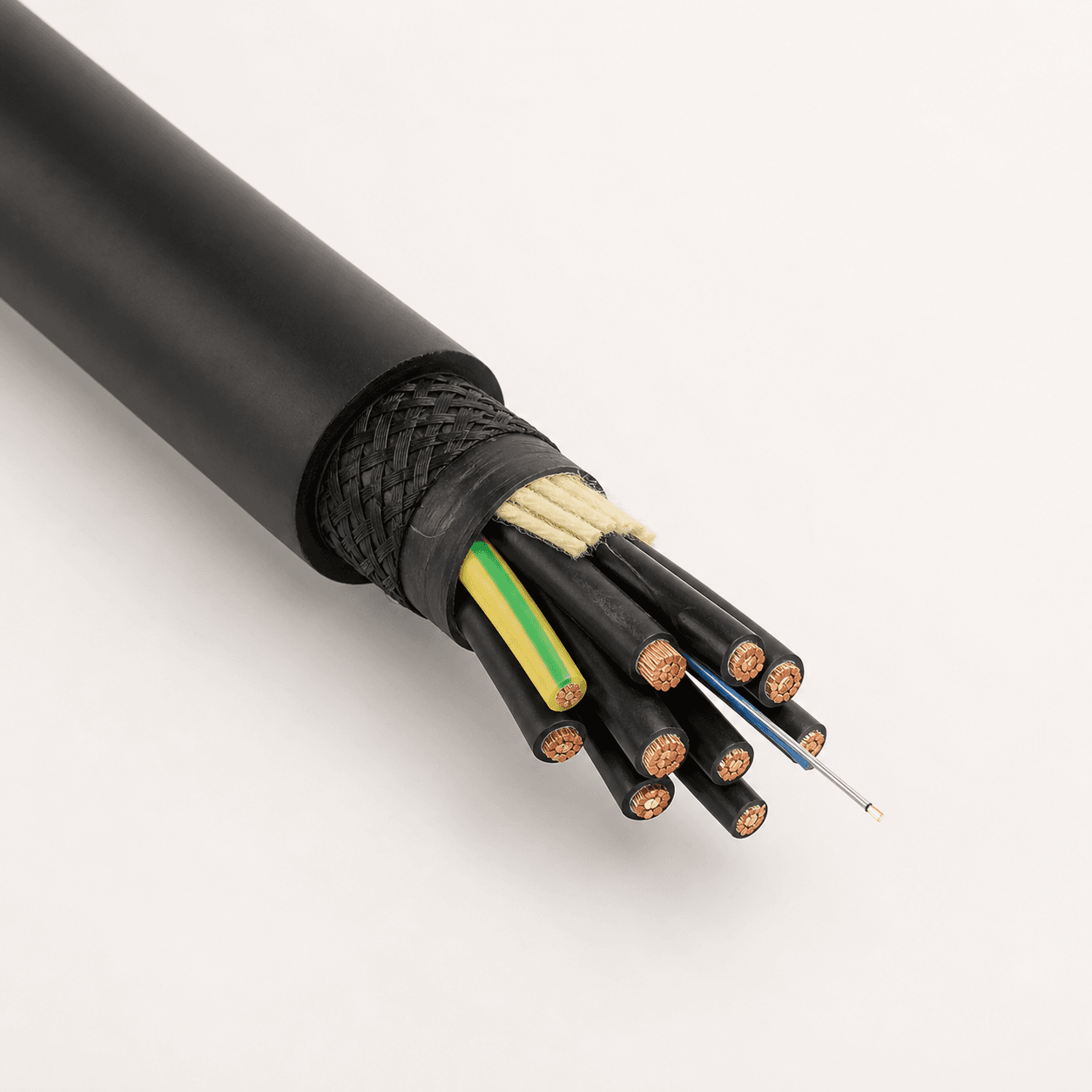
Spreader + fibre
SYSLTOE-J FO
Combined power and fibre-optic functions for confirmed spreader basket system requirements.
View product →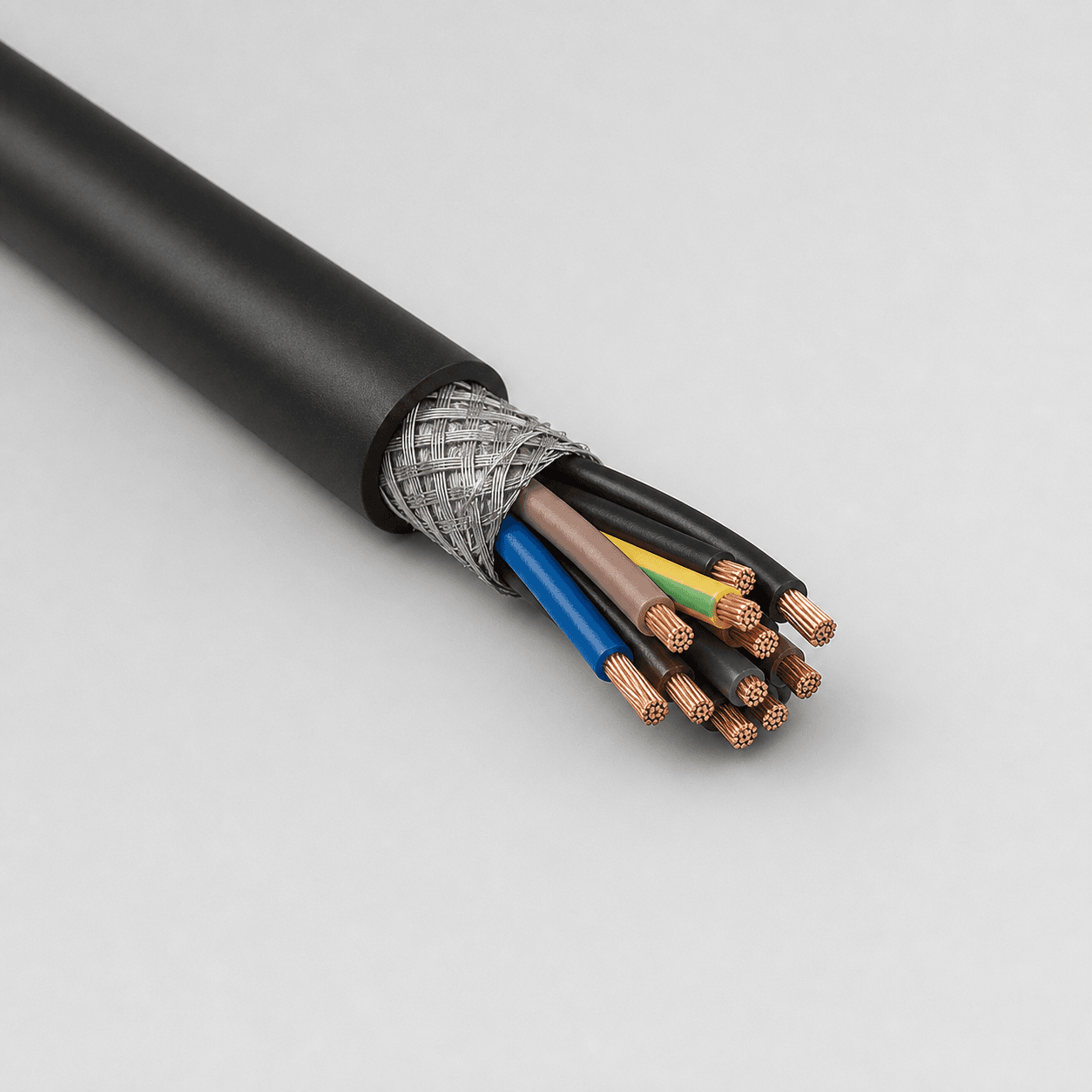
Screened PUR
(N)12YRDC11Y-J/O
Flexible screened PUR construction for selected festoon and drag-chain installations.
View product →
Operating stresses
What Port Crane Cables Must Withstand
Crane cables operate under repeated movement, guide contact and exposed terminal conditions. Each claim must be confirmed for the selected cable construction and operating limits.
Repeated Reeling & Flexing
Frequent winding, unwinding and bend cycles.
Tensile & Vertical Load
Cable weight, hanging length and lifting duty.
Torsional Stress
Twisting caused by motion, routing or handling.
Abrasion & Wear
Contact with guides, rollers, drums and structures.
Moisture & Salt Air
Outdoor port exposure and marine atmosphere.
UV & Weather
Sunlight, rain and changing outdoor conditions.
Movement comparison
Reeling vs Festoon vs Spreader Basket
These systems store and move the cable differently. Substituting one construction for another without reviewing the motion can shorten service life or create installation problems.
Use the comparison as an initial guide, then confirm reel geometry, loop arrangement, lifting height and mechanical load with the crane data.
| Factor | Reeling | Festoon | Basket |
|---|---|---|---|
| Cable storage | Drum | Hanging loops | Collector basket |
| Main movement | Wind / unwind | Horizontal travel | Vertical lift |
| Main stress | Bending + tension | Repeated loop bending | Tensile + flex |
| Typical equipment | STS, RTG, ship loader | Trolley, RMG | STS spreader |
| Typical cable family | Reeling cable | Flat/round festoon | Spreader cable |
Eight-step review
How to Select a Cable for Port Crane Equipment
The conductor size is only one input. Provide enough motion-system data for the cable, reel or festoon route and electrical functions to be reviewed together.
STS, RTG, RMG, harbour crane, loader or unloader.
Gantry, trolley, boom, hoist, spreader or feeder.
Reeling, festoon, basket, vertical or chain.
Power, control, signal, screening and fibre.
Distance, cycle rate, acceleration and direction.
Diameter, layers, rollers, bends and route layout.
Temperature, salt air, UV, water, oil and abrasion.
Standard, drawing, test report and packing needs.
Project-specific construction
Custom Cable Engineering for Port Crane Systems
After the duty and required functions are confirmed, the cable construction can be reviewed around the electrical layout, motion, reinforcement, screening and outer-sheath requirements.
Power + Control Cores
Core count and conductor size can be reviewed around the machine's electrical functions.
Signal Pairs
Control and signal arrangements can be separated or screened where the design requires it.
Fibre Optics
Fibre elements can support data and automation functions in suitable composite cables.
Tensile Reinforcement
Support and anti-torsion elements are reviewed against hanging and pulling loads.
Screening / EMC
Overall or individual screens may be considered for VFD, signal and EMC requirements.
Rubber / PUR Sheath
Sheath selection should reflect flexing, abrasion, weather and installation conditions.
Project documentation
Engineering Documents for Port Crane Projects
Documentation and applicable standards are confirmed according to the selected cable construction and project specification. Availability must be checked for the exact model rather than assumed across the whole range.
Review certification and testing support →Technical Datasheet
Cable Construction Drawing
Routine Test Report
Inspection Record
Drum & Packing Information
Compliance Documentation
Technical resources
Port Crane Cable Technical Resources
Use these guides to move from an application overview to the installation and selection details needed for an enquiry.
Port Crane Reeling Cable Selection Guide
Review drum, guide, route, travel and electrical inputs for reel-fed equipment.
Read guide →How to Choose a Reeling Cable
Understand the project information needed before matching a cable to the reel system.
Read guide →Port Crane Spreader Basket Cable Guide
Explore vertical hanging, collector-basket and combined-function cable requirements.
Read guide →H07RN-F Cable Applications
See where general rubber power cable may be considered and where specialised motion cables are needed.
Read guide →
Buyer & engineer questions
Port Crane Cable FAQ
What cable is used for STS container cranes?
An STS crane may use different cables at different positions: reeling cable for gantry travel, festoon or chain cable for trolley movement, and spreader basket or vertical cable for the spreader. Voltage, movement and machine data are needed before selecting the exact construction.
What is the difference between reeling and festoon cable?
A reeling cable winds onto a drum and experiences bending plus tensile forces. A festoon cable hangs in loops from trolleys and repeatedly bends as the trolley travels horizontally. Their mechanical duty and cable constructions are not interchangeable by default.
Which cable is suitable for an RTG crane?
Many RTG systems use multicore rubber or PUR reeling cables on motor-driven reels or baloney arrangements. The exact cable depends on voltage, core count, reel design, travel speed, route and environmental exposure.
What cable is used between an STS crane and its spreader?
A spreader basket cable or another confirmed vertical-lifting construction may be used. Cable weight, hanging length, lift speed, free-coiling behaviour, tensile load and required power, control or fibre functions should be reviewed.
When is a medium-voltage reeling cable required?
Medium-voltage reeling cables are considered when the mobile equipment's power system and project specification require MV supply, often for higher-power ship loaders, unloaders, stacker-reclaimers and selected container cranes. Voltage and applicable standards must be confirmed for the project.
Can power, control and fibre optics be combined in one crane cable?
Yes, suitable project-specific constructions can integrate power conductors, control cores and fibre-optic elements. The internal layout, screening, reinforcement and motion duty must be confirmed before manufacture.
What information is required to select a crane reeling cable?
Provide crane type, cable position, voltage, conductor and core requirements, travel distance, speed, acceleration, reel diameter, winding layers, guide arrangement, bending radius, cable length, environment, standard, quantity and any existing drawing or cable marking.
Can TEBAOFLEX review a cable for an existing crane reel system?
Yes. Submit the existing cable data, reel and guide dimensions, travel information, electrical requirements and operating environment. The team can review a suitable starting construction and identify details that still require confirmation.
Project enquiry
Request a Port Crane Cable Recommendation
Send the crane position, movement system, electrical functions and reel or travel data. TEBAOFLEX will use the confirmed information to review a relevant cable construction for your project.
Send Crane Application Details →
Crane type
Cable position
Movement system
Voltage & conductor size
Cable length
Travel distance & speed
Reel diameter & layers
Bending radius
Power / control / fibre
Outdoor environment
Required standard
Quantity & destination