
High-temperature cable selection starts by separating the circuit function. An ignition lead near a burner or flare system, an unshielded automotive power connection and a shielded EV powertrain cable can all face heat, yet their voltage, current, electromagnetic-compatibility and installation requirements are fundamentally different.
Start with the circuit—not the temperature label
A high-temperature rating does not make cables interchangeable. Ignition systems can require a single-core, high-voltage construction that withstands the documented thermal and routing conditions. Powertrain systems can require flexible power conductors sized for current and voltage, with shielding only where the vehicle electrical architecture requires electromagnetic compatibility.
First define the circuit: ignition, battery-to-inverter, inverter-to-motor, auxiliary power or another function. Then confirm the applicable voltage, continuous and peak current, conductor size, required temperature condition, route, bend profile, exposure and any shielding termination requirement.
Compare the published constructions by application
| Selection point | 25 kV igniter wire | FHL2G automotive powertrain cable | FHLR2GCB2G EV powertrain cable |
|---|---|---|---|
| Listed system role | Industrial ignition circuits near burners, flare systems and process equipment | Unshielded automotive electric powertrain wiring and high-current connections | Shielded high-voltage cable for electric and hybrid vehicle powertrains |
| Listed voltage | 25 kV DC / 17 kV AC | 0.6/1 kV | Up to 600 V AC / 1000 V DC |
| Listed temperature condition | Maximum conductor temperature 538°C / 1,000°F | −40°C to +180°C for 3,000 hours; short-term ageing to +205°C for 240 hours | −40°C to +180°C operating range |
| Conductor | Nickel-plated copper, listed 18 AWG single core | Class 6 fine flexible stranded copper | Extra-flexible bare copper strands |
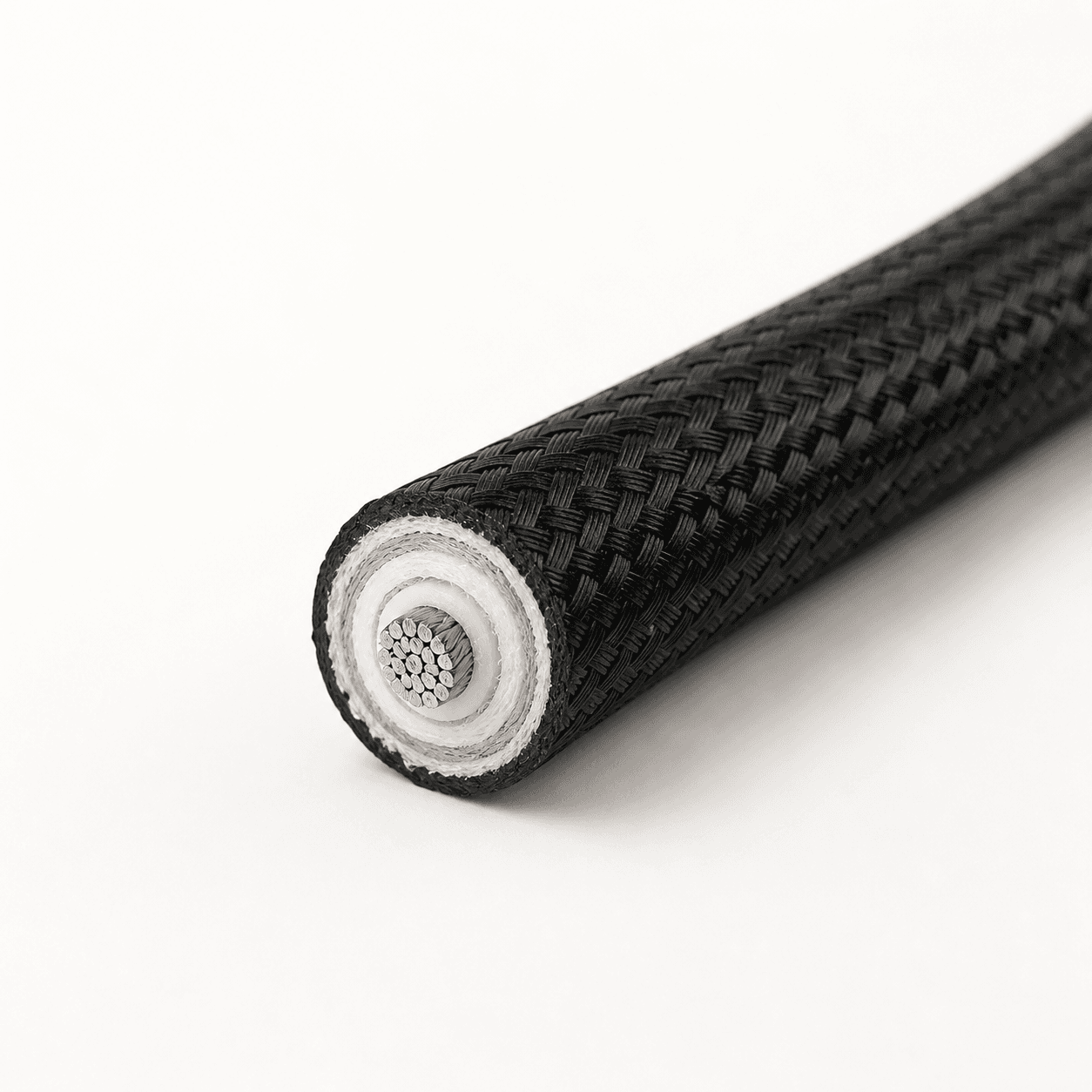
| Insulation / outer construction | Multilayer mica tape, PTFE moisture barrier and fluoropolymer-coated fibreglass braid | SiR silicone rubber insulation and orange silicone sheath | Silicone rubber insulation and silicone outer sheath, typically orange |
| Shielding | Not listed as an EMC-screened powertrain construction | Unshielded | Aluminium/PET foil plus tinned copper braid screen |
| Listed bend reference | Static 6 × overall diameter; dynamic 8 × overall diameter | Static 2 × overall diameter; dynamic 4 × overall diameter | Confirm for the requested vehicle construction and route |
Ignition cables: prioritise the complete high-voltage construction
The TEBAOFLEX 25kV High-Temperature Igniter Wire with Fibreglass Jacket is a listed single-core construction for ignition circuits operating near burners, flare systems and process equipment. Its published design combines a nickel-plated copper conductor, multilayer mica tape, a PTFE moisture barrier and a fluoropolymer-coated fibreglass braid. The listed voltage and 538°C maximum conductor-temperature rating apply to this specified construction.
For an ignition RFQ, supply the AC or DC ignition voltage, conductor size, route length, maximum conductor-temperature requirement, local ambient and hot-spot conditions, bend points, vibration, chemical exposure and required documentation. A high-current automotive silicone cable should not be substituted into an ignition circuit merely because it has a high-temperature rating.
Powertrain cables: match current, voltage and EMC needs
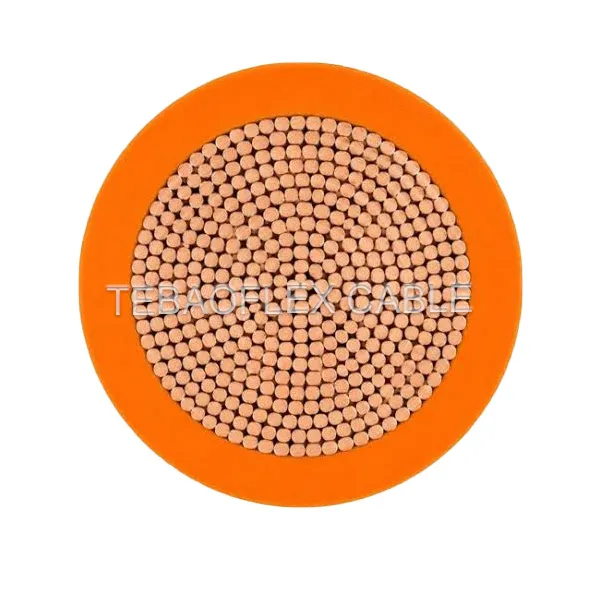
The FHL2G Silicone Cable is listed as an unshielded 0.6/1 kV automotive powertrain cable with Class 6 fine flexible stranded copper and SiR silicone rubber insulation. Published examples include 35 mm² and 50 mm² single-core options. The final cross-section must be selected against the actual current, ambient condition, route and vehicle-platform requirement—not from a temperature rating alone.
Where the system requires a shielded high-voltage construction, the FHLR2GCB2G Silicone Cable for EV Powertrain provides a different listed architecture: extra-flexible bare copper, silicone insulation, aluminium/PET foil and a tinned copper braid screen. Its published voltage capability is up to 600 V AC / 1000 V DC. Shielding must be selected with the applicable EMC and termination design; it is not simply an upgrade to add after the cable is chosen.
Temperature is a system measurement
Record the relevant temperatures separately: conductor temperature, local ambient, radiant heat, hot-surface proximity, thermal cycling and the temperature at clamps, connectors and transitions. A product’s maximum conductor-temperature value is not automatically the allowable temperature of every component in the installed assembly.
Then evaluate the route: static or dynamic bends, vibration, edge contact, abrasion, fluids, chemicals, moisture and service access. For powertrain applications, also document the shielding termination and bonding method required by the platform design. For ignition applications, document the high-voltage interface and all required clearances according to the approved equipment design.
RFQ checklist for high-temperature cable
- Circuit function: ignition, battery, inverter, motor, auxiliary or another approved connection.
- Electrical requirements: AC/DC voltage, continuous and peak current, conductor size, length and voltage-drop requirement.
- Thermal duty: conductor-temperature target, ambient range, hot spots, thermal cycling and duration.
- Construction needs: single or multicore, copper type, insulation, jacket, protective conductor and any screen.
- EMC and interfaces: shielding requirement, termination design, connector, backshell and grounding/bonding documentation.
- Mechanical route: bend points, static or dynamic movement, vibration, clamps, abrasion and pull conditions.
- Environment and approvals: fluids, chemicals, weather, relevant standards, test requirements and final platform documentation.
Explore the TEBAOFLEX High-Temp & Specialty Cable range and review cable certifications, test reports and laboratory support when preparing the technical package.
Frequently asked questions
Can an ignition wire be used as a powertrain cable?
Not automatically. The listed igniter wire is a single-core, high-voltage ignition construction, while powertrain cables must match the actual current, voltage, flexibility and, where required, EMC design.
When is shielding needed for a powertrain cable?
Use shielding when the vehicle or equipment electrical architecture requires it. Specify the required screen and termination method; do not assume that every high-temperature power cable needs the same EMC construction.
Does the highest temperature rating identify the best cable?
No. The correct cable must match the full circuit, temperature condition, route, connector and mechanical duty. A rating applies only to the documented construction and test conditions.
What information should be sent for a quotation?
Provide circuit function, voltage, current, conductor size, length, temperature profile, route, movement, shielding/termination needs, connectors and required documentation.
Request a high-temperature cable review
Send TEBAOFLEX your high-temperature cable requirements. We can review the ignition or powertrain construction request against the stated electrical, thermal, EMC and installation conditions before quotation.