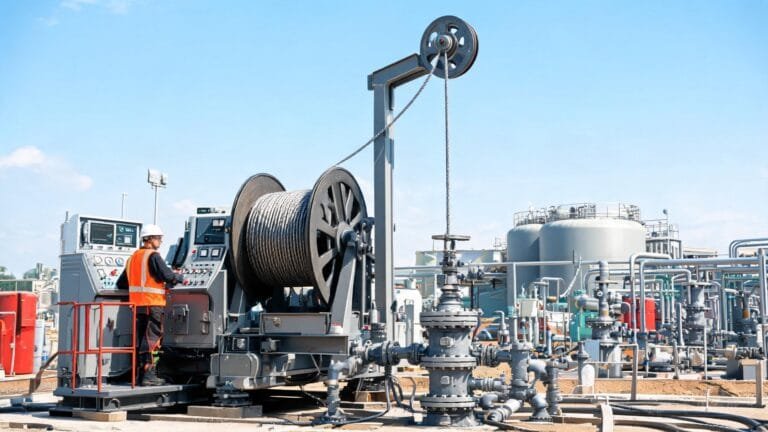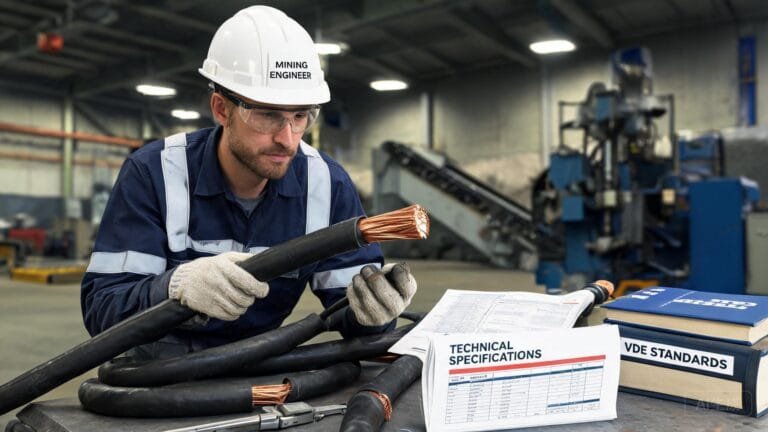

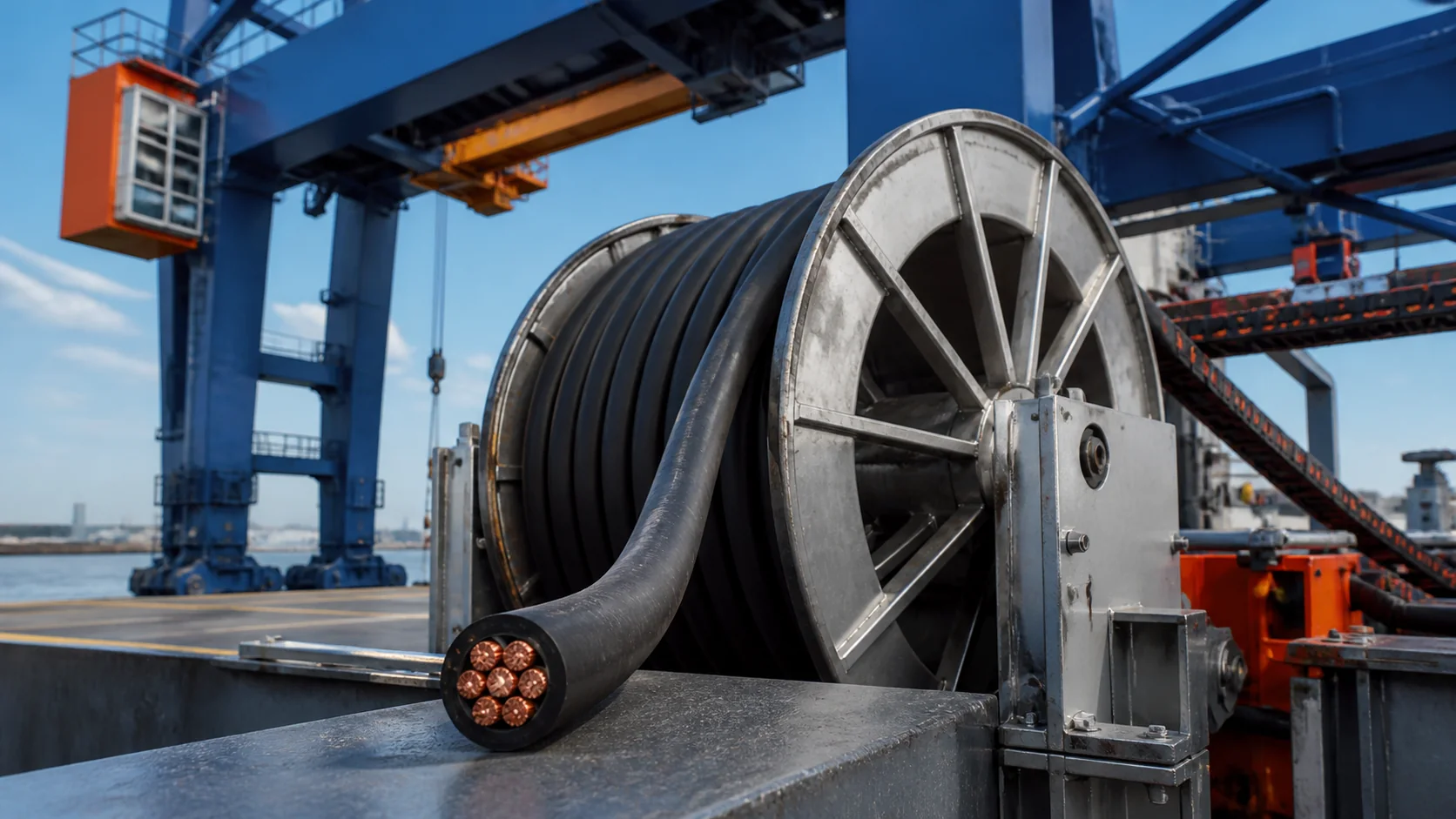
RP/RP-D and GMP are both 0.6/1 kV PUR reeling-cable families for cable drums, but they are not selected by jacket material alone. Compare the required movement, speed, dynamic load, core schedule, control or data functions and drum geometry before choosing a construction.
Where RP/RP-D and GMP overlap
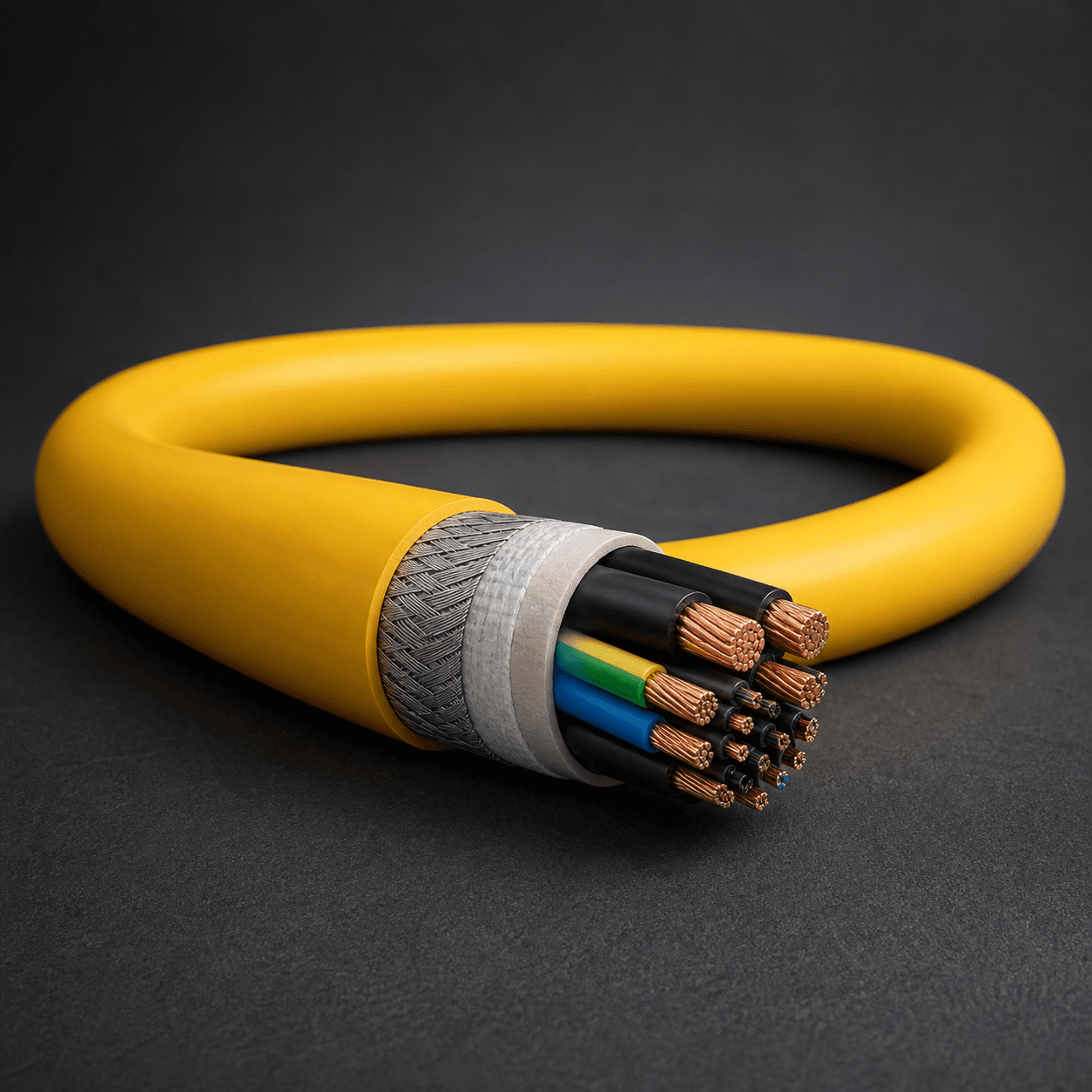
Both the RP / RP-D PUR Reeling Cable and the GMP PUR Reeling Cable are listed as flexible, round 0.6/1 kV solutions for spring-operated or motor-driven cable drums in dry, humid and outdoor industrial environments. Both use polyurethane sheath systems and are described as halogen-free, with resistance to ozone, oil, UV exposure and moisture.
The shared voltage rating does not mean the two families are interchangeable. The deciding inputs are the required conductor schedule, dynamic duty, speed, bending arrangement and any control or data requirement.
RP/RP-D vs GMP: verified selection points
| Selection point | RP / RP-D | GMP |
|---|---|---|
| Listed reeling duty | Continuous standard-duty reeling on random-winding and monospiral drums | Standard-duty reeling systems with small dynamic loads |
| Configuration role | RP: power and control; RP-D: control/data and combined power/control configurations | Flexible power and control cable |
| Listed maximum horizontal travel speed | Up to 80 m/min | Up to 60 m/min |
| Flexible-use ambient temperature | −20°C to +70°C | −25°C to +60°C |
| Listed maximum conductor temperature | +90°C | +80°C |
| Listed continuous-reeling bend radius | 8 × outer diameter; 6 × outer diameter on request | 6 × D on spool; 4 × D on anti-tension drum; 9 × D on guiding device |
| Pulley-system use | Confirm the exact project configuration | Not recommended on the published product page |
| Outer-sheath colour | Yellow as standard; other colours on request | Black |
Choose RP or RP-D when the core schedule drives the decision
RP is the listed compact power and control configuration for horizontal-moving machinery and drum systems. RP-D is the listed option for control/data and combined power/control constructions. If the equipment needs additional control, data or communication elements, provide the full core schedule and interface requirements rather than assuming an extra element is available in every RP construction.
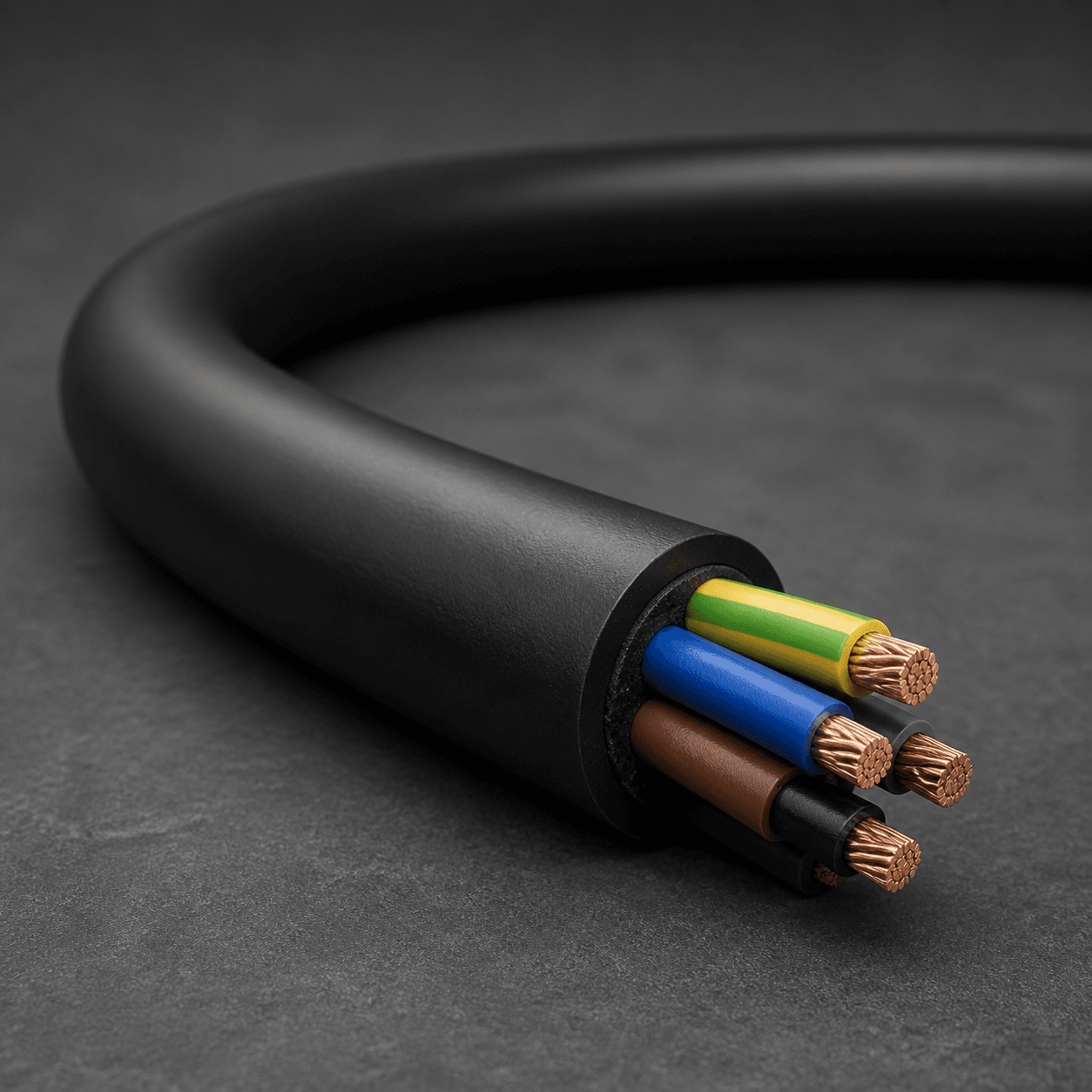
The published RP/RP-D family uses plain flexible copper conductors, Class 5 or 6 to IEC 60228; XLPE or semocore insulation on a polyester base; and an abrasion-resistant polyurethane outer sheath. The listing also notes anti-torsion reinforcement where required by the construction. For continuous reeling, use the stated minimum bend radius and give the drum layout and changes of direction for review.
Choose GMP for its stated standard-duty envelope
GMP is listed as a flexible round power and control cable for standard-duty reeling systems with small dynamic loads. Its published construction includes Class 5 flexible copper, special polypropylene insulation, special polyurethane inner and outer sheaths, and a polypropylene-reinforced filler. The product page explicitly says that GMP is not recommended for pulley systems.
This makes route definition essential: a spool, anti-tension drum and guiding device have different listed bend-radius values. Provide the actual winding arrangement rather than selecting solely from an overall cable diameter or a generic “reeling” description.
RFQ checklist for PUR drum cable
- Core schedule: power, protective conductor, control, data and communications requirements.
- Drum type: random winding, monospiral, spool, anti-tension drum or guiding-device arrangement.
- Movement: horizontal travel speed, acceleration, cycle frequency, travel length and expected dynamic load.
- Route: drum diameter, bend points, changes of direction, clamps and any pulley contact.
- Environment: temperature, moisture, oil, UV, ozone, abrasion and whether water immersion is possible.
- Electrical duty: 0.6/1 kV rating, load, conductor size and voltage-drop requirement.
Important application limits
The published RP/RP-D family is not intended for use in water. GMP is not recommended for pulley systems. These statements should be reviewed alongside the actual installation method and operating environment. Do not use the general PUR sheath description as approval for an unlisted duty or exposure.
For a higher-voltage rubber reeling solution, see the WG / WG-D Medium Voltage Rubber Reeling Cable. For cable documentation support, review TEBAOFLEX cable certifications, test reports and laboratory support.
Frequently asked questions
What is the difference between RP and RP-D?
RP is listed for compact power and control constructions. RP-D is listed for control/data and combined power/control configurations. Supply the required core schedule for the final selection.
Is GMP suitable for every cable-drum application?
No. GMP is listed for standard-duty systems with small dynamic loads and is not recommended for pulley systems. Confirm the drum arrangement and duty before selection.
Which family has the higher listed travel speed?
The published RP/RP-D maximum horizontal travel speed is up to 80 m/min, compared with up to 60 m/min for GMP. Confirm that the requested construction suits the complete motion profile.
Can these cables be used in water?
The published RP/RP-D page says the family is not intended for use in water. Submit any water-exposure requirement for a separate technical review.
Request an RP/RP-D or GMP review
Send TEBAOFLEX your PUR reeling-cable requirements, including drum type, speed, core schedule, length, route and environment. We can help match the requested RP/RP-D or GMP configuration to the equipment duty before quotation.