
Introduction to PVC and Rubber Cable Insulation
Two of the most common insulation and sheath materials in industrial cabling are PVC (Polyvinyl Chloride) and rubber compounds (including EPR, CSM, CR, and PUR). Each material has distinct properties that make it suitable for different applications. Understanding these differences is essential for selecting the right cable for your industrial environment, ensuring both performance and cost-effectiveness.
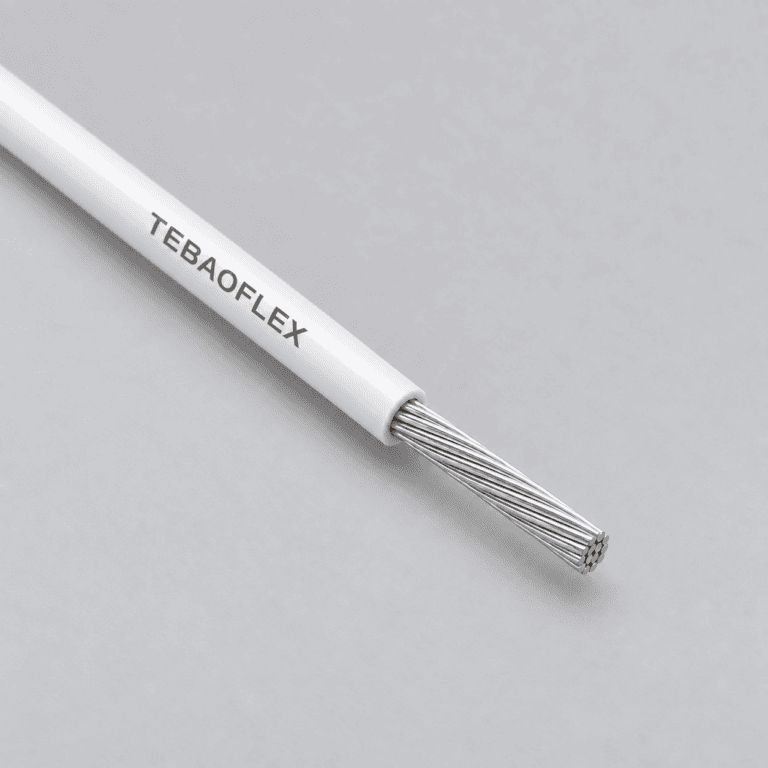
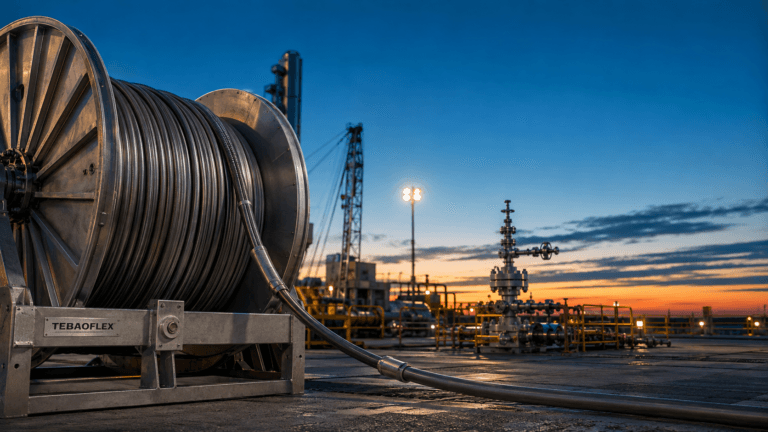
TEBAOFLEX manufactures both PVC and rubber insulated cables across our product range. This guide provides a comprehensive technical comparison to help engineers and procurement professionals make informed cable selection decisions.
What Is PVC Insulated Cable?
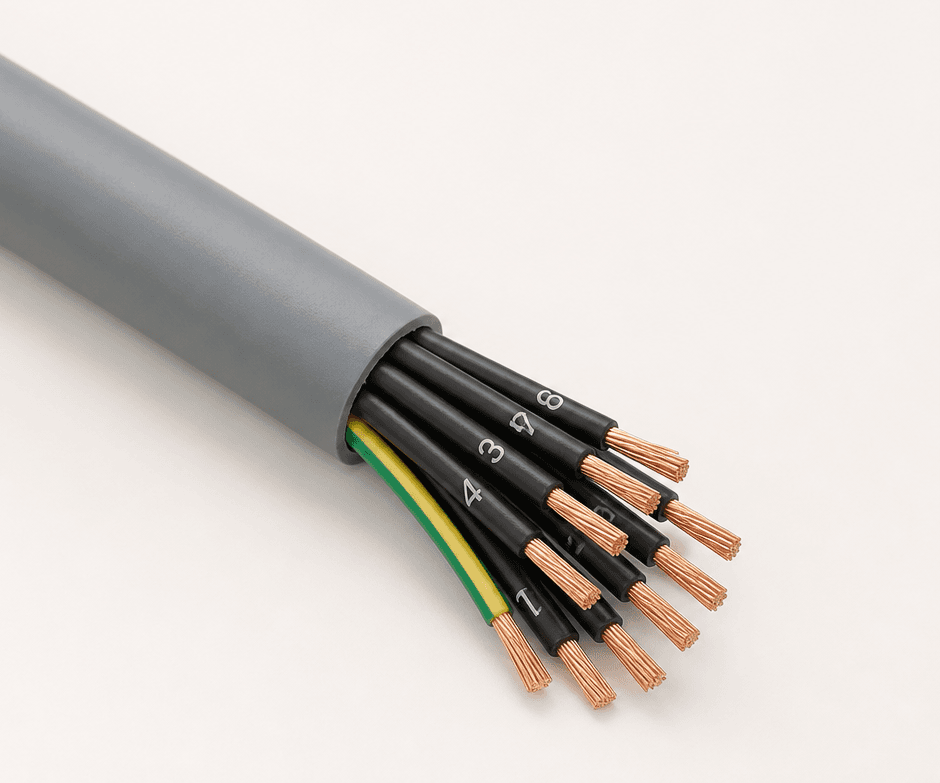
PVC (Polyvinyl Chloride) is a thermoplastic polymer widely used for cable insulation and sheathing. PVC compounds are formulated with plasticizers, stabilizers, and other additives to achieve specific electrical, mechanical, and thermal properties. Key characteristics include:
- Maximum conductor temperature: 70°C standard (90°C for heat-resistant grades per IEC 60228)
- Voltage range: 300V to 1kV typical for power and control cables
- Good electrical insulation: Dielectric strength of 20-30 kV/mm
- Flame retardant: Self-extinguishing when flame source removed (IEC 60332-1)
- Cost-effective: PVC is the most economical insulation material available
- Chemical resistance: Good resistance to acids, alkalis, and many oils
- Limitations: Poor flexibility at low temperatures (becomes brittle below -10°C), limited oil resistance, emits toxic smoke (HCl) when burning
PVC cable types in the TEBAOFLEX range include control cables (YY, YSLY), flat crane cables (H07VVH6-F), and building wires.
What Is Rubber Insulated Cable?
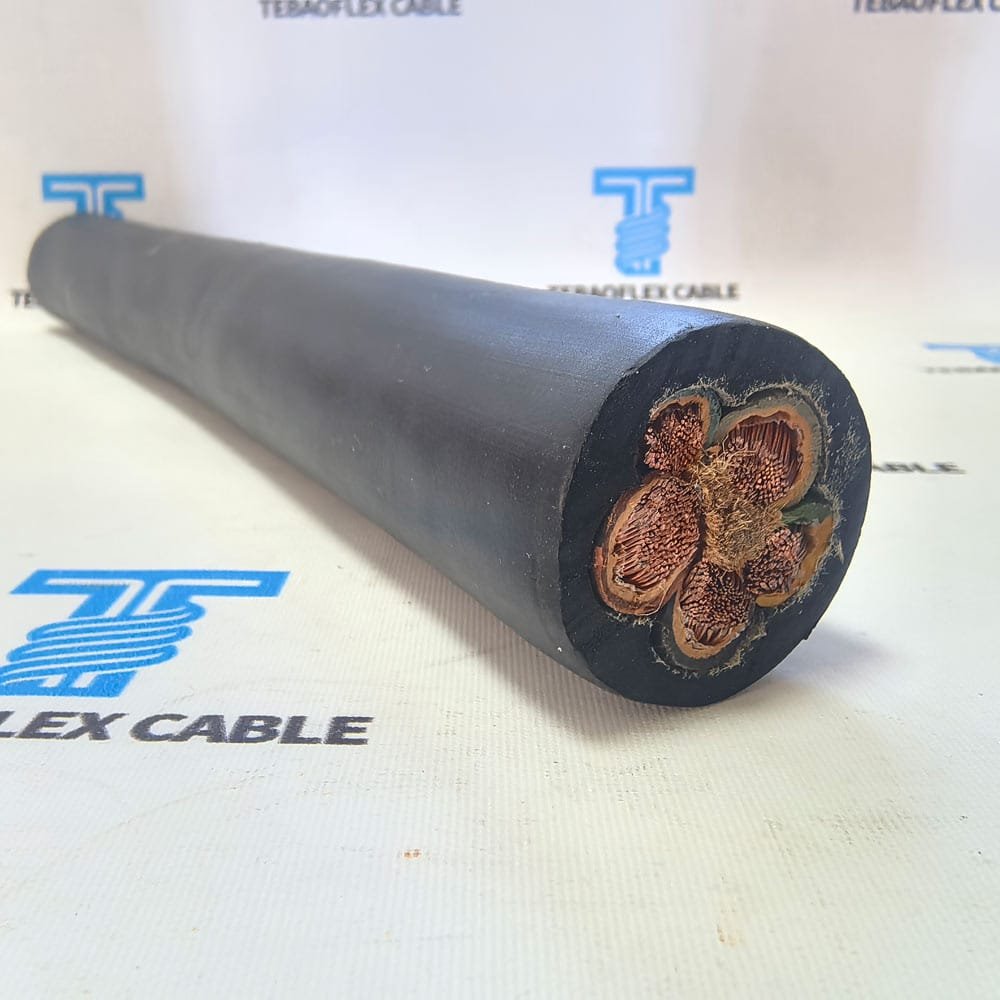
Rubber insulated cables use elastomeric compounds for insulation and/or sheathing. The term "rubber cable" encompasses several material families:
- EPR (Ethylene Propylene Rubber): Rated 90°C. Excellent flexibility, water and chemical resistance. Used for medium voltage power and mining cables.
- CR (Chloroprene Rubber / Neoprene): Rated 90°C. Excellent oil, weather, and flame resistance. Used as sheath for H07RN-F and mining cables.
- CSM (Chlorosulfonated Polyethylene / Hypalon): Rated 90°C. Superior ozone, UV, and chemical resistance. Used in heavy-duty outdoor and marine applications.
- Silicone rubber: Rated 180-200°C. Used for high-temperature applications. See our high temperature cable guide.
- PUR (Polyurethane): Rated 90°C. Exceptional abrasion and cut resistance. Used as sheath for reeling and trailing cables.
Key rubber cable characteristics:
- Excellent flexibility: Remains flexible from -40°C to rated temperature, ideal for dynamic applications
- Superior mechanical properties: High tensile strength, abrasion resistance, and impact resistance
- Oil and chemical resistance: Rubber compounds (especially CR and PUR) resist oils, fuels, and industrial chemicals far better than PVC
- Weather and UV resistance: CSM and CR compounds provide excellent outdoor aging resistance
- Higher cost: Rubber compounds cost 2-5x more than PVC per unit volume
Head-to-Head: PVC vs Rubber Cable Comparison
| Property | PVC | Rubber (EPR/CR/CSM) |
|---|---|---|
| Max Continuous Temp | 70°C (90°C HR grade) | 90°C |
| Low Temp Flexibility | Poor (-10°C min) | Excellent (-40°C) |
| Flexibility (Room Temp) | Good | Excellent |
| Abrasion Resistance | Fair | Very Good to Excellent |
| Oil Resistance | Poor to Fair | Very Good (CR, PUR) |
| UV Resistance | Good (with carbon black) | Excellent (CSM, CR) |
| Water Resistance | Good | Excellent |
| Flame Retardant | Yes (self-extinguishing) | Yes (varies by compound) |
| Smoke Toxicity | High (HCl gas) | Low (LSZH compounds available) |
| Cost Index | 1.0 (baseline) | 2.0-5.0 |
| Lifespan (Static) | 20-30 years | 25-40 years |
When to Choose PVC Cables
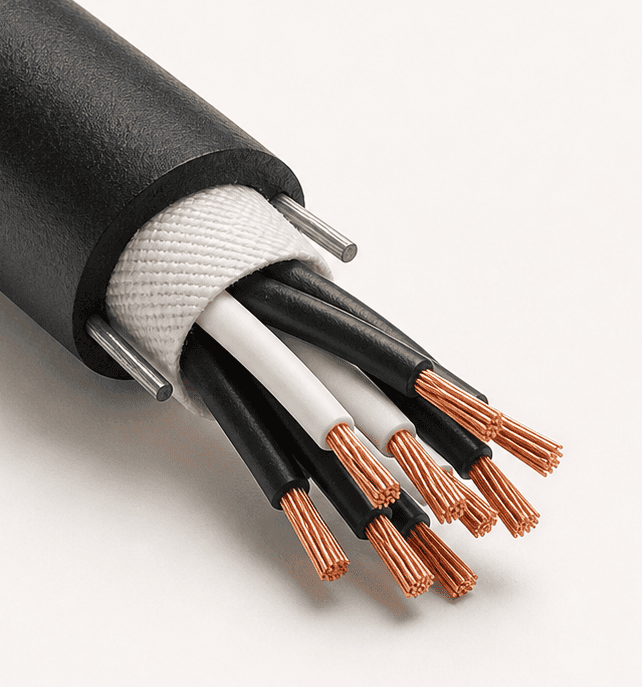
PVC insulated cables are the optimal choice for:
- Fixed indoor installations: Building wiring, control panels, and stationary equipment where temperature extremes and mechanical stress are not factors
- Control and signal cables: JZ-500, YY/YSLY type cables for industrial machinery and automation systems in protected environments
- Crane and elevator cables: Flat PVC cables (H07VVH6-F) for overhead crane control and elevator travelling where flexibility is needed but extreme conditions are not present
- Cost-sensitive projects: For large-volume installations where budget constraints are primary and operating conditions are moderate
- Low voltage distribution: 300/500V and 450/750V cables for general power distribution in commercial and industrial buildings
- LSZH applications: Low Smoke Zero Halogen PVC compounds are available for public buildings, tunnels, and transportation where smoke toxicity is a concern
TEBAOFLEX offers PVC control cables, flat crane cables, and building wires. Browse our product catalog.
When to Choose Rubber Cables
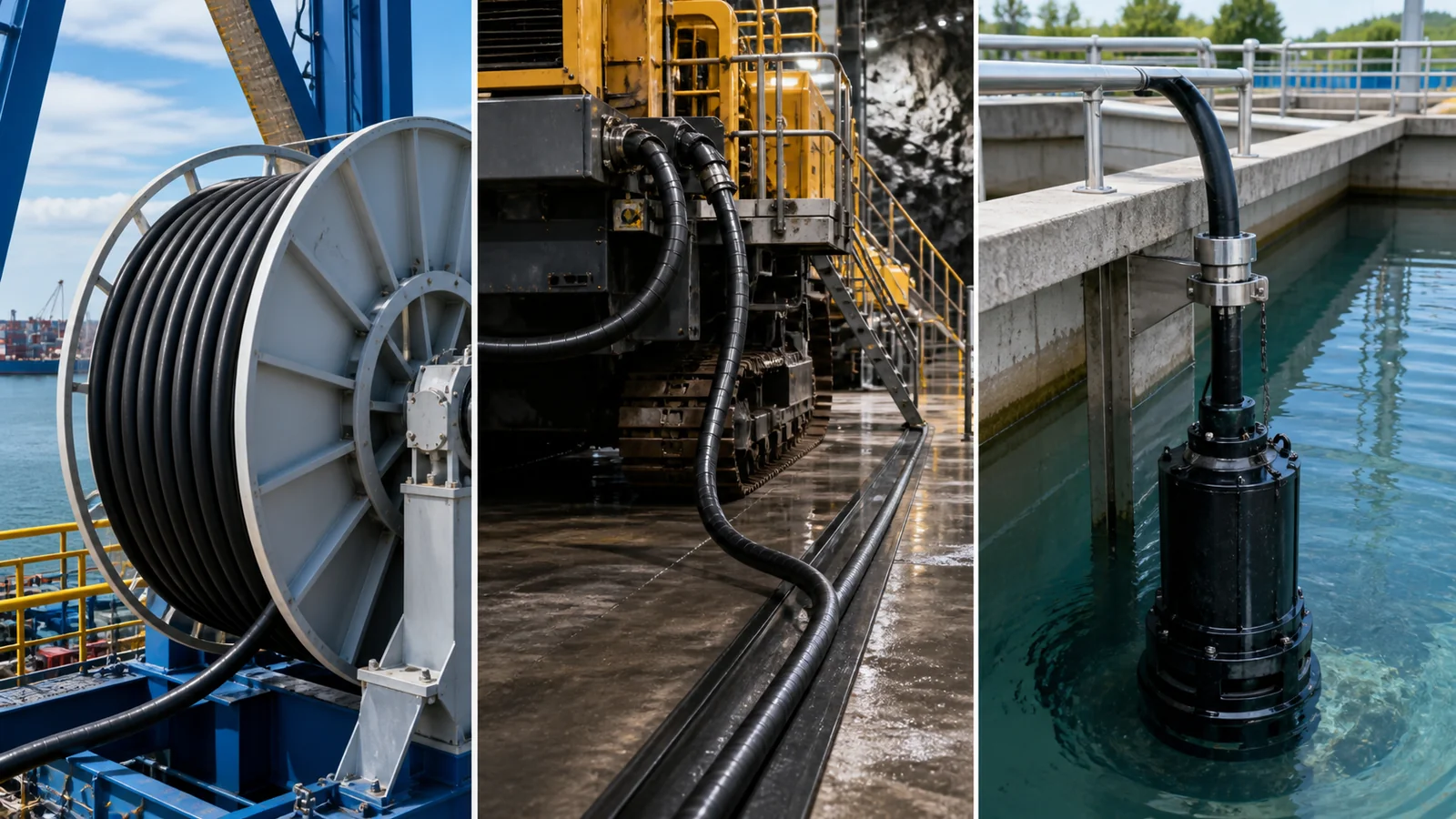
Rubber insulated cables are essential for:
- Dynamic and portable applications: Mining trailing cables, crane festoon cables, reeling cables, and portable power extensions that require continuous flexing and high mechanical stress
- Outdoor and harsh environments: Construction sites, ports, mines, and quarries where cables are exposed to weather, UV, mechanical damage, and chemical spills
- Oil and chemical exposure: Refineries, chemical plants, and machinery workshops where oil, grease, and solvents would degrade PVC cables
- Extreme temperatures: Cold storage (-40°C), foundries (up to 200°C with silicone), and outdoor installations with wide temperature swings
- Marine and subsea: Shipboard wiring, offshore platforms, and submersible pumps where water resistance and flexibility are critical
- Heavy-duty power supply: H07RN-F rubber cables for 450/750V portable equipment power supply in industrial environments
- Fire safety circuits: Rubber cables with mica tape for fire-resistant circuit integrity in emergency systems
Explore our rubber cable types and selection guide for detailed product information.
Detailed Performance Analysis
Mechanical Durability
Rubber cables significantly outperform PVC in mechanical durability. The abrasion resistance of PUR-sheathed rubber cables is 5-10 times greater than PVC. In mining and port applications where cables are dragged across rough surfaces, PVC cables would fail within weeks, while rubber cables last years. The higher initial cost of rubber cables is offset by reduced replacement frequency and downtime.
Temperature Performance
PVC becomes stiff and brittle at low temperatures, with standard grades rated only to -10°C. Below this, PVC cables can crack when bent or impacted. Rubber compounds maintain flexibility to -40°C (CR) or even -50°C (special EPR formulations), making them essential for cold climate operations. At the high end, rubber cables rated 90°C match heat-resistant PVC, while silicone rubber extends to 200°C for furnace applications.
Environmental and Safety Considerations
When PVC burns, it releases hydrochloric acid (HCl) gas and dense smoke, creating both toxic hazard and visibility impairment. LSZH (Low Smoke Zero Halogen) PVC compounds address this, but at higher cost. Rubber compounds generally produce less toxic smoke, and LSZH rubber formulations are available. For public buildings, transportation tunnels, and offshore installations, LSZH rubber cables are increasingly mandated by regulations.
Cost-Benefit Analysis
While rubber cables cost 2-5x more than equivalent PVC cables upfront, the total cost of ownership often favors rubber for demanding applications:
- PVC cable replacement every 1-3 years in harsh environments vs. rubber cable lasting 5-10 years
- Downtime costs from cable failure can exceed the cable cost many times over
- Rubber cables’ broader temperature range reduces the need for multiple cable types for different environments
- For indoor, static, and moderate environments, PVC remains the most economical choice
For a project-specific cost analysis, contact TEBAOFLEX for engineering consultation.
Industry Standards
Both PVC and rubber cables are governed by international standards:
- IEC 60228: Conductor standards for both PVC and rubber insulated cables
- IEC 60245: Rubber insulated cables (rated voltages up to 450/750V)
- IEC 60227: PVC insulated cables (rated voltages up to 450/750V)
- EN 50363: Insulation and sheath material specifications for both PVC and rubber
- VDE 0281/0282: German standards harmonized with IEC
- UL 62: North American standard for rubber-insulated flexible cables
- UL 83: North American standard for thermoplastic (PVC) insulated wires
View our certifications for compliance details.
Selection Decision Guide
- Assess application type: Static indoor → PVC; Dynamic/outdoor → Rubber
- Check temperature range: 0-70°C indoor → PVC; Below 0°C or above 70°C → Rubber
- Evaluate mechanical stress: Low/none → PVC; High flexing/abrasion → Rubber (PUR sheath)
- Consider chemical exposure: None/mild → PVC; Oil/chemical → Rubber (CR or PUR)
- Determine fire safety requirements: Standard → PVC or rubber; LSZH required → LSZH rubber or PVC
- Check water exposure: Dry/occasional moisture → PVC; Continuous wet/submerged → Rubber (EPR)
- Assess budget vs. lifecycle: Low budget/short-term → PVC; Long-term/demanding → Rubber
- Consult manufacturer: For complex requirements, contact TEBAOFLEX for expert guidance
Why Choose TEBAOFLEX
TEBAOFLEX manufactures both PVC and rubber insulated cables, giving you a single source for all your cabling needs:
- PVC control cables (YY, YSLY, JZ-500 series) for industrial automation
- PVC flat crane cables (H07VVH6-F) for overhead crane control
- Rubber power cables (H07RN-F) for portable equipment supply
- EPR/CSM medium voltage cables for industrial power distribution
- PUR sheathed reeling and trailing cables for dynamic applications
- LSZH cables for public buildings and transportation
Our engineering team helps you select the right insulation material based on your application requirements. Browse our product catalog or request a consultation for your next project.
Request a Quote
Need PVC or rubber cables for your project? Our technical team will respond within 24 hours with specifications, material recommendations, and pricing. Submit your cable inquiry to TEBAOFLEX.