
Portable power cable connects movable or frequently relocated equipment, but “portable” does not mean it can be used anywhere. Cable type, voltage, conductor size, movement, environment, protection and installation rules all limit where it is suitable. A portable cord is also not automatically a trailing mine cable, welding cable, DLO cable or replacement for permanent wiring.
This guide helps plant engineers, rental fleets, contractors and buyers distinguish portable power cable duties and prepare a better RFQ. Always apply the governing electrical code, equipment instructions and authority requirements.
What qualifies as portable power cable?
In practical procurement, the term covers flexible multi-conductor cables or cords that supply equipment expected to move, be repositioned or be connected temporarily. Examples include portable tools, generators, pumps, event equipment, maintenance power, mobile machinery and some crane or magnet circuits.
The term is not a single standard designation. In North American projects, flexible cords may be specified by types such as SOOW or SJOOW under UL 62. In IEC-based projects, rubber-insulated flexible cables may be specified within IEC 60245 scopes. Specialized mobile machines and mines use other constructions.
| Cable family | Typical role | Important limit to verify |
|---|---|---|
| SOOW/SJOOW portable cord | Portable tools and industrial equipment under applicable code conditions | Exact type, voltage, environment, listing and permitted use |
| H07RN-F rubber cable | Heavy-duty flexible equipment connections in applicable IEC/VDE markets | Rated voltage, installation, fluid/water exposure and local acceptance |
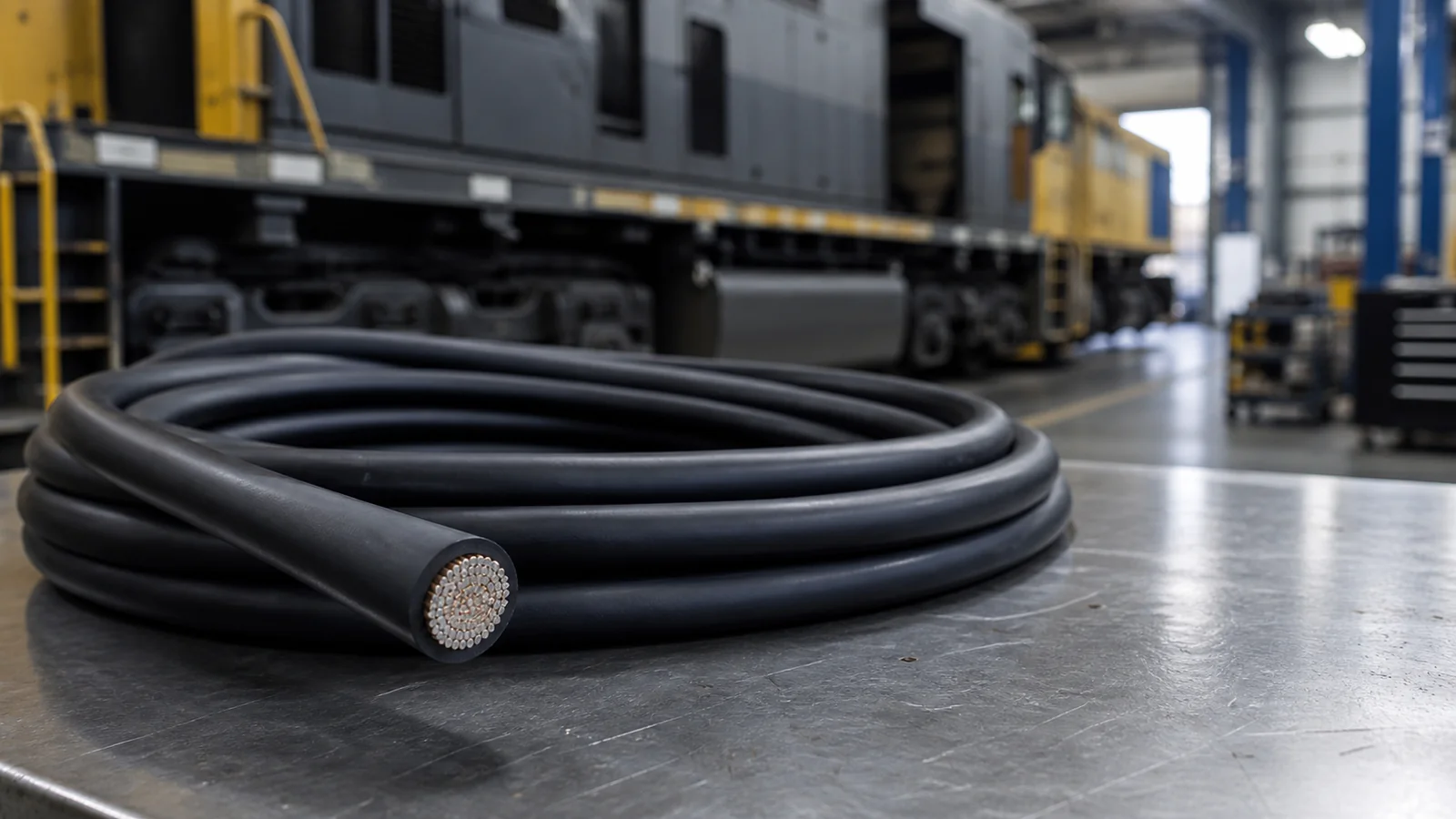
| DLO cable | Flexible single-conductor power connections and diesel-locomotive heritage applications | Single-conductor installation rules, approvals and circuit protection |
| Welding cable | Secondary welding circuits | Not automatically approved as general-purpose power cable |
| Mining trailing cable | Mobile mine equipment with defined grounding/shielding functions | Mine standard, approval, ground-check and mechanical duty |
Where portable cables may and may not be used
OSHA 29 CFR 1910.305 states that flexible cords and cables must be approved and suitable for the conditions of use and location. It lists permitted applications and prohibits using flexible cord as a substitute for fixed wiring, running it through holes or concealing it behind building surfaces. The published 29 CFR 1910.305 text also requires protection from accidental damage.
That distinction matters. A cord serving a portable pump for maintenance does not automatically become acceptable as permanent feeder wiring. The responsible designer must confirm code permissions, support, overcurrent protection, grounding, connectors and environmental rating.
Step 1: define the equipment and duty cycle
State the equipment name, rated input, starting current, operating hours and whether the cable is disconnected daily, moved occasionally or flexed continuously. Temporary duration alone does not define a cable as portable. Describe who handles it and whether it lies in a pedestrian or vehicle route.
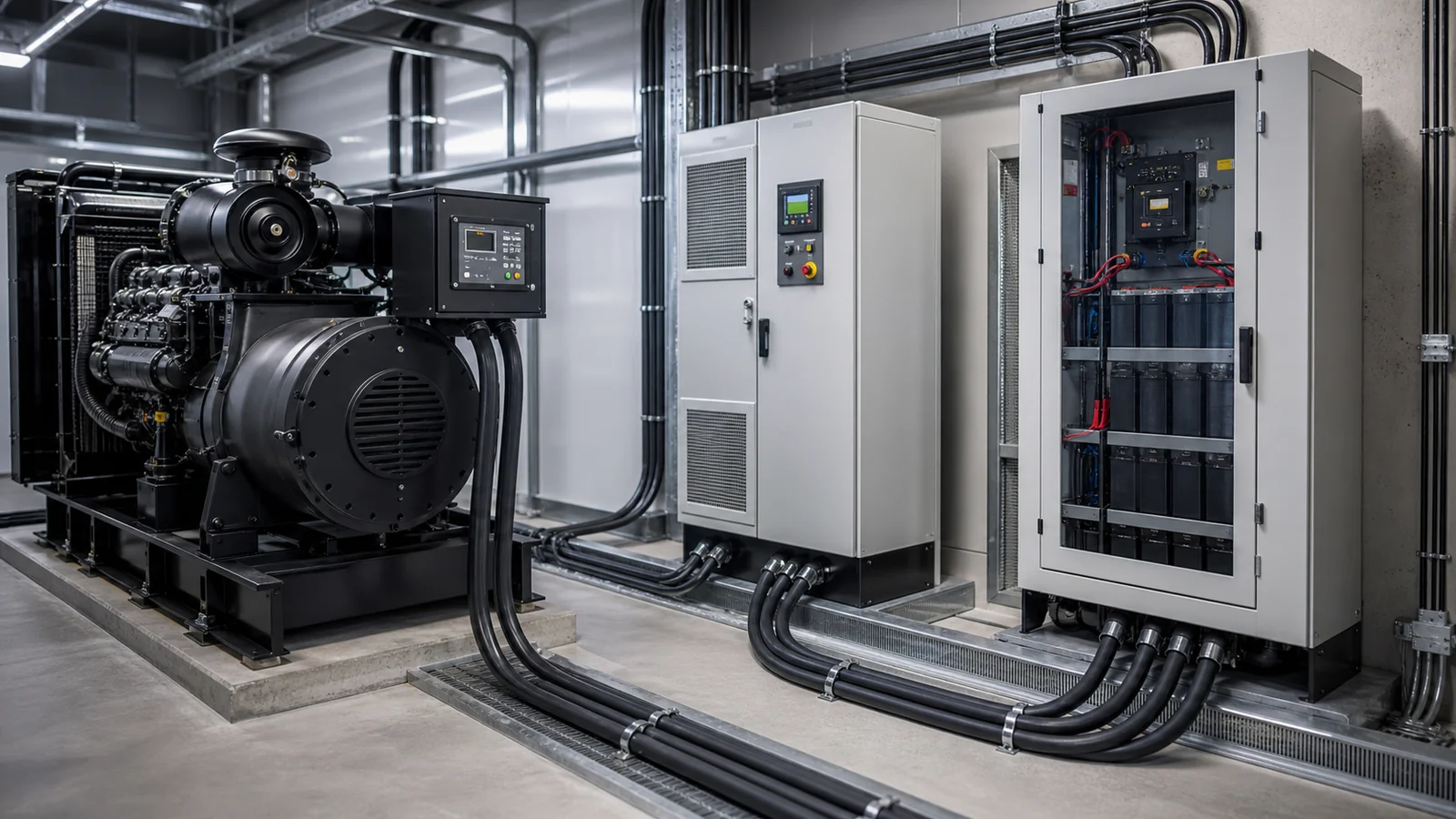
For a generator lead, identify generator output, grounding arrangement, connector system and maximum run length. For a pump, state submersion conditions and sealing. For a crane magnet, describe duty cycle, vertical travel, mechanical support and reel or festoon arrangement. A dedicated 2 kV magnet crane cable addresses requirements different from a workshop extension cord.
Step 2: size the conductors for the real installation
Calculate load current, then apply the correct ampacity table and correction factors for ambient temperature, grouping, installation and duty. Check voltage drop over the complete current path and verify protective-device coordination and fault withstand. A cable that remains coiled or layered on a reel can dissipate heat poorly.
Use the amps-to-cable-size selection method as an initial workflow, then apply the cable voltage-drop calculation to long runs. The manufacturer’s conductor resistance data should correspond to the offered cable and operating temperature.
Step 3: match flexibility to the movement
Occasional hand-coiling, repeated bending, reeling, festooning and torsion are different mechanical duties. Request minimum bend radius for both installation and operation. State pulling force, cable speed, cycles, unsupported length, abrasion surface and whether the cable can be run over.
A flexible strand class does not prove dynamic life. Core lay, separators, reinforcement and jacket determine stability. If the cable is repeatedly reeled, give the supplier reel dimensions and operating profile. If it trails behind mobile equipment, describe snagging and tensile-control measures.
Step 4: specify environment and jacket performance
List water, sunlight, oil, fuel, coolant, chemicals, mud, ozone, heat and cold. Replace general labels with conditions: occasional splash at 25°C, outdoor UV exposure for the service life, or continuous immersion at a defined depth. Use the oil-resistant cable guide to document fluids and test evidence.
Where water exposure is central, compare constructions specifically designed and documented for that duty, such as H07RN8-F waterproof rubber cable. Do not infer continuous-submersion suitability from “weather resistant.” Terminations and joints must be rated and sealed for the same environment.
Step 5: verify type, marking and approvals
UL’s official cable category table identifies UL 62 as the standard for flexible cords and cables. Its wire and cable guide explains how markings and categories relate to use. For IEC-market flexible rubber cables, IEC 60245-1 and IEC 60245-4 define scopes up to and including 450/750 V; the exact national adoption and cable designation must be confirmed.
Compare the printed legend with the quotation and official certification record. Check manufacturer, cable type, conductor size, voltage, temperature, oil/water designations, flame marking and traceability. A generic “CE cable” description does not establish a product standard or third-party approval.
Portable cable selection matrix
| Application question | RFQ data | Decision affected |
|---|---|---|
| Electrical load | Voltage, current profile, phases, length and protection | Conductor count/size, voltage class and voltage drop |
| Mobility | Handling, bend, reel, torsion, cycles and tension | Stranding, core lay, reinforcement and bend limits |
| Environment | Temperature, water, UV, oil and chemicals | Insulation/jacket compounds and test evidence |
| Installation | Temporary/fixed, support, crossings and coiling | Code permission, protection and thermal rating |
| Interface | Plug, gland, lug, reel and equipment entry | Outside diameter, termination and strain relief |
| Compliance | Jurisdiction, standard, listing and marking | Acceptable product family and documents |
SOOW, H07RN-F and DLO are not direct synonyms
SOOW/SJOOW is a North American flexible-cord family with type-specific ratings and markings. H07RN-F is an IEC/VDE-market heavy-duty rubber flexible cable designation. DLO cable is commonly a flexible single-conductor cable associated with locomotive and industrial power applications.
They can overlap in broad marketing descriptions but differ in conductor arrangement, voltage, standard, approvals and permitted installation. The DLO cable guide explains common selection checks. Never approve a substitution from current rating and jacket appearance alone.
Installation and inspection controls
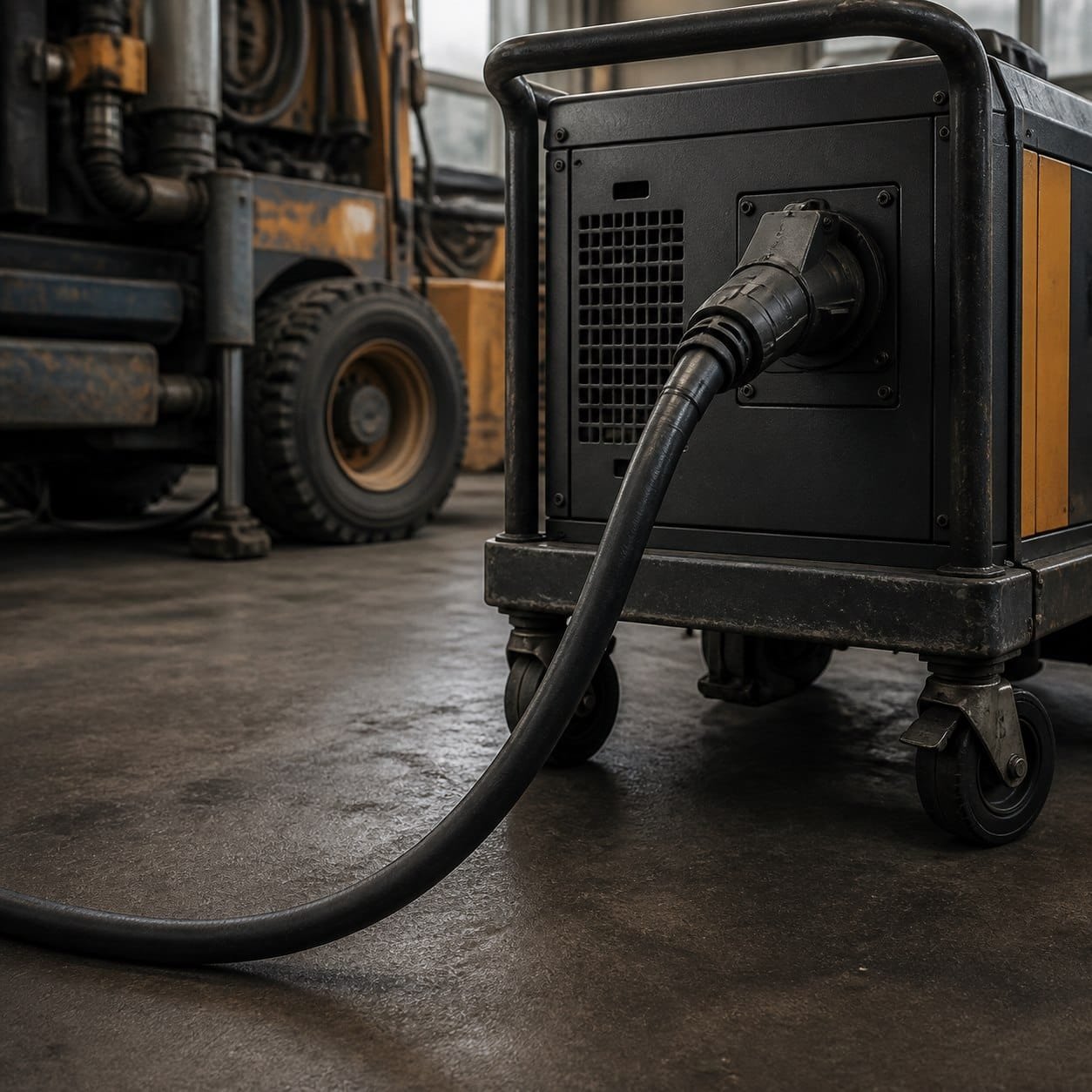
Protect cords at doors, sharp edges and traffic crossings. Provide strain relief so conductor terminations do not carry pulling load. Keep connectors out of standing water unless designed for immersion. Inspect for cuts, crushed areas, exposed reinforcement, hardened jacket, damaged plugs and loose glands. Remove damaged assemblies from service through the site’s safe-isolation procedure.
Track repair history and discard limits. Repeated repairs near the same point usually indicate a route or strain-relief problem, not just poor housekeeping. Do not cover damage with tape and return a high-current cable to service without an approved repair and test process.
Common portable power cable questions
Can portable cable be used permanently if it is heavy duty?
Heavy-duty construction does not override installation rules. Flexible cords are permitted for specific uses and restricted from substituting for fixed wiring in many situations. The designer must identify the applicable code provision, cable type and installation method. If equipment is no longer genuinely portable, review a compliant permanent wiring solution.
Is welding cable suitable for generator output?
Not automatically. Welding cable is designed around welding-circuit duty and can lack the marking or approval required for general power distribution. A generator lead must be evaluated for voltage, continuous current, conductor count, grounding, connectors, environment, overcurrent protection and code permission. Use a product explicitly documented for the intended connection.
Why does a cable become hot while still below its advertised ampacity?
The advertised value may assume free air, a different ambient temperature or a duty cycle unlike the installation. Coiling, grouping, poor contacts, damaged strands and undersized connectors can create extra heat. Measure load and connection temperature safely, then compare the complete installation with the governing rating conditions.
Should extension assemblies be built on site?
Only under an approved procedure using compatible cable, plugs, glands, strain relief and tests. High-current assemblies require correct conductor preparation and torque. A cable with a suitable rating can still be unsafe when fitted with an undersized connector or an enclosure that lacks the required environmental protection.
Prepare a portable power cable RFQ
TEBAOFLEX supplies portable and flexible power cable families for industrial applications. Send the equipment, electrical load, route length, movement, reel data, environment, required type or standard, connector dimensions and document needs through the contact and RFQ form. A complete duty record allows the technical team to identify a suitable starting family or explain why a common portable cord is not appropriate.
Safety note: final cable type, conductor size, protection and installation must comply with applicable codes, equipment instructions and approval by the responsible authority.