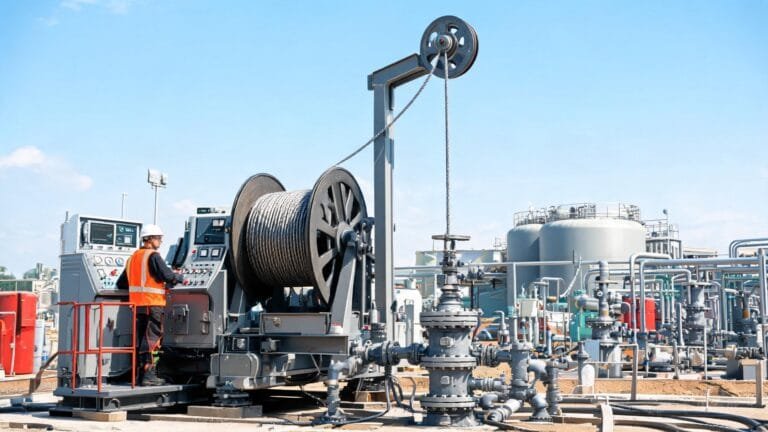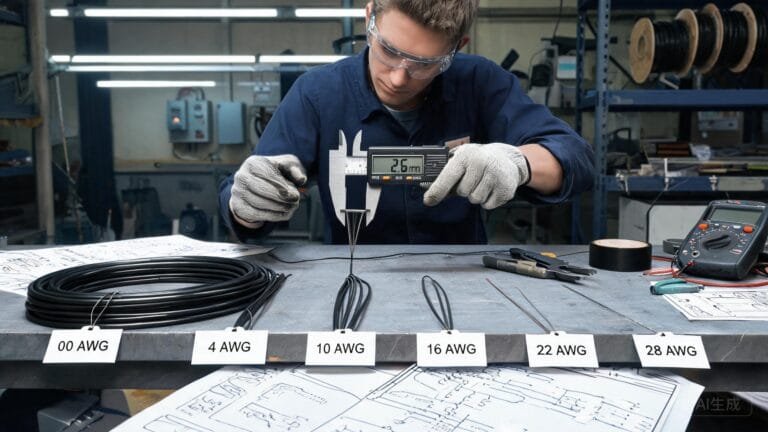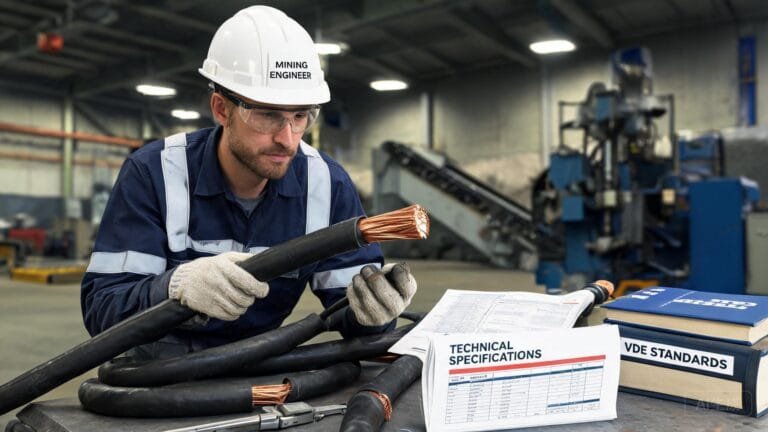

What is DLO cable? DLO, short for Diesel Locomotive cable, is a heavy-duty flexible single-conductor power cable first associated with diesel-electric locomotive circuits. Modern DLO designs commonly combine a fine-stranded copper conductor, thermoset insulation and a protective jacket, often with ratings up to 2 kV. The exact permitted use always depends on the cable marking and documentation.
For engineers and buyers, that last point matters. “DLO” describes a cable family; it does not by itself confirm the voltage, temperature, installation method or certification required by a project. This guide explains the construction, standards and practical selection checks that should appear in a technical inquiry. It complements TEBAOFLEX’s separate guide to where DLO cable fits in heavy-duty equipment.
Last updated: August 18, 2026
What Does DLO Stand For?
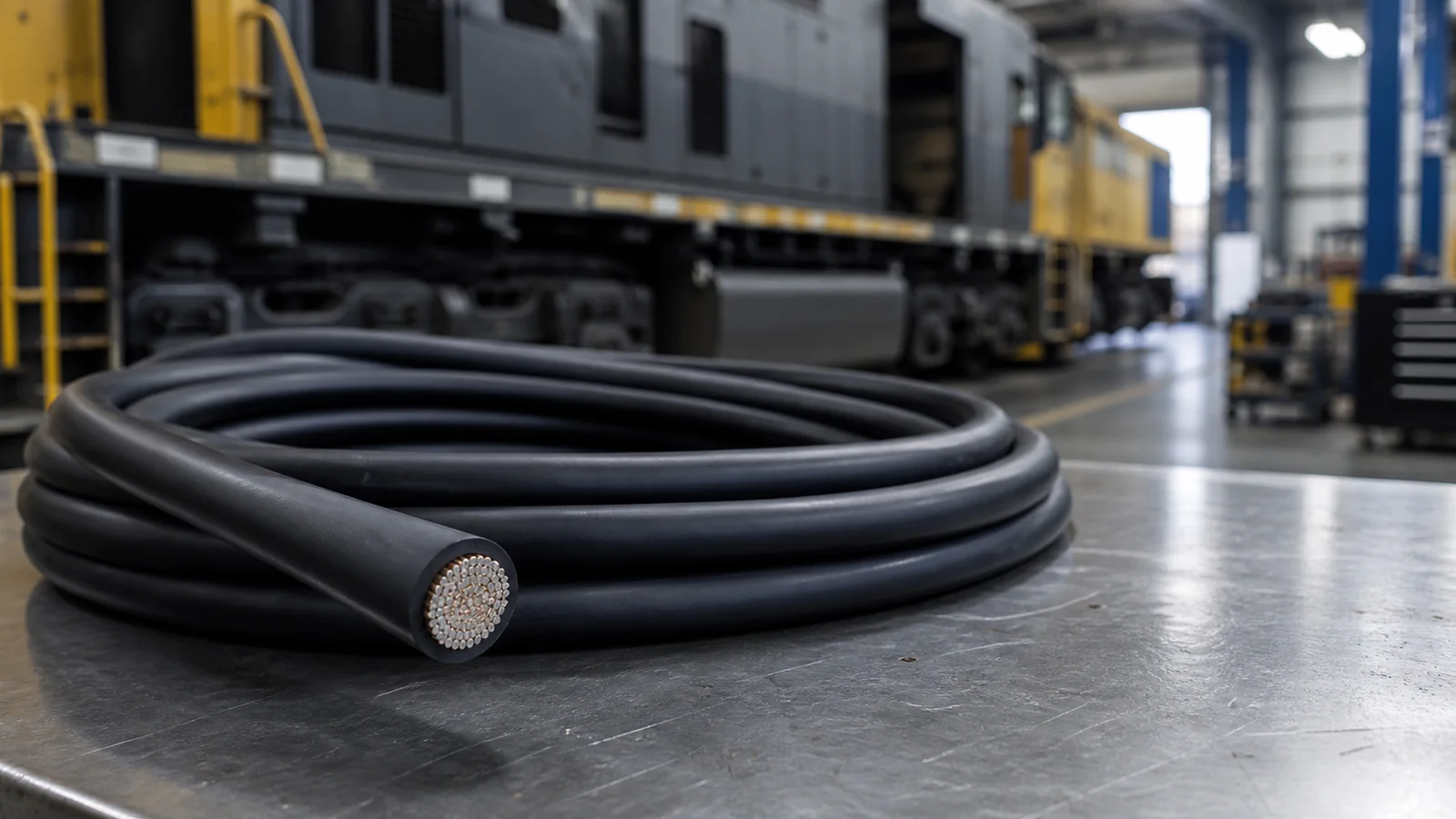
DLO stands for Diesel Locomotive cable. The name comes from its use in diesel-electric locomotives, where a diesel engine drives a generator and flexible power conductors connect electrical equipment in a space exposed to vibration, heat and mechanical stress.
Today, the term is used more broadly for a flexible, single-conductor industrial power cable. Depending on its exact design and approvals, DLO cable may be specified for generators, motors, battery systems, switchgear, renewable-energy equipment and other heavy-duty connections. It is valued where an ordinary rigid conductor would be difficult to route or terminate.
The historical name should not be treated as an installation permission. Two products sold as DLO can differ in conductor construction, voltage and temperature ratings, insulation and jacket compounds, flame or sunlight-resistance markings, and approvals. Start with the printed cable legend and the manufacturer’s current data sheet—not the product name alone.
How Is DLO Cable Constructed?
Fine-stranded copper conductor
DLO cable normally uses many small copper strands arranged to give the conductor substantially more flexibility than a conventional building-wire conductor of similar size. Many designs use a rope-lay construction, and tinned copper is common where a manufacturer wants additional protection against oxidation or specific environmental exposure. The exact strand class and coating must be confirmed because they affect flexibility and termination selection.
Thermoset insulation and a protective jacket
A typical design uses thermoset insulation, often based on EPR or EPDM compounds, around the conductor. A separate outer jacket—frequently CPE or another rubber-based compound—adds mechanical and environmental protection. These material names alone do not prove a particular oil, flame, sunlight, moisture or temperature rating. Those properties must be supported by the cable marking, standard listing and product documentation.
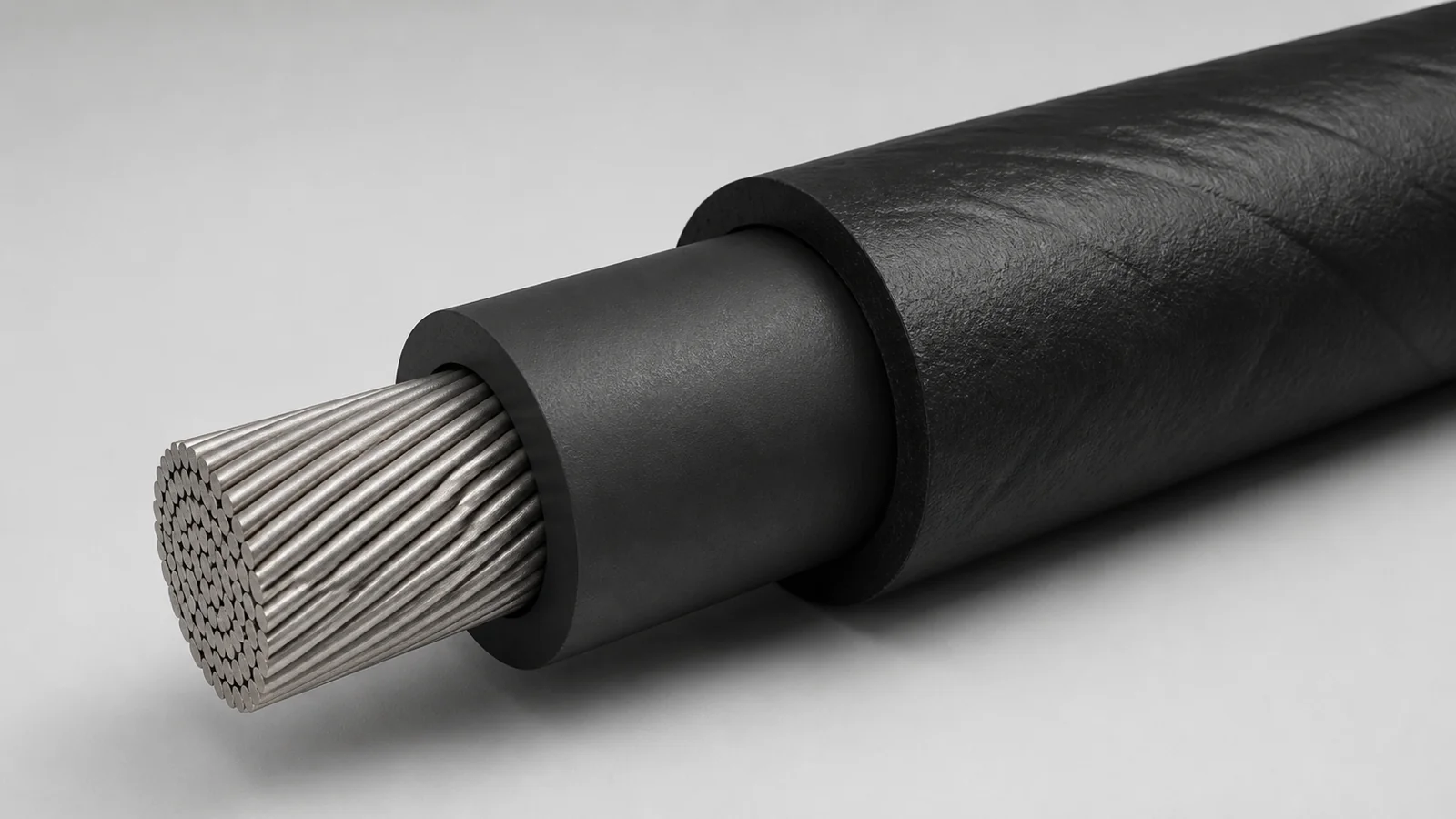
The cable marking controls the specification
The jacket legend should identify the manufacturer, conductor size, voltage and temperature rating, and the relevant listing or use markings. A buyer should compare this information with the project drawings, governing electrical code and approved-equipment list. If a project calls for RHH/RHW-2, RW90, sunlight resistance, a tray-use marking or another approval, request the exact marked construction rather than assuming every DLO cable includes it.
Which DLO Cable Ratings and Standards Matter?
Several standards can appear in a DLO specification, but each one covers a different part of the cable or its evaluation:
- UL 2806 covers single-conductor, heavy-duty flexible power cable evaluated for flexible power and control applications. Its scope includes 600 V and 2,000 V constructions and distinguishes dry and wet temperature ratings.
- ASTM B172 covers rope-lay-stranded copper conductors made from bunch-stranded members, including specified conductor classes and coated or uncoated copper options.
- ANSI/NEMA WC 70 / ICEA S-95-658 provides requirements for power cables rated 2,000 V or less, including materials, construction and testing.
A 2 kV marking is common in the DLO category, but it is not universal. Likewise, a temperature value found on one supplier’s product cannot be transferred to every DLO construction. Confirm the complete legend, listing certificate and data sheet for the cable being quoted. Where a regulator, customer specification or authority having jurisdiction applies, obtain approval before installation.
Where Is DLO Cable Used?
The original application is the power circuit of a diesel-electric locomotive, but the same combination of conductor flexibility and a robust cable body can be useful in other equipment. Common project categories include:
- connections between generators, motors, drives and switchgear;
- battery banks, power-conversion equipment and energy-storage systems;
- mining, drilling, marine and heavy mobile equipment;
- industrial machinery where a large conductor must follow a tight but controlled route; and
- temporary or permanent power connections when the exact cable listing permits the installation method.
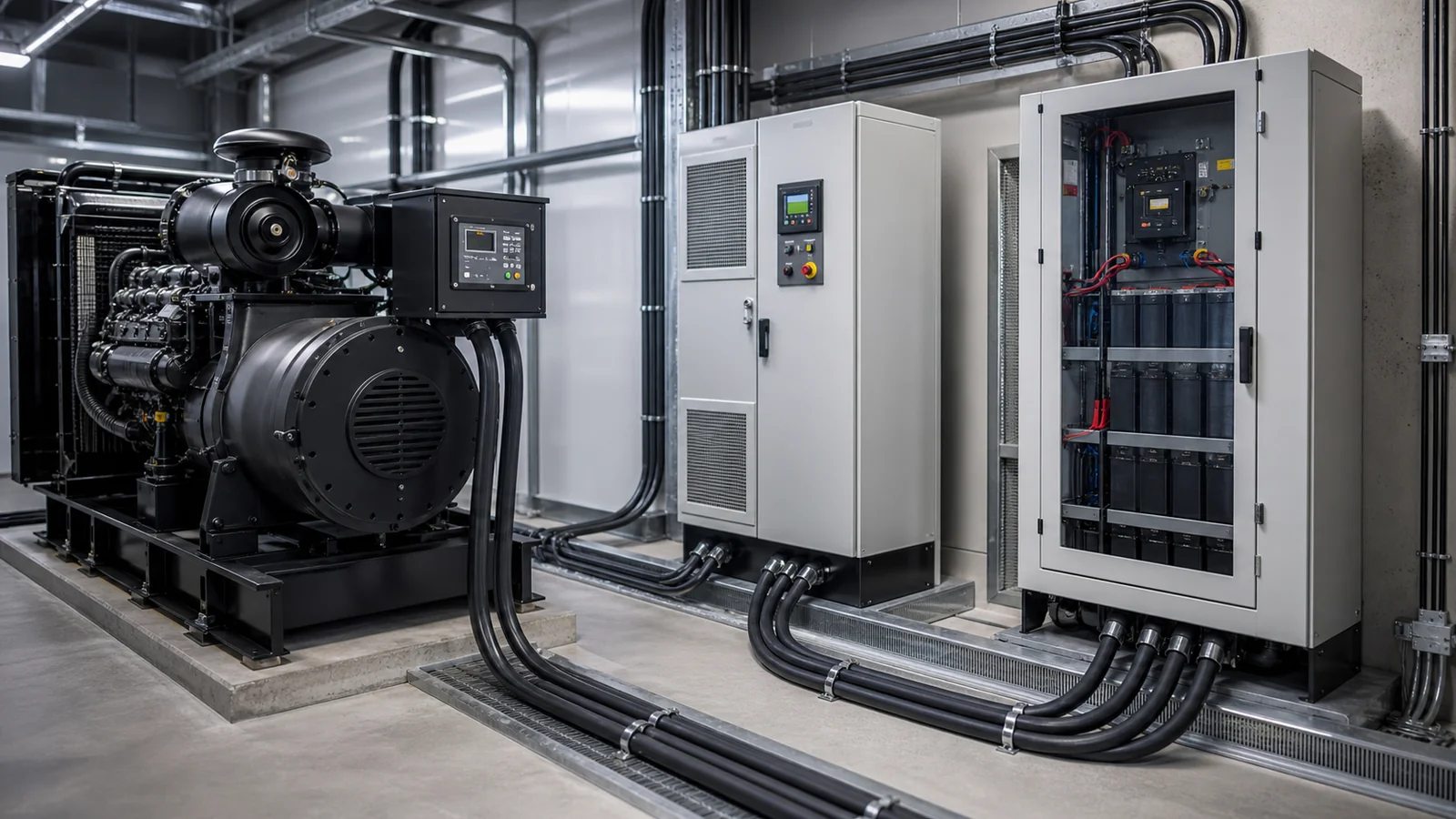
These are application families, not blanket approvals. A cable suitable for a protected generator connection may not be suitable for continuous reeling, direct burial, open wiring, a hazardous location or an exposed marine installation. For a project-specific starting point, review the TEBAOFLEX DLO 2kV flexible diesel locomotive cable and confirm the final construction against your requirement.
What DLO Cable Is Not
It is not automatically the same as welding cable
Both cable types can use fine-stranded copper and flexible rubber-based materials, so they may look similar. However, their voltage markings, listings, insulation systems, jacket construction and intended uses can differ. Do not substitute one for the other based only on conductor size or flexibility. Compare the complete standard and installation requirements.
It is not automatically approved for every wiring method
A DLO product may carry additional markings that support particular installation methods, but the word “DLO” alone does not establish cable-tray, building-wire, wet-location or sunlight-resistant use. Check the printed legend and governing code for the actual route.
It is not automatically a continuous-flex cable
DLO cable is flexible enough to simplify routing and absorb some equipment movement, but continuous bending, reeling, festooning and torsion are separate mechanical duties. Those applications require defined bend radius, cycle life, speed, tensile load and environmental conditions. If the cable will move repeatedly, share the motion profile so the supplier can determine whether a purpose-designed rubber and flexible cable is more appropriate.
DLO Cable Selection Checklist
A useful inquiry does more than ask for a conductor size and price. The following inputs allow a cable supplier to check the construction, rating and documentation before quoting.
| Selection checkpoint | Information to provide | Why it matters |
|---|---|---|
| Electrical duty | System voltage, current, AC or DC, circuit length and allowable voltage drop | Determines the required voltage class and supports conductor sizing. |
| Required marking | Specified standard, listing, temperature rating and any RHH/RHW-2, RW90, tray or other project marking | Confirms whether the offered cable is permitted for the intended installation. |
| Installation method | Open air, conduit, tray, equipment wiring, temporary connection or another defined route | Changes code requirements, heat dissipation, bend limits and mechanical protection. |
| Operating environment | Ambient temperature and exposure to oil, water, sunlight, abrasion, ozone, chemicals or flame risk | Guides the insulation and jacket compound and the ratings that must be documented. |
| Movement | Static after installation, occasional flexing, vibration, continuous bending, reeling or torsion | Prevents a flexible cable from being misapplied in a motion profile it was not designed to withstand. |
| Termination | Lug or connector type, stud size, enclosure space, conductor class compatibility and installation tooling | Fine-stranded conductors require compatible listed terminals and correct preparation. |
| Documentation | Data sheet, test report, certificate, inspection requirement and cable-marking language | Lets engineering and quality teams verify compliance before shipment. |
| Commercial details | Required length, drum or coil preference, delivery destination and target schedule | Supports a complete, comparable quotation and practical packaging plan. |
Do not select ampacity from a generic internet chart alone. Allowable current can change with conductor size, ambient temperature, grouping, installation method, governing code and the manufacturer’s approved values. An engineer should also evaluate voltage drop and fault-current duty for the actual circuit.
Termination deserves equal attention. Fine-stranded conductors may not be accepted by a lug intended only for conventional stranding. Use a terminal listed or approved for the actual conductor construction, follow its strip-length and assembly instructions, and use the specified tooling and torque. When in doubt, provide the lug data with the cable inquiry.
How to Specify DLO Cable for a Quote
Begin with the electrical duty and required approvals, then describe the route, environment and movement. Add the preferred conductor size only if it has already been engineered; otherwise provide the current, length and installation conditions needed for review. Include the termination interface, test documents, quantity, packaging and delivery destination.
TEBAOFLEX can compare these inputs with its special cable solutions and identify the questions that must be resolved before manufacturing. A final offer should state the construction, markings, applicable test basis and any project-specific options. This keeps the engineering review tied to documented requirements instead of assumptions.
Frequently Asked Questions
What does DLO mean in cable?
DLO means Diesel Locomotive cable. The name reflects the cable’s historical use in diesel-electric locomotive power circuits. Modern DLO designs are also used in other industrial power connections when their ratings and approvals match the project.
Is DLO cable always rated 2 kV?
No. Many current DLO constructions are marked 2,000 V, while standards and product families can also include other voltage ratings. Treat the printed cable legend and current data sheet as the controlling source.
Is DLO cable the same as welding cable?
No. They can look similar and both may be flexible, but their voltage ratings, listings, materials and intended uses can differ. Substitution requires an engineering and code review of the exact products.
Can DLO cable be installed in cable tray?
Only when the specific cable carries the required marking and the governing code permits that installation. “DLO” by itself is not a tray-use approval. Verify the legend, listing documentation, route and local requirements.
What information is needed for a DLO cable quotation?
Provide voltage, current, circuit length, conductor size if engineered, required standards and markings, installation method, ambient and environmental exposure, movement profile, termination details, quantity, packaging, documentation and delivery location.
The Practical Takeaway
What is DLO cable in practical terms? It is a flexible single-conductor power-cable family whose suitability depends on the complete construction and marking—not the name alone. Confirm electrical duty, installation method, environment, motion, termination compatibility and documentation before ordering. To review a new project, send your electrical and installation requirements to the TEBAOFLEX technical team.