
Introduction to Instrumentation Pair Cables
In petrochemical plants, refinery process units, and chemical manufacturing facilities, thousands of field instruments—temperature transmitters, pressure gauges, flow meters, and level sensors—depend on reliable signal transmission to the central control system. The instrumentation pair cables connecting these devices to DCS (Distributed Control System) and SCADA networks must deliver precise analog and digital signals while rejecting electromagnetic interference in an environment dense with motors, variable frequency drives, and high-current power cables.
Petrochemical instrumentation cables also serve in hazardous areas where explosive gas atmospheres may be present, requiring cables certified for IEC 60079 Ex-e or Ex-i installations. TEBAOFLEX manufactures a comprehensive range of instrumentation pair cables designed specifically for petrochemical and process industry applications, with individual pair shielding, overall screening, and halogen-free construction options.
What Are Instrumentation Pair Cables?
Instrumentation pair cables are multi-core signal cables where individual twisted pairs carry low-voltage analog (4-20 mA, 0-10V) or digital (HART, Foundation Fieldbus, Profibus PA) signals between field instruments and control room equipment. Key construction features include:
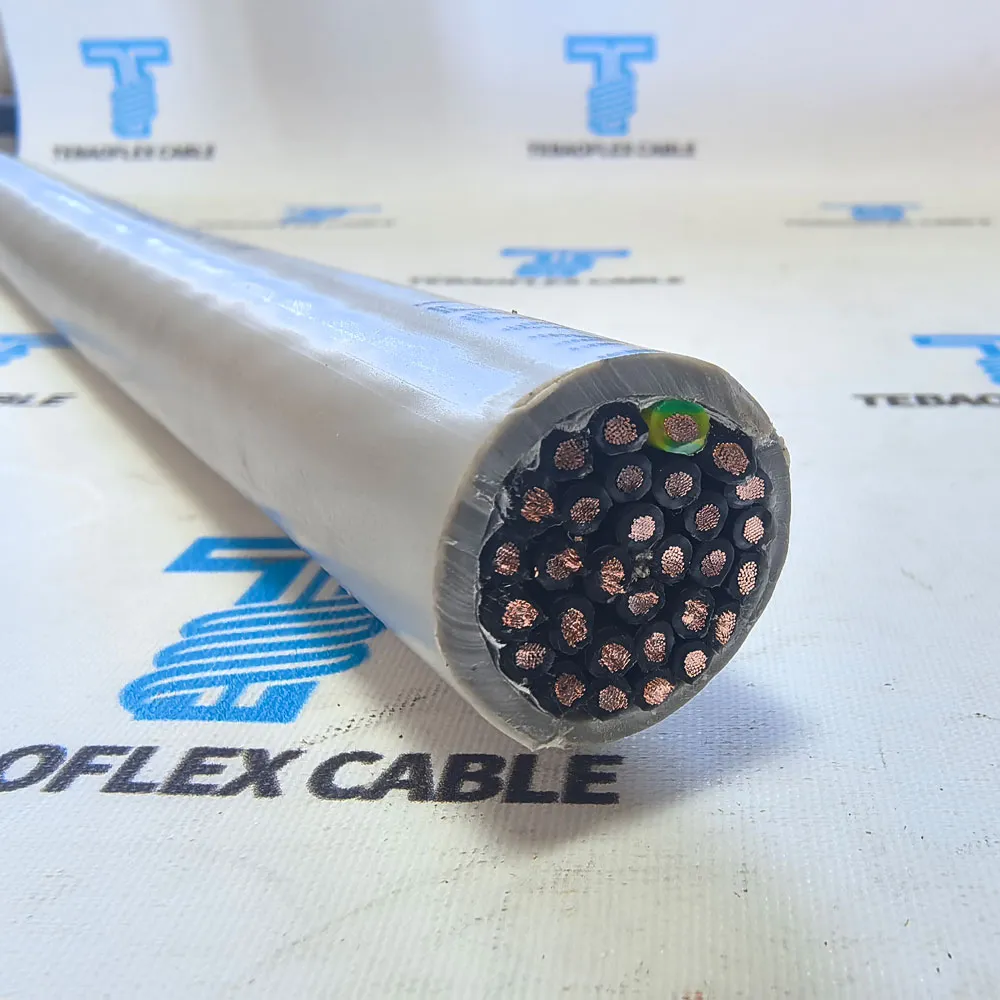
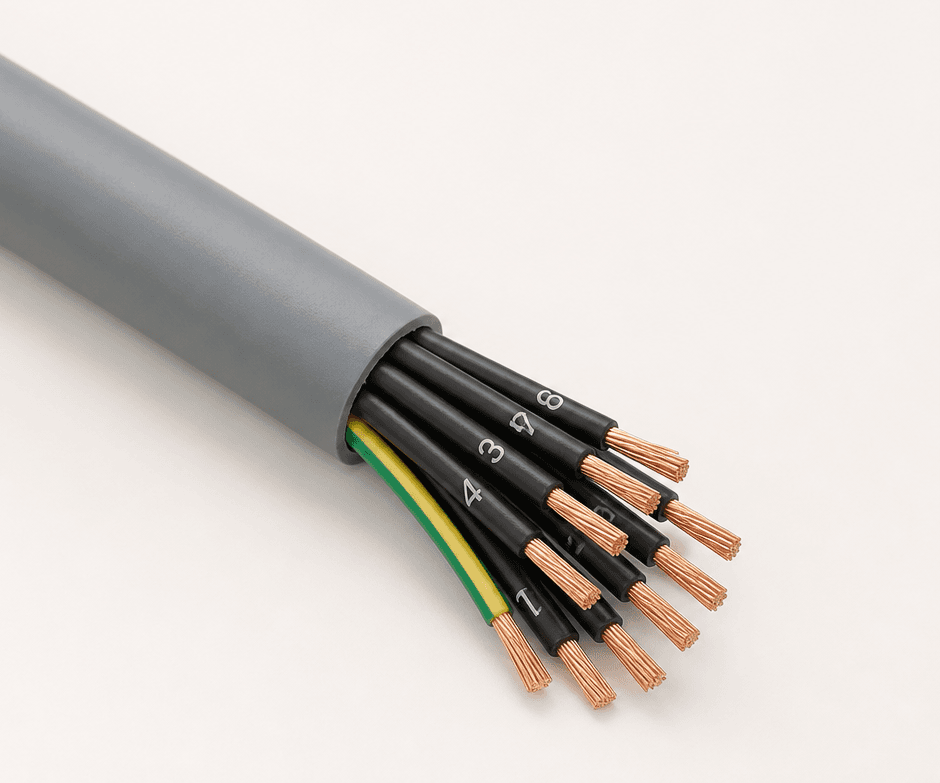
- Conductors: Solid or stranded tinned copper, typically 0.5–1.5 mm² (20–16 AWG), Class 1 or 2 per IEC 60228
- Twisted pairs: Two insulated conductors twisted together at a specific pitch (typically 12–25 mm) to cancel electromagnetic interference through differential signaling
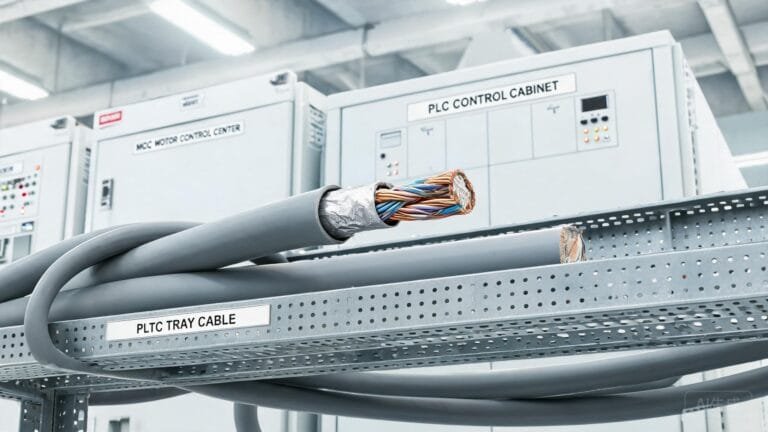
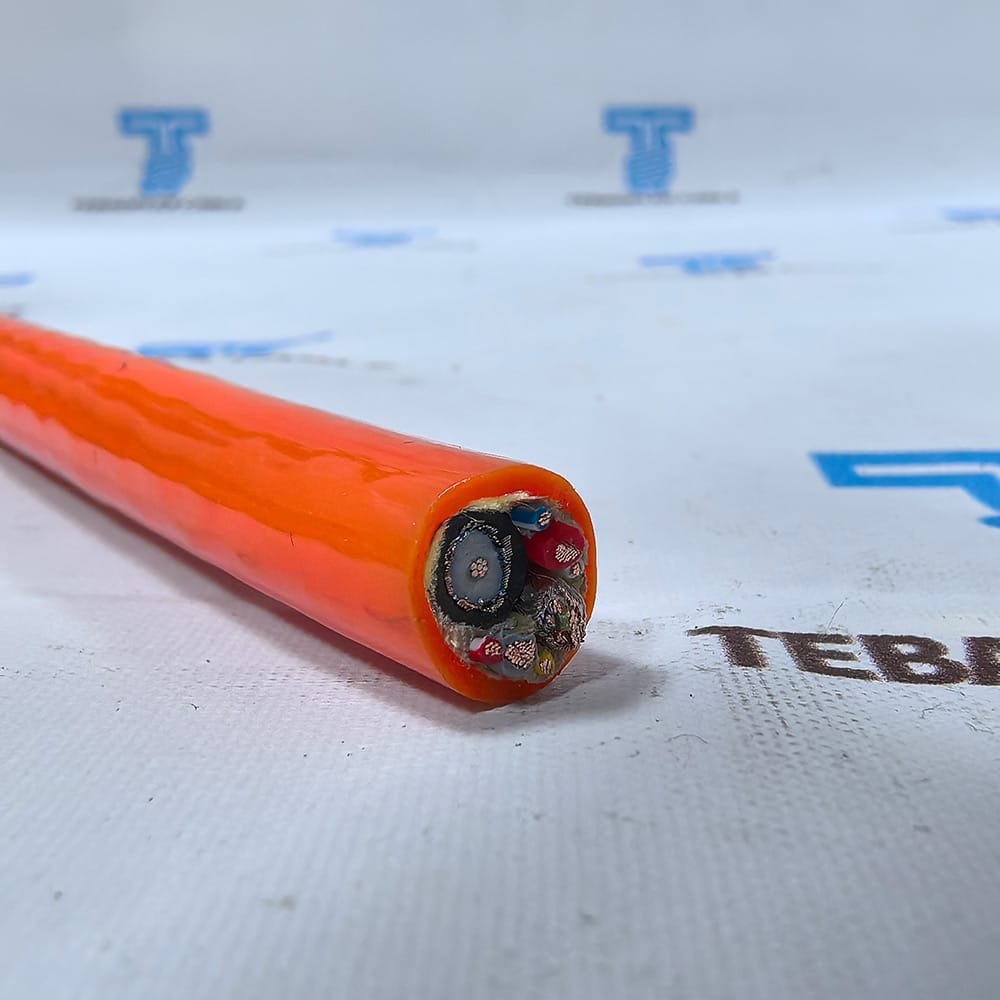
- Pair shielding: Each pair individually wrapped with aluminum/polyester tape with drain wire (100% coverage) for pair-to-pair isolation
- Overall screen: Aluminum/polyester tape and/or tinned copper wire braid over the bundle for overall electromagnetic protection
- Outer sheath: PVC, LSZH, or rubber compound rated for the installation environment, including oil and chemical resistance
The multi-layer shielding strategy—pair shield + overall screen— is critical for petrochemical environments where signal integrity directly impacts process safety and product quality. Explore our instrumentation cable product range for available configurations.
Construction and Shielding Design
The effectiveness of instrumentation pair cables in petrochemical plants depends on the quality of the shielding design:
Twisted Pair Geometry
The twist pitch determines the common-mode rejection ratio (CMRR) of the pair. A shorter pitch (e.g., 12 mm) provides better high-frequency noise rejection, while a longer pitch (25 mm) is adequate for low-frequency analog signals. Consistent twist pitch along the cable length prevents impedance discontinuities that can cause signal reflections.
Individual Pair Shielding
Aluminum/polyester tape with 100% overlap provides complete electrostatic shielding for each pair. This prevents crosstalk between pairs in multi-pair cables, ensuring that signals from one instrument do not induce noise in adjacent circuits. A tinned copper drain wire provides a low-impedance path to ground for shielded noise currents.
Overall Screen
For additional protection against high-power electromagnetic fields (from nearby motor cables, transformers, and VFDs), an overall tinned copper wire braid (85-95% coverage) or aluminum tape is applied over the bundle. This outer screen rejects ambient EMI before it reaches the individual pair shields.
Sheath Materials for Petrochemical Service
Petrochemical plant environments require sheath compounds resistant to oils, solvents, and process chemicals. LSZH (low smoke zero halogen) sheaths are increasingly specified for enclosed process areas where smoke emission during fire is a safety hazard. For outdoor process units, UV-stabilized PVC or CSP sheaths provide weather resistance.
Technical Specifications
| Parameter | Standard Instrumentation | Hazardous Area (Ex-i) |
|---|---|---|
| Voltage Rating | 300/500 V | 300/500 V (IS) |
| Conductor | Tinned Cu, Class 1 or 2 | Tinned Cu, Class 1 |
| Pair Count | 1, 2, 4, 8, 12, 24 pairs | 1, 2, 4 pairs |
| Conductor Size | 0.5–1.5 mm² | 0.5–1.0 mm² |
| Insulation | PVC / PE / XLPE | XLPE / PE |
| Pair Shield | Al/poly tape + drain wire | Al/poly tape + drain wire |
| Overall Screen | Cu braid (85-95%) | Cu braid (95% min) |
| Outer Sheath | PVC / LSZH / CSP | LSZH (blue) |
| Max Temperature | 70°C (PVC) / 90°C (XLPE) | 90°C |
| Flame Standard | IEC 60332-1 or 60332-3 | IEC 60332-3 |
Hazardous Area Certification
Petrochemical plants include hazardous areas where flammable gases or vapors may be present. Instrumentation cables for these areas must comply with IEC 60079 standards for explosive atmospheres:
- Ex-i (Intrinsic Safety): Cables for IS circuits must have low capacitance and inductance values that limit the stored energy available to spark in the hazardous area. Cable parameters (L/R ratio, C/L) must be verified against the safety barrier specifications.
- Ex-e (Increased Safety): Cables must meet temperature class requirements (T1–T6) and have flame-retardant properties. Terminals and glands must be Ex-e certified.
- Ex-d (Flameproof): Cables entering Ex-d enclosures require specially certified cable glands that maintain the flameproof seal.
- Blue sheath convention: Intrinsically safe cables are traditionally identified by a blue outer sheath for easy identification in hazardous areas.
View hazardous area certification documents for TEBAOFLEX instrumentation cables.
Petrochemical Applications
Instrumentation pair cables serve critical measurement and control functions across petrochemical facilities:
Process Control Systems
Temperature, pressure, flow, and level transmitters connect to DCS input/output cards via multi-pair instrumentation cables. Signal integrity directly impacts process control accuracy and safety interlock reliability. See petrochemical application cases.
Analyzer Systems
Gas chromatographs, continuous emission monitors, and online analyzers require shielded signal cables with minimal noise pickup. Individual pair shielding prevents cross-talk between low-level analyzer signals.
Fire and Gas Detection
Flame detectors, gas sensors, and heat detectors use fire-resistant instrumentation cables to ensure detection circuits remain functional during fire events. LSZH sheaths minimize smoke in enclosed areas.
Vibration Monitoring
Rotating equipment monitoring systems (accelerometers, proximity probes) use low-noise coaxial or triaxial cables for high-frequency vibration signal transmission from turbines, compressors, and pumps.
Selection Guide for Instrumentation Cables
- Identify signal type: Analog (4-20 mA), digital (HART, Profibus PA), or thermocouple/RTD—determines conductor count and insulation type
- Determine pair count: Based on instrument loop count and spare capacity (typically 20% spare pairs)
- Select conductor size: 0.5 mm² for short runs, 1.0 mm² for distances over 100m, 1.5 mm² for long runs to minimize signal attenuation
- Choose shielding: Individual pair shields + overall screen for dense EMI environments; overall screen only for simple installations
- Verify hazardous area requirements: Confirm IEC 60079 Ex-i or Ex-e certification and L/C parameters for IS circuits — view our certifications
- Select sheath material: LSZH for enclosed areas, PVC/CSP for outdoor, oil-resistant compounds for process unit areas
- Check flame rating: IEC 60332-3 for bunched installations in cable trays
- Request engineering support: For complex instrument loop designs, contact TEBAOFLEX
Why Choose TEBAOFLEX Instrumentation Cables
TEBAOFLEX manufactures instrumentation pair cables for petrochemical and process industry applications worldwide:
- Multi-pair configurations from 1 to 24 pairs in 0.5–1.5 mm² conductor sizes
- Individual pair aluminum tape shielding + overall tinned copper braid screen
- IEC 60079 hazardous area certified constructions (Ex-i and Ex-e)
- LSZH, PVC, and CSP sheath options for all plant environments
- Custom designs with armor, fire-resistant mica tape, and integrated thermocouple extension wires
Our custom manufacturing services support petrochemical projects from FEED to commissioning. For specifications and hazardous area certificates, contact TEBAOFLEX or browse our product catalog.
Request a Quote
Need instrumentation pair cables for your petrochemical project? Our engineering team will respond within 24 hours with detailed specifications, shielding design recommendations, and pricing. Submit your instrumentation cable inquiry to TEBAOFLEX.