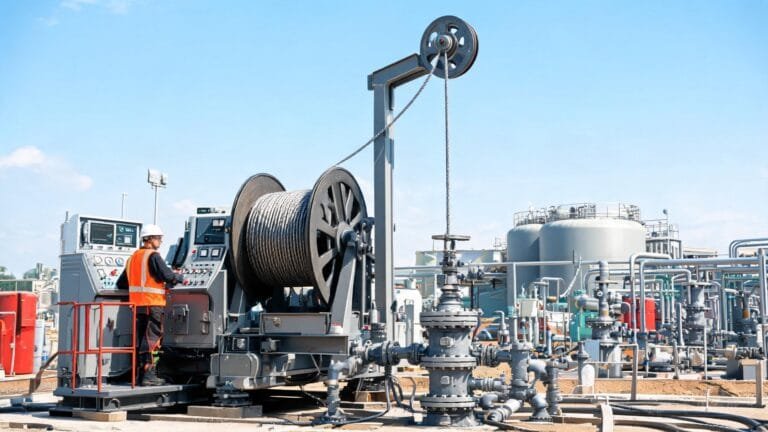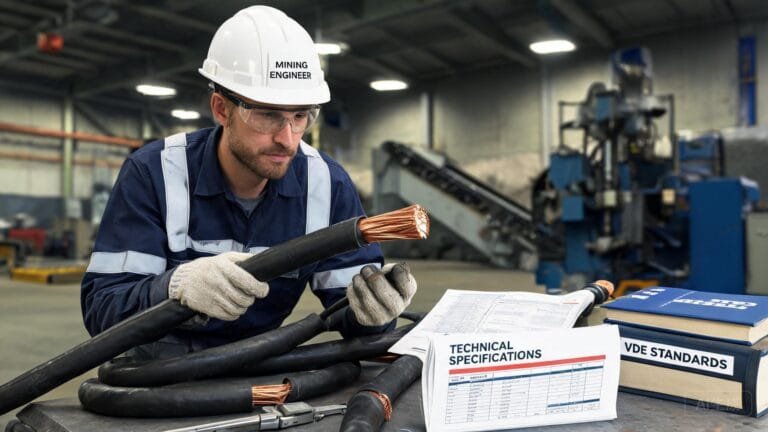

Baulift and Baulift-T are both flexible rubber power and control cable options for vertical lifting applications, but a cable basket or cable pot changes the selection process. Define the vertical route, support design, basket geometry, core schedule, lifting height and mechanical duty before selecting the final construction.
Use the route to distinguish the two options
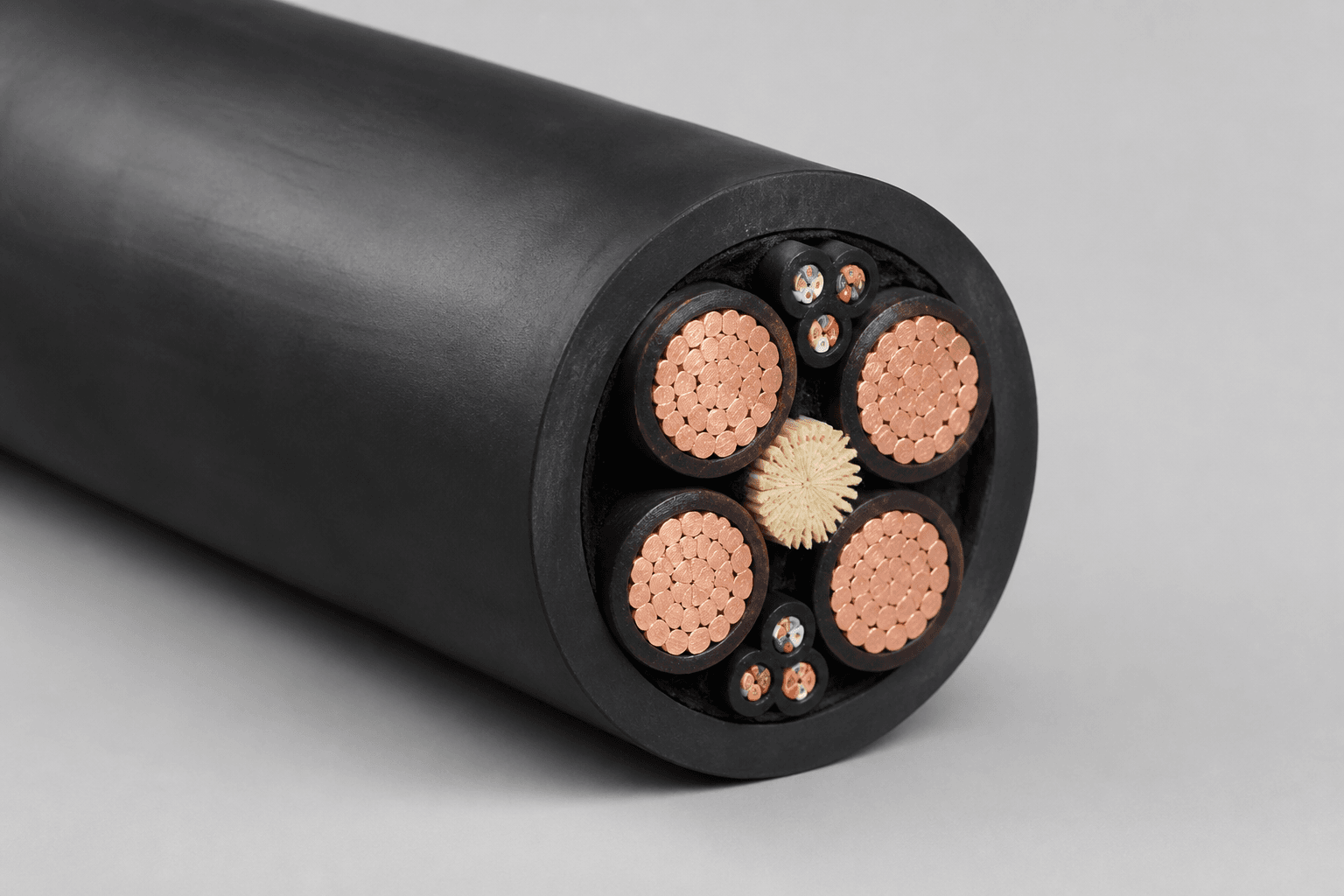
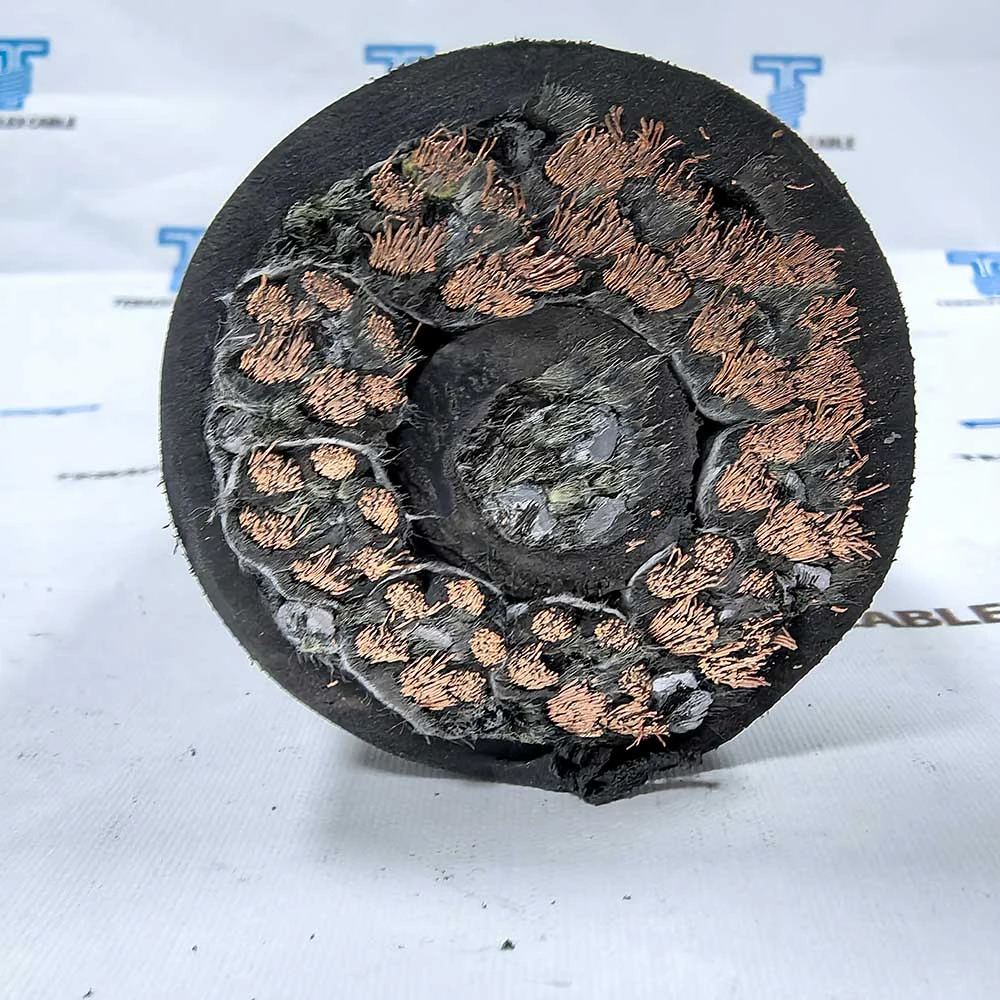
The TEBAOFLEX Baulift Cable is listed as a flexible rubber power and control cable for construction lifts, material hoists, cranes and freely suspended vertical routes. Its conductor count, cross-section, central support and outer sheath are configured to the lifting height and mechanical duty.
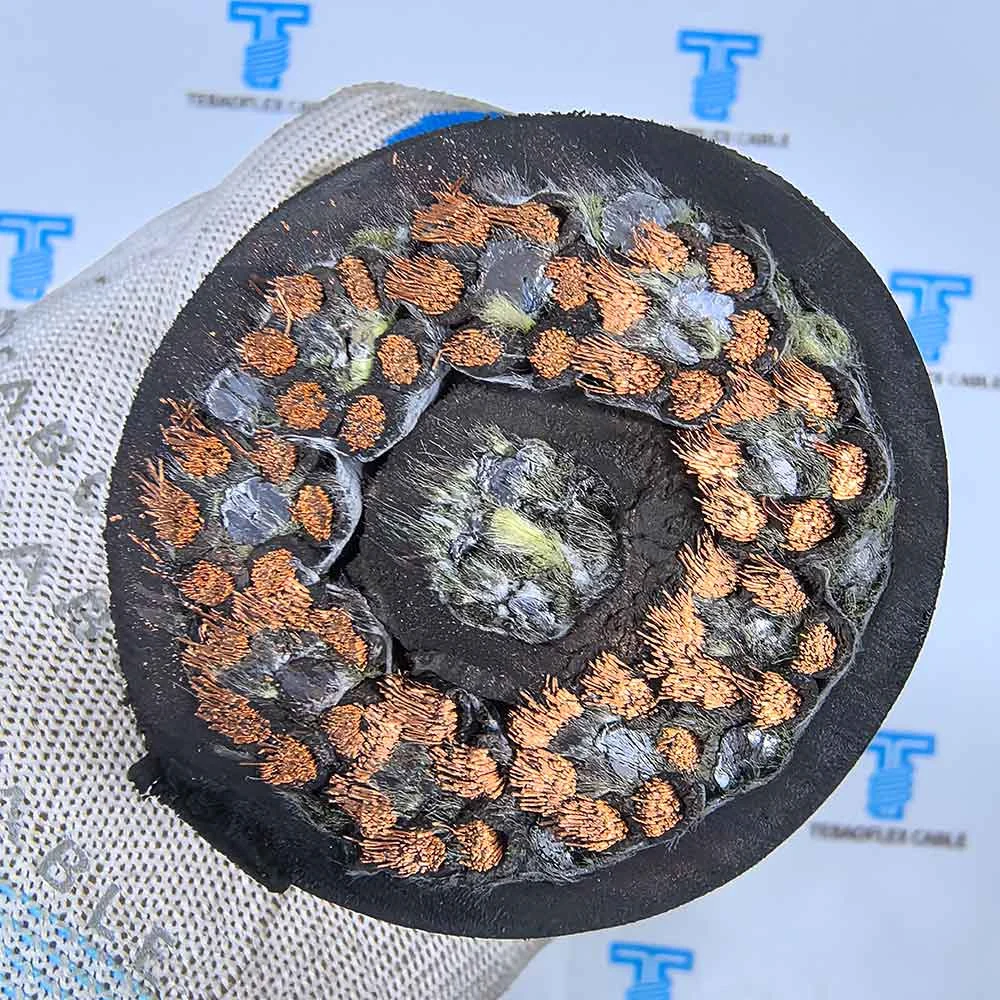
The TEBAOFLEX Baulift-T Basket Crane Cable is specifically listed for freely suspended construction-lift, hoist and crane applications using a cable basket or cable pot. Its support construction is project-configured for repeated vertical travel, bending and suspended load. The product page requires the basket diameter, cable lay direction, strain relief, lifting height and route to be coordinated before manufacture.
Baulift vs Baulift-T: published selection points
| Selection point | Baulift | Baulift-T |
|---|---|---|
| Listed application | Construction lifts, material hoists, cranes and vertically suspended cable routes | Freely suspended construction-lift, hoist and crane applications using a cable basket or cable pot |
| Support construction | Power and control cores with a central support element | Project-configured support construction for vertical travel, bending and suspended load |
| Published voltage | 300/500 V reference value | Not stated on the published product page; confirm the project requirement |
| Route input | Lifting height, cable weight, installed route, travel speed and core schedule | Basket diameter, lay direction, strain relief, lifting height and cable route |
| Reference configurations | Configured to project requirements | Published examples from 4 G 2.5 + 6 × 1 mm² to 5 G 16 + 15 × 1 mm² |
| Reference tensile value | Confirm for the selected construction | 1,000 N on the listed reference configurations |
Why basket geometry matters for Baulift-T
A cable basket does more than store cable length. Its diameter and the cable lay direction influence how the cable is arranged during repeated vertical travel. Strain relief and the path into and out of the basket must also be compatible with the approved construction. These details should be supplied before manufacture, together with the total lifting height and expected travel cycle.
The published Baulift-T configurations illustrate the effect of the core schedule on diameter and weight. For example, the listed 4 G 2.5 + 6 × 1 mm² construction has an approximate outer diameter of 16.3 mm and approximate weight of 375 kg/km, while the listed 5 G 16 + 15 × 1 mm² construction has an approximate outer diameter of 30.2 mm and approximate weight of 1,715 kg/km. These are reference construction values; do not use them as a substitute for the project-specific suspension and support calculation.
Choose the core schedule from the hoist system
Both options are described as power and control cables, so the exact core arrangement must be driven by the hoist or crane system. Provide the motor supply, protective-conductor requirement, control functions, safety circuits, terminals and any data or communication requirements. The selected core count and conductor size affect cable diameter, weight and the support arrangement.
RFQ checklist for basket crane cable
- Equipment and route: construction lift, material hoist or crane type; total lifting height; route drawing; and travel frequency.
- Basket details: cable-basket or cable-pot diameter, lay direction, capacity, strain relief and entry/exit geometry.
- Electrical schedule: voltage, power cores, protective conductor, control cores, safety functions and terminal plan.
- Mechanical duty: cable weight, suspended length, movement, bend points, supports and required tensile documentation.
- Environment: temperature, rain, UV exposure, dust, oil, abrasion and outdoor conditions.
- Documentation: requested data sheet, test records, inspection requirements and delivery destination.
Do not treat reference tensile values as an installation approval
The 1,000 N figure on the Baulift-T page is a reference tensile strength for the shown configurations. The final allowable installation load and support arrangement must be confirmed for the actual cable, lifting height, basket design, route and applicable project requirements. This is especially important when the cable remains freely suspended or experiences repeated vertical travel.
For a vertical lift cable with a published self-supporting sisal cord, review the Construction Lift-T Cable. For related crane solutions, see the TEBAOFLEX crane and festoon cable range.
Frequently asked questions
What is the main difference between Baulift and Baulift-T?
Baulift is listed for general construction-lift, hoist, crane and vertically suspended routes. Baulift-T is specifically listed for cable-basket or cable-pot applications, with basket and route details required before manufacture.
Does Baulift-T have one fixed construction?
No. The support construction is project-configured. The product page provides reference configurations, but the final construction must match the installation duty.
What does the 1,000 N value on Baulift-T mean?
It is a reference tensile strength shown for the published configurations. Confirm the allowable load and support design for the actual project.
What information is most important for a cable-basket quotation?
Provide basket diameter, cable lay direction, strain relief, lifting height, route, core schedule, cable length, environmental conditions and documentation needs.
Request a Baulift configuration review
Send TEBAOFLEX your basket crane cable requirements. We can review whether the Baulift or Baulift-T construction better matches the vertical route and required support arrangement before quotation.