
Project brief based on buyer-supplied application and specification information. The end user and commercial terms are not identified here; final cable construction and suitability remain subject to the approved project datasheet and site requirements.
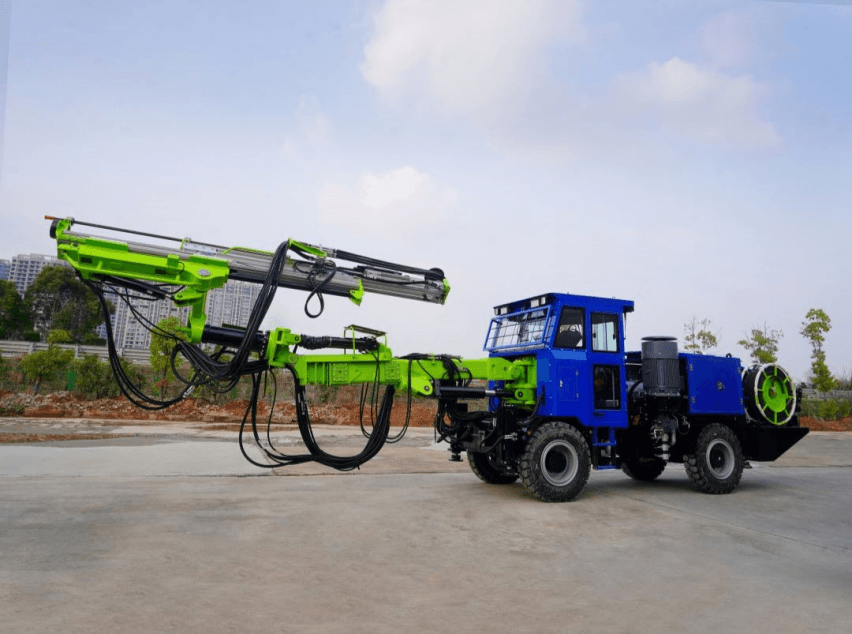
TEBAOFLEX is preparing a 2 kV Type G-GC cable solution for a mining-supply customer serving an underground mining project in Venezuela. The application is an underground drill jumbo (also called a jumbo driller), a compact multi-boom machine used to drill blast holes, rock-bolt holes and exploration holes in tunnels and mine roadways. For equipment that works in confined, dusty and demanding environments, the power cable must be selected as part of the machine and site system—not simply by conductor size.
Project at a glance
| Item | Documented project information | Selection relevance |
|---|---|---|
| Application | Underground drill jumbo / jumbo driller | Portable power is exposed to movement, tight travel routes and harsh underground conditions. |
| Project location | Mining project in Venezuela | Equipment requirements and delivery planning must be confirmed with the customer and local project team. |
| Specified cable | 2 kV Type G-GC, 3 x 2 AWG | The conductor arrangement, ground-check configuration and outside diameter must match the approved equipment specification. |
| Supply route | International production and transport planning | Production timing and transit should be evaluated together with the commissioning schedule. |
Why the underground drill jumbo application matters
An underground drill jumbo is designed to move and work in restricted mine and tunnel spaces. Its drilling booms, hoses and cable routing need room to operate while the machine travels through the working area. This makes installation routing, bend allowance, abrasion exposure, available connection space and protective grounding part of the practical cable-selection discussion.
For this project, the stated 2 kV Type G-GC 3 x 2 AWG configuration provides a defined starting point. Before manufacture, TEBAOFLEX will confirm the latest approved drawing or datasheet, including the power-core arrangement, ground-check requirement, jacket color, termination interface, required length and the operating conditions reported by the project team. For a broader RFQ checklist, see our Mining Cable Selection Guide.
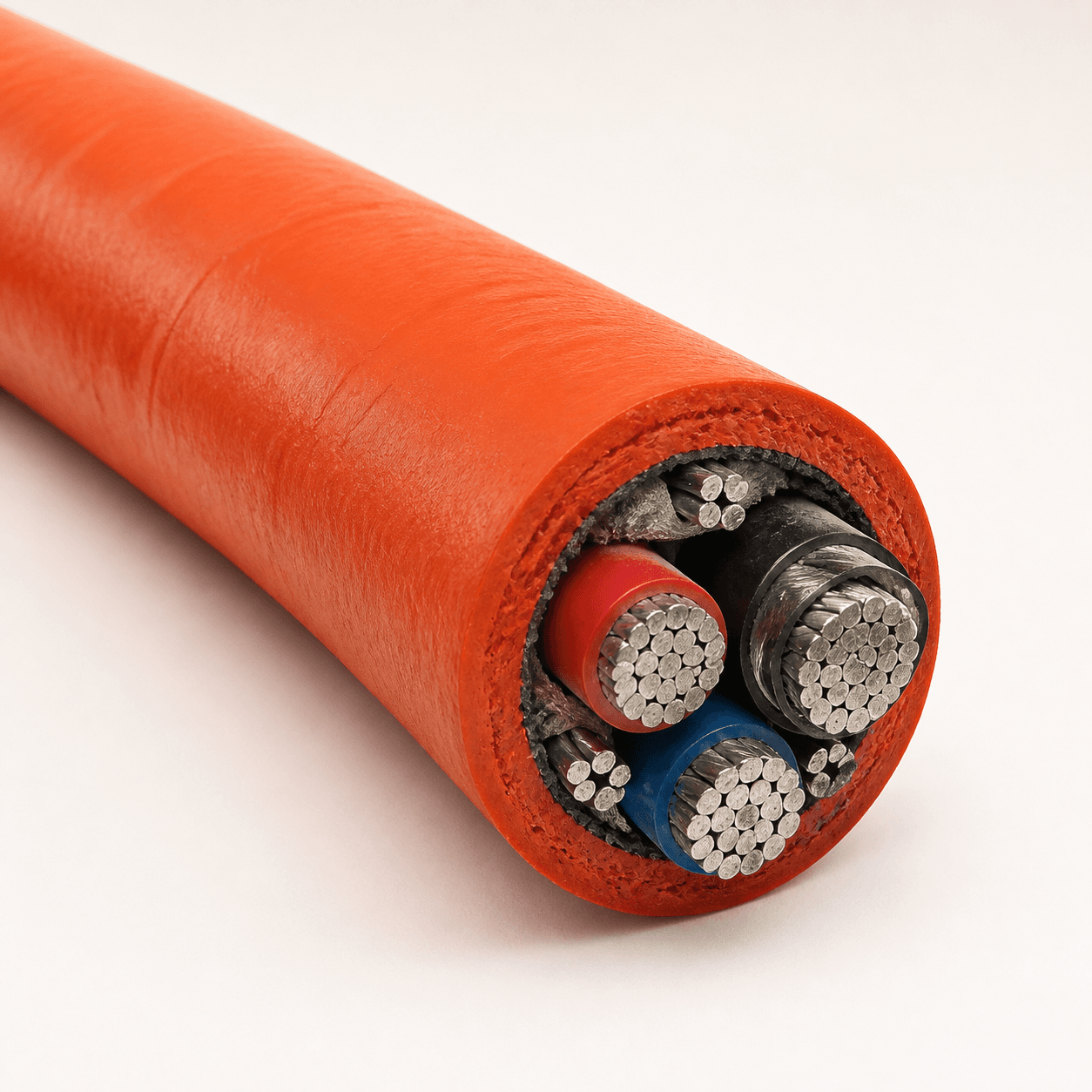
Documented cable construction points
The project background specifies a flexible mining-cable construction intended to support the equipment application. The following points are drawn directly from the supplied specification notes. They are project-reference information rather than a substitute for the final approved technical datasheet.
| Construction element | Documented detail | Purpose in the application |
|---|---|---|
| Conductor | Flexible tinned copper wires | Supports a flexible cable build for equipment supply. |
| Thermoset insulation | Premium-grade 90 °C EPDM, described as heat-, moisture- and oil-resistant | Provides an insulated system for the stated project environment. |
| Insulated conductors | Flexible tinned copper, separator tape and green EPR insulation | Forms part of the specified insulated conductor system. |
| Ground-check conductor | Flexible tinned copper, separator tape and yellow EPR insulation | Allows the equipment designer to implement the specified ground-check arrangement. |
| Outer protection | Filler, tape, extra-heavy 90 °C orange CPE rubber jacket and Kevlar braided reinforcement | Builds the documented outer protection system for the project cable. |
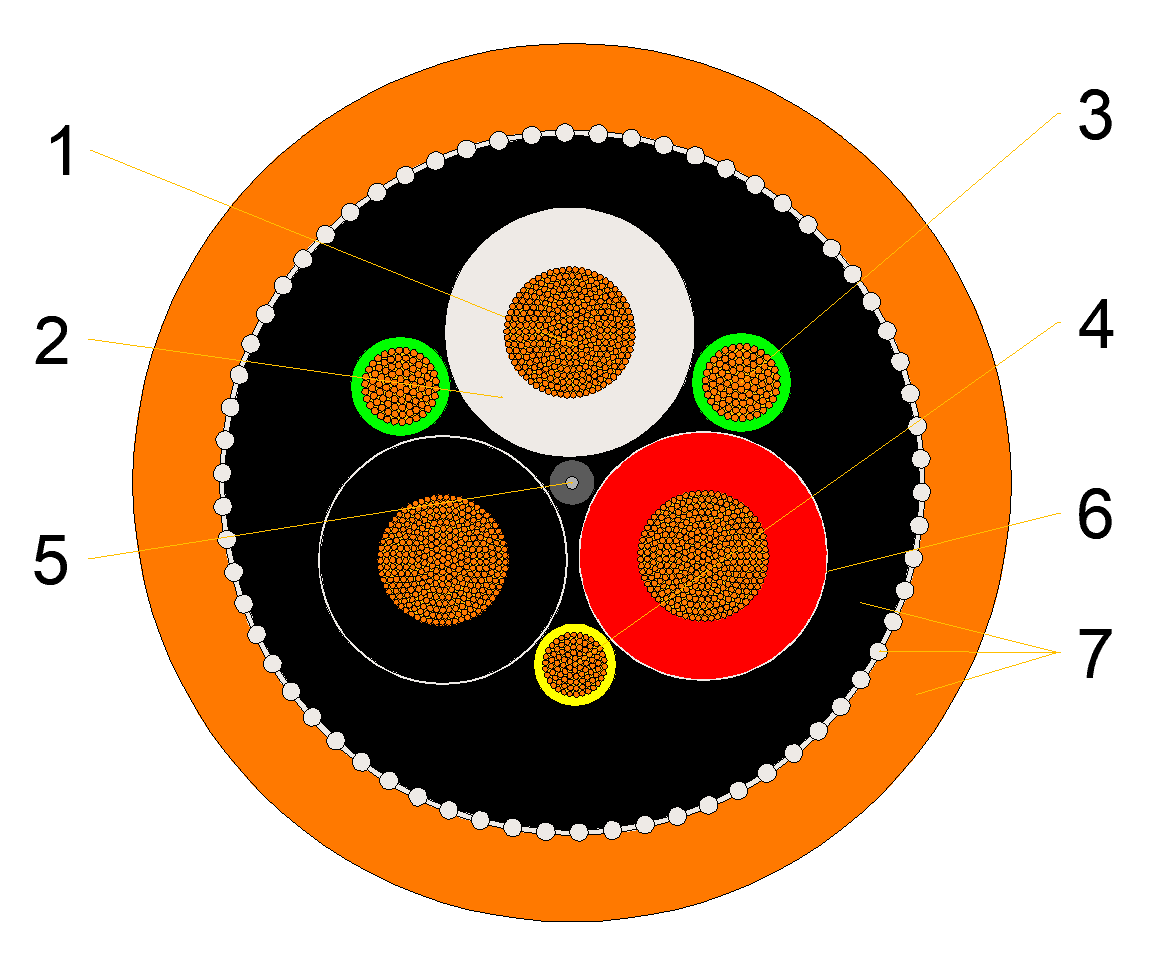
Planning around production and transit
The project discussion identified transport as an important schedule consideration, with an estimated 60-day transit window noted for the route. In response, TEBAOFLEX planned to shorten the indicative production period from 20 days to 15 days to help the customer coordinate procurement with the project timeline. These timings are planning inputs for this case, not a universal delivery promise: final lead time depends on the approved construction, quantity, material availability, logistics route and payment clearance.
For international mining projects, early technical confirmation helps prevent avoidable delay. The most useful RFQ information is the equipment cable schedule, voltage, conductor size, ground-check requirement, cable length, installation route, movement frequency, termination details, test expectations and target arrival date.
Next step: confirm the approved equipment specification
This Venezuela project illustrates a practical approach to a specialist mining-cable enquiry: start with the application, verify the equipment-side requirements, document the cable build and then align manufacture and transport with the project schedule. Buyers seeking a comparable 2 kV solution can review the Type G-GC 2 kV mining power cable product page, or send TEBAOFLEX the equipment specification for a project-specific review.