
RG7H1R / RG7OZR Cable FAQ: Most Common Questions
RG7H1R and RG7OZR are medium voltage EPR-insulated power cables, and engineers often have detailed questions about installation, maintenance, and type testing. This FAQ addresses the most frequently asked questions from TEBAOFLEX MV cable customers.
For complete specifications, see our RG7H1R product page, RG7OZR product page, and specifications guide.
General FAQ
Q1: What does the RG7H1R designation mean?
A: The designation follows IEC standards: R = EPR insulation, G7 = MV voltage series, H1 = standard construction, R = unarmoured PVC sheath. RG7OZR adds OZR = steel wire armoured + PVC sheath for mechanical protection.
Q2: What is the difference between RG7H1R and RG7OZR?
A: RG7H1R is unarmoured — copper wire screen only, for indoor tray and conduit. RG7OZR is steel wire armoured — for direct burial and outdoor mechanical protection. Same EPR insulation, conductor, and screen. See our comparison guide.
Installation FAQ
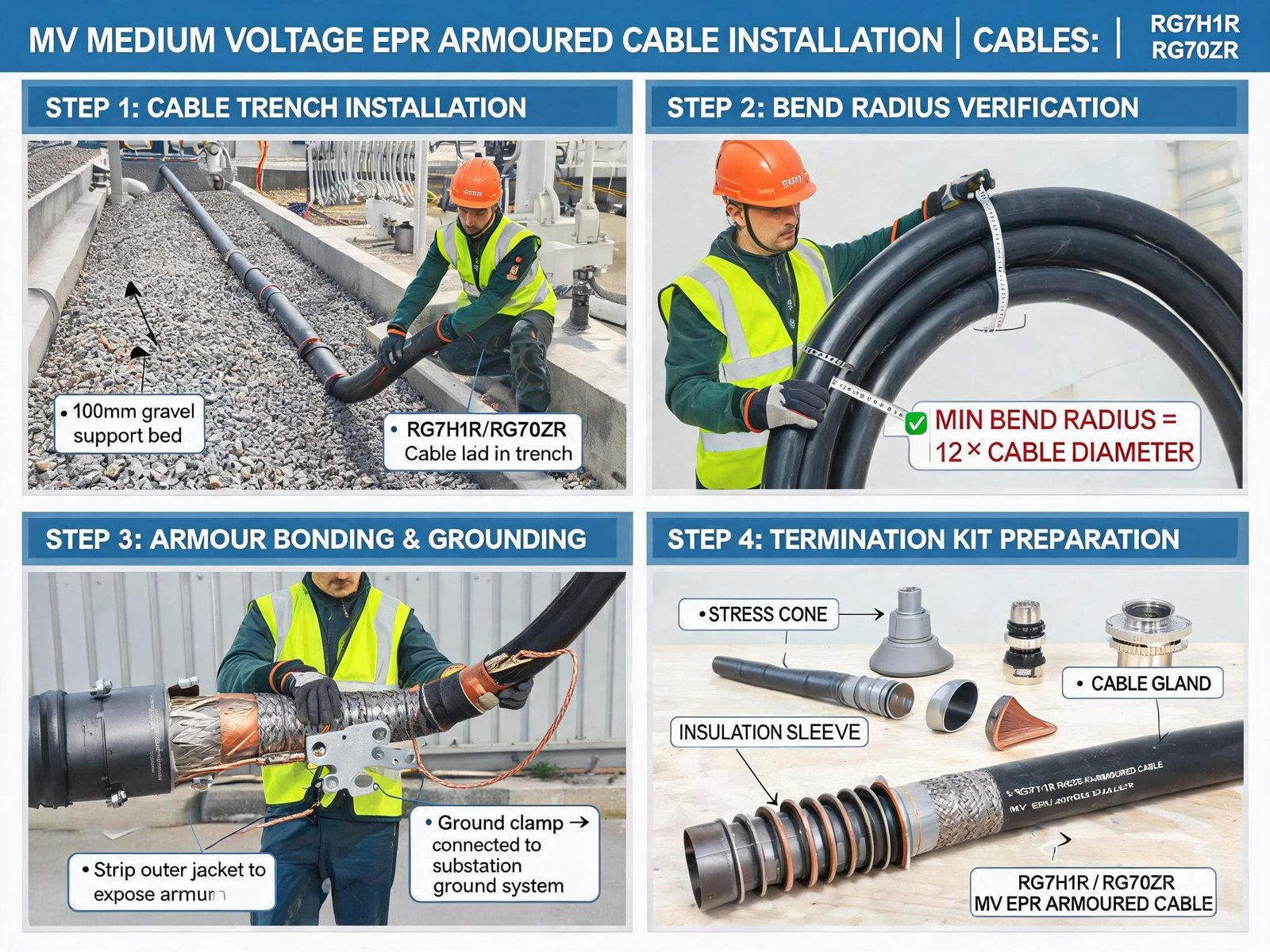
Q3: What is the minimum bending radius for RG7H1R / RG7OZR?
A: Minimum bending radius per IEC 60502-2:
- Single-core: 12 × overall diameter (12D)
- 3-core: 15 × overall diameter (15D)
- During installation: Add 20% to the above values
For example, RG7OZR 1C 70mm² 6/10kV with 30mm OD requires minimum 360mm fixed bending radius.
Q4: How do I terminate RG7H1R / RG7OZR cable?
A: MV cable terminations require specialized kits:
- Heat shrink termination kit: Most common — provides stress control, insulation, and weatherproofing
- Cold shrink termination: Preferred where heat is not permitted — silicone rubber pre-expanded
- Steps: Strip outer sheath → expose armour → bond armour to ground → expose copper screen → bond screen → strip insulation screen → install stress cone → install termination kit
- Critical: Never use LV termination methods on MV cable — flashover risk
Q5: Can RG7H1R be direct buried?
A: No. RG7H1R is unarmoured and not designed for direct burial without additional mechanical protection. For direct burial, use RG7OZR with steel wire armour. If RG7H1R must be buried, it must be installed in a rigid conduit or pipe that provides equivalent mechanical protection.
Q6: How should I bond the copper wire screen and armour?
A: Proper bonding is critical for MV cable safety:
- Copper screen: Bond at both ends to station ground for fault current path
- Steel wire armour (RG7OZR): Bond at both ends using armour glands with bonding terminals
- Grounding conductor: Connect to station grounding grid per IEEE 80
- Single-core cables: Special consideration for induced voltages in armour — use aluminum wire armour (AWA) for single-core to prevent magnetic losses
Maintenance and Troubleshooting FAQ
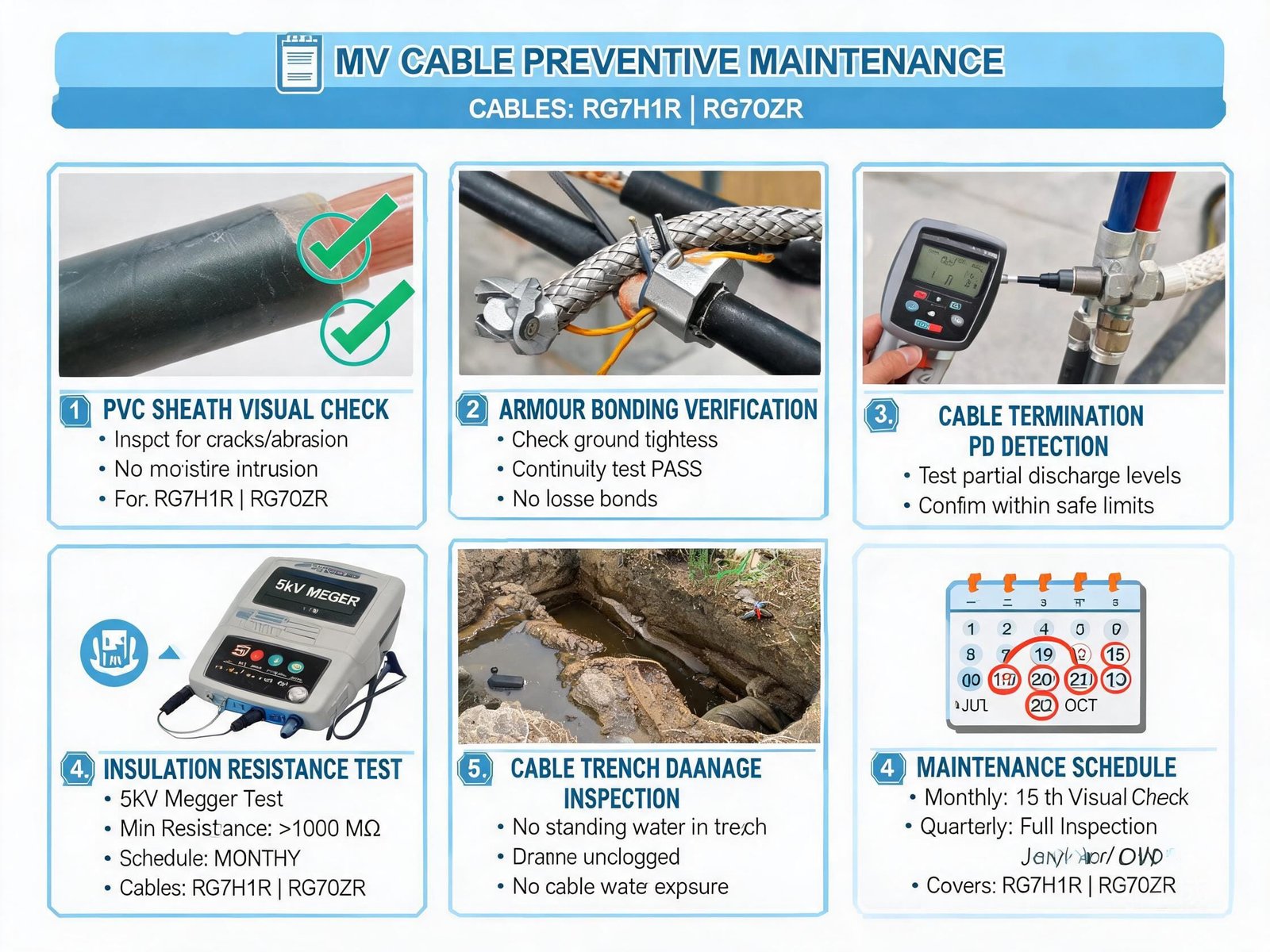
Q7: How often should I test RG7H1R / RG7OZR cable insulation?
A: MV cable testing schedule:
- New installation: 5kV or 10kV Megger (VLF) test before energizing
- Commissioning: Partial discharge test and tan-delta measurement for critical circuits
- Annual: Visual inspection of terminations, cable trays, and grounding connections
- 3-5 years: Insulation resistance and tan-delta measurement
- After fault: Full insulation test before re-energizing
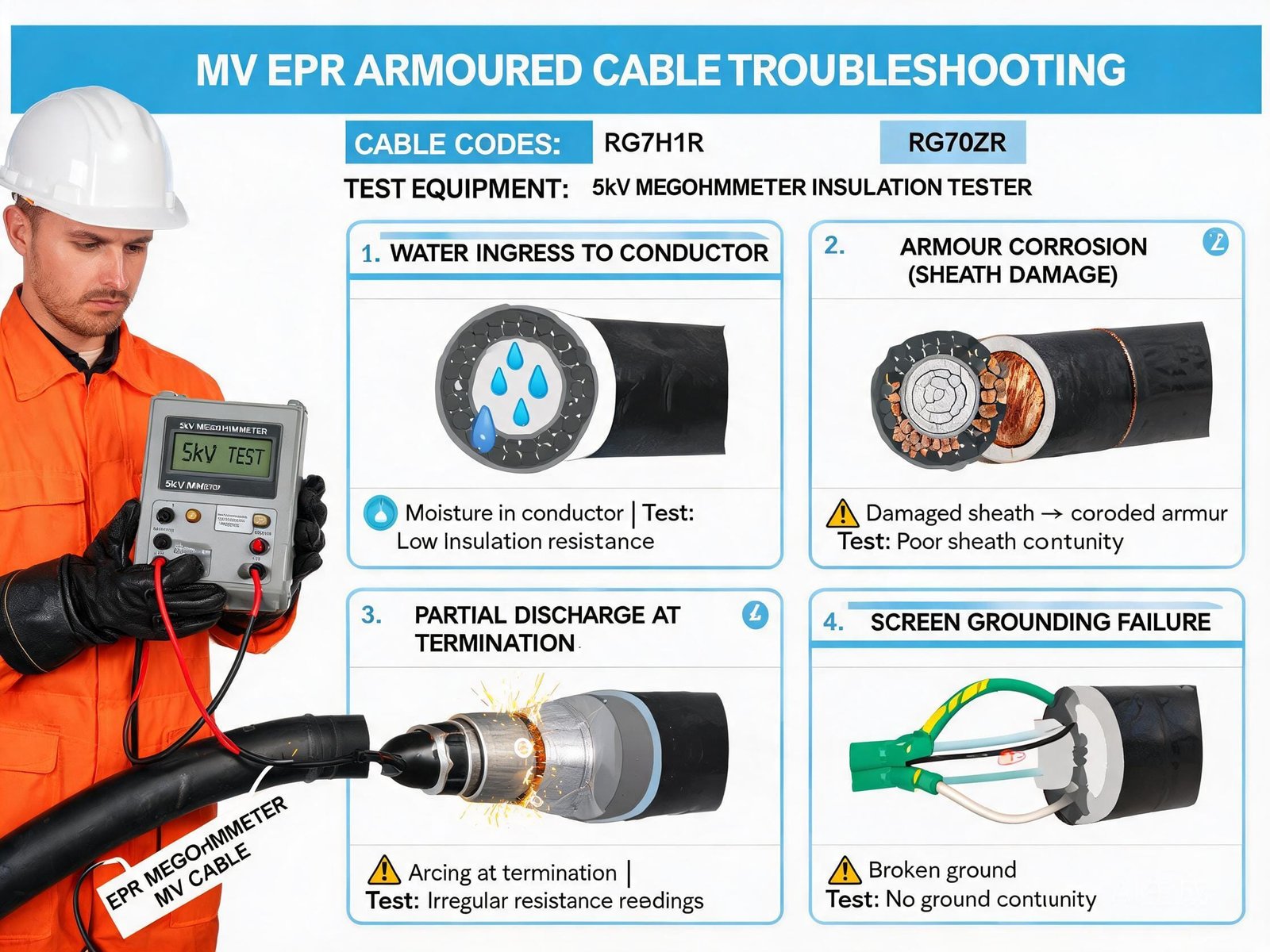
Q8: What are common causes of RG7H1R / RG7OZR cable failure?
A: Common MV cable failure modes:
- Termination failure: Improper stress cone installation causing partial discharge and flashover
- Water ingress: Moisture entering through damaged sheath causing insulation degradation
- Armour corrosion: Steel wire armour corrosion through PVC sheath damage
- Screen grounding failure: Poor bonding causing floating screen voltage and discharge
- Thermal degradation: Overload causing EPR insulation thermal aging
- Mechanical damage: Dig-in or impact damage to buried cable
Q9: Can RG7H1R / RG7OZR cable be spliced?
A: Yes, but use MV-rated joint kits only:
- MV joint kit: Heat shrink or cold shrink joint kit rated for same voltage
- Conductor connection: Compression or mechanical connector
- Insulation restoration: Heat shrink tubing with stress control mastic
- Screen restoration: Copper mesh or wire connection between screen ends
- Armour restoration (RG7OZR): Steel wire connection between armour ends
- Testing: Insulation resistance test after jointing before re-energizing
Q10: What is the service life of RG7H1R / RG7OZR cable?
A: Expected service life:
- Indoor installation (RG7H1R): 30-40+ years
- Direct burial (RG7OZR): 25-35+ years
- EPR insulation: Excellent thermal aging resistance — 90°C rated for continuous operation
- Factors reducing life: Water ingress, thermal overload, mechanical damage, poor terminations
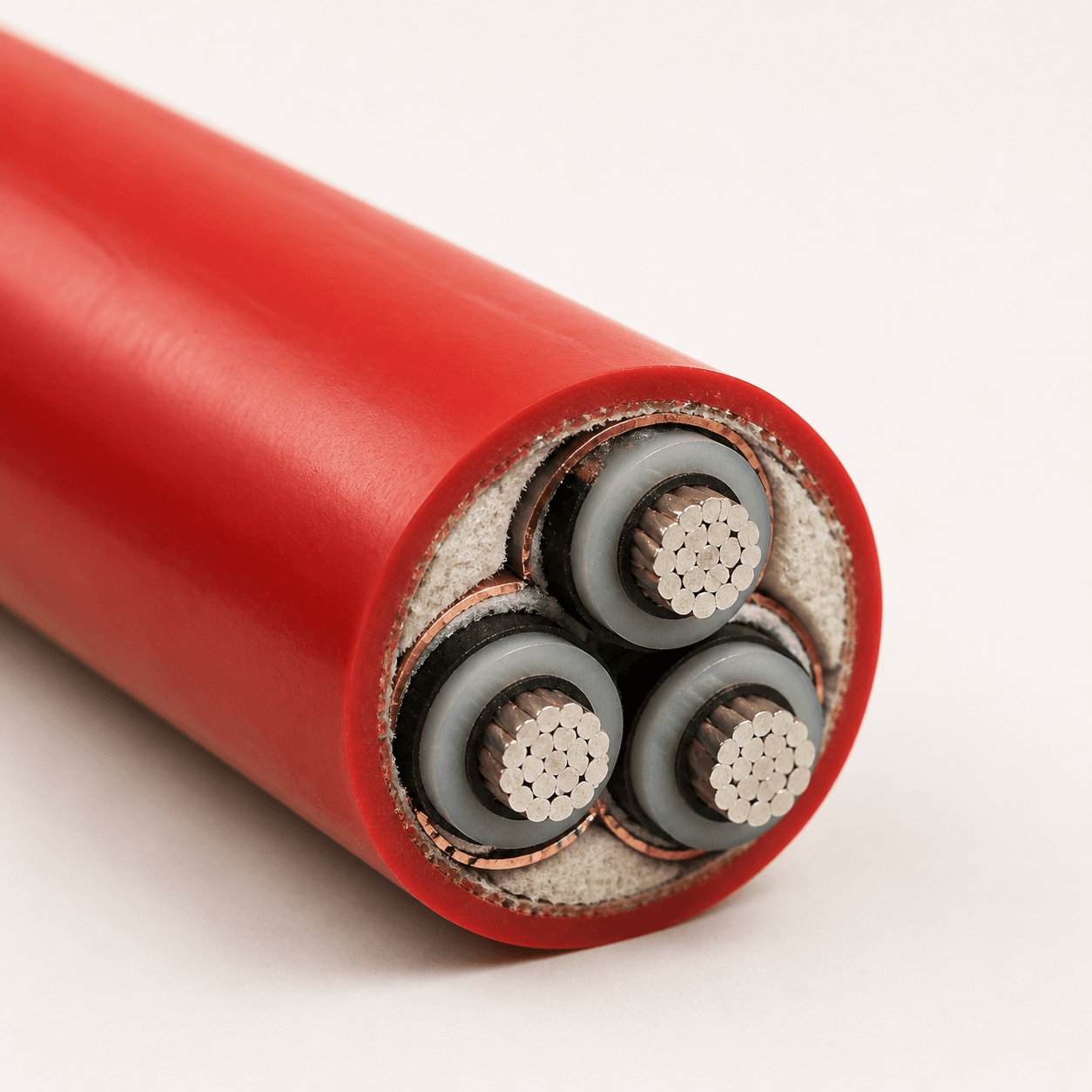
Q11: How do I identify genuine RG7H1R / RG7OZR cable?
A: Check for:
- Cable marking: Type (RG7H1R/RG7OZR), voltage (e.g., 6/10kV), manufacturer, IEC 60502-2
- Conductor screen: Semiconducting layer (black) over conductor
- Insulation: EPR (visible as colored/rubber insulation)
- Insulation screen: Semiconducting strippable layer (black) over insulation
- Copper screen: Copper wires or tape visible under sheath
- Armour (RG7OZR): Galvanized steel wire under outer sheath
- Type test certificate: IEC 60502-2 partial discharge and impulse test report
Still Have Questions?
TEBAOFLEX technical support is available for:
- RG7H1R / RG7OZR cable sizing for MV distribution
- Voltage rating selection (3.6/6kV to 12/20kV)
- Armour vs unarmoured selection based on installation environment
- MV termination and joint kit selection
- Type test documentation and compliance
- Quotation and delivery timeline
Contact TEBAOFLEX engineering for expert assistance and competitive pricing on RG7H1R / RG7OZR medium voltage cables.