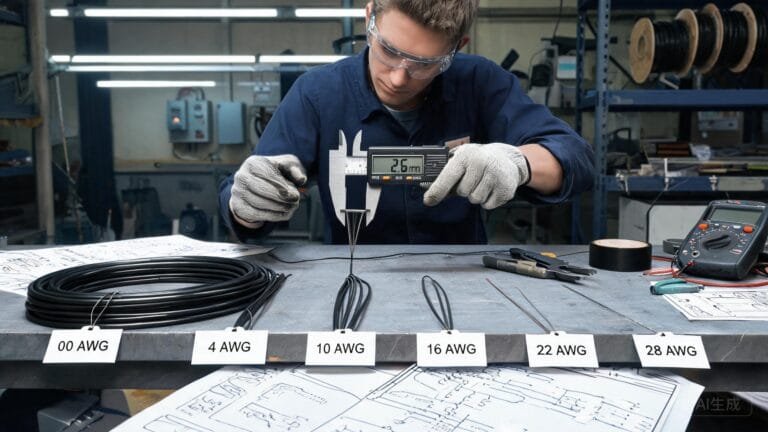

Solid pair cables for oil and gas are selected from the circuit record: analog or digital function, pair count, screening, armour, hydrocarbon exposure and a fixed installation route. Use a construction checklist instead of relying on a generic instrumentation name.
What the application record should capture
Record the process unit, DCS or PLC loop, transmitter type, pair count, maximum route length, tray or conduit path, and whether the cable is fixed after installation. Solid conductors are typically used on stationary oil and gas routes where termination reliability and low-noise analog loops matter more than repeated flexing.
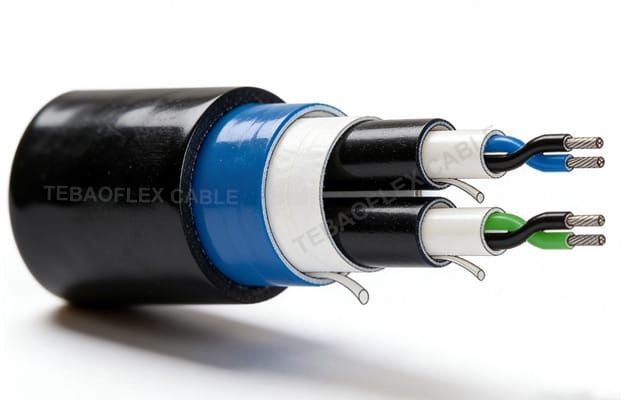
Confirm voltage, signal type (4–20 mA, RTD, thermocouple, digital I/O), earth scheme and whether individual screens, an overall screen, or both are required. See the related shielded instrumentation cable reference for a confirmed TEBAOFLEX construction family.
Solid pair versus stranded pair
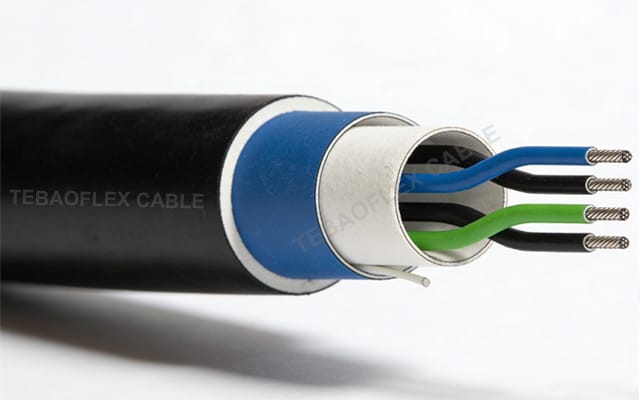
Solid pair cables are usually specified for fixed tray, rack and conduit runs in refineries, terminals, well pads and offshore modules. Stranded pair cables remain the better default where vibration, short-radius dressing, or occasional movement is part of the duty.
Do not mix the two constructions on the same approved loop without checking termination hardware, ferrules and the project cable schedule. A previous order for “instrument cable” is not evidence that solid pair is acceptable on a moving skid or drag path.
Construction points to verify
Verify pair identification, insulation, individual screen (IS), overall screen (OS), drain wire, armour and outer sheath against the approved data sheet. Hydrocarbon splash, mud, UV and temperature must be written into the exposure record, not assumed from a photograph.
For oil contact and cleaning chemicals, use the same evidence method as the oil resistant cable guide. Offshore or platform routes also need the local fire, smoke and mud specification checked against the current project standard.

Project verification checklist
| Check | Record | Why it matters |
|---|---|---|
| Circuit duty | 4–20 mA, RTD, thermocouple, digital I/O | Defines pair type and screening. |
| Conductor | Solid pair, size and pair count | Confirms fixed-route construction. |
| Screening | IS, OS or IS+OS and drain wire | Controls noise and earth scheme. |
| Mechanical route | Tray, conduit, armour, glands | Prevents unsupported indoor-only use. |
| Environment | Oil, mud, UV, temperature, fire class | Sets sheath and approval evidence. |
| Evidence | Data sheet, marking, test records | Supports FAT, SAT and punch-list close-out. |
Common mistakes
- Treating instrument cable as a complete specification. Pair count, screen type and conductor class must be written down.
- Using solid pair on a moving or high-vibration route. Recheck the mechanical duty before release.
- Omitting hydrocarbon and fire evidence. Jacket colour or a familiar designation is not sufficient.
- Leaving earth and screen bonding undefined. IS/OS only works when the earthing drawing is followed.
What to send with the enquiry
Include the loop list, pair count, conductor class, screening, armour, sheath, route length, ambient and fluid exposure, and the governing standard. TEBAOFLEX can then match a documented construction instead of substituting a visually similar cable.