
In mining, ports, cranes, marine equipment and other demanding industrial environments, cable selection directly affects equipment reliability and maintenance costs. A flexible cable may need to handle repeated movement, vibration, abrasion, moisture, oil, temperature changes and mechanical tension at the same time.
Choosing the right cable is therefore more than matching voltage and conductor size. The cable must also suit the way the equipment moves, the environment where it operates and the service life expected by the project.
1. Start with the Application
The first question is how the cable will be used. Fixed installations, festoon systems, reeling equipment, trailing machines and robotic systems place very different demands on a cable. For example, a Flat PNCT Flexible Rubber Port Cable suits demanding port connections, while reel drum equipment may require a dedicated rubber reeling construction.
- Fixed installation: The cable mainly needs dependable electrical performance and environmental protection.
- Festoon systems: The cable must tolerate repeated bending and controlled horizontal movement.
- Reeling equipment: The cable needs high flexibility, resistance to torsion and strong mechanical construction.
- Trailing equipment: The cable must withstand dragging, impact, crushing and repeated movement.
- Robotic or automated equipment: The cable must manage continuous flexing, torsion and a tight installation space.
2. Check the Electrical Requirements
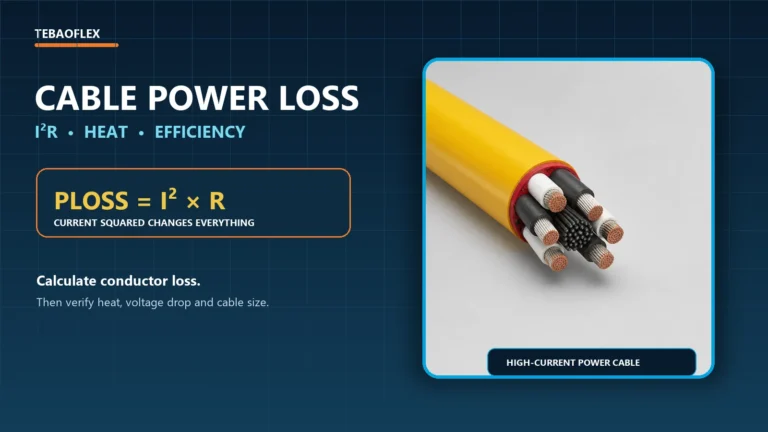
Voltage, current, conductor size and the number of cores are fundamental selection factors. The cable should be sized for the actual load, duty cycle, ambient temperature and installation method.
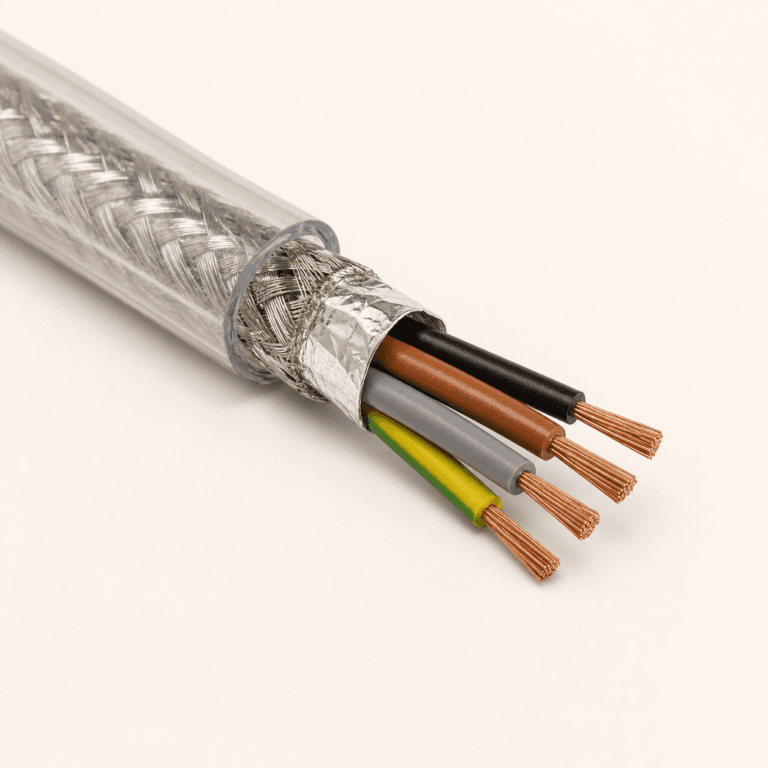
For power applications, also consider voltage drop and short-circuit requirements. For control and signal applications, shielding and suitable conductor arrangements may be necessary to reduce electromagnetic interference and maintain stable communication. A product such as SY LSZH PVC Control Flexible Cable can be reviewed when a project needs flexible control conductors with additional shielding and mechanical protection.
3. Consider the Working Environment
Industrial cables often operate in conditions that are much harsher than those found in ordinary buildings. Before selecting a construction, review exposure to water, seawater, mud, oil, chemicals, sunlight, heat, cold and abrasive surfaces.
Mining and marine applications may require robust sheathing and resistance to moisture. Port and crane applications may require protection against outdoor exposure, impact and repeated mechanical stress. For port equipment, a 600V 2PNCT-H-U rubber reeling cable is an example of a product designed around repeated reel movement. In oil and gas environments, material compatibility and fire-performance requirements may also be important.
4. Match the Cable to the Movement
Movement is one of the most important factors in flexible cable design. A cable designed for occasional bending should not automatically be used in a high-cycle reeling or robotic application.
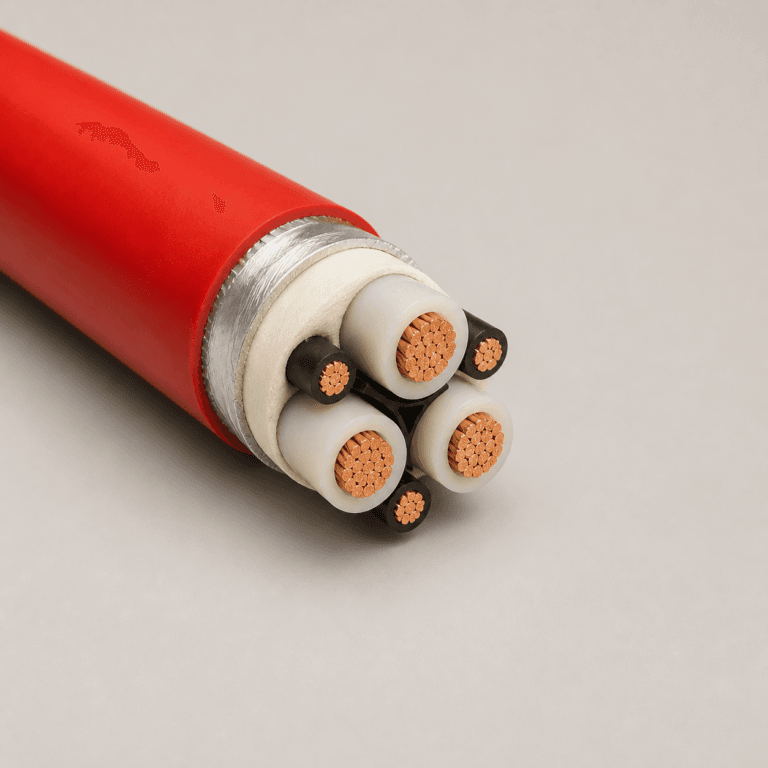
Review the minimum bending radius, bending direction, travel distance, operating speed, acceleration and torsion. The installation method should also be considered. Incorrect guiding, excessive tension or a bending radius that is too small can shorten cable life even when the cable itself is technically suitable. Heavy-duty trailing applications may call for a construction such as the N(T)SCGEWOEU-TR medium-voltage trailing cable.
5. Select the Right Sheath and Construction
Rubber, PUR and PVC cables each have different performance characteristics. Rubber cables are widely used where flexibility, toughness and resistance to harsh working conditions are important. PUR sheaths can provide strong abrasion resistance and good outdoor durability. PVC cables may be suitable for many fixed, control and general industrial applications.
The conductor arrangement, insulation system, shielding, reinforcement and outer sheath should all be selected as one complete construction. A cable is a system, and changing one component can affect flexibility, heat dissipation and mechanical performance.
6. Confirm Standards and Quality Requirements
Projects may require compliance with specific national or international standards, approvals or customer specifications. Confirm the required markings, test documentation, voltage class and certification before ordering.
It is also important to review the manufacturer’s quality controls, testing capability and experience with similar applications. A technically correct cable from an unsuitable source can still create delays and reliability problems.
Practical Selection Checklist
- What equipment will use the cable?
- Will the cable be fixed, flexing, trailing or reeled?
- What voltage, current and core configuration are required?
- What bending radius, travel distance and movement speed apply?
- Will the cable contact water, oil, chemicals or abrasive materials?
- Are shielding, reinforcement or special certifications required?
- What installation accessories and guiding system will be used?
Conclusion
The right flexible cable balances electrical performance, mechanical strength and environmental resistance. By evaluating the application, movement profile, installation conditions and required standards together, operators can reduce unplanned downtime and improve the service life of their equipment.
TEBAOFLEX supports customized cable solutions for mining, cranes, ports, marine equipment, automation and other demanding industrial applications. Contact our technical team with your operating conditions and cable requirements to discuss a suitable solution.