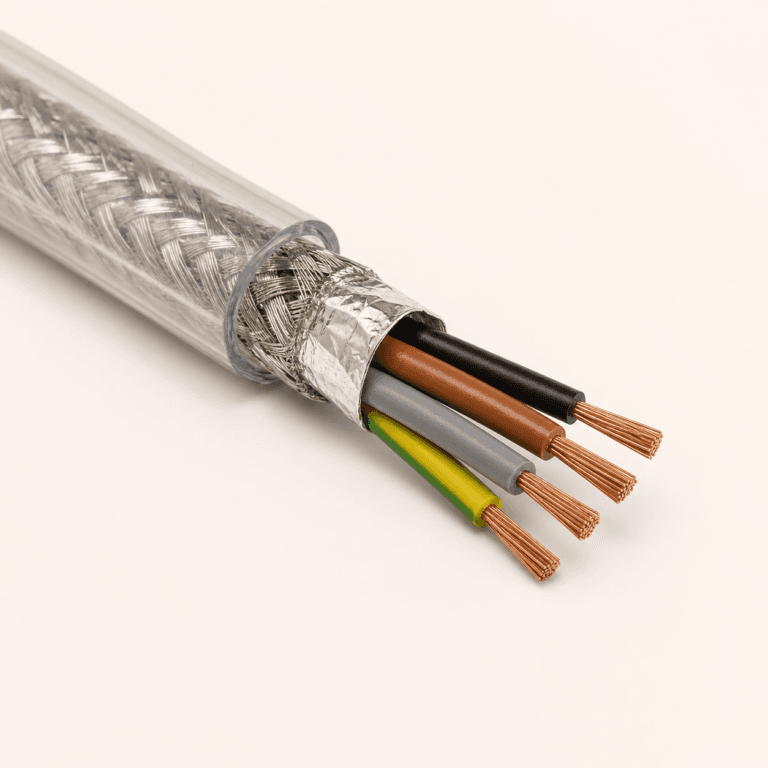
VFD Motor Cable Length: Reflected Waves, dV/dt, EMC & Cable Selection
Learn how VFD motor cable length affects reflected-wave voltage, dV/dt, cable capacitance, motor insulation and EMC, and how to evaluate reactors, filters and cable construction.

Learn how VFD motor cable length affects reflected-wave voltage, dV/dt, cable capacitance, motor insulation and EMC, and how to evaluate reactors, filters and cable construction.
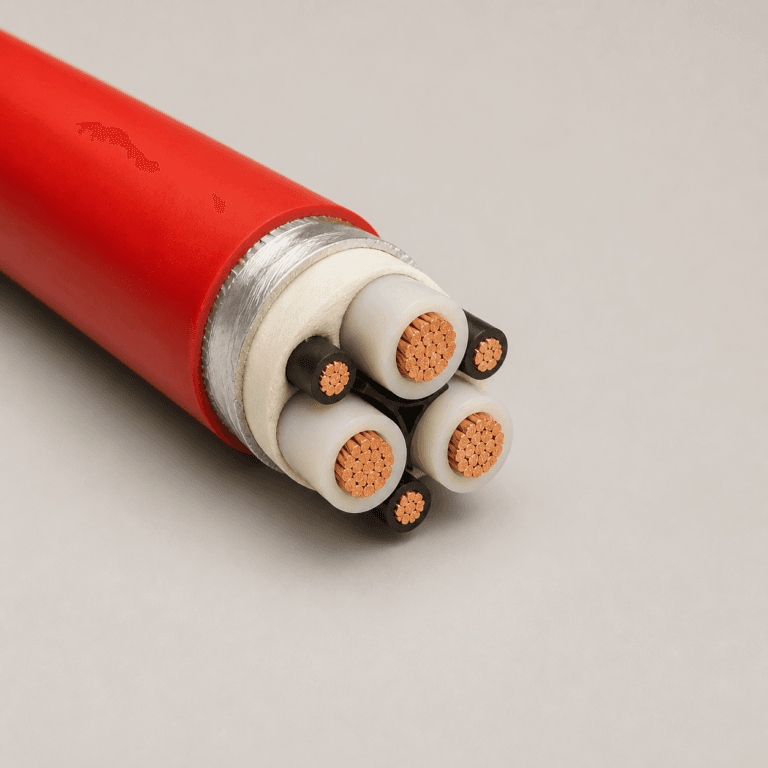
Understand cable resistance, reactance and impedance, including AC voltage drop, frequency effects, motor circuits, VFD cable behaviour and the difference between series and characteristic impedance.
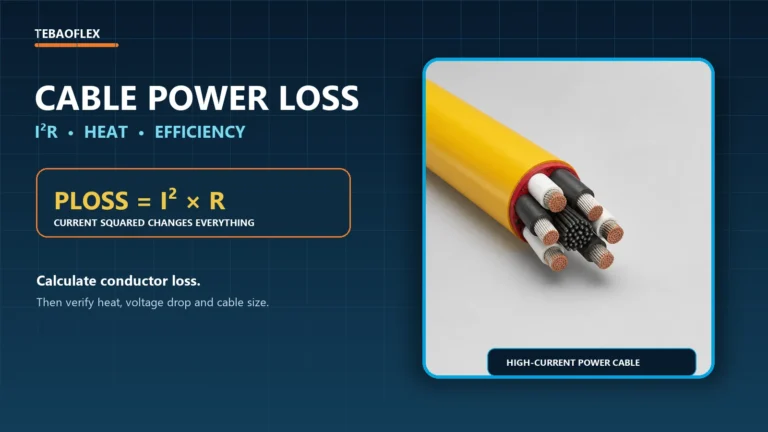
Calculate cable power loss with I²R and see how current, resistance, length, conductor size and temperature affect heat, voltage drop and energy use.
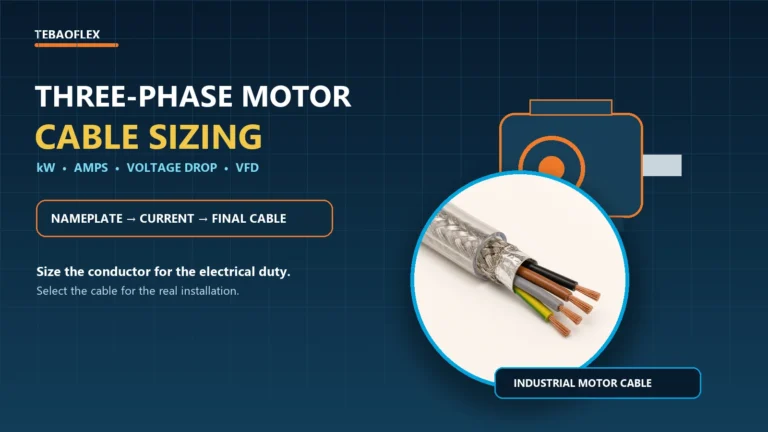
Size a three-phase motor cable from verified current through ampacity, derating, voltage drop, starting conditions, VFD and mechanical-duty checks.
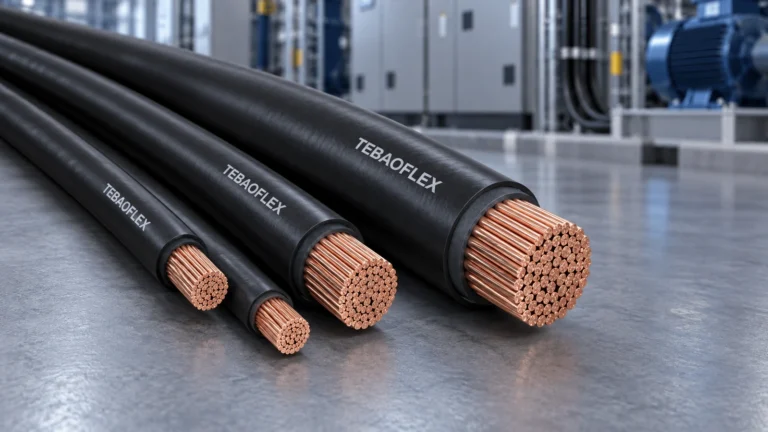
Convert amps to cable size with a practical industrial process covering mm², AWG, ampacity, derating, voltage drop, cable length and installation conditions.
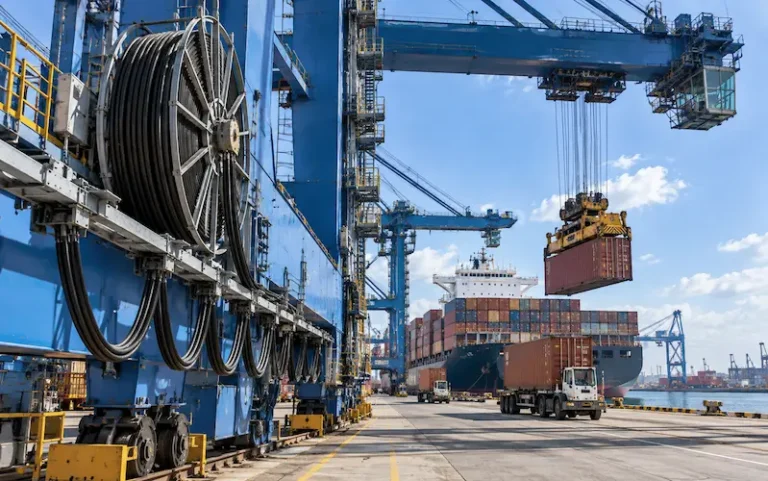
Learn how cable length affects voltage drop, resistance and conductor size, with worked comparisons for long industrial power, reeling and festoon cable runs.
Calculate DC cable voltage drop for 12V, 24V, 28V, 48V and 270V systems, with practical examples, conductor sizing factors and industrial application guidance.
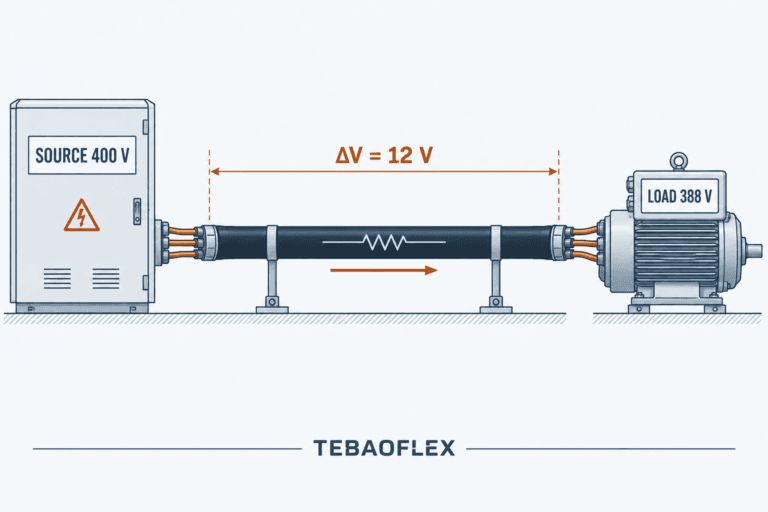
Learn how to calculate cable voltage drop for DC, single-phase and three-phase circuits, compare worked examples, and select cable size using verified resistance, reactance and operating data.
Learn how Ohm's Law applies to electrical cables, including conductor resistance, voltage drop, cable size, ampacity and industrial selection limits.
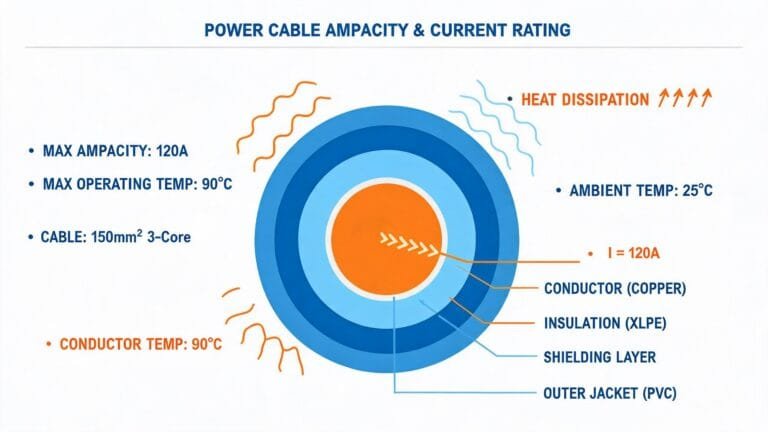
Quick answer: Cable ampacity is the current a specified cable can carry continuously under stated installation and environmental conditions without exceeding its permitted conductor temperature. Conductor size alone does not determine an ampere rating. Start with a rating for the…