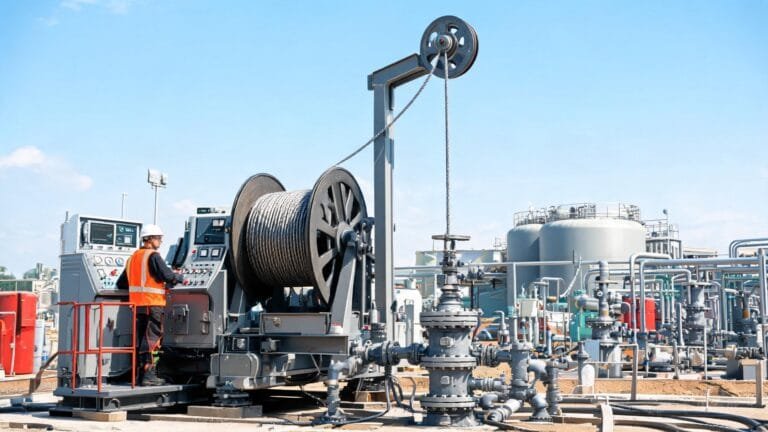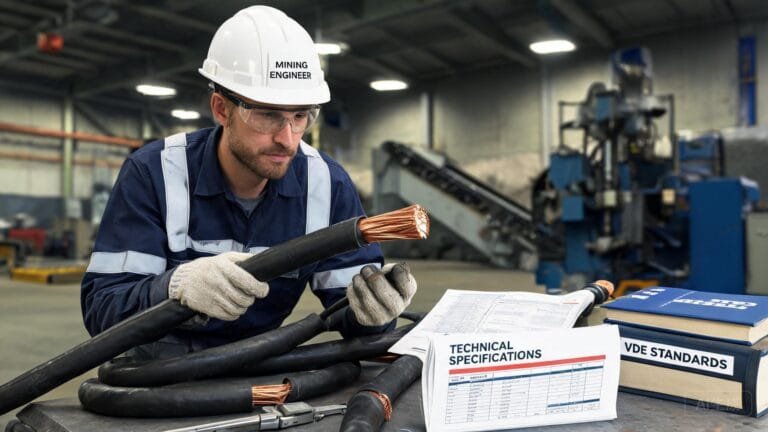

A construction hoist cable must be selected for a vertical moving route, not as a generic flexible power cord. Confirm the suspended length, self-supporting arrangement, power and control-core schedule, travel path, bend radius and site environment before specifying the final construction.
Start with the vertical route
Construction hoists place the cable in a different duty from a fixed feeder or a horizontal reel. The cable can run in a vertical cable basket or a suspended path, move with the lift and carry its own installed weight over the supported length. The route design, support system and moving bend points therefore need to be confirmed before the conductor schedule is finalised.
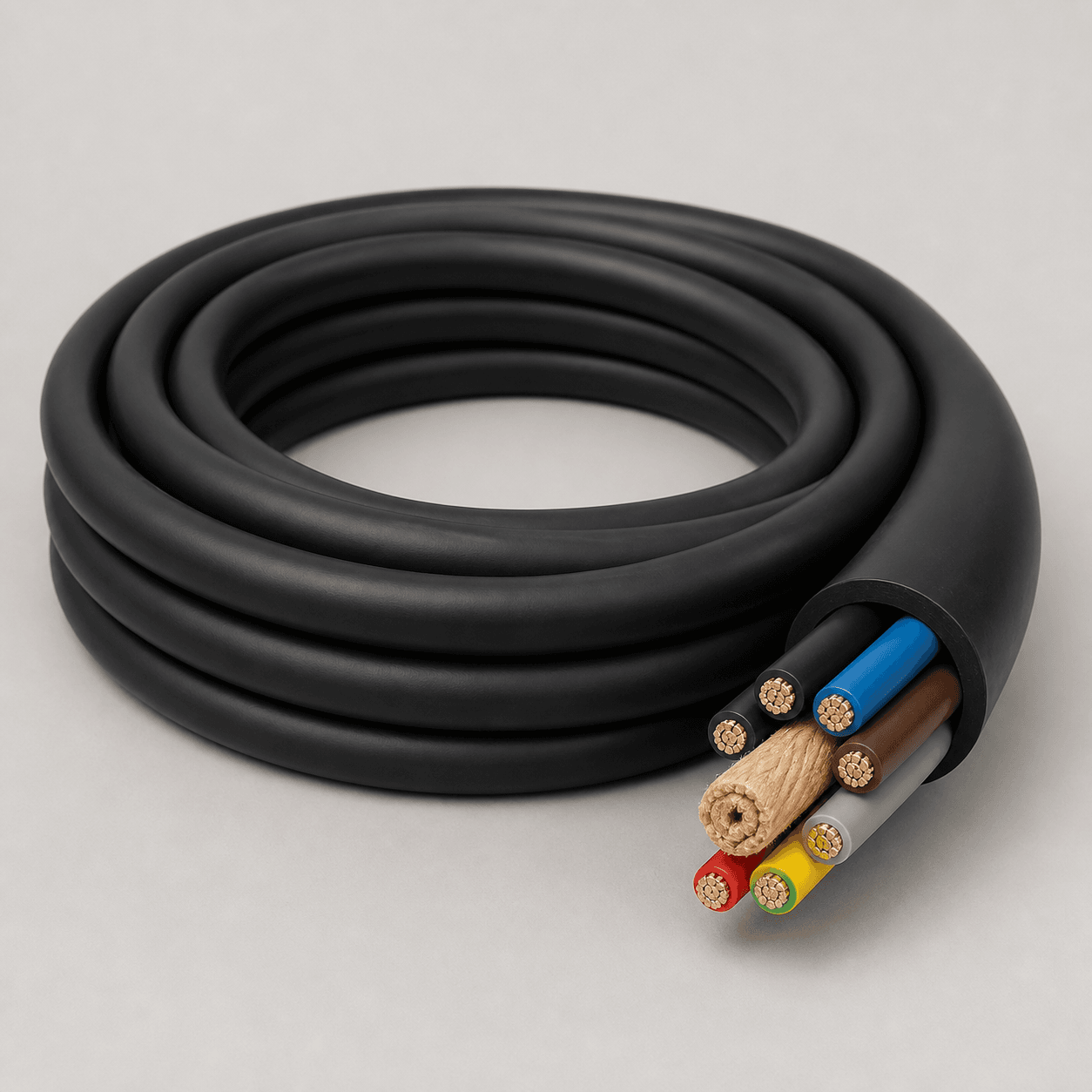
The TEBAOFLEX Construction Lift-T Cable is a highly flexible PVC lift cable with a self-supporting sisal cord for vertical construction hoists. Its published maximum suspension length is up to 80 m, subject to the installation design and specified cable construction. This value is a starting point for review, not a universal approval for every hoist installation.
Use the published construction as the selection reference
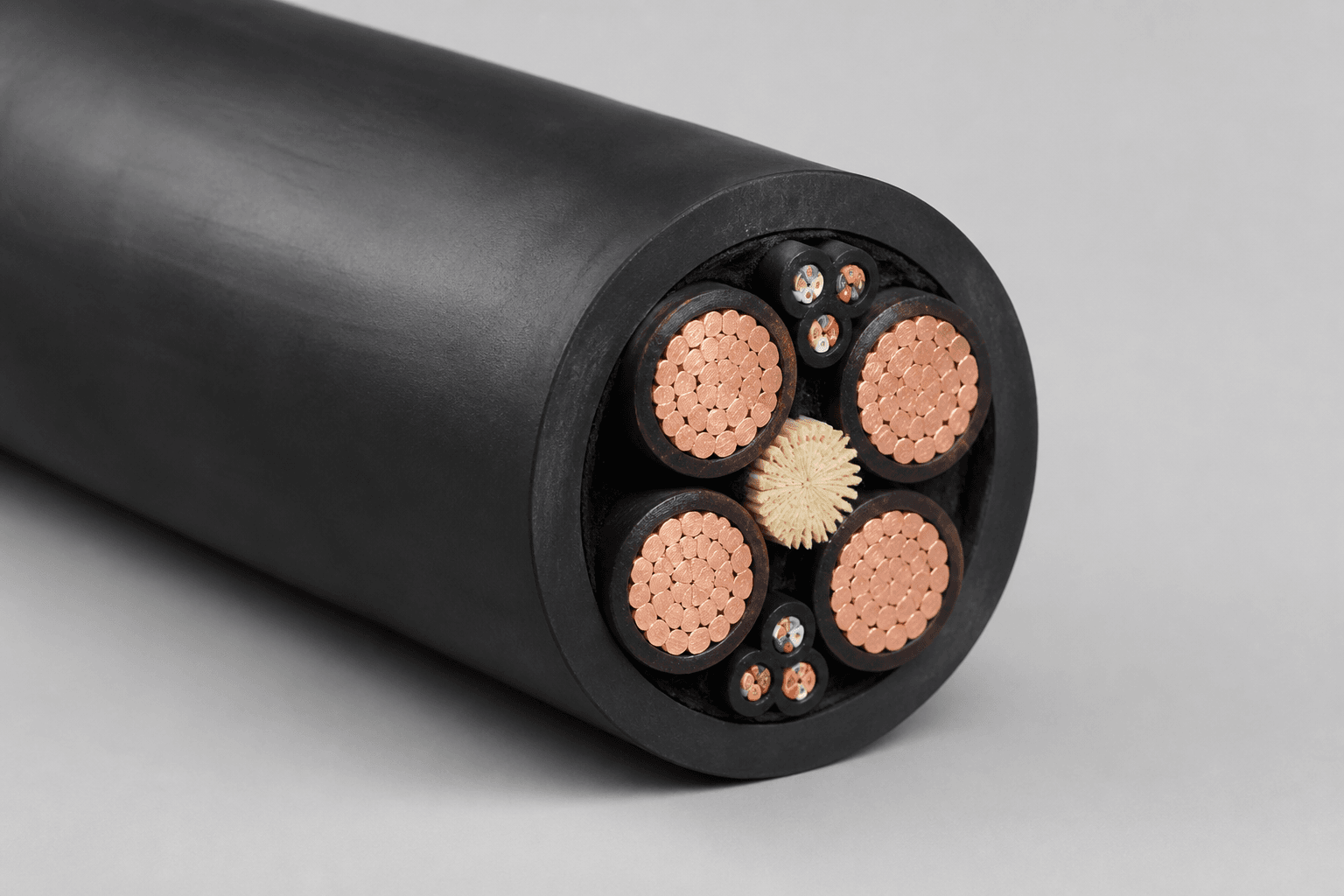
The listed Construction Lift-T construction uses tinned-copper Class 6 fine-stranded conductors, PVC TI4 core insulation, a sisal-cord self-supporting element and a black PVC TM5 outer sheath. The self-supporting element, conductor grouping and sheath are part of the complete construction; do not assume that a different flexible PVC cable can provide the same suspended-route performance.
| Selection item | Why it matters | Published Construction Lift-T reference |
|---|---|---|
| Suspended length | Controls the vertical-duty review and support arrangement. | Up to 80 m, subject to installation design and specified construction. |
| Self-supporting element | Supports the cable on a vertical moving route. | Sisal cord. |
| Power and control cores | Must match the hoist motor, controls, safety circuit and project interface. | Listed examples combine power cores with additional control cores. |
| Moving bend radius | Protects the cable during travel through the designed route. | 12 × outer diameter. |
| Moving temperature | Defines the stated temperature range for dynamic use. | −30°C to +70°C. |
| Maximum conductor temperature | Must be checked against the electrical load and duty cycle. | +70°C. |
| Electrical test value | Supports product documentation; it is not the same as a declared operating-voltage rating. | 3 kV test voltage. |
Define the core schedule before installation
A construction hoist can require both power and multiple control circuits. The published Lift-T examples include 04G2.5 + 8 × 1.5 mm², 04G6 + 12 × 1 mm², 04G10 + 15 × 1 mm² and 04G16 + 15 × 1 mm². These examples show why the motor load, control functions, protective conductor and interface requirements should be provided together; select the final schedule against the actual hoist documentation.
Do not size conductors from the outer diameter or cable weight alone. Provide the electrical load, circuit type, installed length, voltage-drop requirement and any control or communication interface so the construction can be reviewed correctly.
Installation checks for a vertical moving cable
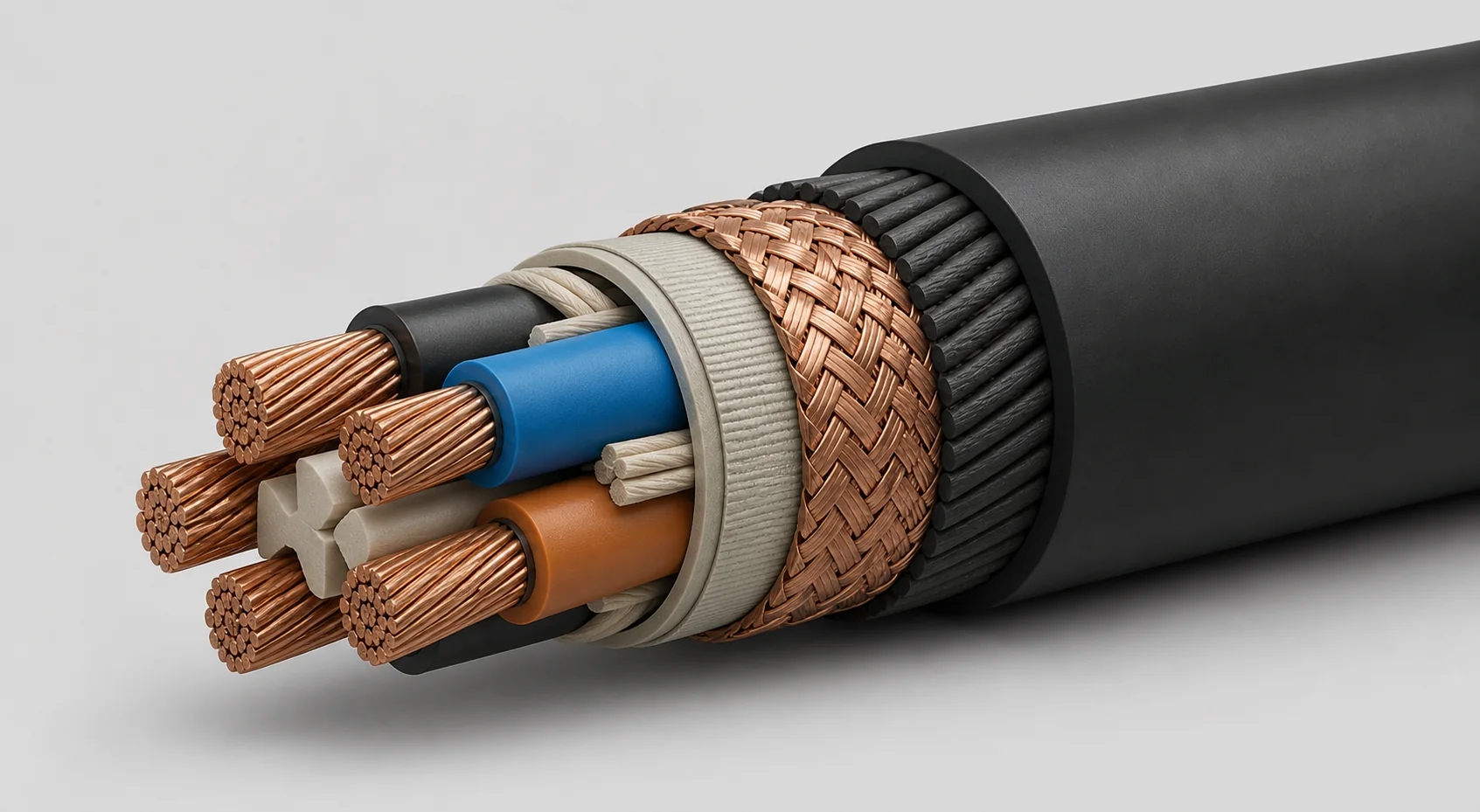
- Document the hoist and route. State hoist type, total travel, suspension length, cable-basket arrangement, attachment points and travel frequency.
- Check bends and guides. Allow the stated 12 × outer-diameter minimum moving bend radius and identify every guide, clamp and change of direction.
- Confirm power and controls. Provide motor load, supply details, protective-conductor requirement, control-core count and terminal layout.
- Assess the site environment. Report ambient temperature, rain, dust, UV exposure, abrasion, cleaning and possible mechanical contact.
- Review the cable support. The support system must match the approved cable construction and installation design; do not transfer unsupported weight to the electrical terminations.
- Plan commissioning and maintenance. Inspect the routing, support points, sheath condition and terminations using the project’s approved procedure.
Do not confuse vertical lift cable with horizontal reeling cable
Horizontal reeling applications are selected around drum geometry, travel speed and winding pattern. Construction-hoist cable selection is centred on vertical suspension, the self-supporting arrangement and repeated lift travel. A cable described as flexible or suitable for a cable drum is not automatically suitable for a vertical construction-hoist route.
For horizontal cable-drum duty, review the RP / RP-D PUR Reeling Cable. For crane and festoon applications, see the TEBAOFLEX crane and festoon cable range.
Frequently asked questions
What is the listed maximum suspension length for Construction Lift-T Cable?
The product page lists up to 80 m, subject to the installation design and specified cable construction. Confirm the actual hoist arrangement before selection.
Why does a construction hoist cable need a self-supporting element?
The listed Lift-T construction uses a sisal cord to support its intended vertical suspended-route duty. The full cable and support arrangement should be reviewed together.
What bend radius applies while the hoist is moving?
The published minimum moving bend radius is 12 × the outer diameter. Account for this at guides, baskets and changes of direction.
Can the 3 kV test voltage be used as the cable’s operating-voltage rating?
No. Test voltage and operating voltage are different values. Provide the actual system voltage and project documentation for the final cable review.
Request a construction-hoist cable review
Send TEBAOFLEX your construction-hoist cable requirements, including the hoist type, suspension length, core schedule, travel path, temperature and installation details. We can review the intended Lift-T configuration before quotation.