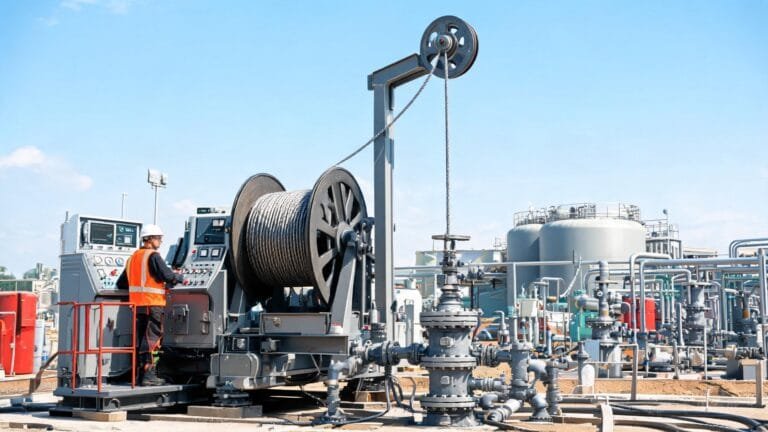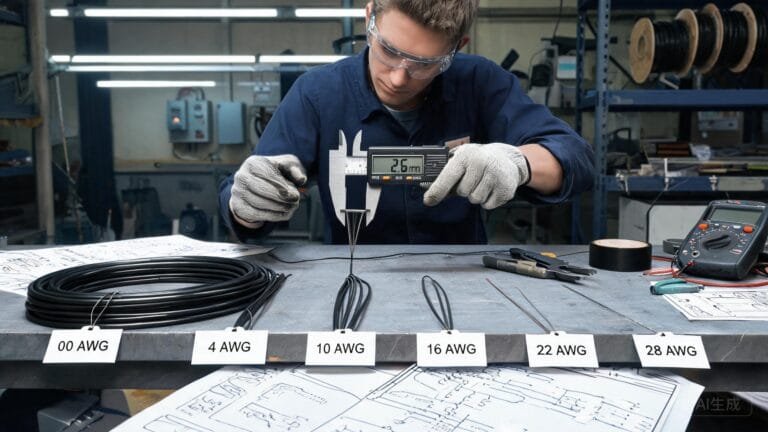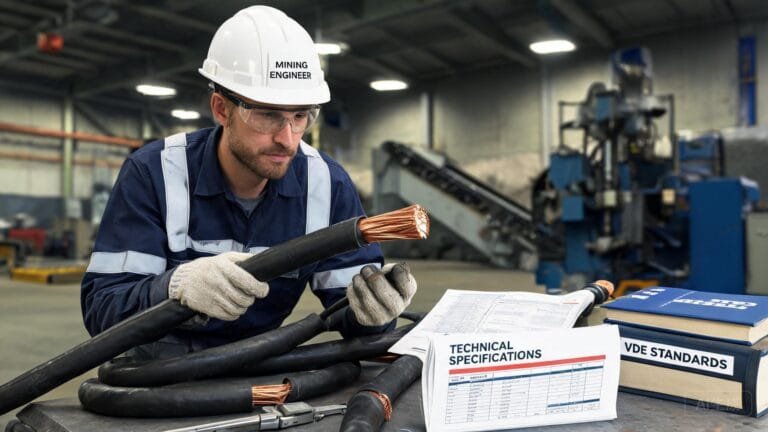

Open pit mining cable must be selected for the actual surface route: dragging across rock, controlled reeling, equipment travel, ultraviolet exposure, weather and the electrical load. A heavy-duty sheath is important, but it cannot compensate for an unmanaged cable path, unsuitable guides or missing termination support.
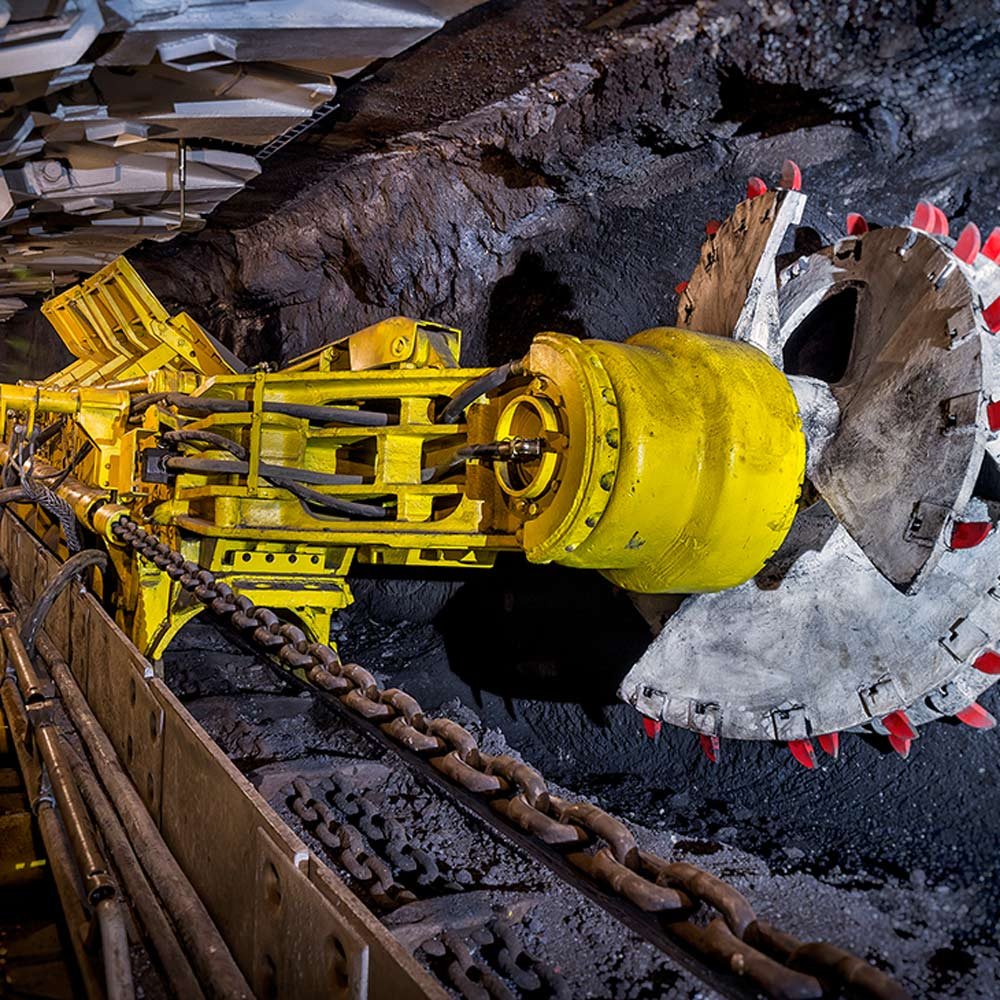
Surface operations expose mobile cables to terrain, abrasive fines, weather, sunlight, vehicle interaction and rapid equipment repositioning. The right starting point is a surface route map that records cable contact, drum and guide positions, crossings, equipment travel and emergency access—not a product name copied from a previous installation.
Map drag, reel and terrain risks
Trailing cables can be pulled across rock, gravel, soil and process material. Reeling cables see repeated bending around a drum and guide system. Both need route control, but their stresses are different. Record maximum travel, free cable length, direction changes, drum dimensions where applicable, guide positions and the points at which the cable can rub, snag or be crossed by equipment.
Also record UV exposure, water, mud, temperature, oil, dust and maintenance access. These conditions help define the correct outer sheath, support approach and protection measures. Cable protection should be designed with the mine operating team; it is not merely an accessory added after cable selection.
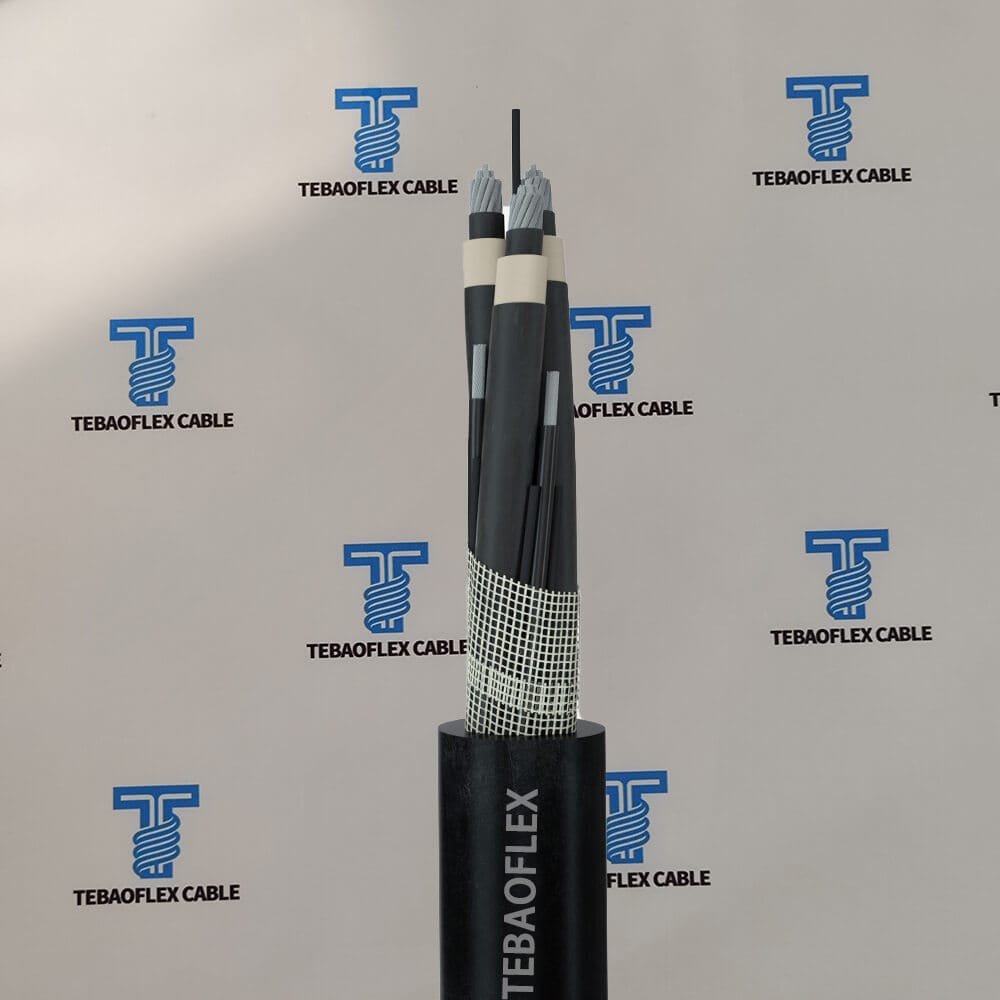
Connect the cable to the equipment motion
Electric shovels, drills, mobile crushers and dumpers may all use flexible cable systems, but the mechanical duty must be recorded separately for each route. Ask whether the cable is dragged, reeled, parked, temporarily moved, or supported by a dedicated handler. Then confirm the cable’s electrical functions: power, protective earth, ground-check or pilot where required, control, signal or data.
The (N)TSCGEWOEU-TR open-pit trailing cable page is a relevant product reference for heavy-duty surface trailing discussions. The NTSCGEWÖU flexible trailing cable page provides a separate reference for mining and tunnelling power supply. Confirm project data before treating any product range as interchangeable.
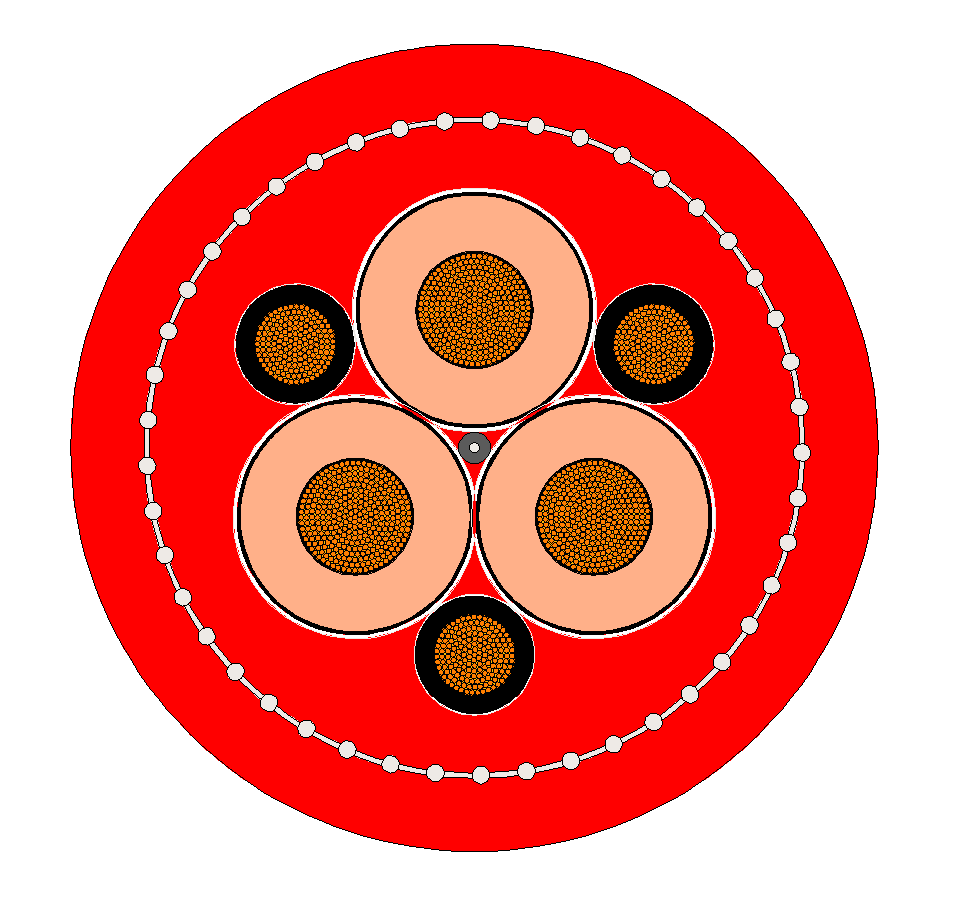
Use documented construction and compliance evidence
For a replacement, capture the jacket marking, cable data sheet, route photographs, termination details and failure history. A visual match is not enough to confirm voltage, core function, support elements or service limits. If a U.S. project calls for MSHA acceptance or approval, verify the required record and marking against the MSHA flame-resistant cable information. Other regions require their own applicable rules and project standards.
Pay close attention to where the cable leaves a reel, passes a guide or enters the machine. These transition points should be reviewed with clamp, gland and strain-relief details. Repeated damage at one location usually points to a route or handling issue that must be corrected.
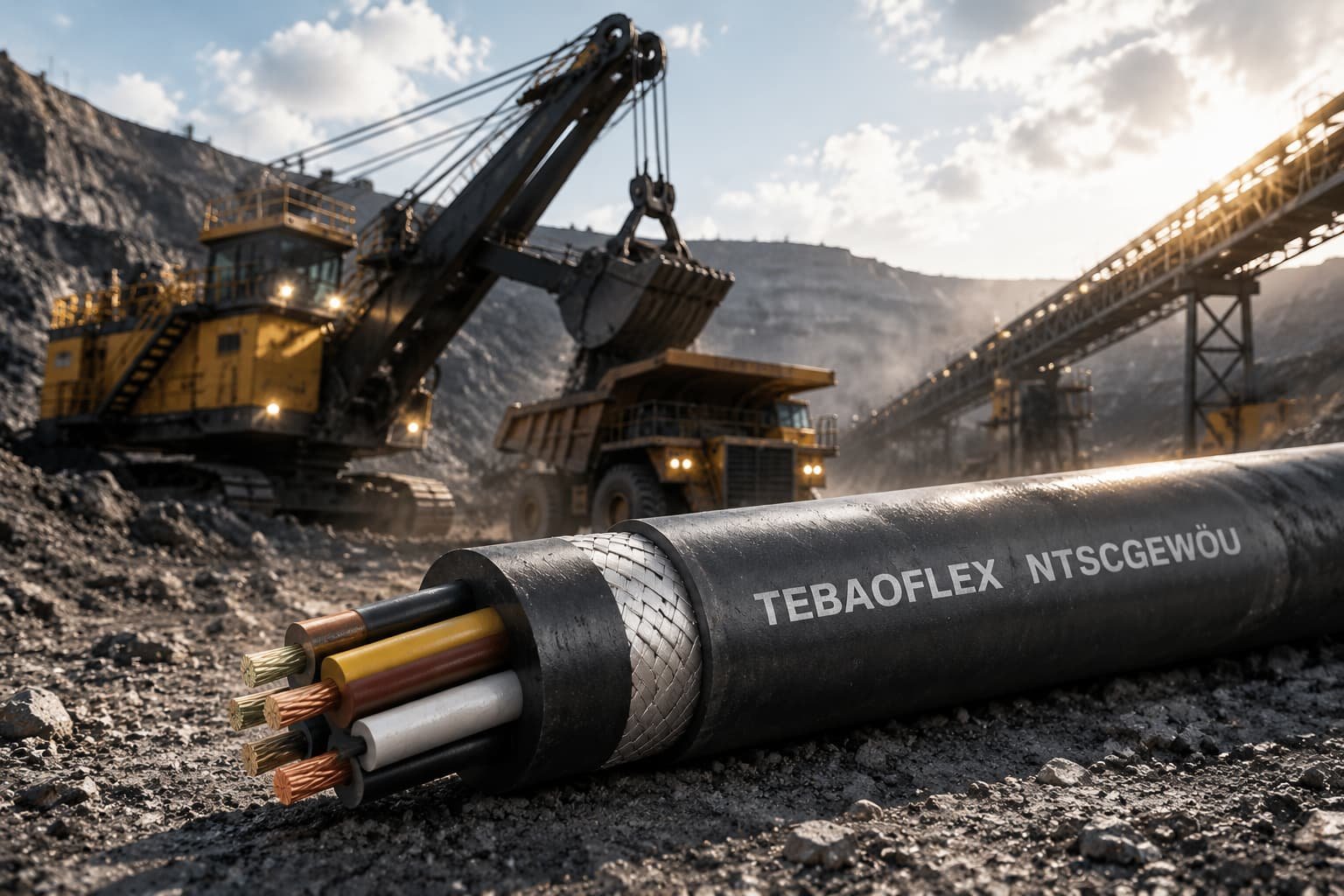
Open pit mining cable RFQ checklist
| Record | What to provide | Selection value |
|---|---|---|
| Equipment | Shovel, drill, crusher, dumper or other equipment | Defines the operating context. |
| Motion and route | Drag, reel, travel, guides, drum data and free length | Identifies mechanical duty. |
| Terrain contact | Rock, gravel, soil, crossings and protective measures | Supports abrasion and route-control planning. |
| Environment | UV, weather, water, oil, dust and temperature | Supports project-specific material assessment. |
| Electrical functions | Voltage, load, earth, pilot/ground-check, control and data | Confirms cable and termination functions. |
| Evidence | Marking, drawings, photos and failure history | Improves replacement accuracy. |
Five mistakes to avoid
- Selecting for voltage only. Surface cable life is also driven by terrain and movement.
- Ignoring vehicle crossings. Record them and develop protection with site operations.
- Assuming abrasion resistance solves every problem. Guides, bend paths and handling still matter.
- Skipping reel data. Drum and guide conditions are core selection inputs.
- Ordering from a photo alone. Use markings, drawings and a documented route.
For a complementary selection method, see the mining equipment cable guide.
Frequently asked questions
What cable is used in open-pit mining?
The correct construction depends on equipment, voltage, drag or reel duty, route, terrain and project requirements. The mine application must be defined before a product is selected.
Is a trailing cable the same as a reeling cable?
No. A trailing cable is assessed for movement along the route; a reeling cable is assessed for repeated drum and guide cycles. Their mechanical inputs differ.
Why is UV exposure included in the RFQ?
Outdoor service conditions should be assessed against the documented product construction. Recording UV and weather exposure prevents incomplete assumptions.
What route photos are useful?
Include the complete cable path, terrain contact, guides, reel exit, terminations, crossings and damaged areas.
How can TEBAOFLEX help?
Send equipment, motion, route, electrical and environmental data. You can send your open-pit mining requirements for a project-specific review.
Turn surface-route data into a cable decision
Reliable open pit mining cable selection links the product to its terrain, motion, electrical functions and termination details. TEBAOFLEX can help evaluate those inputs before the order is finalised.
Last reviewed: August 2026. Final suitability must be confirmed against the project specification, local rules and equipment requirements.