
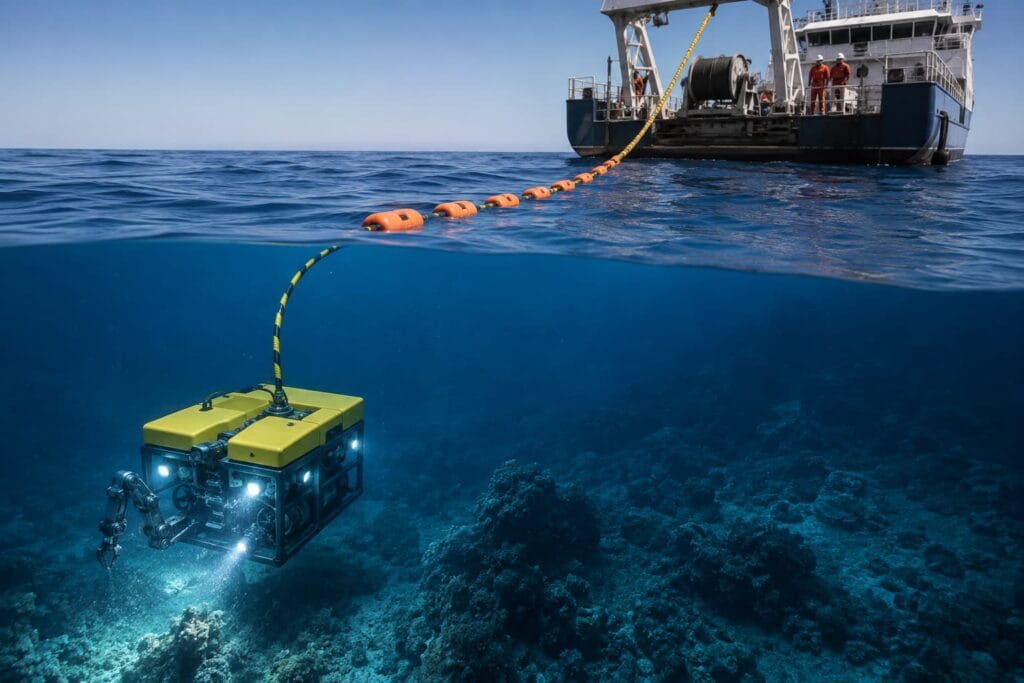
A floating cable is designed to stay manageable on or near the water surface while transmitting power, signal or control data to marine equipment. In ROV, aquaculture, inspection and subsea support applications, cable buoyancy can reduce drag, protect equipment and make deployment easier for operators.
Unlike ordinary waterproof cable, a floating cable must balance electrical performance with buoyancy, flexibility, tensile strength and resistance to seawater, abrasion and repeated handling. If one of these factors is ignored, the cable may twist, sink, pull on the equipment or fail earlier than expected.
What Makes a Cable Float?
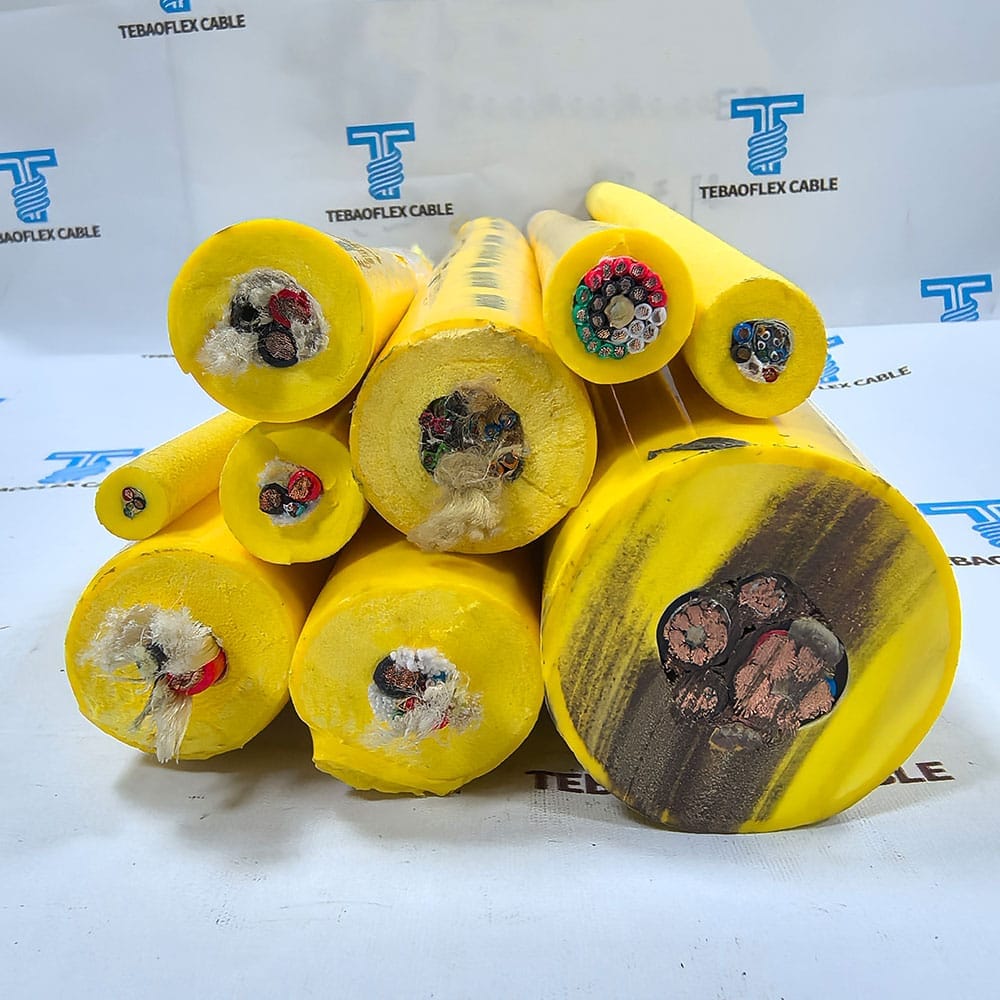
Floating performance is usually achieved through the cable structure rather than a single material choice. The design may include low-density sheath materials, buoyant fillers, foam layers or a carefully controlled overall diameter and weight. The goal is not simply to make the cable light, but to maintain stable buoyancy under real working conditions.
For ROV and subsea systems, the Buoyant Tether Cable for ROVs and Subsea Systems is a direct example of this cable type. It can be reviewed when a project needs a tether cable that supports power, signal or control transmission while reducing underwater drag and handling difficulty.
Key Applications for Floating Cable
Floating cable is commonly used where equipment moves in water but the cable should not sink freely to the seabed or interfere with the operating path. It can help operators keep the cable visible, reduce snagging risks and improve control during deployment and recovery.
- ROV tether and inspection systems
- Aquaculture monitoring and feeding equipment
- Floating pumps and temporary water systems
- Marine survey and underwater camera equipment
- Dockside testing, maintenance and offshore support tools
- Subsea systems that require hybrid power and signal transmission
For aquaculture and wet operating environments, H07BQ-F Aquaculture Waterproof Cable can be considered where a flexible waterproof cable is required for fish farming, pond equipment or exposed outdoor use.
Electrical Design: Power, Signal and Control
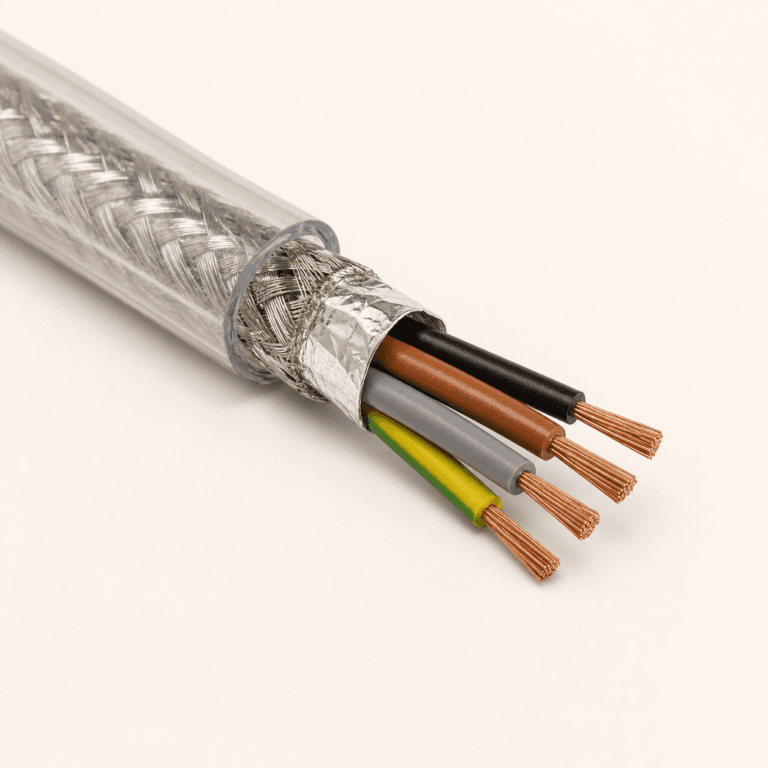
A floating cable may carry low-voltage power, control signals, data pairs or a combination of several functions. The internal structure should be selected according to the actual load, communication requirement and interference environment.
For compact equipment connections, a 4 Core PUR Waterproof Cable may suit low-voltage devices that require flexible wet-area wiring. For more integrated systems, the Composite Umbilical Cable can combine power, signal, control and other elements into one custom cable structure.
Mechanical Load and Tensile Strength
Buoyancy does not remove mechanical stress. During launch, retrieval and operation, the cable may still experience pulling force, bending, twisting and abrasion against decks, guide rings or equipment frames. For longer lengths or heavier equipment, the cable may need strength members or reinforcement.
If the cable will tow equipment or work under higher mechanical load, the Armoured Tow Cable with Galvanized Steel Wire provides a related option where tensile support and external protection are important. For hydraulic and subsea equipment, a Hydraulic Umbilical Cable may be more suitable when fluid lines, power and signal functions need to be combined.
Sheath Material and Environmental Resistance
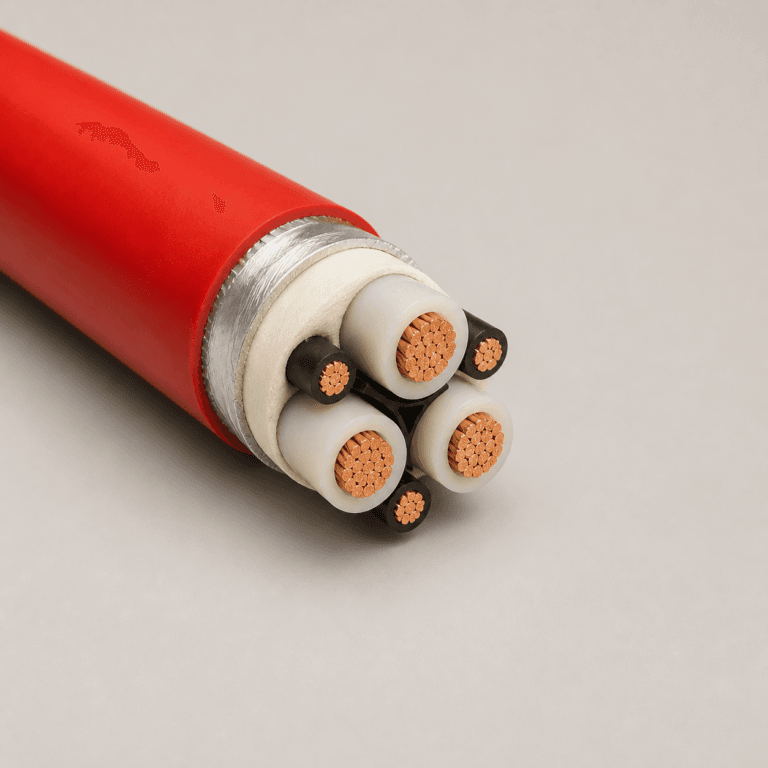
The outer sheath protects the cable from seawater, abrasion, oil, sunlight and repeated handling. PUR is often selected for marine equipment because it offers flexibility, abrasion resistance and good mechanical protection. Rubber may be preferred for heavy-duty power applications where rugged handling and outdoor durability are priorities.
Color can also matter. Bright jacket colors can help operators see the cable on wet decks or near the water surface, reducing the risk of accidental pulling, crushing or incorrect routing. Visibility is a practical safety detail, especially when several cables or hoses are used around the same equipment.
Important Design Questions Before Ordering
- Should the cable be fully floating, slightly buoyant or neutrally buoyant?
- What voltage, current and signal types must the cable carry?
- What is the required cable length and working depth?
- Will the cable be pulled, reeled, dragged or manually handled?
- What minimum bending radius and movement frequency apply?
- Does the system need shielding, twisted pairs or hybrid elements?
- Will connectors, molded ends or a complete cable assembly be required?
- What water, oil, UV, abrasion and temperature exposure should be expected?
Common Mistakes in Floating Cable Selection
One common mistake is treating floating cable as just waterproof cable with a different jacket. Another is focusing only on buoyancy while ignoring tensile load, electrical shielding or bending behavior. In real marine applications, a good cable must support the full operating cycle from storage and deployment to movement, recovery and maintenance.
It is also important to confirm whether the cable should float on the surface, remain near neutral buoyancy underwater or follow a controlled route with floats and supports. These are different design targets and should be discussed before production.
Building a Practical Cable Solution
The best floating cable solution starts with the application details. ROV builders, aquaculture operators, marine contractors and subsea equipment manufacturers should confirm electrical load, signal type, cable length, buoyancy target, tensile load and connector requirements before finalizing the design.
TEBAOFLEX supports custom marine and underwater cable projects where buoyancy, flexibility, waterproof performance and signal reliability must work together. By matching the cable construction to the actual operating environment, project teams can improve handling, reduce equipment stress and extend cable service life.