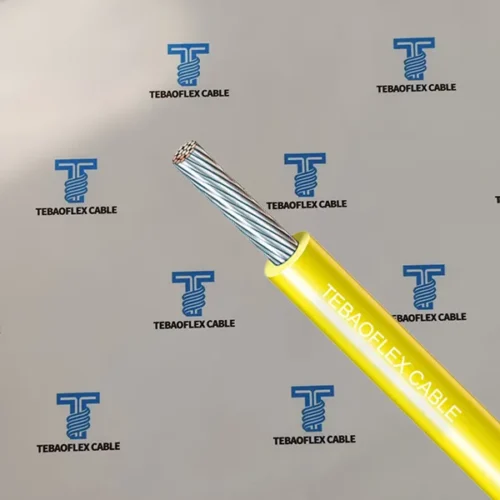
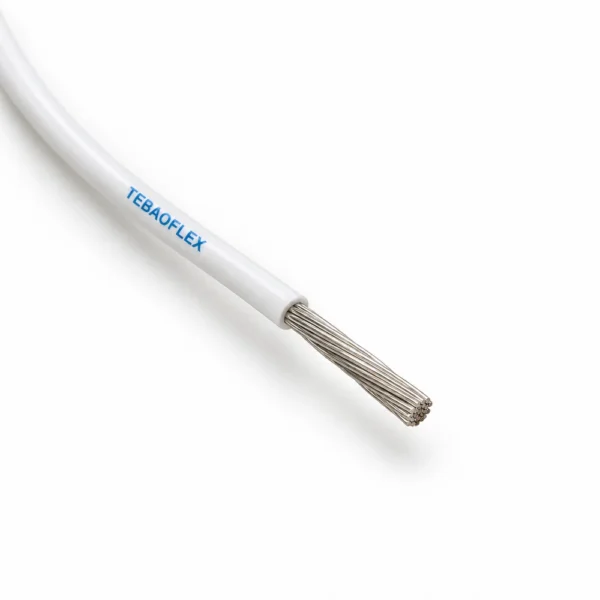
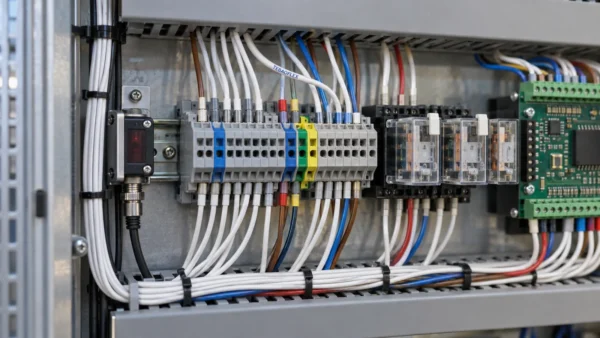
UL 1212 PTFE wire is a thin-wall, single-conductor appliance wiring material designed for internal wiring where compact dimensions, chemical resistance and stable electrical insulation are important. The UL AWM Style 1212 reference covers extruded PTFE insulation with an 80°C temperature rating and a voltage rating that is not specified by the UL style.
TEBAOFLEX supplies this PTFE hook-up wire for electrical appliances, electronic equipment, industrial control devices and rotating-machine internal connections. Depending on the approved construction, conductor options can include bare, tin-plated, nickel-plated or silver-plated copper. This allows buyers to match soldering, termination, corrosion-resistance and service-temperature requirements without using a thicker general-purpose PVC lead wire.
What Is UL AWM Style 1212 Wire?
UL 1212 is an Appliance Wiring Material style under UL 758 for a single conductor with extruded PTFE insulation. It is intended for internal wiring where the wire is not exposed to mechanical abuse. Buyers also search for this construction as UL 1212 hook-up wire, 80°C PTFE wire, thin-wall PTFE insulated wire or high-temperature appliance wire.
The UL style itself does not specify a voltage rating. Therefore, a 1500 V dielectric test value must not be presented as a 1500 V operating rating, and UL 1212 must not automatically be described as a 600 V wire. If a project requires a defined 600 V rating, use a separately approved construction or confirm an applicable dual rating before ordering.
UL 1212 PTFE Wire Technical Specifications
| Parameter | Reference value | Selection note |
|---|---|---|
| Product type | Single-conductor PTFE hook-up wire | For internal appliance and electronic equipment wiring. |
| UL style | UL AWM Style 1212 | Appliance Wiring Material under UL 758. |
| Temperature rating | 80°C | Manufacturer reference operating range: -65°C to +80°C. |
| UL voltage rating | Not specified | Do not interpret the test voltage as the operating voltage. |
| Test voltage | 1500 V | Dielectric test reference from the supplied technical data. |
| Conductor | Solid or stranded copper | Bare, tin-plated, nickel-plated or silver-plated options by approved construction. |
| UL conductor-size reference | 36-16 AWG | Verify larger sizes against the applicable UL file and product marking. |
| Insulation | Extruded PTFE | Thin-wall thermoplastic fluoropolymer insulation. |
| Insulation wall | 0.008 in / approximately 0.20-0.21 mm minimum average | UL style reference minimum at any point: 0.007 in. |
| Flame reference | Horizontal flame | FT1 or VW-1 claims depend on the approved product construction and marking. |
| Oil-resistance reference | 60°C | As listed on the UL Style 1212 reference page. |
Conductor Finish Options
The conductor finish affects termination and environmental performance. Bare copper is suitable for general internal wiring when the operating conditions allow it. Tin-plated copper helps resist oxidation and supports conventional soldering. Silver-plated copper is often selected where low contact resistance and solderability are important, while nickel-plated copper can be reviewed for applications that need additional oxidation resistance. Final conductor finish, strand count and dimensional tolerance must be confirmed in the order specification.
| Conductor option | Typical selection reason | What to confirm |
|---|---|---|
| Bare copper | General internal equipment wiring | Ambient conditions and termination method |
| Tin-plated copper | Oxidation resistance and standard soldering | Strand construction and terminal compatibility |
| Silver-plated copper | Solderability and stable electrical contact | Required finish thickness and project specification |
| Nickel-plated copper | Additional oxidation resistance | Termination process and required performance |
Why Use Thin-Wall PTFE Insulation?
PTFE provides strong dielectric performance in a compact insulation wall. As a result, UL 1212 wire can help reduce harness diameter in control panels, instruments and electrical appliances where routing space is limited. In addition, PTFE offers excellent resistance to many aggressive chemicals, moisture and ultraviolet exposure. Its low surface friction can also simplify routing through compact channels or tightly organised wire harnesses.
These characteristics make PTFE insulated hook-up wire useful when ordinary PVC insulation would be too bulky or insufficiently resistant to the surrounding chemicals. However, UL 1212 remains an internal-wiring style. It should not be selected as an exposed portable cord, building wire or external power cable unless another applicable approval covers that use.
Typical Applications
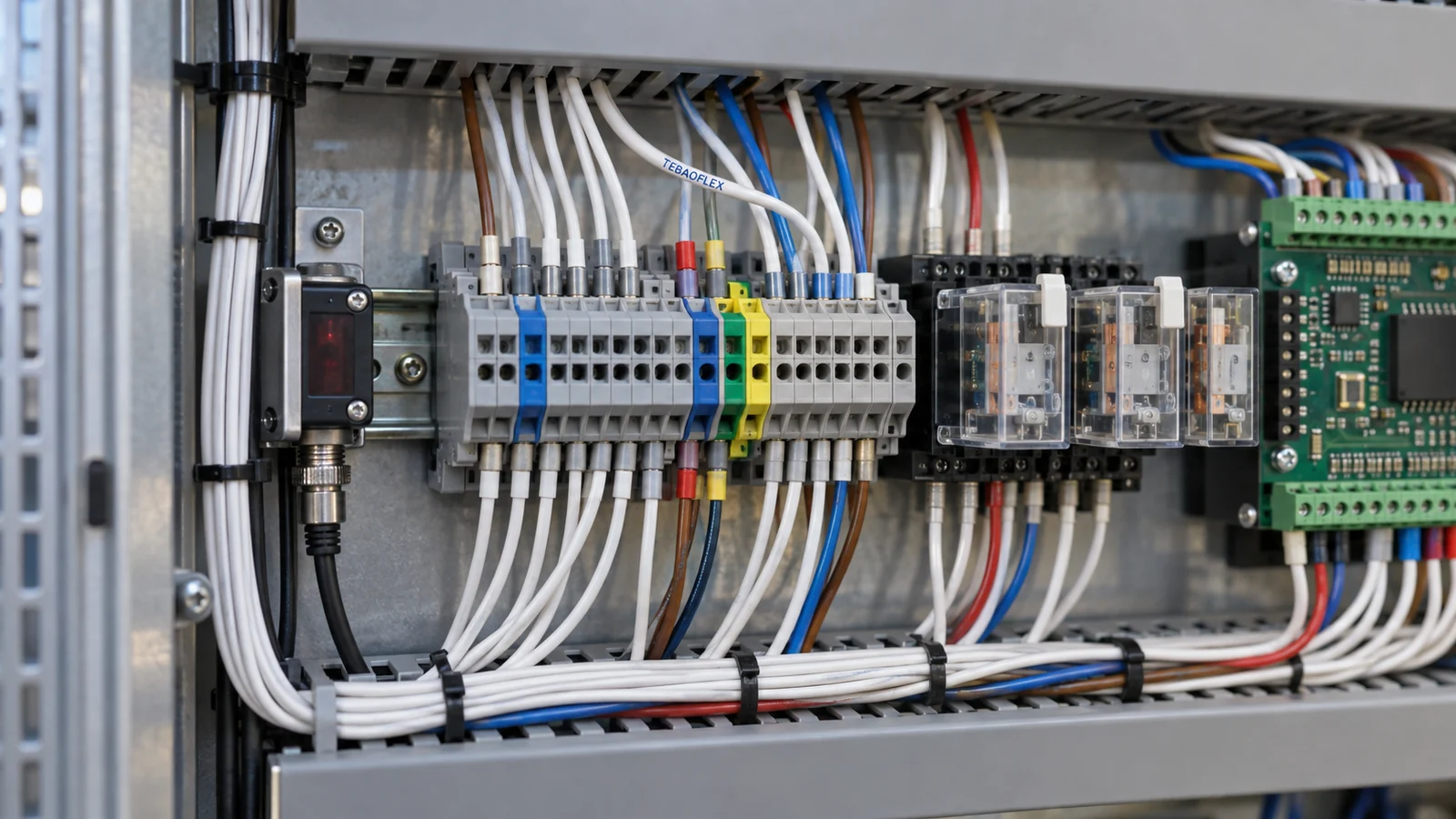
- Internal wiring of electrical and electronic appliances.
- Industrial control panels, instruments, relays and sensor connections.
- Compact wire harnesses in test, measurement and communication equipment.
- Internal wiring of rotating machines where the approved routing prevents mechanical abuse.
- Household electrical equipment and heating-appliance control circuits located within the verified temperature limit.
UL 1212 Compared with Other PTFE Wire Styles
| UL style | Temperature | Voltage reference | Best selection context |
|---|---|---|---|
| UL 1212 | 80°C | Not specified | Thin-wall PTFE internal wiring where compact routing and chemical resistance matter. |
| UL 1198 | 150°C | 600 V | Higher-temperature PTFE wiring with a defined 600 V rating. |
| UL 1199 | 200°C | 600 V | High-temperature PTFE wiring requiring a 200°C, 600 V construction. |
Selection and Ordering Information
To select the correct UL 1212 PTFE wire, specify the AWG size, solid or stranded conductor, conductor plating, insulation colour, required length, termination method and equipment environment. Also identify any requested flame marking or secondary approval. TEBAOFLEX will confirm the applicable construction, dimensional tolerances, production length and marking before quotation.
For formal style details, refer to the UL AWM Style 1212 reference. Related products are available in the High-Temperature & Specialty Cable range.
Frequently Asked Questions
Is UL 1212 wire rated 600 V?
No. The UL Style 1212 reference specifies an 80°C temperature rating, while the operating voltage is not specified. A 600 V claim requires another applicable approval or dual rating.
Is the 1500 V test voltage the operating voltage?
No. It is a dielectric test reference, not the rated working voltage. The operating circuit must follow the equipment design and applicable approval conditions.
What conductor sizes are covered by UL Style 1212?
The current UL style reference lists 36-16 AWG solid or stranded conductors. If a larger size is requested, confirm its approval scope and product marking before ordering.
What is the difference between PTFE wire and Teflon wire?
PTFE is the material name. “Teflon wire” is a commonly used search term, while Teflon is a trademark. Product specifications should identify the actual PTFE insulation and applicable UL style.
Can UL 1212 wire be used outside equipment?
UL 1212 is intended for internal wiring where it is not subjected to mechanical abuse. External, portable-cord or building-wire applications require a construction approved for that use.
Request UL 1212 Wire Information
Send your AWG size, conductor finish, strand construction, colour, quantity, required marking and application conditions for a project-specific quotation.