
Quick answer: Heavy-duty 0.6/1 kV flexible XLPE/EPR and polyurethane (PUR / 11Y) mining and reeling power cables combine Class 5 or Class 6 stranded copper conductors, central tensile or open anti-torsion reinforcement, and cut-resistant TMPU jackets. Depending on regional code, engineers cross-reference these feeders against DIN VDE 0250 (N)SHT11Y, DIN VDE 0250-812 (N)SHÖU, AS/NZS 1802 Type 275 / Type 241, or ICEA S-75-381 Type G-GC.
Applicable standards: DIN VDE 0250-812, DIN VDE 0250-814, IEC 60228 Class 5/6, EN 50525-2-21, AS/NZS 1802, SANS 1520-1.
How Are 0.6/1 kV PUR Mining and Reeling Power Cables Constructed?
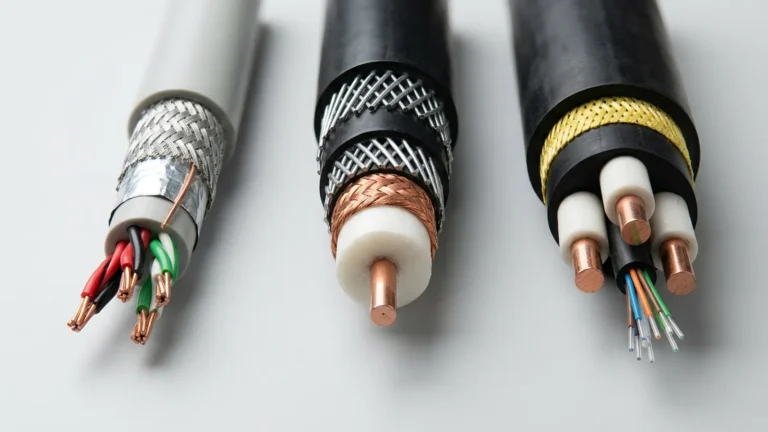
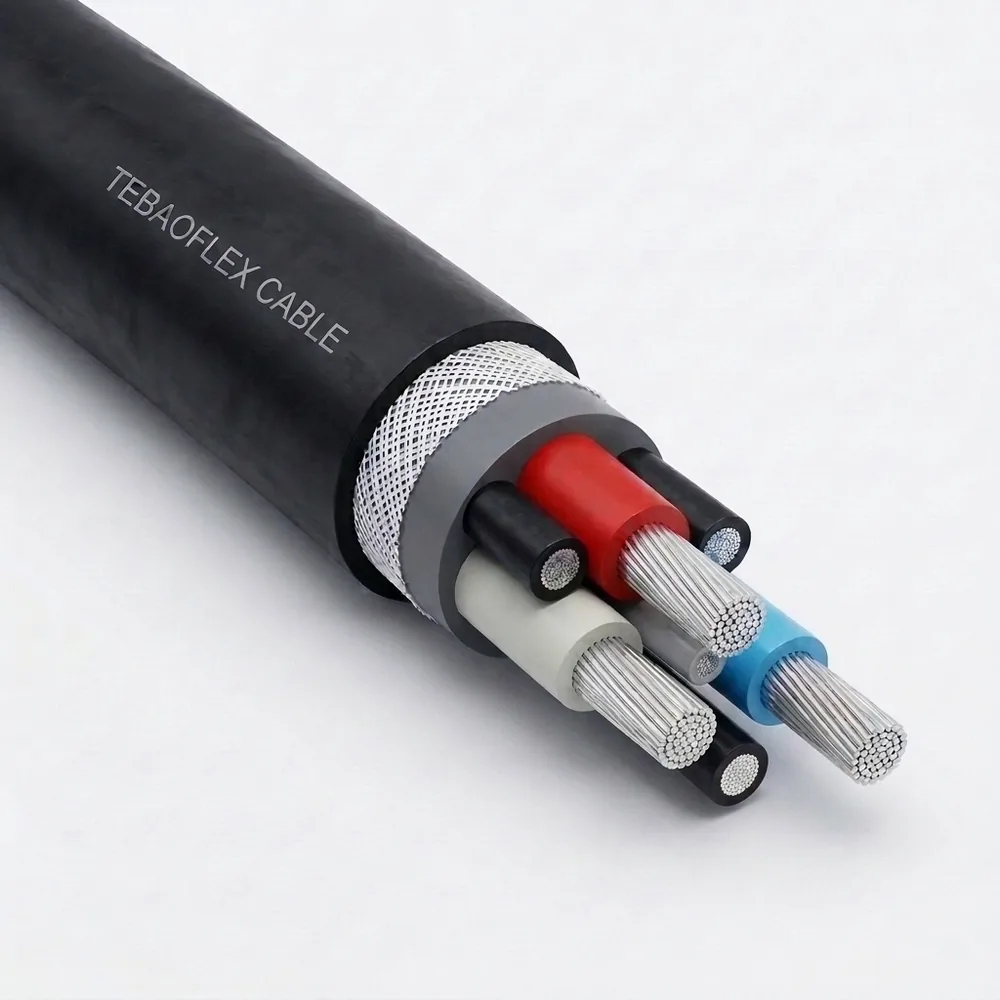
A 0.6/1 kV PUR trailing or reeling power cable is engineered specifically for high-tension drum spooling, underground tunnel jumbos, shuttle cars, and port crane vertical or monospiral reels. Unlike light-duty 300/500 V factory automation control cords, heavy-duty 0.6/1 kV PUR feeders incorporate tensile load-bearing elements and split earth or pilot conductors.
Evaluating any cross-reference starts with separating every physical layer from the conductor bundle out to the double-extruded or braid-reinforced polyurethane sheath.
| Construction Layer | Standard Material & Code | Mechanical & Electrical Role |
|---|---|---|
| Phase & Pilot Conductors | IEC 60228 Class 5 or extra-fine Class 6 bare or tinned copper | Short-pitch rope or bunch stranding resists work-hardening and strand breakage over guide sheaves. |
| Central Tensile Core | Aramid yarn bundle or cushioned elastomer cradle | Absorbs axial pulling forces (typically 15 to 30 N/mm² of copper cross-section) during horizontal and vertical reeling. |
| Core Insulation | 90 °C XLPE, HEPR (3GI3), or TPE-E dielectric | Provides compact wall thickness, smaller overall cable diameter, and high thermal overload margin up to 250 °C short-circuit. |
| Earth & Pilot Layout | Symmetrical 3 + 3 split earth/pilot (e.g., 3 × 50 + 3 × 10 mm²) or multi-core J/O | Balances core lay geometry to prevent corkscrewing under dynamic drum tension while supporting earth-continuity relays. |
| Inner Bedding & Braid | Extruded inner sheath + open-weave polyester/aramid anti-torsion braid | Locks inner and outer sheaths mechanically so counter-rotating torque on cable reels cannot delaminate the jacket. |
| Outer Jacket | Ether- or ester-grade TMPU (11Y polyurethane), yellow, orange, or black | Delivers high tear resistance, rock-cut protection, microbe/hydrolysis resistance, and flexibility down to −40 °C. |
Review TEBAOFLEX standard constructions including our 0.6/1 kV yellow PUR mining power cable, (N)SHT11Y 0.6/1 kV PUR vertical reeling cable, and heavy-duty 0.6/1 kV PUR motorized reel cable.
How Do 0.6/1 kV PUR Trailing and Reeling Cables Cross-Reference Globally?
Public international standards divide low-voltage mobile mining and crane cables by outer jacket polymer (PUR vs. polychloroprene rubber), voltage ceiling (450/750 V vs. 0.6/1 kV vs. 2 kV), and whether individual phase screens are mandatory. Use the matrix below to match regional specifications accurately.
| Standard / Region | Public Designation | Rated Voltage | Insulation & Jacket | Reinforcement & Earth Cores | Key Substitution Considerations |
|---|---|---|---|---|---|
| DIN VDE 0250 (Germany / Port & Mining) | (N)SHT11Y / (N)12YRD11Y-J | 0.6/1 kV (Um 1.2 kV) | EPR or TPE-E core; 11Y PUR outer sheath | Anti-torsion aramid/polyester braid; J/O or 3+3 cores | Direct functional match for motorized drum reeling, spreader baskets, and tunnel loaders requiring compact OD. |
| DIN VDE 0250-812 (Germany / Europe) | (N)SHÖU-J / (N)SSCHÖU-J | 0.6/1 kV (Um 1.2 kV) | 3GI3 EPR core; 5GM3 / 5GM5 PCP rubber sheath | Unscreened ((N)SHÖU) or screened ((N)SSCHÖU) | Larger outer diameter than XLPE/PUR designs, but provides superior IEC 60332-1-2 flame retardancy and hot-slag resistance. |
| SANS 1520-1 (South Africa Mining) | Type 61A Trailing & Reeling | 640/1100 V | EPR phase cores; CR inner + TPU (PUR) outer sheath | Open nylon braid; 3 composite-screened cores + 3 pilots | Directly engineered for abrasive hard-rock LHD loaders and drill jumbos requiring individual phase earth-fault screening. |
| AS/NZS 1802 (Australia / NZ Mining) | Type 275 / Type 241 | 1.1/1.1 kV | R-EP-90 EPR core; HD-85-PCP rubber sheath | Open reinforcement braid; 3 earths + central pilot | Mandatory for Australian underground mines; Type 275 is unscreened anti-corkscrewing reeling, while Type 241 adds semiconductive screens. |
| EN 50525-2-21 (European Harmonized) | H07BQ-F / S07BQ-F | 450/750 V | EPR (EI4) core; PUR (EVM/TMPU) jacket | Unreinforced portable tool/site cord | Not a 0.6/1 kV reeling substitute: lower 450/750 V ceiling and lacks anti-torsion braid for motorized drums. |
| ICEA S-75-381 (North America Mining) | Type G-GC / Type W | 2000 V (2 kV) | 90 °C EPR core; reinforced thermoset CPE/PCP | 2 split grounds + 1 GC pilot (Type G-GC); MSHA flame | Higher 2 kV insulation wall increases outer diameter; verify drum groove pitch and cable gland clamping range. |
How to Select Between PUR and Rubber Reeling Variants
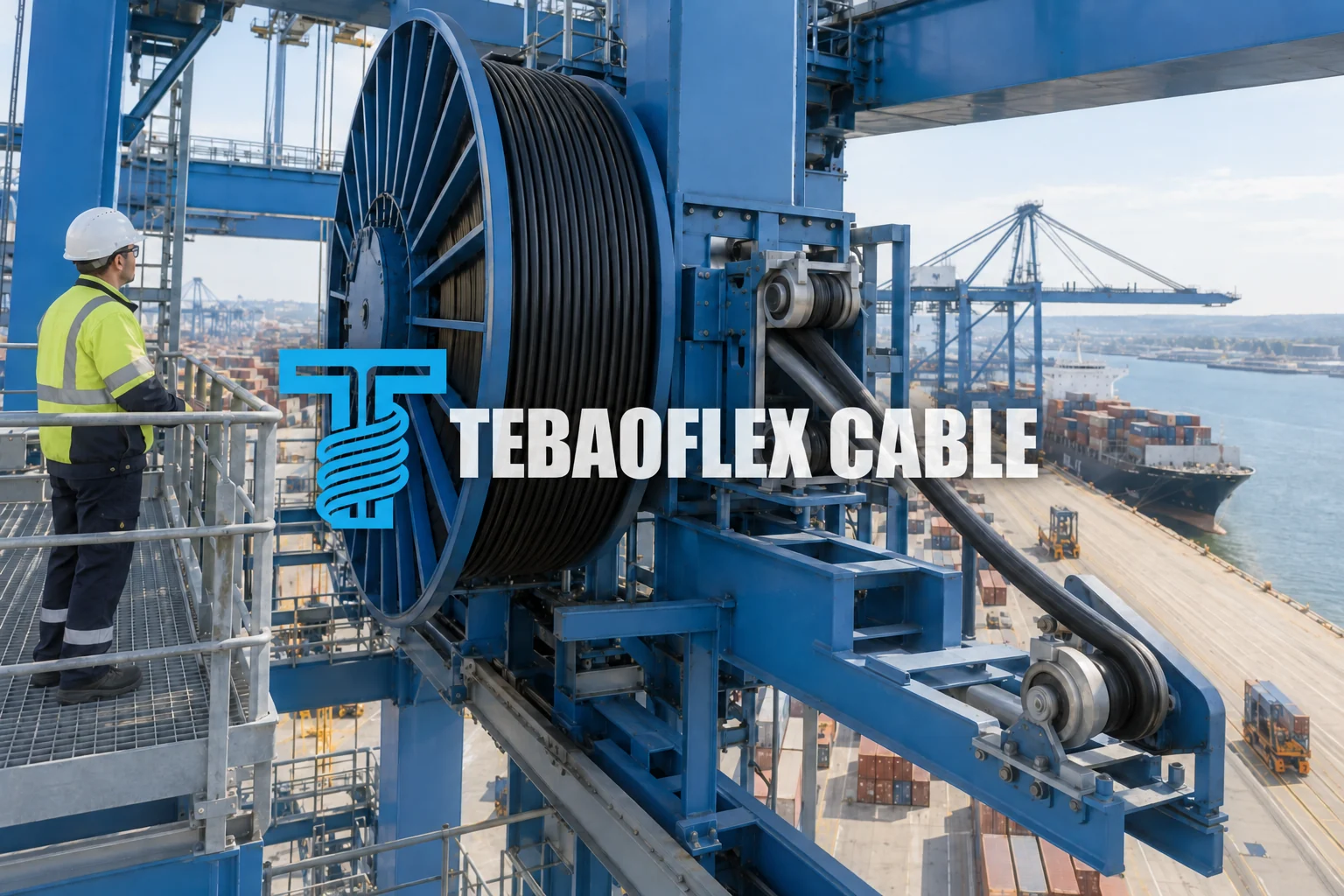
Choosing between polyurethane (11Y) and polychloroprene rubber (5GM5 / HD-85-PCP) depends on whether mechanical rock-cut wear, drum pocket space, or underground flame propagation rules govern your site approval. Match the exact TEBAOFLEX product family to your equipment motion profile below.
| Duty Profile | Recommended Construction | Jacket & Reinforcement | Typical Equipment |
|---|---|---|---|
| Compact rock-abrasion trailing & reeling | 0.6/1 kV Yellow PUR Mining Feeder | XLPE/EPR + high-visibility yellow 11Y PUR | Tunnel drill jumbos, bolters, shotcrete rigs, and mobile crushers on sharp aggregate floors. |
| High-speed motorized drum & crane reeling | (N)SHT11Y 0.6/1 kV PUR Reeling Cable | Inner bedding + anti-torsion braid + 11Y PUR | Vertical spreader reels, monospiral crane drums, and automated material-handling gantries. |
| Australian statutory shuttle-car reeling | AS/NZS 1802 Type 275 Reeling Cable | Semiconductive cradle + open braid + HD-85-PCP | Underground shuttle cars and continuous-miner haulage reels requiring anti-corkscrewing stability. |
Browse complete system options in our mining and tunnelling cables and port crane and festoon cables catalogs, or review our port and crane reeling cable selection guide.
What Must Be Checked Before Substituting a 0.6/1 kV PUR Cable?
Replacing an installed trailing or reeling feeder without verifying tensile rating, PUR chemistry, and earth-pilot monitoring is the primary cause of premature corkscrewing and jacket delamination. Verify five mandatory engineering parameters before issuing a purchase order.
Engineering boundary: do not substitute automation drag-chain PUR cords on reeling drums
Standard 300/500 V unreinforced PUR control cables lack an inner sheath and anti-torsion braid. Spooling an unreinforced drag-chain cable onto a spring or motorized drum causes core bird-caging, conductor twist rupture, and immediate sheath wrinkling.
- 1. Polyether vs. polyester PUR base polymer: Specify polyether-grade TPU (11Y) for wet underground tunnels, high-humidity tropical ports, and microbial mud to prevent warm-water hydrolysis degradation; reserve polyester TPU for dry mineral-oil and fuel-splash zones.
- 2. Maximum permissible tensile load: Standard flexible cables without a central aramid core typically tolerate 15 N/mm² of total copper cross-section, whereas aramid-reinforced reeling designs support 25 to 30 N/mm² for high-acceleration drums and long vertical drops.
- 3. Pilot and earth-continuity relay compatibility: Confirm whether the machine ground-check monitor expects three split interstitial earths (3 + 3), a dedicated insulated pilot core, or individual phase screens before switching between European VDE and Australian or North American constructions.
- 4. Outer diameter vs. monospiral drum pocket width: XLPE/PUR cables often have a 10% to 18% smaller outer diameter than EPR/PCP rubber cables of equal conductor cross-section. Check drum spacer bars, slip-ring glands, and roller guides when changing insulation systems.
- 5. Underground flame-propagation compliance: Open-pit and surface tunnels widely accept halogen-free 11Y PUR, whereas gassy underground coal mines typically require MSHA, SANS, or DIN VDE 5GM3/5GM5 self-extinguishing rubber compounds.
Frequently Asked Questions About 0.6/1 kV PUR Cable Cross-References
Engineers evaluating 0.6/1 kV PUR trailing and reeling cables regularly ask about voltage upgrades from H07BQ-F, metric-to-AWG sizing, and hydrolysis durability in flooded headings. Below are direct engineering answers for specification review.
Can EN 50525-2-21 H07BQ-F replace a 0.6/1 kV PUR reeling cable?
H07BQ-F is rated only 450/750 V and has no anti-torsion reinforcement braid or central strength member. It is suitable for handheld portable tools and temporary site leads, not 0.6/1 kV motorized reels or heavy tunnel jumbos.
When should (N)SHÖU rubber cable be chosen instead of a 0.6/1 kV PUR cable?
Choose DIN VDE 0250-812 (N)SHÖU with a 5GM3 or 5GM5 polychloroprene sheath when the cable may contact hot slag, welding spatter, >80 °C contact surfaces, or strict underground flame tests where thermoplastic PUR softens.
How do metric 0.6/1 kV conductor sizes map to North American AWG sizes?
Always round up to the next larger cross-section so ampacity and voltage drop remain within limits: 16 mm² maps to 4 AWG (21.2 mm²), 35 mm² to 2 AWG (33.6 mm²) or 1 AWG (42.4 mm²), 70 mm² to 2/0 AWG (67.4 mm²) or 3/0 AWG (85.0 mm²), and 95 mm² to 4/0 AWG (107.2 mm²).
What operating details are needed for a reeling cross-reference review?
Provide system voltage, phase and pilot core configuration, drum inner barrel diameter, travel length and speed (m/min), horizontal vs. vertical orientation, ambient water or oil exposure, and required drum cut length.
Request a 0.6/1 kV PUR Trailing or Reeling Cable Specification Review
Send your existing cable jacket print, core arrangement (such as 3 × 35 + 3 × 6 mm² or multi-core control), reel geometry, and site environment. TEBAOFLEX engineers will recommend the exact DIN VDE, IEC, or AS/NZS construction and quote factory-direct production lead times.
Request Technical Cross-Reference ReviewTechnical references & review record: Construction criteria and cross-reference parameters compiled from DIN VDE 0250-812 / 0250-814, DIN VDE 0207-21 (11Y PUR sheath compounds), IEC 60228, EN 50525-2-21, AS/NZS 1802, SANS 1520-1, and ICEA S-75-381. Technical review updated October 2026 by TEBAOFLEX Engineering.