
A flare stack igniter cable must be selected as a complete high-voltage construction, not by jacket name alone. Fibreglass-braid and fluoropolymer-jacket options can serve different temperature, route and exposure conditions. Confirm the required ignition voltage, conductor-temperature limit, bending path and external environment before choosing a configuration.
First, compare complete constructions
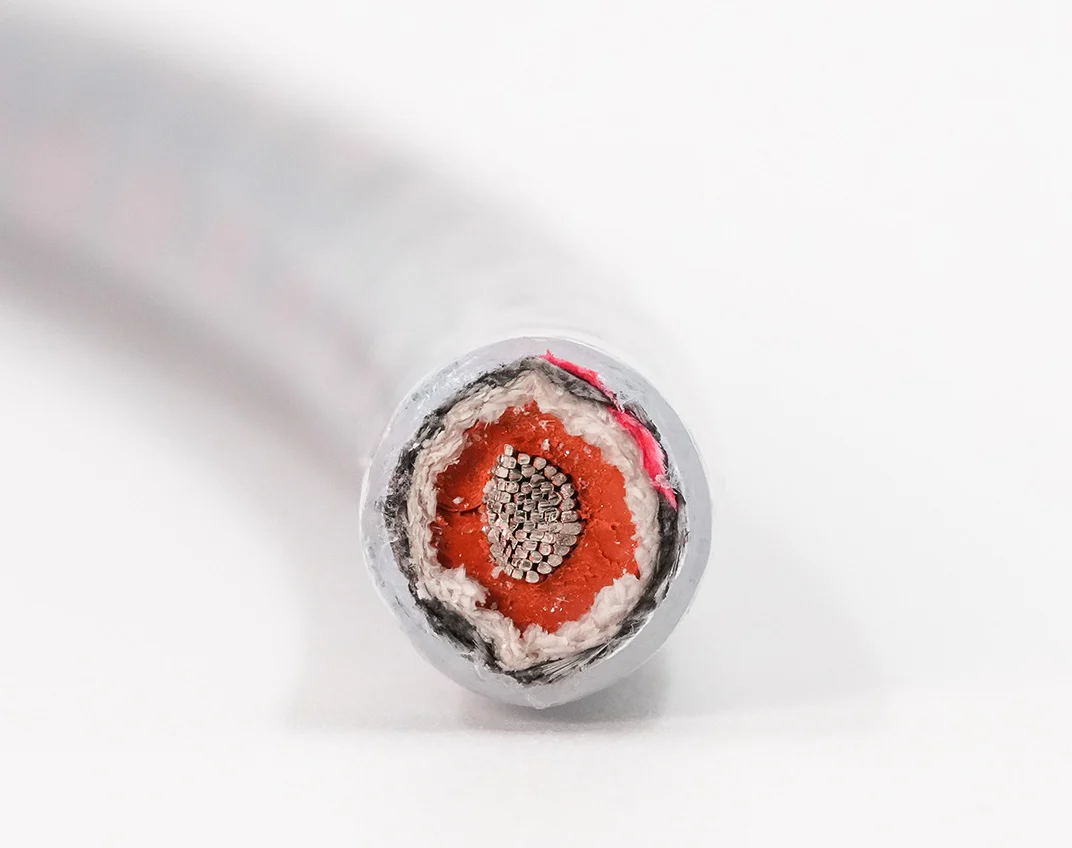
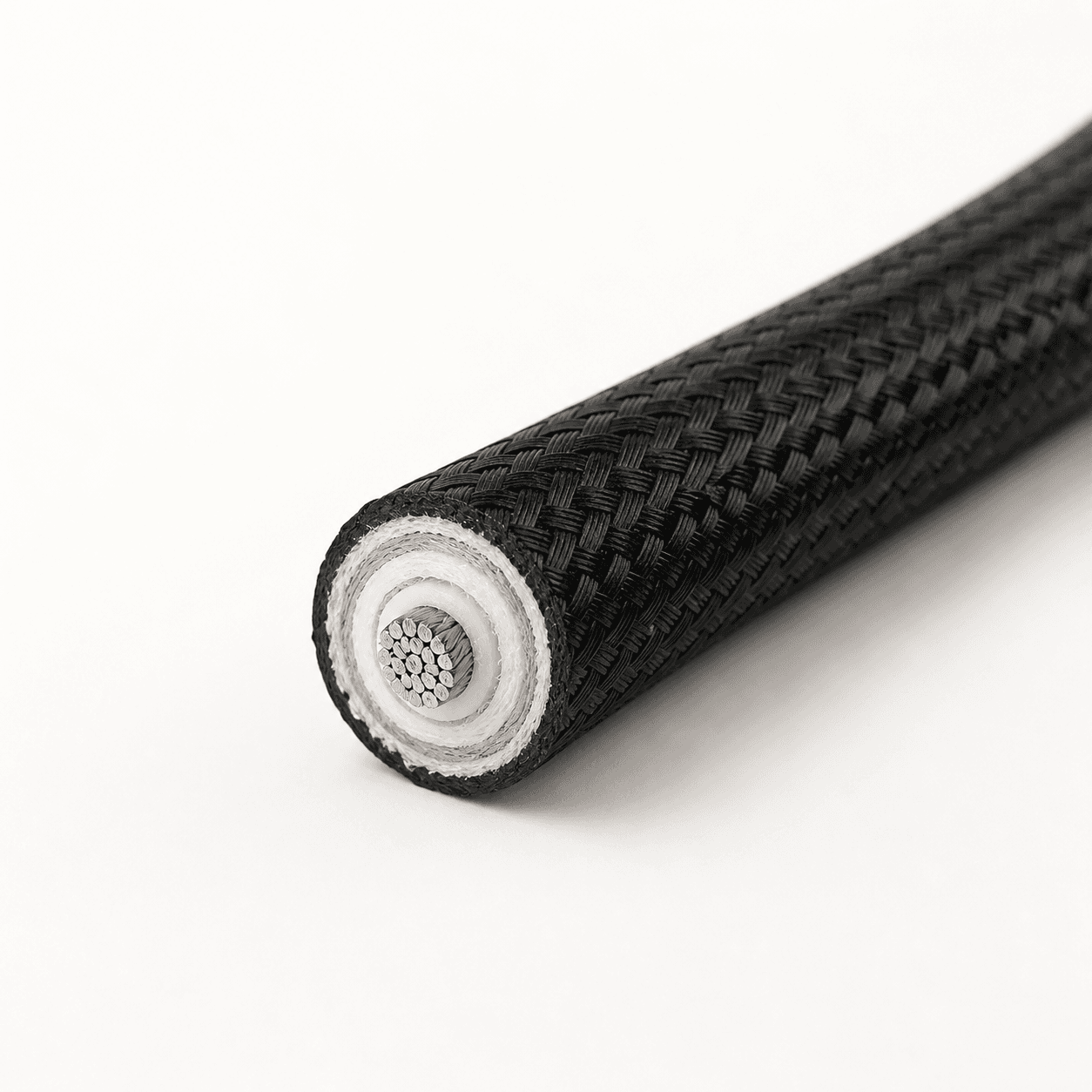
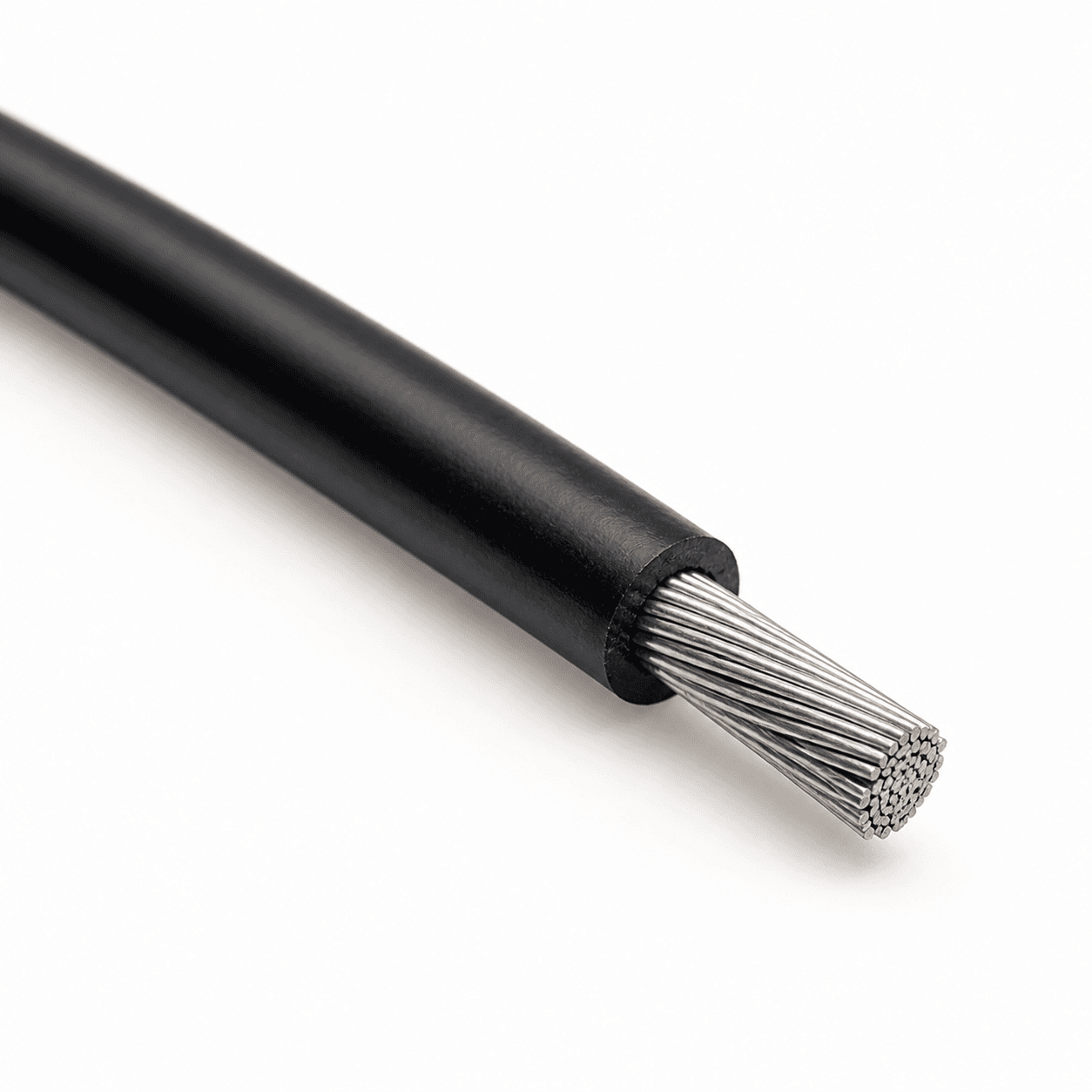
The “fibreglass versus fluoropolymer” question can be misleading if the whole construction is not listed. The TEBAOFLEX fibreglass-jacket igniter wire includes a fluoropolymer-coated fibreglass braid, together with mica tape and a PTFE moisture barrier. The fluoropolymer-jacket igniter wire uses a fluoropolymer outer jacket as its listed outer construction. These are different designs and should be compared against the route and thermal duty.
The related 25kV Igniter Flare Stack Cable combines nickel-plated copper, high-voltage silicone insulation, mica tape, fibreglass braid and a fluoropolymer outer coating. It is a product reference for flare and burner ignition routes, not a substitute for either single-core construction without a project review.
Temperature is only one selection input
Use the listed maximum conductor temperature only for the exact product construction. The fibreglass-jacket igniter wire page lists 538°C / 1,000°F maximum conductor temperature, while the fluoropolymer-jacket igniter wire page lists 250°C / 482°F. These values do not describe every part of the cable route or confirm the same performance against flames, hot surfaces, fluids or mechanical contact.
Document the ambient temperature, distance from the ignition source, local hot spots, route supports, bend points, vibration, abrasion and chemical contact. The resulting record allows the cable construction to be reviewed as part of the complete ignition system.
| Comparison point | Fibreglass-jacket igniter wire | Fluoropolymer-jacket igniter wire |
|---|---|---|
| Listed outer construction | Fluoropolymer-coated fibreglass braid | Fluoropolymer jacket |
| Listed voltage rating | 25 kV DC / 17 kV AC | 25 kV DC / 17 kV AC |
| Listed maximum conductor temperature | 538°C / 1,000°F | 250°C / 482°F |
| Listed static bend radius | 6 × overall diameter | 12 × overall diameter |
| Selection question | Does the approved route require this multilayer, high-temperature construction? | Does the approved route suit the listed fluoropolymer-jacket construction? |
Route, bend radius and exposure checks
Both product listings require the route to be checked. The listed bend-radius values differ, so a tighter route cannot be assumed to suit both options. Confirm the installed diameter, clamps, cable supports, maintenance access and any movement during service. Do not use a jacket description as evidence that the full cable is suitable for a particular bend or vibration condition.
When fluid or chemical exposure is present, identify the substance, contact method, temperature and duration. The fluoropolymer-jacket product is described for heat, chemical, cutting and abrasion considerations, while the fibreglass-jacket construction includes a fluoropolymer-coated braid. Final suitability remains dependent on the documented exposure and supplied configuration.
RFQ checklist for flare stack igniter cable
- Required AC or DC ignition voltage and conductor size.
- Maximum conductor-temperature requirement and route-level ambient conditions.
- Installed length, bend points, supports, clamps and movement requirements.
- Mechanical contact, vibration, abrasion and cutting risks.
- Fluid, chemical, weather and cleaning exposure.
- Required standards, documentation and delivery location.
Review the relevant fibreglass-jacket igniter wire and fluoropolymer-jacket igniter wire product pages alongside your route information. For supporting documentation, visit Cable Certifications, Test Reports & Laboratory Support.
Frequently asked questions
Is a fibreglass-jacket igniter wire the same as a plain fibreglass cable?
No. The listed TEBAOFLEX construction uses a fluoropolymer-coated fibreglass braid and additional insulation layers. Check the full data sheet.
Which option has the higher listed conductor-temperature limit?
The listed fibreglass-jacket igniter wire is rated to 538°C / 1,000°F maximum conductor temperature. That value applies to the listed construction and must be assessed with the complete application.
Can the fluoropolymer-jacket cable replace the fibreglass version?
Not automatically. Confirm temperature, bend path, exposure and circuit requirements before substitution.
What information is needed before quotation?
Provide voltage, conductor size, length, temperature, route, bend radius, exposure details and the required documentation.
How can TEBAOFLEX help?
Send your flare stack igniter cable requirements for a configuration review.
Choose the construction from the duty record
The correct jacket decision comes after comparing the complete construction and the documented installation duty. TEBAOFLEX can help match a flare stack ignition requirement to the appropriate cable configuration before quotation.