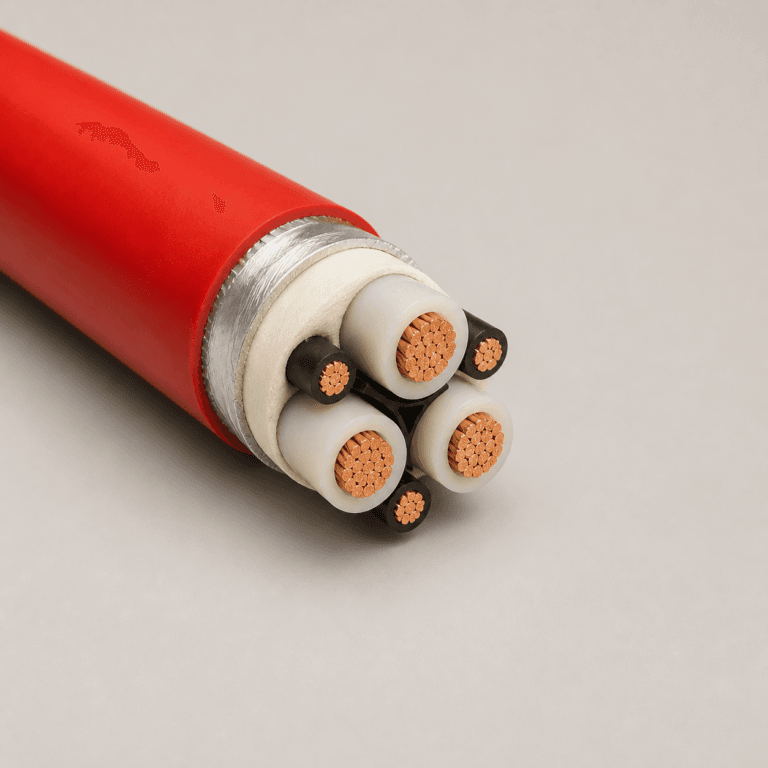

Port cranes, ship loaders and heavy lifting systems depend on cables that can move continuously while carrying power and control signals. Unlike a fixed installation cable, a reeling cable must tolerate repeated winding, unwinding, bending, tension and outdoor exposure without losing electrical or mechanical performance. For RTG and reel drum systems, a product such as 600V 2PNCT-H-U rubber reeling cable can be considered when the application requires a flexible cable for repeated winding and unwinding.
Choosing the right cable for a reel drum is therefore about more than conductor size. The travel distance, reel design, bending radius, speed, load, installation direction and working environment all influence the cable construction.
What Makes Reeling Cable Different?
Reeling cable is designed for dynamic applications. It is repeatedly flexed and stored on a drum, often under mechanical tension. A cable that performs well in a static tray may fail early when used on a moving crane or port machine.
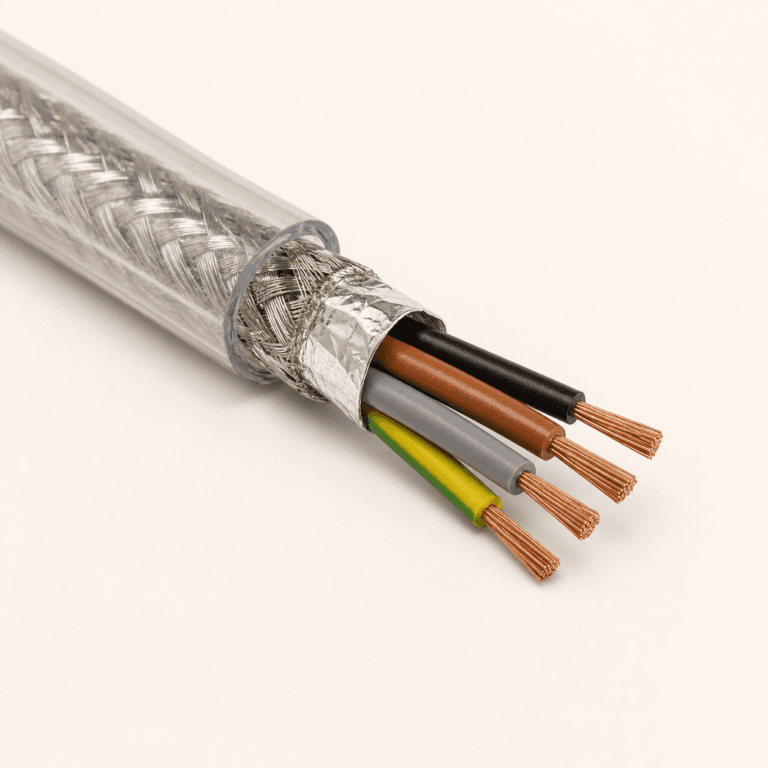
Heavy-duty reeling cables commonly combine flexible conductors, carefully designed stranding, a robust insulation system and an outer sheath that resists abrasion, oil, weather and mechanical stress. Depending on the application, the cable may also include control cores, communication elements, shielding or an integrated supporting structure.
Key Factors in Cable Selection
- Reeling distance: Confirm the maximum cable length that will be wound onto the drum and the usable travel distance.
- Bending radius: The cable construction must match the minimum bending radius of the reel and the actual routing path.
- Operating speed: Start-stop movement and high travel speed can create additional mechanical stress.
- Voltage and current: Select the conductor size and insulation system according to the equipment load and supply voltage.
- Control and signal needs: Crane systems may require separate control cores, pilot cores, data pairs or shielding.
- Environment: Ports expose cables to salt spray, rain, sunlight, oil, dust, low temperatures and impact.
- Mechanical load: Vertical installations and long travel distances may require additional tensile support.
Why Sheath Material Matters
The outer sheath is the first line of protection against the working environment. Rubber is often selected for demanding crane and port applications because it offers flexibility and good resistance to abrasion, impact and outdoor conditions. PUR may be preferred when high abrasion resistance and a compact, durable sheath are especially important.
The correct material depends on the application. A cable used on a sheltered indoor hoist may have different requirements from one installed on a ship-to-shore crane exposed to seawater and strong sunlight. Material selection should be based on the full duty cycle rather than a single environmental condition.
Power, Control and Communication in One Cable
Modern port equipment often needs more than power transmission. A single cable system may connect motors, brakes, sensors, limit switches, emergency circuits and control cabinets. Combining these functions can simplify installation, but the internal construction must be designed to reduce interference and maintain reliable signal transmission during movement.
Shielded control elements, twisted pairs and suitable separation between power and signal cores can help protect sensitive circuits. For installations with strict EMC requirements, the cable design should be reviewed together with the drive system, grounding method and cable routing. For flat cable arrangements with EMC requirements, the KYFLCY flat EMC festoon cable is another option to review alongside the reel design and control system.
Common Applications
- Ship-to-shore container cranes
- Rubber-tired gantry cranes
- Ship unloaders and ship loaders
- Bulk material handling equipment
- Reclaimer and stacker systems
- Hoists, winches and lifting machinery
- Harbor and shipyard equipment
TEBAOFLEX supplies port, crane and festoon cables for projects that require flexible power, control and communication solutions. Product selection can be matched to the reel type, voltage, core configuration, travel length and environmental conditions. For spreader and container-handling equipment, the Port Crane Spreader Basket Cable can be evaluated when flexible power and control connections are needed near the spreader. For higher-voltage systems, the NSSHCGEOEU medium-voltage reeling cable provides a related option for combined power, control and monitoring requirements.
How to Improve Reeling Cable Service Life
- Keep the reel aligned with the cable travel path.
- Respect the manufacturer’s minimum bending radius and pulling limits.
- Avoid twisting the cable before it enters the drum.
- Inspect the sheath regularly for cuts, flattening, cracks or unusual wear.
- Check the reel tension and guide rollers as part of routine maintenance.
- Use a cable construction designed for the actual dynamic duty cycle.
A Reliable Cable Starts with the Application Details
There is no single reeling cable that fits every crane or port machine. The most reliable solution is developed from the equipment data: movement pattern, cable length, drum diameter, speed, tension, electrical load and environmental exposure.
By reviewing these requirements before production, TEBAOFLEX can help customers select a cable structure that supports stable operation, easier maintenance and longer service life in demanding industrial environments.