
For ROV and underwater equipment, cable selection is often reduced to a material label or a jacket colour. That shortcut can create costly specification gaps. An orange PUR ROV cable may be easier to identify in a busy work area, but colour alone does not establish suitability for water exposure, signal transmission, repeated movement or a specific installation route. Engineers and buyers need to review the complete cable construction and the actual duty before selecting or quoting a cable.
This guide explains why orange PUR sheaths are common in ROV and underwater equipment, what the jacket colour can and cannot indicate, and which technical details should be included in an RFQ. It is written for engineering, procurement, maintenance and project teams comparing flexible power, control and signal cable options for marine and industrial equipment.
Orange PUR ROV Cable: Visibility Is Useful, but Construction Decides
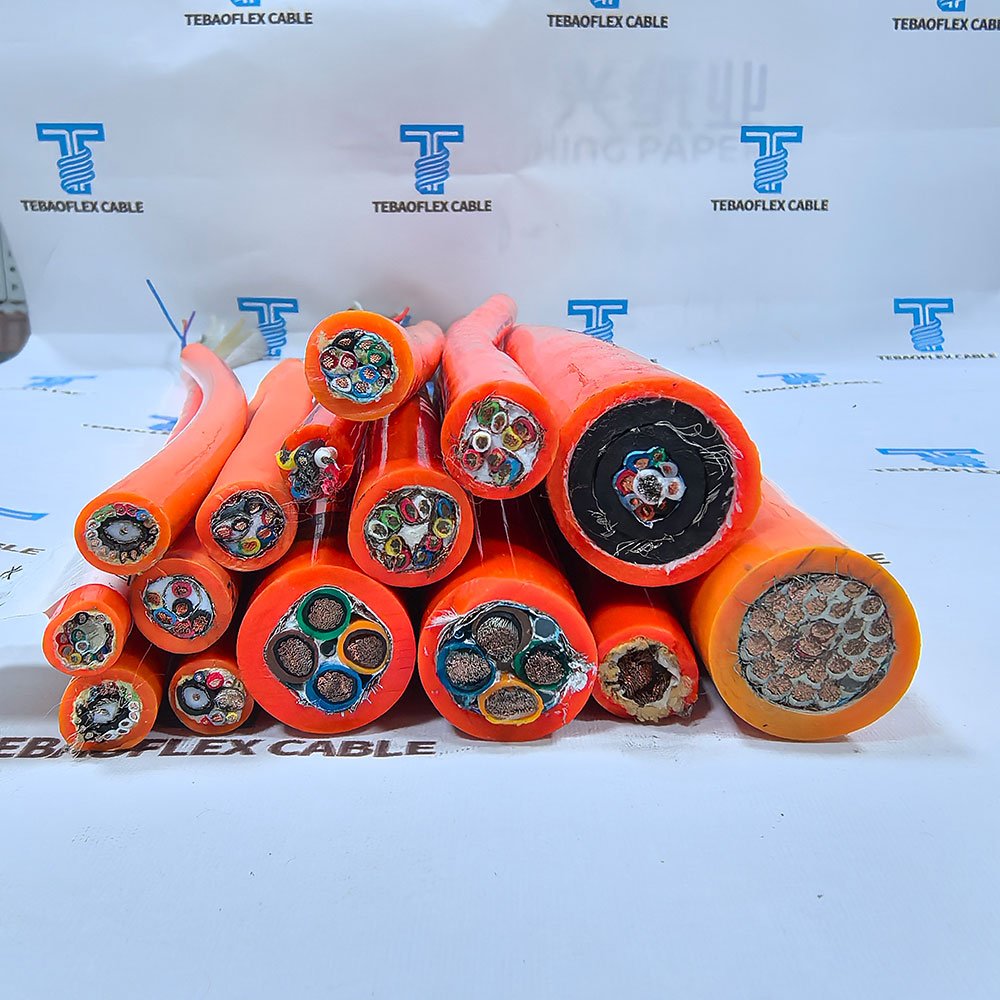
An orange jacket gives maintenance teams a visible reference when cables are routed around deck equipment, test areas, launch systems or service benches. A distinct colour can make cable identification quicker during installation, inspection and troubleshooting, especially where several hoses, power lines and control cables share the same working space.
However, the jacket colour is not a technical performance rating. It does not by itself confirm pressure capability, water resistance, oil resistance, abrasion performance, bending life, shielding effectiveness or suitability for a particular ROV. Those decisions depend on the approved cable design, data sheet and project conditions. A reliable selection process therefore treats orange as an identification feature and treats construction as the technical basis for approval.
Why a Visible Orange Sheath Helps ROV and Underwater Teams
ROV support and underwater-equipment operations often involve frequent inspection, handling and temporary routing before the system is placed into service. In these environments, visual distinction can support practical work: teams can trace the intended cable route, distinguish a selected flexible line from adjacent services and communicate more clearly during maintenance activities.
Colour should still be specified in context. A project may need a particular identification scheme, a customer marking requirement or a consistent colour across replacement parts. If colour matters, include it in the RFQ together with the functional requirements. This prevents a supplier from treating jacket colour as a cosmetic preference when it is actually part of the site identification process.
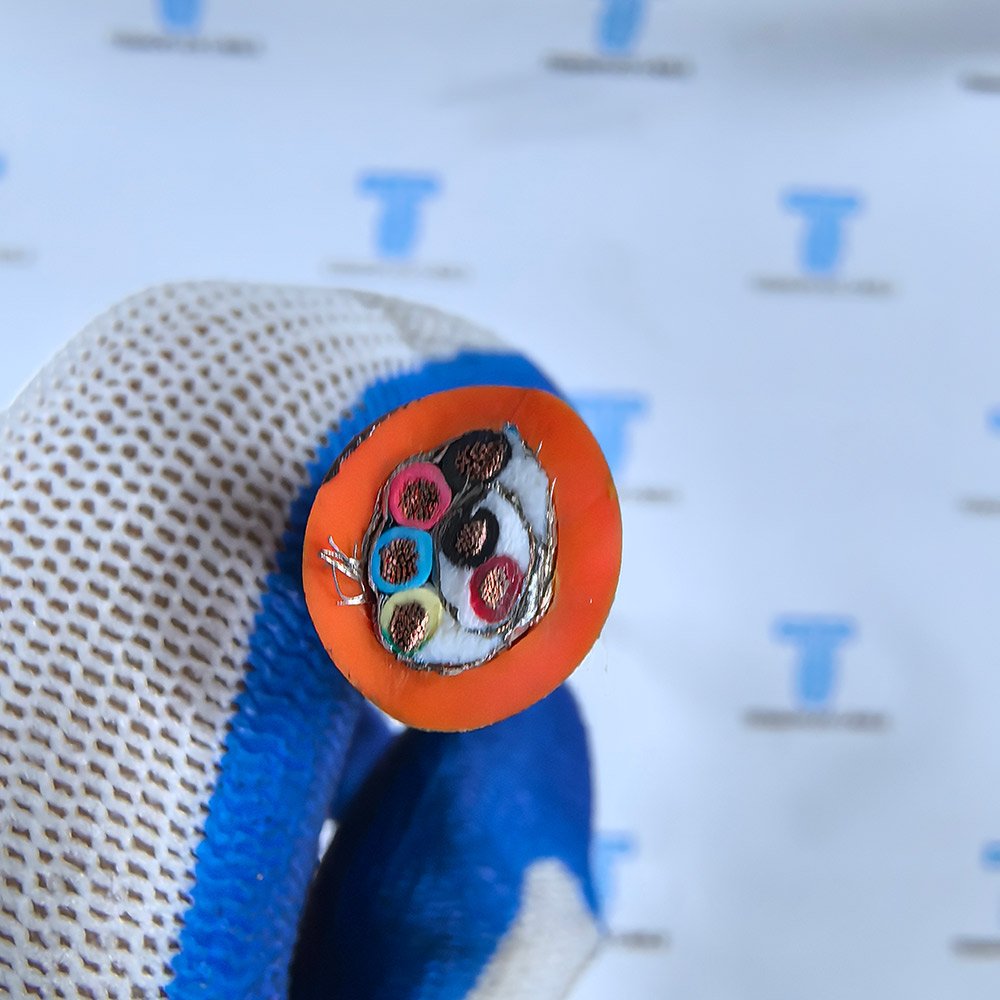
What the PUR Jacket Must Be Matched Against
PUR is often considered when buyers need a flexible jacket material for demanding industrial or marine equipment, but the material name alone is not a complete specification. The supplier needs to know whether the cable is fixed, flexed during service, guided through a route, handled manually, exposed to contact points or connected to moving equipment. The expected media, temperature conditions and mechanical contact also need to be described.
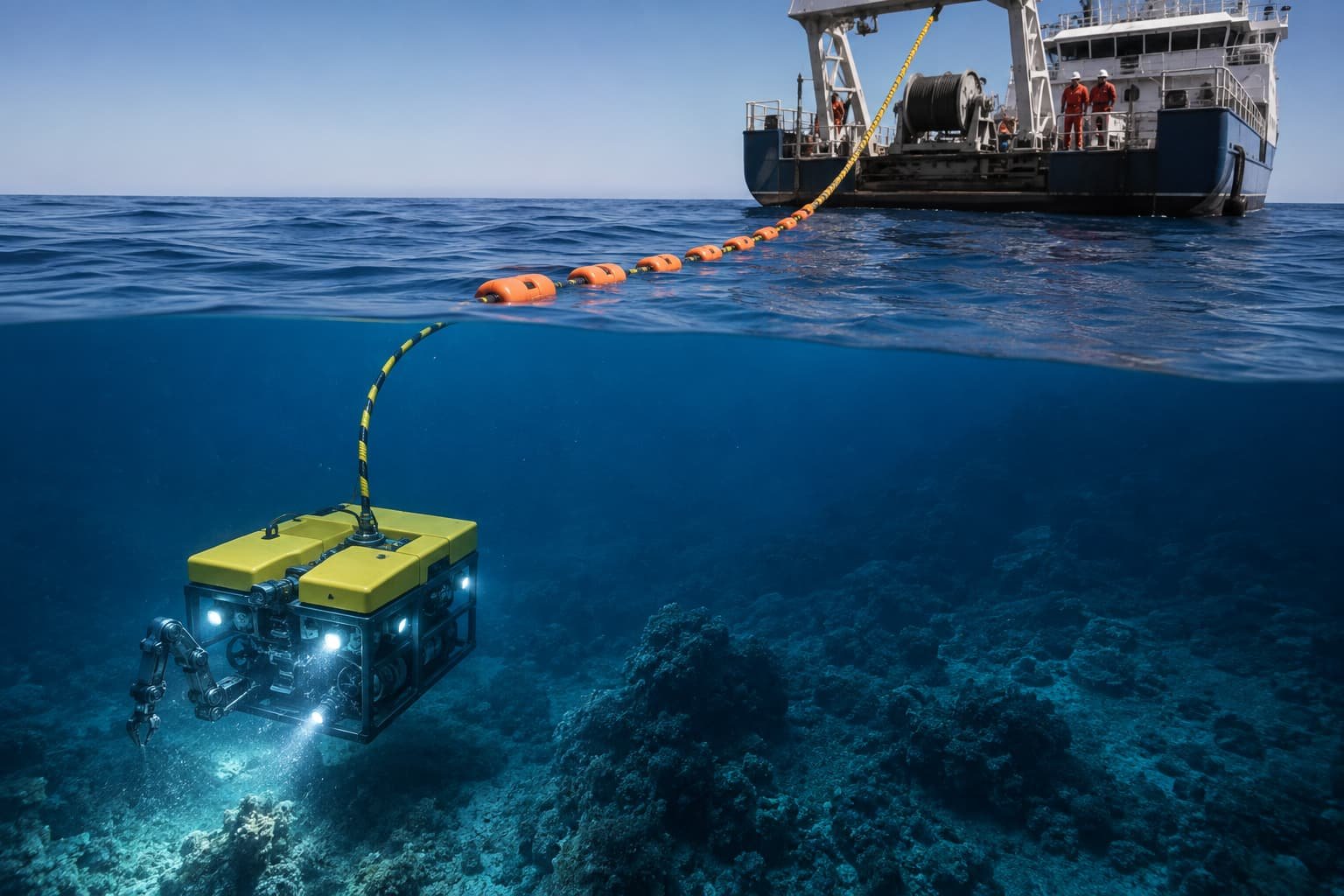
For underwater equipment, the system boundary matters as much as the jacket material. Is the cable routed only on deck? Does it pass through a wet area? Is it part of a submerged assembly? Does a connector, gland or protective conduit define a separate limitation? These questions should be resolved from the approved equipment and installation information. Do not use an orange PUR jacket as evidence that the complete assembly is suitable for every water-related condition.
Cable Construction Matters More Than Jacket Color
ROV, inspection and underwater-equipment cable requirements may involve power, control, signal or combined functions. The right construction begins with the circuit. Buyers should provide the system voltage, conductor size, number of cores, signal type and any protective-conductor requirement. Where a signal circuit is involved, the grounding approach and required shielding arrangement should be part of the technical discussion.
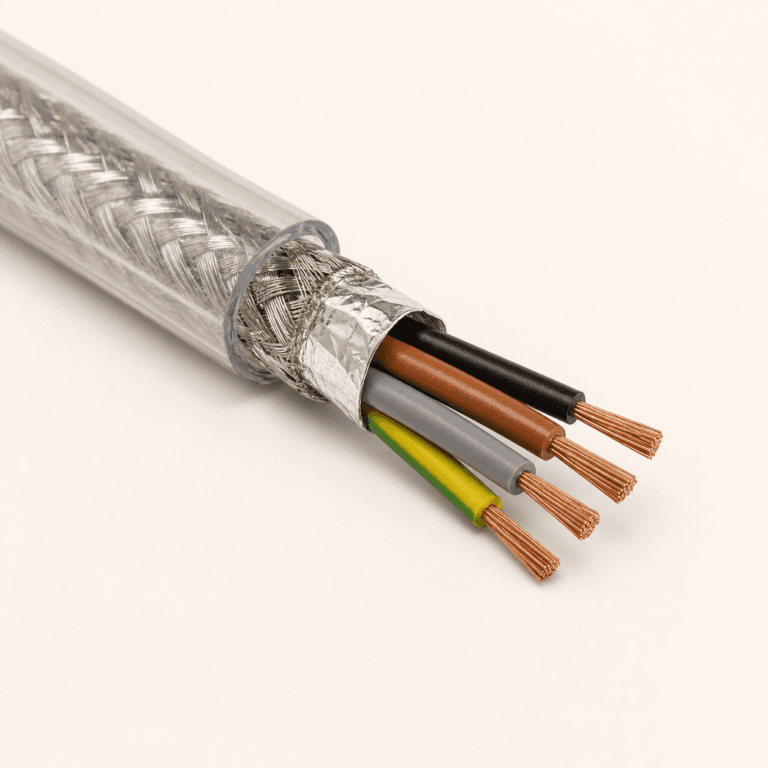
Construction review may also cover conductor flexibility, insulation, screen or braid arrangement, jacket material, fillers, strength members and termination compatibility. Not every ROV system needs the same features, and not every feature should be assumed. A cable intended for a protected fixed route should not automatically be treated as suitable for continuous flexing, reeling, torsion or tensile duty. Conversely, a moving cable needs to be evaluated against the real movement path rather than a generic “flexible” description.
For a product-focused starting point, see the PUR 4×18 AWG ROV signal cable. The final selection should still be reviewed against the project circuit and installation data.
ROV and Underwater Cable Selection Checklist
| Selection factor | Why it matters | Information to provide |
|---|---|---|
| Cable function | Power, control and signal circuits can require different constructions. | Equipment, circuit purpose, voltage and signal type. |
| Core configuration | Core count and conductor size affect circuit and termination design. | Number of cores, conductor size and protective-conductor requirement. |
| Shielding | Sensitive signals may need a defined screen and grounding approach. | Signal type, interference concerns and grounding arrangement. |
| Movement duty | Fixed, flexing, reeling and torsional duties impose different requirements. | Routing geometry, movement pattern, bend locations and pull conditions. |
| Environment | Water, fluids, abrasion, temperature and mechanical contact must be evaluated together. | Installation location, media exposure and protective measures. |
| Orange jacket | Colour supports identification but does not define performance. | Site colour convention, marking requirement or visibility need. |
When Shielding Should Be Considered for an ROV Cable
Shielding should be discussed when the cable carries signals that may be affected by electrical noise, when the system documentation specifies a screen, or when the grounding arrangement needs to be controlled. The presence of a shield is not automatically beneficial unless it is matched to the signal type, termination design and grounding method. A poorly defined screen connection can create a different problem from the one the shield was intended to address.
For this reason, an RFQ should identify whether the cable carries analogue, digital, communication, sensor or mixed signals, and should state any customer drawing or interface requirement. The supplier can then review the requested arrangement without assuming that every underwater cable needs the same shielding design.
Common ROV Cable Selection Mistakes
The first mistake is selecting a cable by colour, material name or conductor size alone. These are important attributes, but none replaces an application review. The second is describing the environment too broadly. Terms such as “marine,” “underwater” or “outdoor” do not state whether the cable is fixed, submerged, exposed to fluids, subject to abrasion or protected by a route system.
A third mistake is omitting the movement duty. A cable that is handled occasionally, guided through a moving system or continuously flexed may require different review criteria. The fourth is leaving the required standards, documentation, cable marking and quantity until after the first quotation. Providing those items up front reduces avoidable revisions and gives both engineering and procurement a clearer decision trail.
Coordinate Engineering and Procurement Before Release
Before releasing an order, engineering and procurement should compare the cable schedule, technical response and commercial quotation line by line. This is especially helpful when the same equipment package contains multiple cable functions or when the installation route is still being finalized. A short joint review can identify missing movement data, unclear shielding requirements, inconsistent core descriptions or documentation gaps before they affect production planning or site installation.
What to Include in an Orange PUR ROV Cable RFQ
To request a technically useful quotation, send the equipment or application, system voltage, conductor size, number of cores, signal type, shielding requirement, cable movement, installation environment, required standards, quantity and delivery schedule. Also share drawings, cable schedules or customer documents where available. If orange identification is required, state the reason and any marking or colour-reference requirement.
For broader system planning, review our guides to floating cable design for ROVs and marine equipment and ROV cable solutions for marine inspection. You can also browse our submersible and underwater cable range.
FAQ: Orange PUR ROV Cables
Does an orange sheath make a cable suitable for underwater use?
No. Orange primarily supports identification and visibility. Suitability depends on the approved cable construction, installation conditions and complete system requirements.
When should shielding be specified for an ROV cable?
Specify shielding when the signal type, system documentation, interference risk or grounding arrangement calls for it. The exact design should be reviewed against the circuit and termination method.
Can a PUR cable be used for continuous movement?
That depends on the specific cable design and the actual movement duty. Confirm the route, bend geometry, travel pattern and product documentation before approval.
What is the most important information for an ROV cable quotation?
Provide the application, voltage, conductor size, number of cores, signal and shielding needs, installation environment, movement duty, required standards and quantity.
Choose the Cable by Duty, Not by Colour Alone
An orange PUR ROV cable can support clearer identification in underwater-equipment work, but the correct selection depends on the complete electrical, mechanical and environmental requirement. TEBAOFLEX CABLE provides customized special-cable solutions for marine, offshore and industrial equipment. Need help selecting the right cable for your system? Send your application, voltage, conductor size, core count, cable movement, installation environment, required standards and quantity through our technical enquiry channel. Our team can review the requirements and recommend suitable next steps.