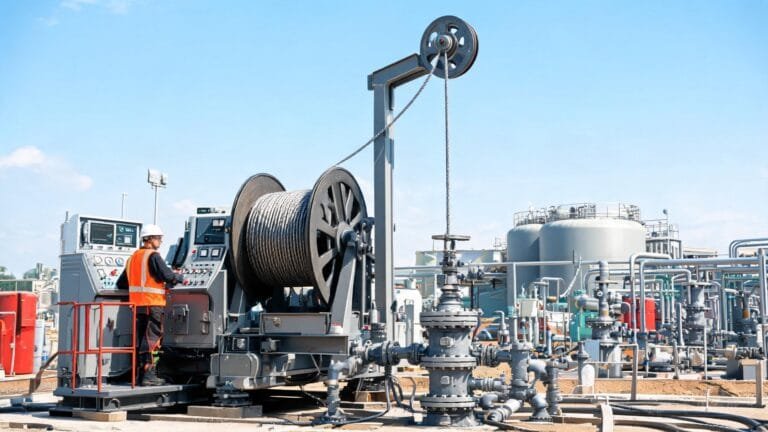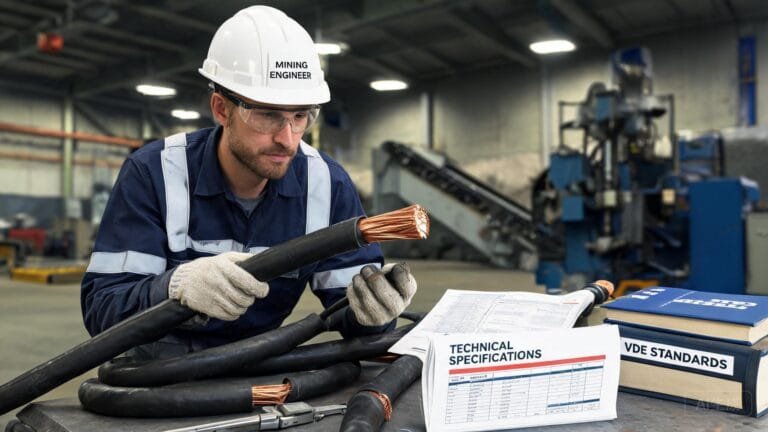

Selecting the correct portable cord is a decision that directly impacts equipment safety, regulatory compliance, and long-term operating costs. For engineers and procurement professionals, knowing how to select SOOW SJOOW portable cord for specific industrial applications requires understanding voltage requirements, environmental conditions, conductor sizing, and applicable standards.
This selection guide walks through the complete decision-making process for choosing between SOOW (600V) and SJOOW (300V) portable cords, covering the key technical and practical factors that should drive your specification.
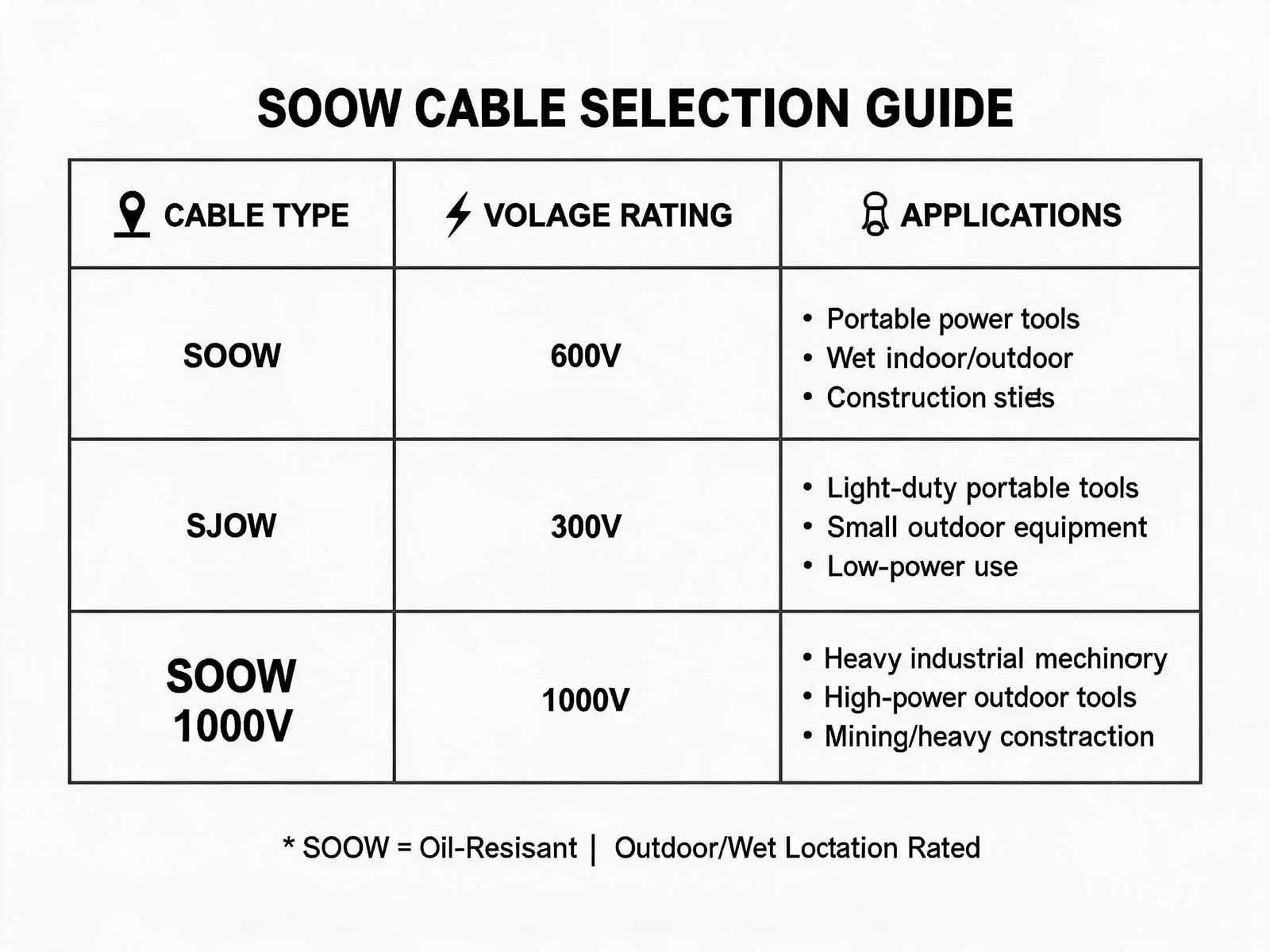
Step 1: Determine Your Operating Voltage
The single most important factor in selecting between SOOW and SJOOW is the operating voltage of the connected equipment:
- If your equipment operates at 480V or 600V: You must use SOOW (600V rated cable). SJOOW is not rated for these voltages.
- If your equipment operates at 120V or 240V: SJOOW (300V) is sufficient. SOOW can also be used, but it will be larger in diameter and more expensive.
- If you are unsure of the operating voltage: Always verify with the equipment manufacturer or a qualified electrician before specifying cable.
Step 2: Calculate Conductor Sizing Requirements
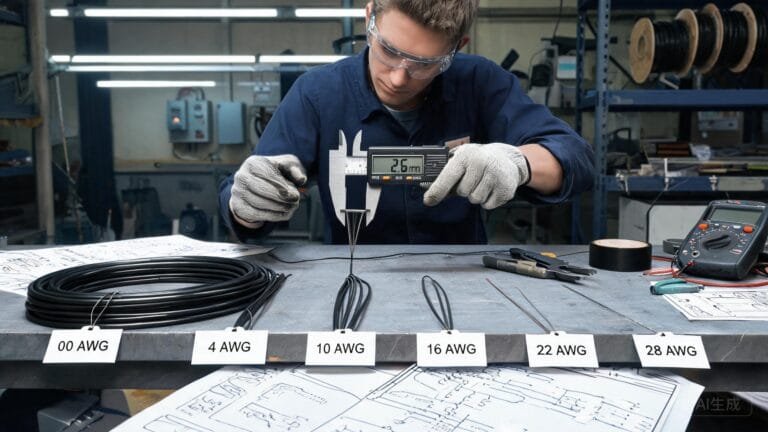
After determining voltage, calculate the correct conductor size (AWG) based on the load current:
- Identify the full-load current of the connected equipment
- Apply derating factors for ambient temperature, number of current-carrying conductors in the cable, and run length
- Select an AWG size with ampacity exceeding the calculated derated current
- Verify that voltage drop over the cable run is within acceptable limits (typically less than 3% for power circuits)
For assistance with conductor sizing calculations, our engineering team can review your load requirements and recommend the appropriate AWG size.
Step 3: Evaluate the Installation Environment
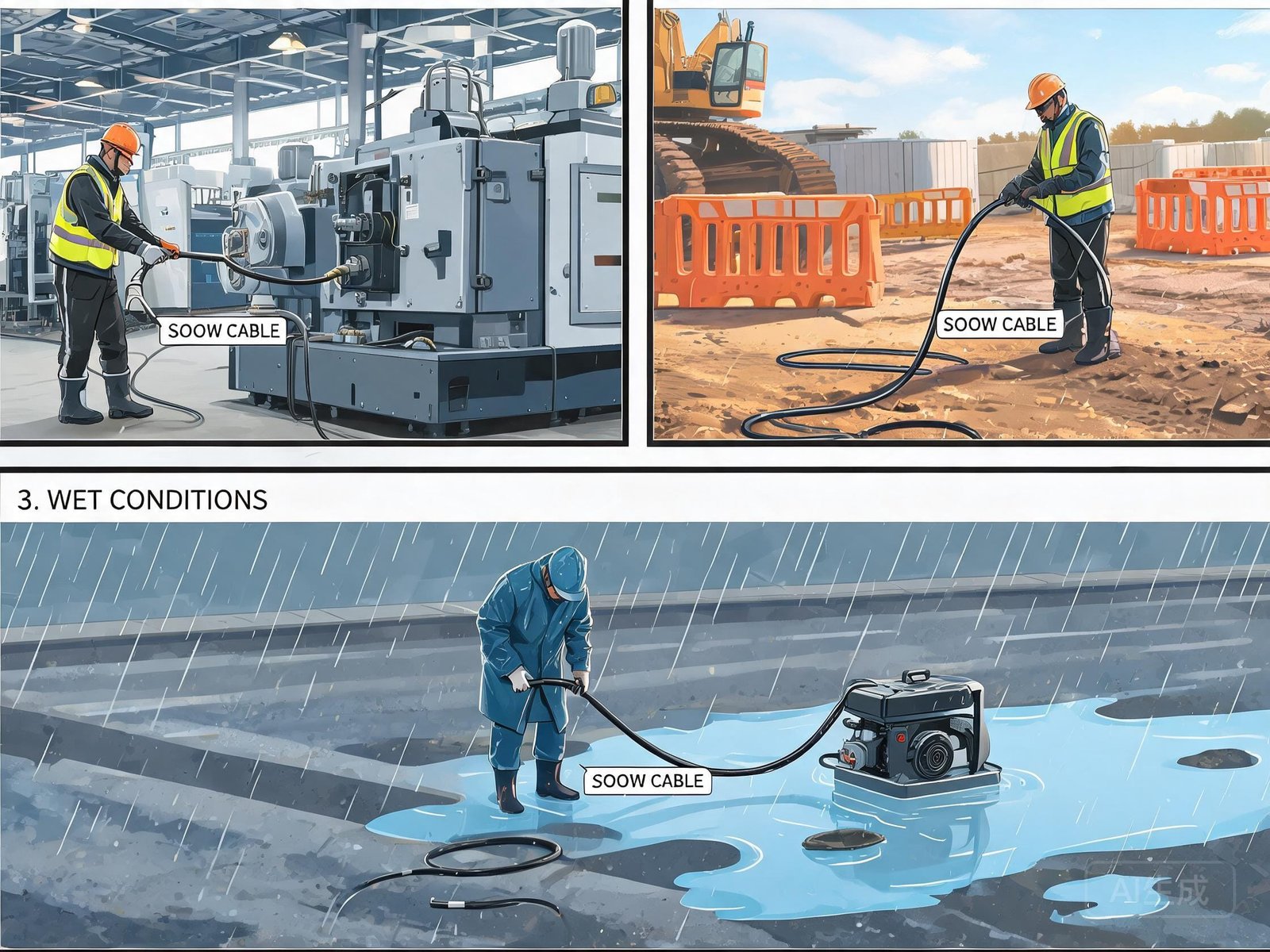
The operating environment determines whether the cable’s jacket and insulation materials are suitable for the application:
Indoor Industrial Environments
- Oil and chemical exposure — the “OO” oil-resistant designation is essential in machine shops and processing facilities
- Ambient temperature — verify it does not exceed the 90°C rating
- Mechanical hazards — consider cable ramps or protective conduit where vehicles or equipment may cross cable paths
Outdoor and Construction Environments
- Weather exposure — the “W” water-resistant rating confirms suitability for outdoor use
- UV exposure — thermoset rubber includes UV inhibitors, but plan for periodic jacket inspection
- Traffic — use cable protectors in vehicle and pedestrian crossing areas
- Temperature — both SOOW and SJOOW remain flexible at -40°C, suitable for cold-climate construction sites
Step 4: Verify Standards and Certification Requirements
Confirm that the cable meets all applicable standards for your project:
- UL 62: The fundamental standard for flexible cords and cables in North America
- CSA C22.2 No. 49: Required for Canadian installations
- NEC Article 400: Governs permitted uses of flexible cords in the United States
- FT-2 flame rating: Verify the cable carries this horizontal flame test rating
- RoHS compliance: Required for certain markets and applications
Always request compliance documentation from the manufacturer. Our certifications page provides detailed information on standards compliance for TEBAOFLEX cables.
Step 5: Consider Cable Movement and Flex Requirements
The way the cable will be used affects both the cable type and configuration:
- Static installation: If the cable will be installed once and not moved, standard SOOW or SJOOW is adequate
- Occasional relocation: For cables that are periodically moved, the rubber jacket’s flexibility provides good service life
- Frequent flexing or reeling: For applications involving cable reels, continuous flexing, or torsional movement, consult the manufacturer for flex-life recommendations. Not all SOOW/SJOOW cables are designed for continuous flex applications.
- Minimum bending radius: Maintain at least 4-5 times the cable outside diameter to prevent conductor fatigue and jacket damage
Common Selection Mistakes to Avoid
- Choosing SJOOW to save cost on a 480V circuit: This is the most dangerous mistake — it creates an immediate safety hazard and code violation
- Oversizing conductor AWG unnecessarily: While oversized conductors are safe, they increase cost and may not fit standard connectors
- Ignoring derating factors: Multiple current-carrying conductors in a single cable require ampacity derating per NEC tables
- Specifying based on price alone: Inferior rubber compounds may look identical but fail prematurely under oil or UV exposure
- Forgetting to verify connector compatibility: SOOW and SJOOW have different outer diameters at the same AWG size — verify that connectors, strain reliefs, and glands accommodate the selected cable
Information to Provide When Requesting a Quotation
To receive an accurate quotation for SOOW or SJOOW portable cord, provide the following information:
- Application/equipment: What will the cable connect?
- Voltage: Operating voltage of the circuit (120V, 240V, 480V, 600V)
- Conductor size: Required AWG or mm² size
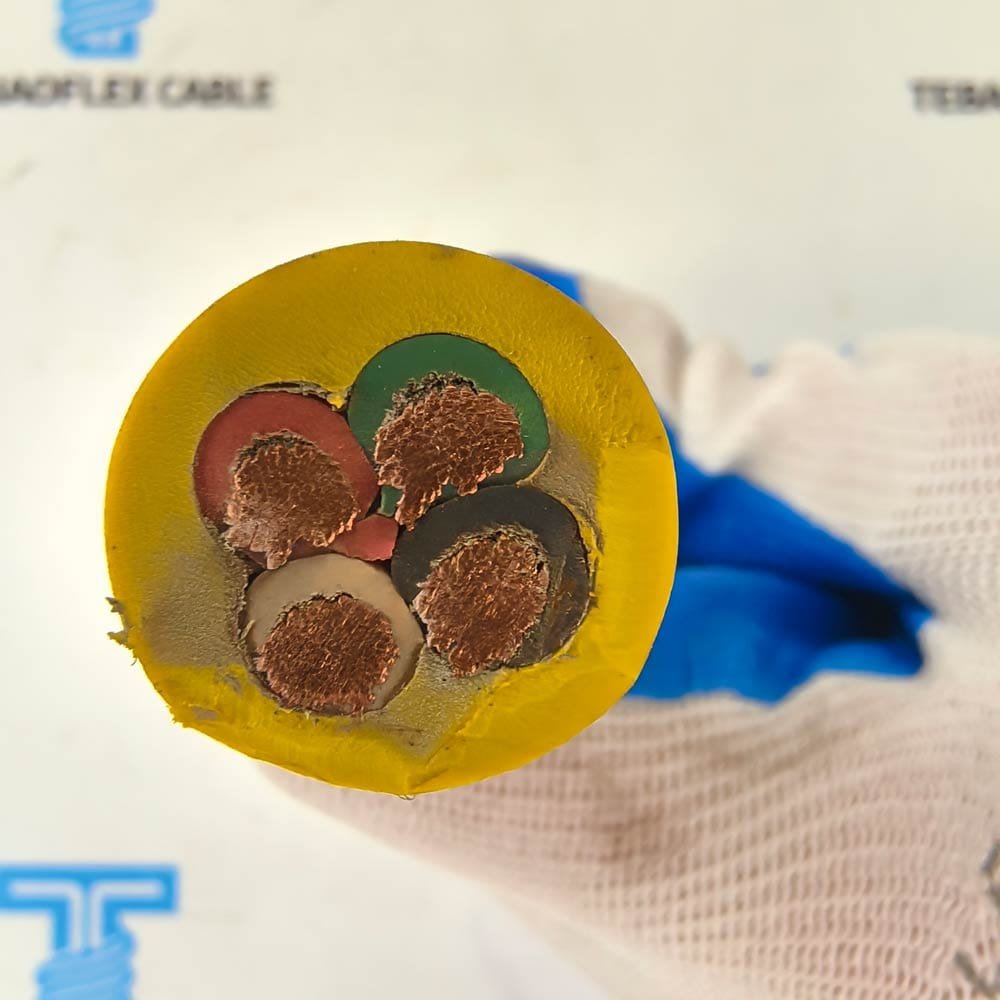
- Number of cores: 2, 3, 4, or 5 conductors
- Cable movement: Static, occasional relocation, or continuous flexing
- Installation environment: Indoor, outdoor, wet, oil exposure, temperature range
- Required standards: UL 62, CSA, RoHS, or other certifications
- Required quantity: Total length and number of runs
Providing complete specifications ensures you receive the correct cable recommendation and accurate pricing. Explore our full range of portable and flexible cables for additional options.
Conclusion
Learning how to select SOOW SJOOW portable cord requires a systematic approach: start with voltage (the SOOW vs SJOOW decision), then address conductor sizing, environmental resistance, standards compliance, and cable movement requirements. Avoiding common selection mistakes — particularly the dangerous substitution of SJOOW for SOOW on high-voltage circuits — ensures both safety and regulatory compliance.
TEBAOFLEX CABLE offers SOOW and SJOOW portable cords with full UL 62 compliance, available in standard and custom configurations for industrial B2B applications worldwide.
Frequently Asked Questions
How do I know if I need SOOW or SJOOW?
The primary deciding factor is voltage. If your equipment operates at 480V or 600V, you need SOOW (600V rated). If it operates at 120V or 240V, SJOOW (300V rated) is sufficient. Always verify the circuit voltage before specifying cable type.
What AWG size do I need for my SOOW cable?
AWG size depends on the load current, conductor count, ambient temperature, and run length. Calculate the full-load current, apply NEC derating factors, and select an AWG with adequate ampacity. Our engineering team can assist with this calculation if you provide your load details.
Can SOOW cable be used in wet locations?
Yes. The “W” in SOOW designates water resistance, making it suitable for wet locations as defined by the NEC. However, continuous submersion is not recommended — for submersion applications, specialized submersible cable types are required.
What certifications should I look for when buying SOOW cable?
At minimum, verify UL 62 listing and FT-2 flame rating. For Canadian installations, CSA C22.2 No. 49 certification is required. For environmentally sensitive markets, RoHS compliance may also be necessary. Request compliance documentation from the manufacturer.
How long can I run a SOOW cable before voltage drop becomes a problem?
Voltage drop depends on conductor size, load current, and circuit voltage. As a general guideline, keep voltage drop below 3% for power circuits. Use online voltage drop calculators or consult the NEC tables for specific AWG and length combinations. For long runs, larger conductor sizes or higher circuit voltages reduce voltage drop.
Ready to specify the right SOOW or SJOOW cable for your project? Contact us or Request a Quote.
Send us your application/equipment, voltage, conductor size, number of cores, cable movement, installation environment, required standards, and required quantity — our engineering team will review and recommend a suitable cable solution.