
The SOOW vs SJOOW cable comparison is one of the most common questions we receive from engineers and procurement teams. While these two portable cord types look nearly identical and share the same letter designations, a single letter — the “J” — creates a significant difference in voltage rating, application scope, and regulatory compliance. Selecting the wrong type can lead to safety hazards, code violations, and equipment failure.
This comparison guide breaks down every technical and practical difference between SOOW and SJOOW portable cords to help you make the correct specification decision.
SOOW vs SJOOW: The Fundamental Difference
The most critical distinction between SOOW and SJOOW is the voltage rating:
| Characteristic | SOOW | SJOOW |
|---|---|---|
| Voltage Rating | 600V AC | 300V AC |
| “J” Designation | None (hard service) | “J” = Junior service |
| Typical AWG Range | 18 AWG to 2 AWG | 18 AWG to 10 AWG |
| Conductor Cores | 2 to 5 | 2 to 6 |
| Temperature Range | -40°C to 90°C | -40°C to 90°C |
| Standard | UL 62 | UL 62 |
| Jacket Material | Thermoset rubber (neoprene/CPE) | Thermoset rubber (neoprene/CPE) |
| Oil Resistance | Yes (insulation + jacket) | Yes (insulation + jacket) |
| Water Resistance | Yes (“W” designation) | Yes (“W” designation) |
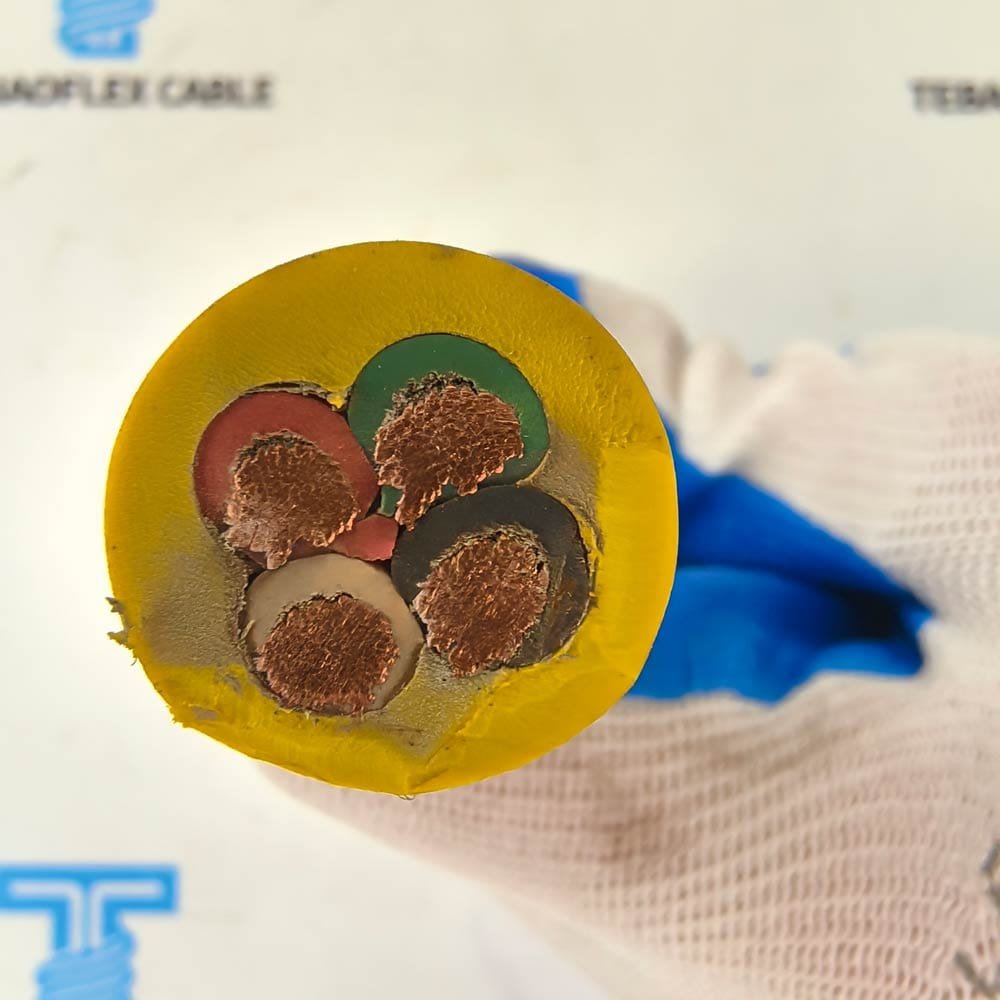
Construction Differences in Detail
Voltage Rating Impact on Construction
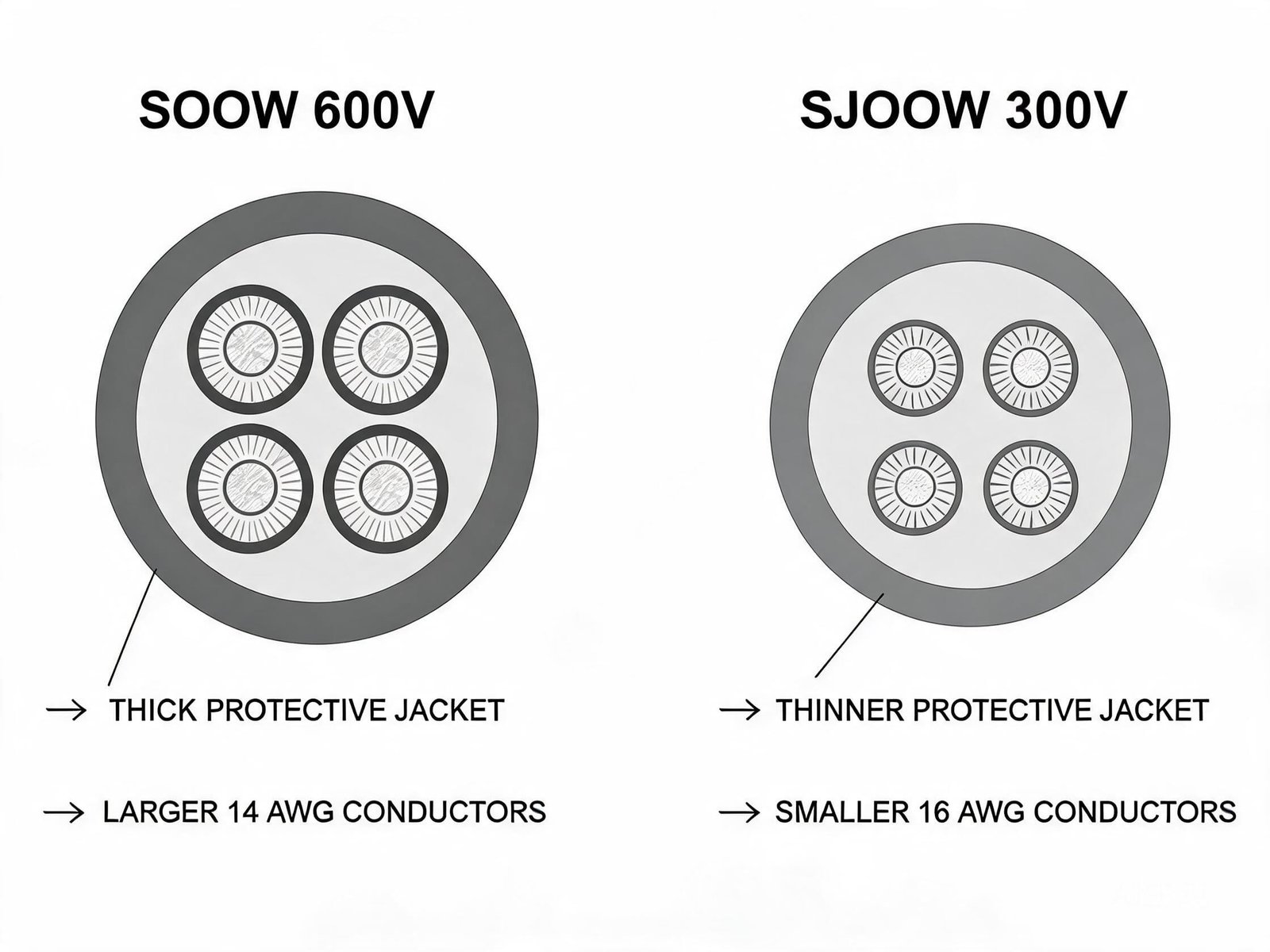
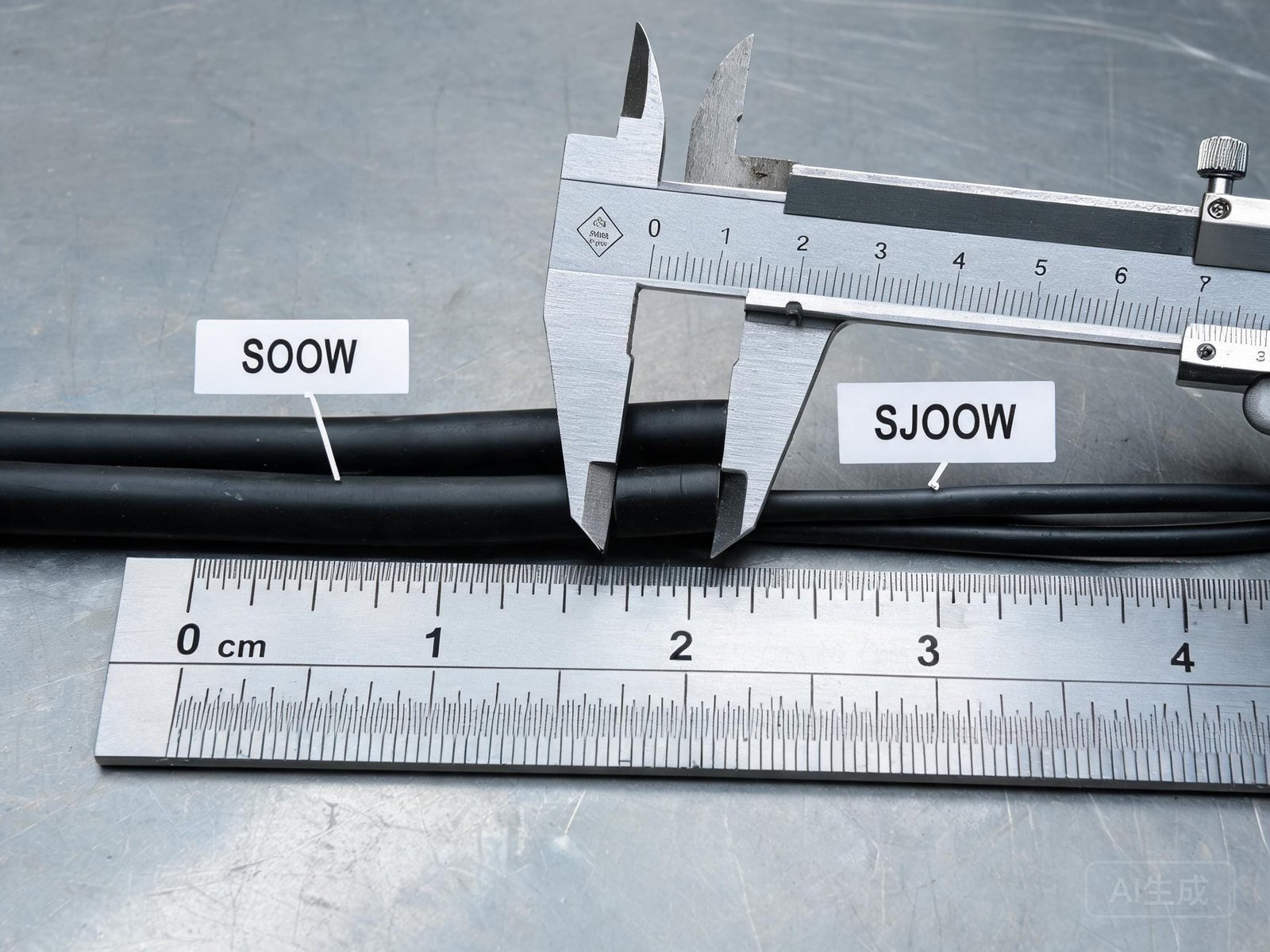
The 600V rating of SOOW requires thicker insulation on each conductor compared to SJOOW’s 300V rating. This results in a larger overall cable diameter for SOOW at the same AWG size and core count. The thicker insulation also provides greater dielectric strength, which is why SOOW is specified for higher-voltage equipment.
Conductor Size Availability
SOOW is available in larger conductor sizes (up to 2 AWG) because it is designed for higher-current, higher-voltage applications. SJOOW typically tops out at 10 AWG, as 300V applications rarely require larger conductors. This limits SJOOW to lighter-duty applications where the current demand is moderate.
Application Comparison: Where Each Cable Excels
SOOW Applications (600V)
SOOW is specified when the connected equipment operates at voltages above 300V. Common applications include:
- 480V and 600V industrial equipment
- Three-phase motor connections at higher voltages
- Construction site power distribution at 480V/600V
- Heavy welding equipment
- Industrial heater and process equipment
SJOOW Applications (300V)
SJOOW is appropriate for equipment operating at 120V or 240V, including:
- Portable hand tools and bench equipment
- Small appliance and equipment connections
- Light-duty portable generator connections
- Residential and commercial temporary power
- Indoor workshop power distribution at 120/240V
Cost and Availability Comparison
SJOOW is generally less expensive than SOOW for the same AWG size due to thinner insulation and smaller conductor availability. However, cost should never be the primary selection criterion — the voltage rating must match the application. Using SJOOW on a 480V circuit to save cost creates a serious safety hazard.
For projects requiring bulk quantities or custom configurations, our complete portable cord product catalog includes both SOOW and SJOOW options with competitive pricing for B2B buyers.
Regulatory and Code Considerations
The National Electrical Code (NEC) in the United States governs the use of flexible cords and cables. Key code considerations for SOOW vs SJOOW selection include:
- NEC Article 400: governs the permitted uses of flexible cords — both SOOW and SJOOW fall under this article
- Voltage matching: The cable’s voltage rating must equal or exceed the circuit voltage
- Listing requirements: Both types must be UL-listed and marked with the appropriate designation
- Permitted uses: Flexible cords are permitted for specific applications only — not as permanent building wiring
For projects requiring cables that meet international standards beyond UL, review our certifications and compliance documentation for IEC, VDE, and other regional standards.
Common Comparison Mistakes
- Assuming “J” means “junior” in quality: The “J” refers to the service level (300V vs 600V), not build quality. Both are manufactured to the same UL 62 standard.
- Interchanging SOOW and SJOOW: Never substitute SJOOW for SOOW on circuits exceeding 300V — this is a code violation and safety hazard.
- Ignoring conductor count differences: SJOOW supports up to 6 conductors, while SOOW typically maxes at 5 — check your circuit requirements before specifying.
- Overlooking jacket material variations: Some manufacturers use different rubber compounds — always verify that both insulation and jacket carry the “O” oil-resistant designation.
Conclusion
The SOOW vs SJOOW cable comparison ultimately comes down to one factor: voltage rating. SOOW at 600V is required for higher-voltage equipment and applications, while SJOOW at 300V is appropriate for standard 120/240V portable power. Both share the same oil-resistant insulation, water-resistant jacket, and -40°C to 90°C temperature range — but using the wrong voltage rating creates serious safety and compliance risks.
TEBAOFLEX CABLE manufactures both SOOW and SJOOW portable cords to UL 62 standards. Explore our SOOW and SJOOW portable cord product page for detailed specifications, or learn about our custom cable manufacturing services for specialized configurations.
Frequently Asked Questions
Can I use SOOW where SJOOW is specified?
Yes, in most cases. SOOW has a higher voltage rating (600V vs 300V) and is backward-compatible with 300V applications. However, SOOW will be larger in diameter and more expensive, so it may not fit existing connectors or strain reliefs designed for SJOOW.
What happens if I use SJOOW on a 480V circuit?
Using SJOOW (300V rated) on a 480V circuit is a serious safety violation. The insulation is not rated for the higher voltage, creating risk of insulation breakdown, short circuits, fire, and injury. Always match the cable voltage rating to the circuit voltage.
Are SOOW and SJOOW interchangeable in terms of connectors?
Not always. Because SOOW has thicker insulation for the same AWG size, it has a larger overall diameter. Connectors designed for SJOOW may not accommodate SOOW cable, and vice versa. Always verify connector compatibility before ordering.
Do SOOW and SJOOW have the same temperature rating?
Yes. Both SOOW and SJOOW are rated for -40°C to 90°C. The voltage rating difference does not affect the temperature range — both use the same rubber insulation and jacket compounds.
Which cable is more flexible, SOOW or SJOOW?
Both use the same rubber insulation system and stranded copper conductors, so flexibility is comparable. However, at the same AWG size, SJOOW may feel slightly more flexible due to its thinner insulation layers. The difference is generally minimal in practical handling.
Still unsure whether SOOW or SJOOW is right for your project? Contact us or Request a Quote.
Send us your application/equipment, voltage, conductor size, number of cores, cable movement, installation environment, required standards, and required quantity — our engineering team will review and recommend a suitable cable solution.