
Selecting the correct trailing cable for mining equipment is a decision that directly impacts operational safety, equipment uptime, and total cost of ownership. Knowing how to select NTSCGEWOU trailing cable for specific mining operations requires understanding voltage requirements, environmental conditions, mechanical stress factors, and applicable standards.
This selection guide walks through the complete decision-making process for choosing the correct NTSCGEWOU trailing cable for mining and tunnelling applications.
Step 1: Determine Equipment Voltage Requirements
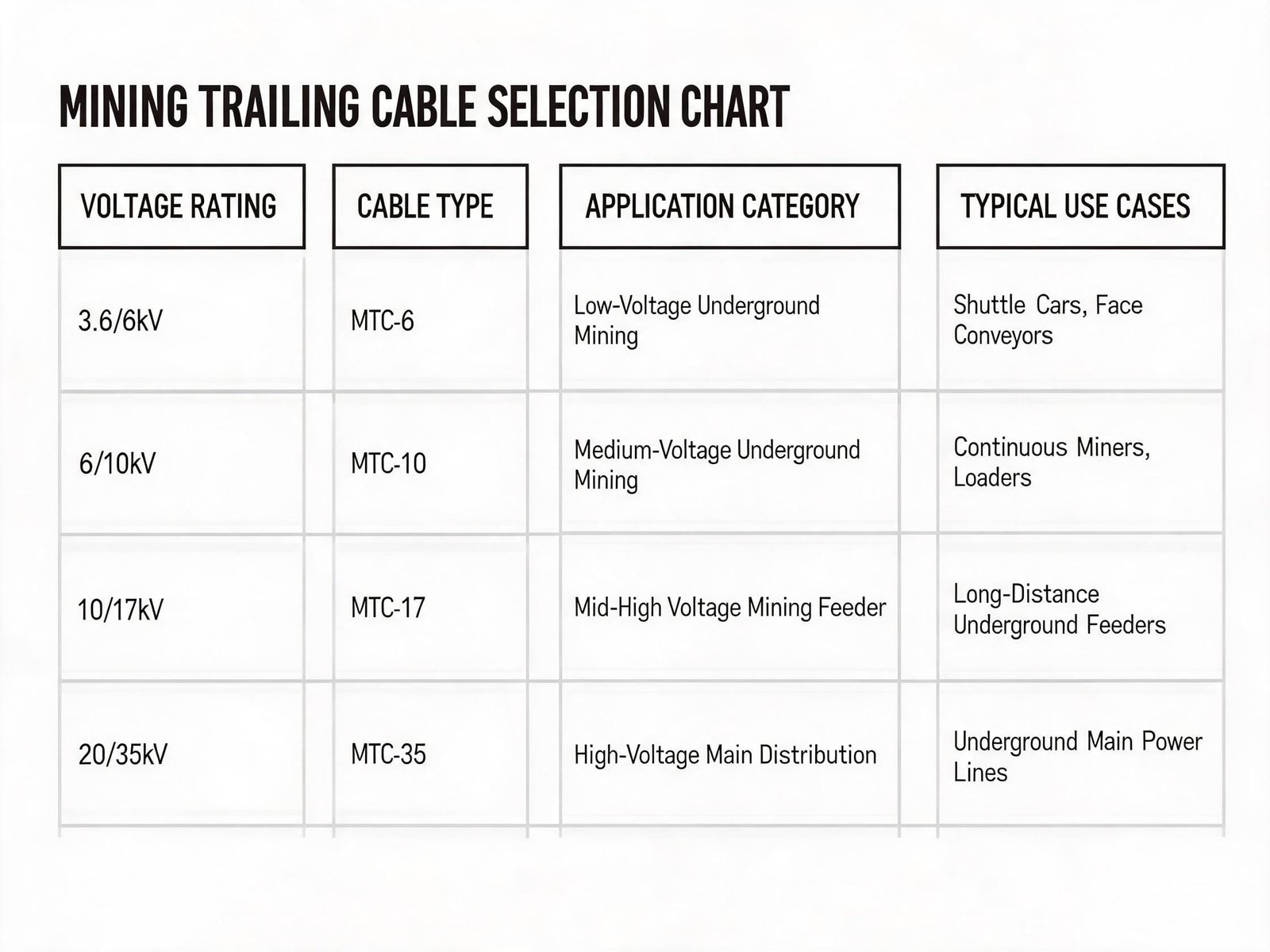
The first and most critical selection factor is the voltage rating of the mining equipment:
- 3.6/6kV: Medium-sized excavators, some underground equipment
- 6/10kV: Standard mining excavators and shovels
- 8.7/15kV: Large excavators, crusher stations
- 12/20kV: High-voltage mining equipment, large bucket-wheel excavators
- 20/35kV: Very large mining equipment, high-voltage distribution
Always verify the equipment’s rated voltage from the manufacturer’s specifications. The cable voltage rating must equal or exceed the circuit voltage.
Step 2: Evaluate the Operating Environment
The mining environment determines whether the NTSCGEWOU cable’s construction is suitable for the application:
Open-Pit Mining
- UV exposure: The “U” designation provides UV resistance for outdoor operations
- Abrasion: Cables may contact rough ground — verify jacket abrasion resistance
- Weather: The rubber jacket withstands rain, dust, and temperature cycling
- Equipment movement: Verify torsional resistance rating matches equipment travel patterns
Underground Mining and Tunnelling
- Water ingress: The “W” designation confirms water resistance for wet underground environments
- Flame retardancy: IEC/EN 60332-1-2 compliance is essential for underground fire safety
- Space constraints: Verify cable bending radius fits available routing paths
- Chemical exposure: Assess hydraulic oil and chemical presence for oil resistance requirements
Step 3: Calculate Conductor Sizing
Determine the correct conductor size based on the equipment’s power demand:
- Identify the full-load current of the connected equipment
- Apply derating factors for ambient temperature, grouping, and reeling conditions
- Verify that voltage drop over the cable run is within acceptable limits
- Consider the cable’s thermal performance under continuous loading
For assistance with conductor sizing calculations, our engineering team can review your load requirements and recommend the appropriate conductor size.
Step 4: Verify Mechanical Requirements
Mechanical stress is a primary failure mode for trailing cables. Verify these mechanical specifications:
- Torsional resistance: NTSCGEWOU is rated for plus/minus 25 degrees per meter — verify this matches the equipment’s rotational movement
- Travel speed: Up to 120 m/min — verify the equipment’s maximum travel speed does not exceed this rating
- Bending radius: Ensure the cable reel and routing paths accommodate the cable’s minimum bending radius
- Tensile strength: For vertical or steeply inclined installations, verify the cable’s tensile rating is adequate
Step 5: Confirm Standards and Certifications
Verify that the cable meets all applicable standards for your project and jurisdiction:
- VDE 0250-813: The primary standard for NTSCGEWOU mining cables
- IEC/EN 60332-1-2: Flame retardancy for underground fire safety
- Mining Safety Mark (MA): Required for certain mining jurisdictions
- ISO 9001:2015: Manufacturer quality management certification
Always request compliance documentation. Our certifications page provides detailed information on standards compliance.
Common Selection Mistakes to Avoid
- Undersizing conductor AWG: Mining equipment has high inrush currents — undersized conductors overheat and fail
- Ignoring torsional requirements: Cables with insufficient torsional resistance will fail prematurely in reeling applications
- Overlooking environmental factors: Standard industrial cables fail rapidly in mining conditions with water, oil, and abrasion
- Specifying wrong voltage rating: Using a cable rated below the circuit voltage creates a safety hazard
- Neglecting cable management: Even the correct cable will fail if the reeling system, tension control, and routing are not properly designed
Information to Provide When Requesting a Quotation
- Application/equipment: Type of mining equipment (excavator, TBM, crane, etc.)
- Voltage: Circuit voltage (3.6/6kV, 6/10kV, 8.7/15kV, 12/20kV, 20/35kV)
- Conductor size: Required cross-section in mm squared or AWG
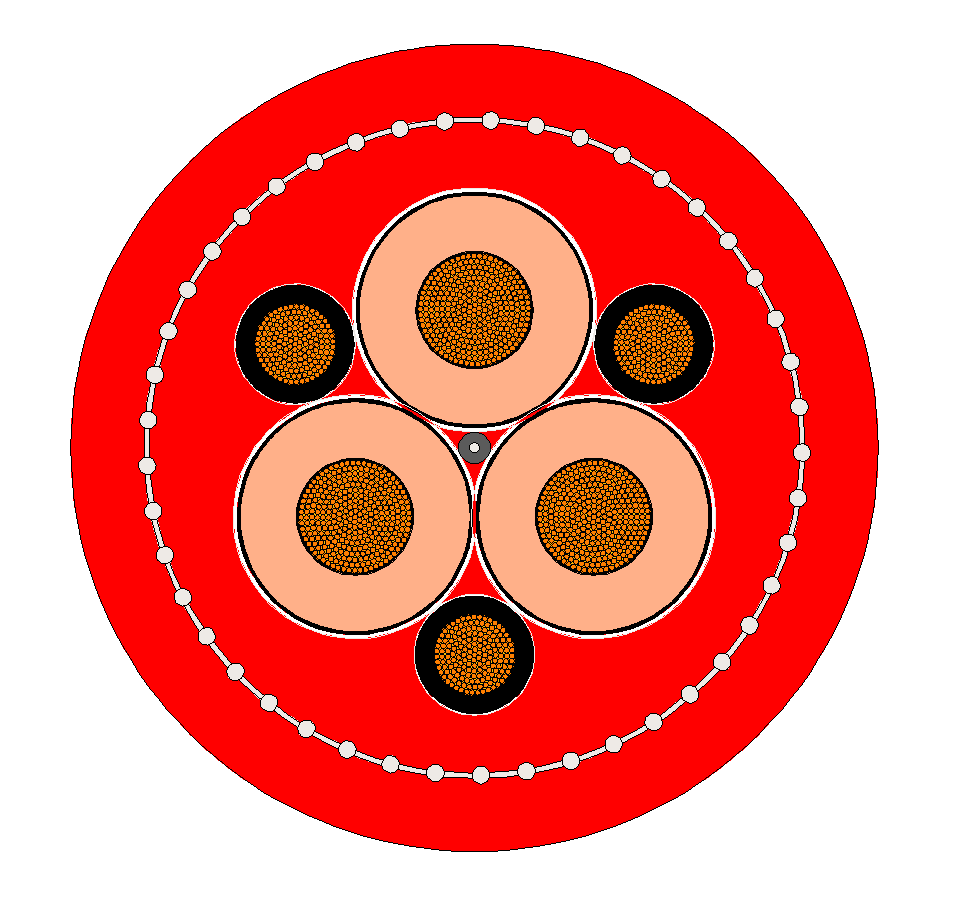
- Number of cores: Typically 3 with earth conductor
- Cable movement: Trailing, reeling, or static installation
- Installation environment: Open-pit, underground, tunnelling, wet conditions, oil exposure
- Required standards: VDE 0250-813, IEC/EN 60332-1-2, MA mark, or other certifications
- Required quantity: Total length and number of runs
Providing complete specifications ensures you receive the correct cable recommendation. Explore our full mining cable product catalog for additional options.
Conclusion
Learning how to select NTSCGEWOU trailing cable requires a systematic approach: start with voltage, then evaluate environment, calculate conductor sizing, verify mechanical requirements, and confirm standards compliance. Avoiding common selection mistakes — particularly undersizing conductors and ignoring torsional requirements — ensures operational reliability and safety in mining and tunnelling operations.
TEBAOFLEX CABLE offers NTSCGEWOU trailing cables with VDE 0250-813 compliance, available in standard and custom configurations for mining B2B applications worldwide.
Frequently Asked Questions
How do I know what voltage rating I need for my mining cable?
The voltage rating is determined by the mining equipment’s power supply requirements. Check the equipment manufacturer’s specifications for rated voltage. Common ratings are 6/10kV for standard excavators and 12/20kV or 20/35kV for large mining equipment.
What is the torsional resistance rating of NTSCGEWOU cable?
NTSCGEWOU cable is rated for torsional stress of plus or minus 25 degrees per meter. This means the cable can withstand rotational twist of up to 25 degrees per meter of cable length without sustaining damage to the conductors or insulation.
Can NTSCGEWOU cable be used on cable reels?
Yes. NTSCGEWOU is specifically designed for trailing and reeling applications. However, verify that the reeling system’s drum diameter and cable guide design accommodate the cable’s minimum bending radius and travel speed rating.
What standards should I look for when buying NTSCGEWOU cable?
At minimum, verify VDE 0250-813 compliance and IEC/EN 60332-1-2 flame retardancy. For certain mining jurisdictions, a Mining Safety Mark (MA) may also be required. Always request compliance documentation from the manufacturer.
How long can a trailing cable run be?
Maximum run length depends on conductor size, voltage, load current, and acceptable voltage drop. For long runs, larger conductor sizes may be needed to maintain voltage within acceptable limits. Our engineering team can assist with voltage drop calculations for your specific installation.
Ready to specify the right NTSCGEWOU cable for your mining operation? Contact us or Request a Quote.
Send us your application/equipment, voltage, conductor size, number of cores, cable movement, installation environment, required standards, and required quantity — our engineering team will review and recommend a suitable cable solution.