
The NTSCGEWOU vs NTSCGEWOEU comparison is one of the most frequently encountered questions in mining cable specification. These two cable designations share many characteristics but differ in construction details that affect their application scope, performance, and cost. Understanding these differences is essential for engineers and procurement teams who need to specify the correct trailing cable for mining and tunnelling operations.
This comparison guide breaks down the technical and practical differences between NTSCGEWOU and NTSCGEWOEU cables to help you make the correct specification decision.
Designation Code Comparison
Both cable types follow VDE 0250-813 designation conventions, but with a critical difference in the middle section:
| Code Element | NTSCGEWOU | NTSCGEWOEU |
|---|---|---|
| N | Sheathed cable | Sheathed cable |
| T | Three-core | Three-core |
| S | Screened | Screened |
| C | Copper conductor | Copper conductor |
| G | Rubber insulation (EPR) | Rubber insulation (EPR) |
| E | Earth conductor | Earth conductor |
| O (position 1) | — | Oil-resistant (additional) |
| W | Water resistant | Water resistant |
| O | Oil resistant | Oil resistant |
| U | UV/weather resistant | UV/weather resistant |
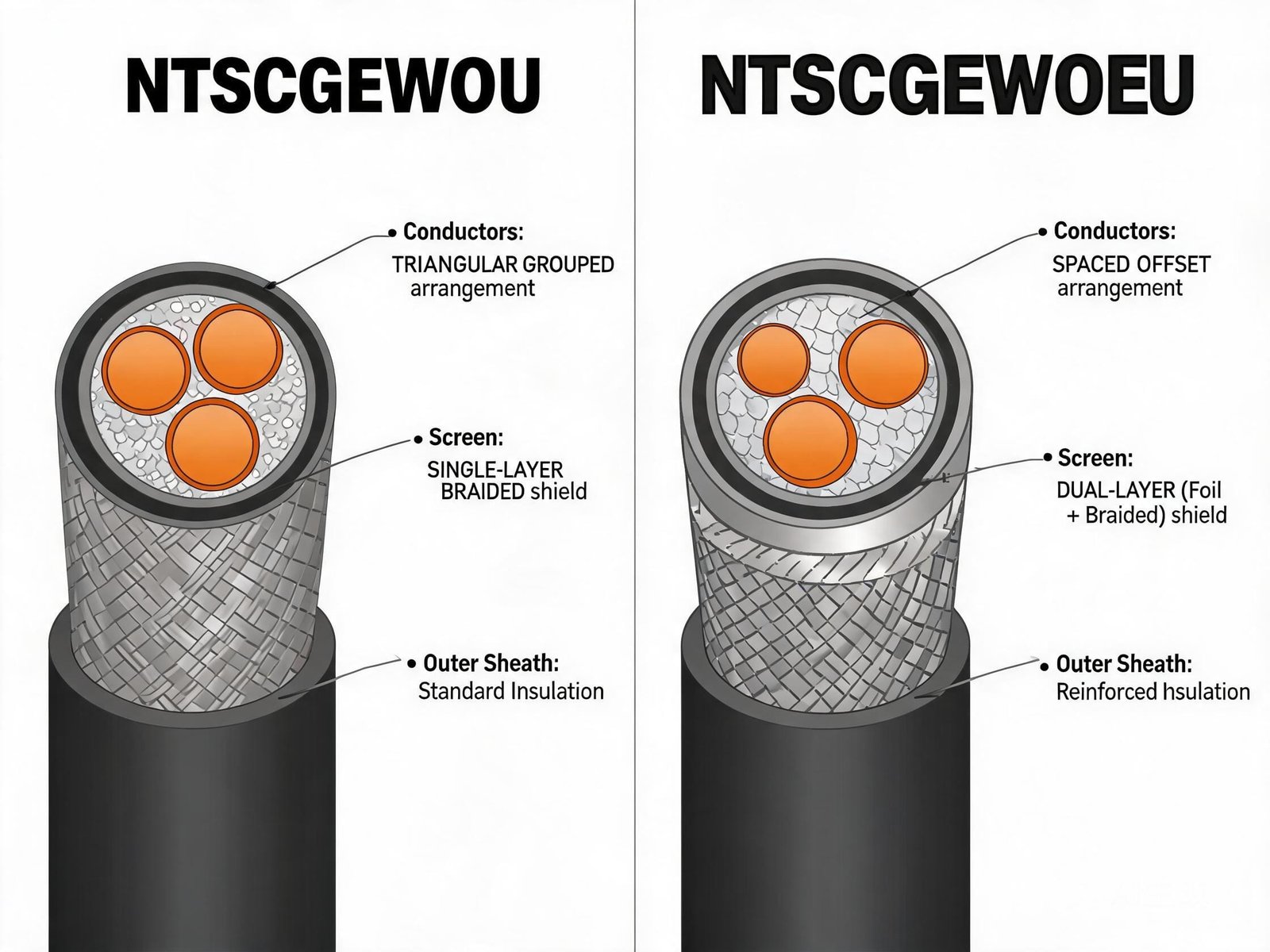
Key Differences Explained
Additional Oil-Resistant Layer
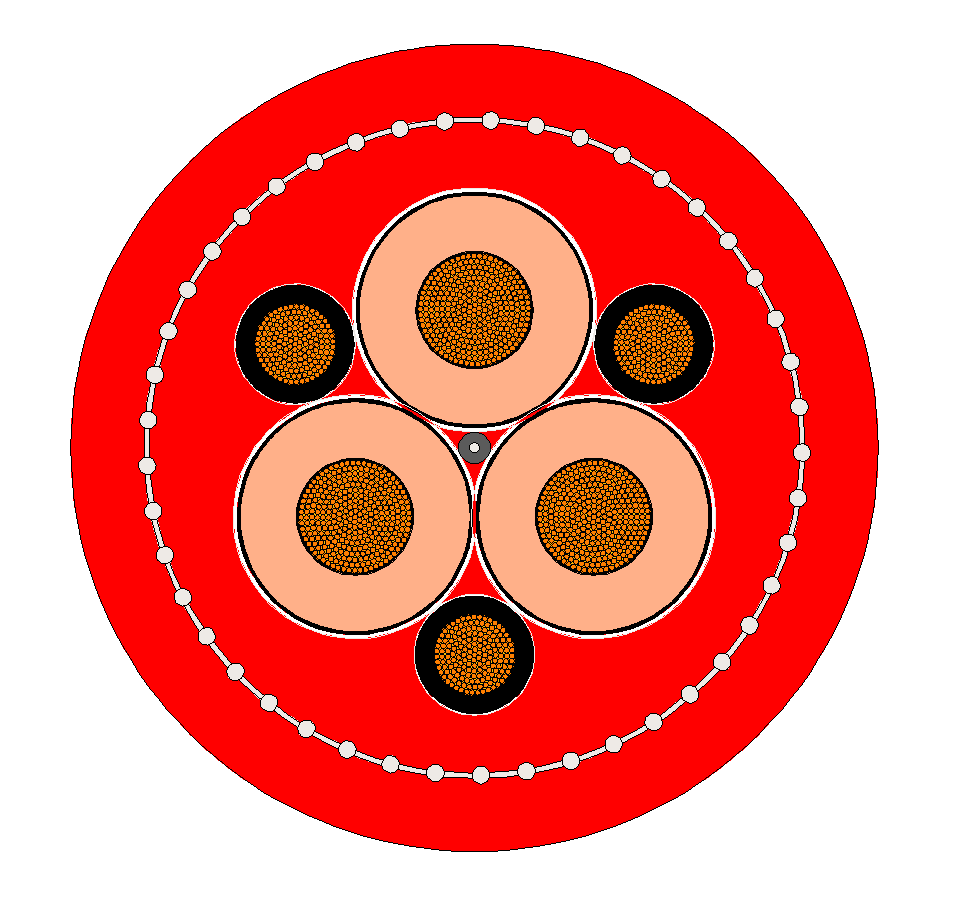
The primary difference between NTSCGEWOU and NTSCGEWOEU is the additional “O” designation in NTSCGEWOEU, which indicates an additional oil-resistant component or layer in the cable construction. This may affect:
- The inner sheath or bedding compound, which may have enhanced oil resistance
- The overall cable construction, which may include an additional barrier layer
- The price, which is typically higher for NTSCGEWOEU due to the additional material
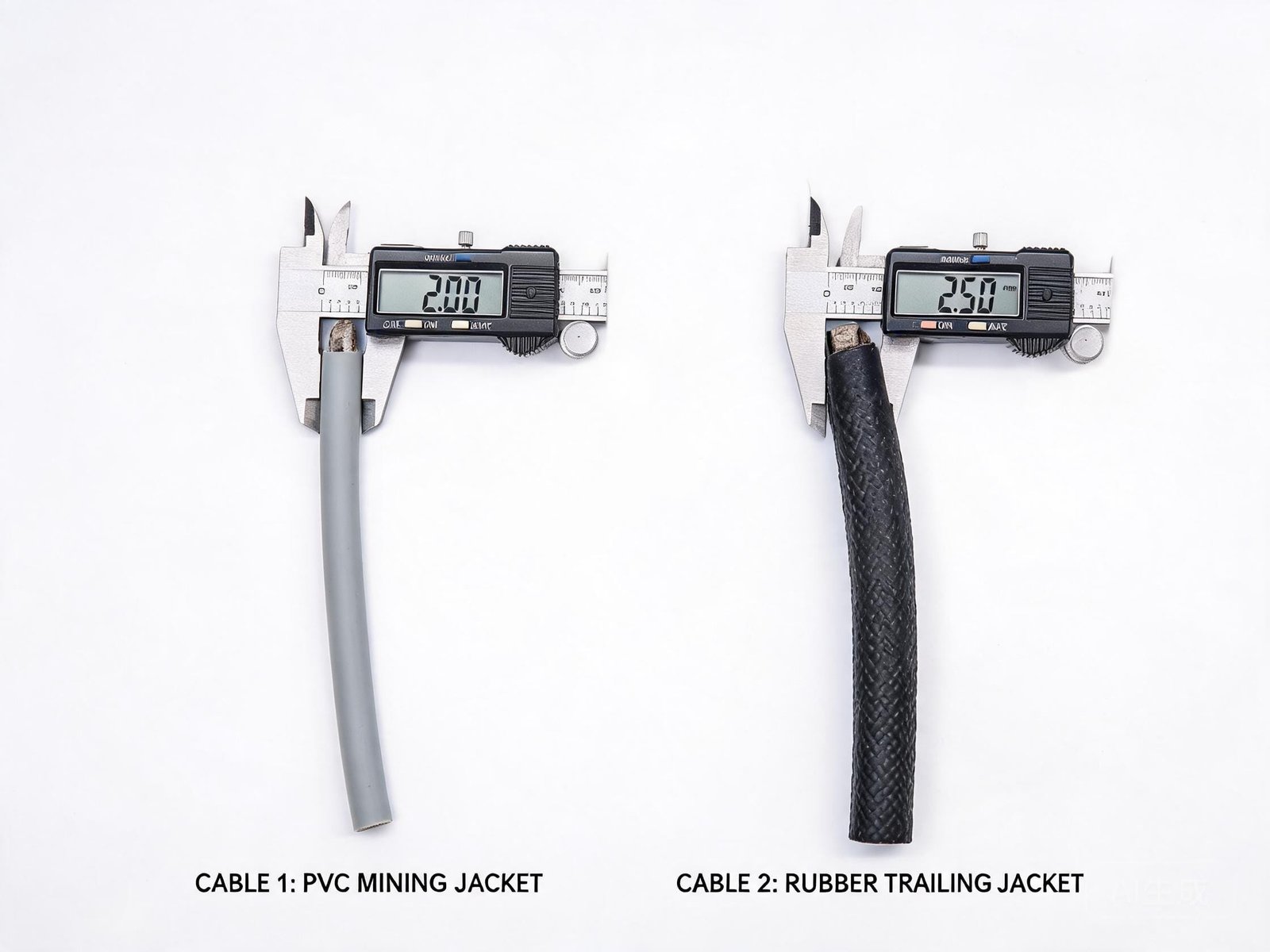
Shared Characteristics
Despite the construction difference, both cable types share the following specifications:
- Voltage rating: Both available from 3.6/6kV to 20/35kV
- Conductor: Class 5 stranded tinned copper
- Insulation: EPR (Ethylene Propylene Rubber)
- Standard: VDE 0250-813
- Flame retardancy: IEC/EN 60332-1-2
- Environmental resistance: Water, oil, UV, and abrasion resistant
Application Comparison
When to Choose NTSCGEWOU
- Standard mining and tunnelling operations with typical oil exposure
- Open-pit mining excavators and shovels
- Tunnel boring machines in standard tunnel conditions
- Cranes and material handling equipment
- Applications where the standard oil resistance of the WOU jacket is sufficient
When to Choose NTSCGEWOEU
- Mining environments with heavy hydraulic oil exposure
- Underground mining with chemical contamination
- Equipment with high-volume hydraulic systems operating near cable routes
- Applications where maximum oil resistance is required for safety or regulatory compliance
- Projects specifying the enhanced oil-resistant construction for critical installations
For a comprehensive overview of both cable types and their mining cable product range, the full catalog provides detailed specifications.
Cost and Availability Considerations
NTSCGEWOEU is typically more expensive than NTSCGEWOU due to the additional oil-resistant material. However, the cost difference should not be the primary selection criterion. Consider the actual environmental conditions:
- If the application involves standard mining operations with incidental oil exposure, NTSCGEWOU provides adequate protection
- If the application involves continuous or heavy oil exposure, NTSCGEWOEU’s enhanced oil resistance may be justified
- Always verify availability and lead times for the specific voltage and conductor size required
Common Comparison Mistakes
- Assuming the cables are identical: While they share many characteristics, the additional oil-resistant layer in NTSCGEWOEU provides measurably different performance in oil-rich environments
- Selecting NTSCGEWOEU unnecessarily: For standard mining applications, NTSCGEWOU’s oil resistance is typically sufficient. The enhanced version should be specified only when justified by environmental conditions
- Ignoring manufacturer variations: Different manufacturers may interpret the designation slightly differently. Always request detailed technical specifications from the manufacturer.
Conclusion
The NTSCGEWOU vs NTSCGEWOEU comparison ultimately comes down to the level of oil resistance required for the specific application. NTSCGEWOU provides water, oil, and UV resistance suitable for standard mining and tunnelling operations. NTSCGEWOEU adds enhanced oil-resistant construction for environments with heavy hydraulic oil and chemical exposure. Both comply with VDE 0250-813 and share the same voltage ratings, conductor materials, and insulation system.
TEBAOFLEX CABLE manufactures both NTSCGEWOU and NTSCGEWOEU trailing cables to VDE 0250-813 standards. Explore our NTSCGEWOU product page for detailed specifications, or learn about our custom cable manufacturing services for specialized requirements.
Frequently Asked Questions
What is the main difference between NTSCGEWOU and NTSCGEWOEU?
The main difference is that NTSCGEWOEU includes an additional oil-resistant designation (extra “O”), indicating enhanced oil-resistant construction compared to NTSCGEWOU. This may involve an additional barrier layer or enhanced bedding compound.
Are NTSCGEWOU and NTSCGEWOEU interchangeable?
NTSCGEWOEU can typically be used where NTSCGEWOU is specified, as it provides enhanced oil resistance. However, using NTSCGEWOU where NTSCGEWOEU is required may not provide adequate oil protection in heavy-oil-exposure environments.
Which cable should I choose for standard mining operations?
For standard mining and tunnelling operations with typical oil exposure, NTSCGEWOU provides adequate water, oil, and UV resistance. Choose NTSCGEWOEU only when the application involves continuous or heavy oil and chemical exposure.
Do both cables have the same voltage rating?
Yes. Both NTSCGEWOU and NTSCGEWOEU are available in voltage ratings from 3.6/6kV to 20/35kV. The voltage capability is determined by the insulation system, which is the same EPR rubber in both types.
What standard do both cables comply with?
Both NTSCGEWOU and NTSCGEWOEU comply with VDE 0250-813, the German standard for cables used in mining and similar heavy-duty applications. They also meet IEC/EN 60332-1-2 for flame retardancy. Review our certifications documentation for details.
Still unsure whether NTSCGEWOU or NTSCGEWOEU is right for your project? Contact us or Request a Quote.
Send us your application/equipment, voltage, conductor size, number of cores, cable movement, installation environment, required standards, and required quantity — our engineering team will review and recommend a suitable cable solution.