
RFOU Cable Applications Overview
The RFOU cable is the standard offshore power cable for general power distribution on oil platforms, ships, and marine installations. Its LSZH sheath, steel wire armour, and oil-resistant construction make it ideal for non-fire-critical circuits where flame retardancy and offshore durability are required. This guide covers primary applications and installation practices for RFOU cables.
View our RFOU 0.6/1kV offshore power cable product page for specifications.
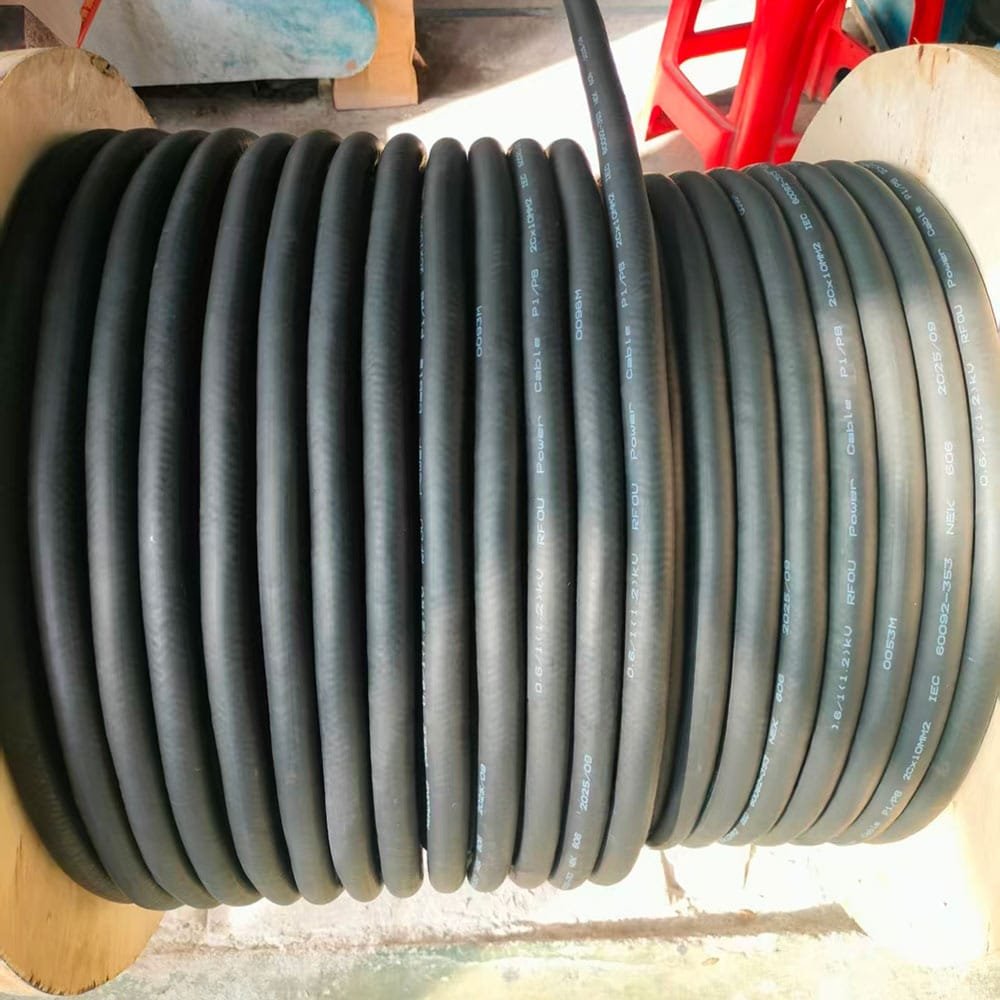
Offshore Platform Power Distribution
On offshore oil and gas platforms, RFOU cable is used for:
- Process equipment power: Power supply to production modules, compressors, and pumps
- General lighting: Normal (non-emergency) lighting circuits throughout the platform
- HVAC systems: Ventilation and air conditioning power supply
- Utility power: Workshop, galley, and accommodation power distribution
- Control circuits: Process control and instrumentation power supply (non-safety)
- Motor power: LV motor power supply for process equipment
For fire-critical circuits (fire pumps, emergency lighting, ESD systems), use BFOU fire-resistant cable instead.
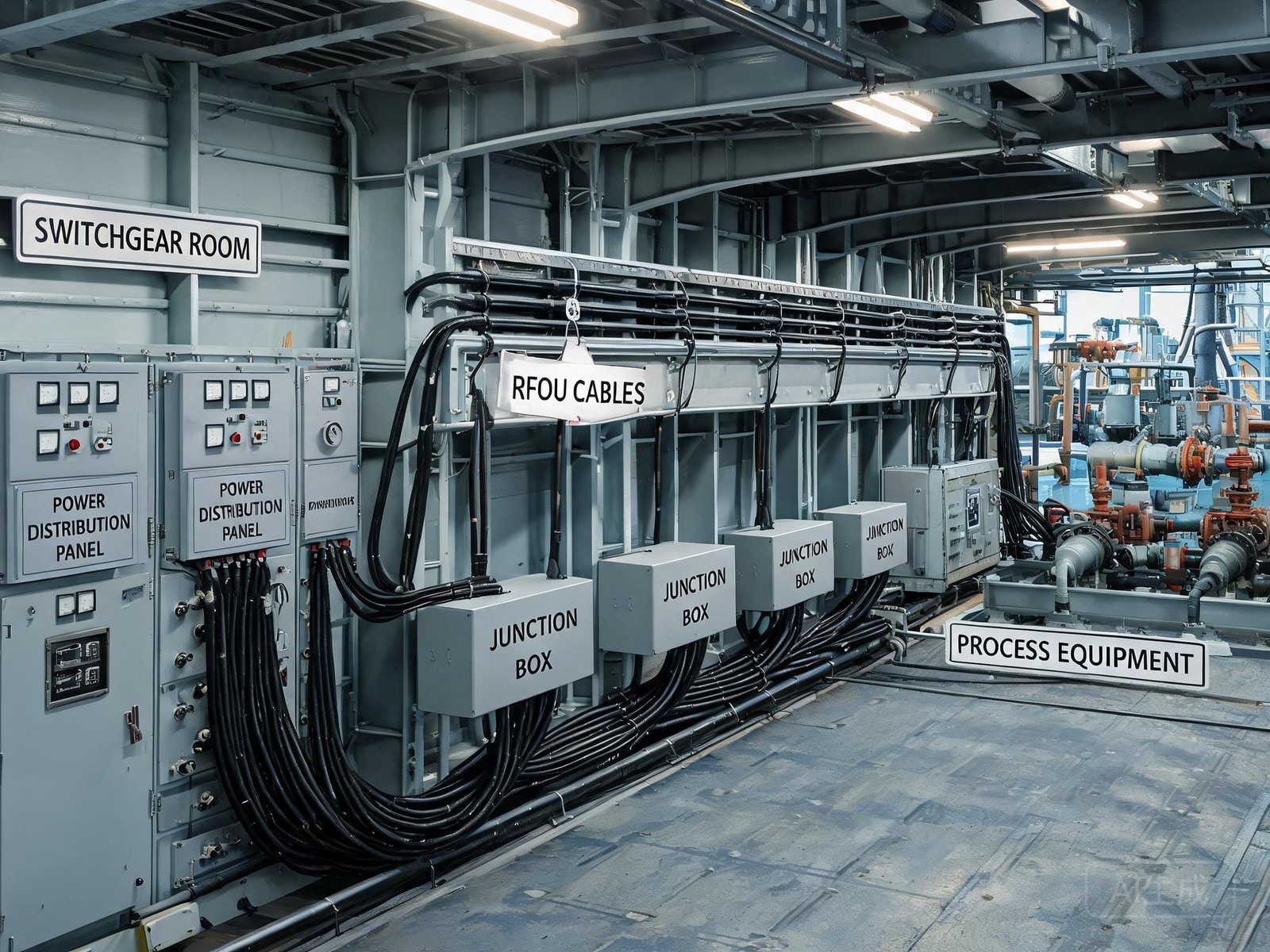
Shipboard and Marine Installations
RFOU cable is used on ships and vessels for:
- Engine room wiring: General power distribution in engine rooms
- Deck machinery power: Winches, capstans, and mooring equipment
- Accommodation power: Cabin and common area electrical supply
- Navigation equipment: Non-critical navigation and communication power
- Cargo systems: Cargo pump and handling equipment power
Cable Tray and Routing Installation
Proper cable management is essential for offshore RFOU installations:
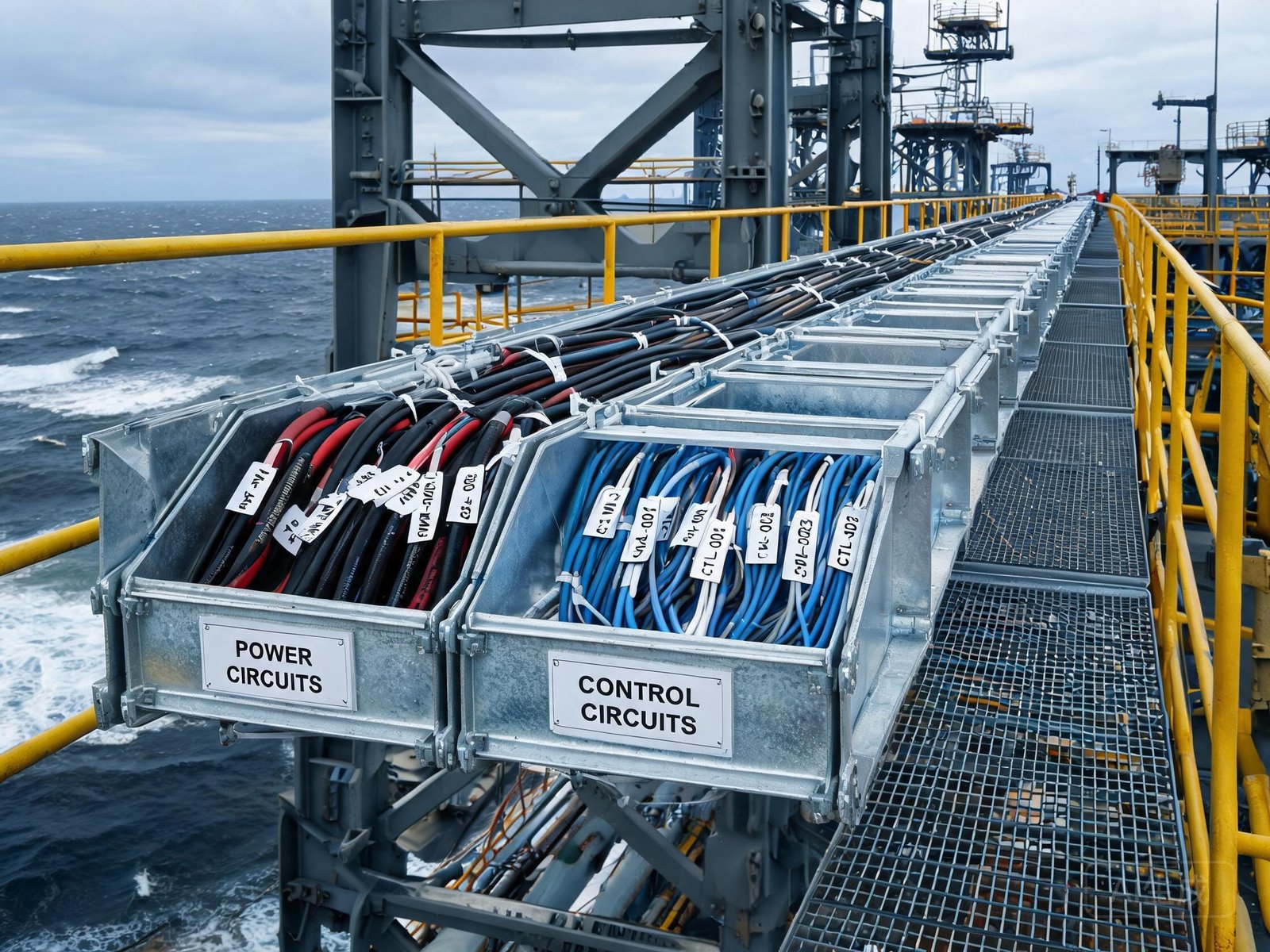
- Cable trays: Use perforated galvanized steel or 316 stainless steel trays
- Tray sizing: Calculate fill ratio — maximum 40% fill for heat dissipation
- Segregation: Separate RFOU power cables from control and communication cables
- Support spacing: Horizontal: max 0.6m; Vertical: max 1.0m
- Cable identification: Tag all cables at both ends and at tray transitions
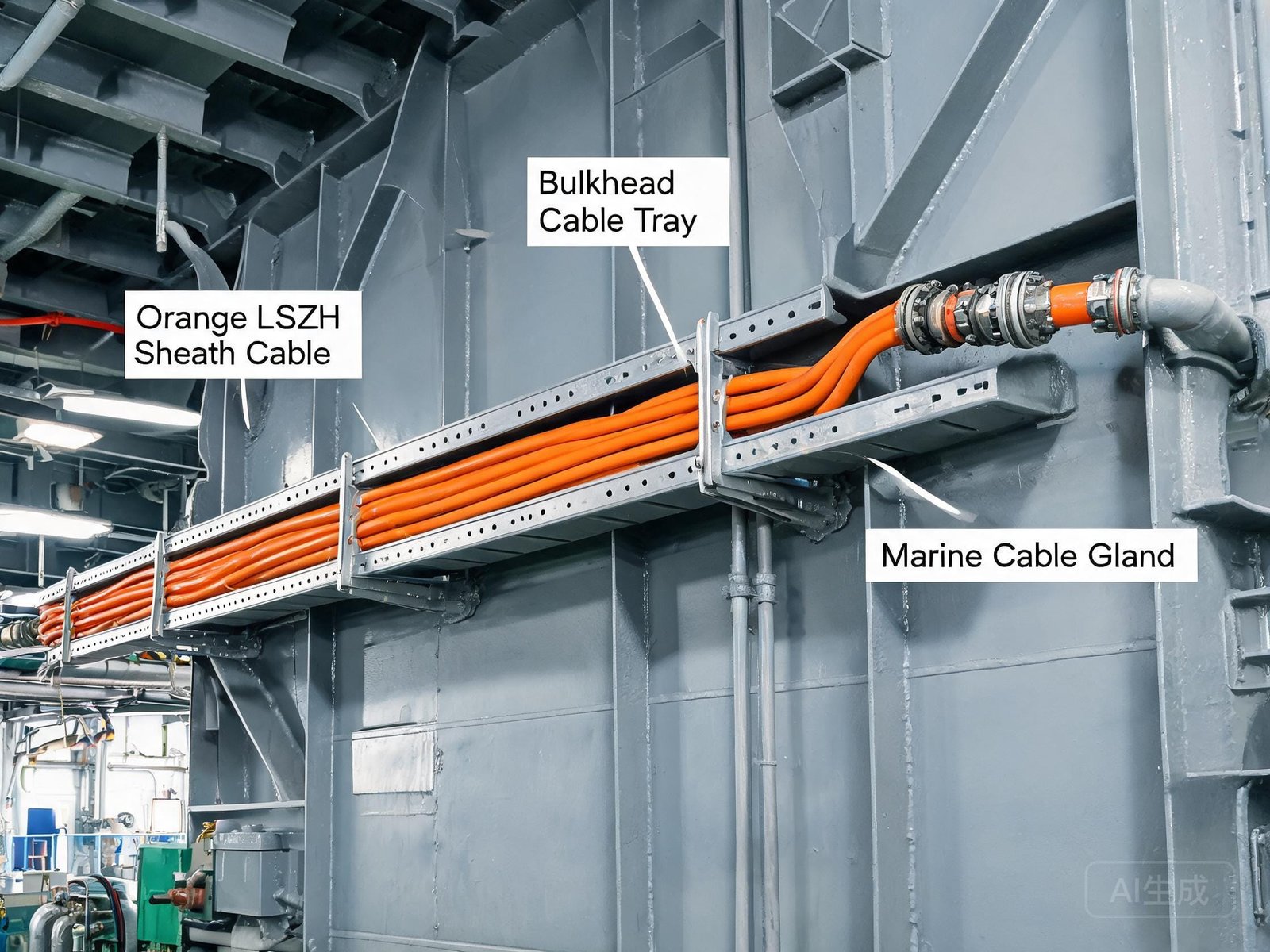
- Bulkhead penetrations: Use MCT (multi-cable transit) systems for watertight and fire-rated bulkhead crossings
RFOU Application Selection Matrix
| Application | Recommended Config | Typical Size | Fire Resistance Required? |
|---|---|---|---|
| Process equipment power | 3C + E | 4-25mm² | No — RFOU suitable |
| General lighting | 2C / 3C | 1.5-2.5mm² | No — RFOU suitable |
| HVAC power | 3C + E | 2.5-6mm² | No — RFOU suitable |
| Motor power | 3C + E / 1C | 2.5-95mm² | No — RFOU suitable |
| Fire pump power | 3C + E | 4-25mm² | Yes — use BFOU |
| Emergency lighting | 2C / 3C | 1.5-2.5mm² | Yes — use BFOU |
| ESD system | 3C + E | 2.5-6mm² | Yes — use BFOU |
Installation Best Practices for RFOU
- Bending radius: Minimum 8× OD for fixed, 10× during installation
- Cable glands: Weatherproof brass or 316 stainless steel, IP66+ rated
- Temperature: Install when ambient is above -15°C to prevent sheath cracking
- Pulling tension: Do not exceed maximum tensile rating — use cable grip
- Joints: Use offshore-rated cable splice kits — maintain IP rating and flame retardancy
- Routing: Avoid hot surfaces (exhausts, pipes) — maintain minimum 200mm clearance
When to Use RFOU vs BFOU
| Cable Type | Fire Rating | Best For |
|---|---|---|
| RFOU | IEC 60332 (flame retardant) | General offshore power, lighting, HVAC, motors |
| BFOU | IEC 60331 (fire resistant) | Fire pumps, emergency systems, ESD, escape lighting |
See our BFOU vs RFOU comparison guide for detailed differences.
Why Choose TEBAOFLEX for RFOU Cable?
- Full NEK 606 compliant manufacturing
- LSZH sheath meeting IEC 61034 and IEC 60754 standards
- DNV, ABS, LR, BV classification society certification support
- Complete range: 1.5mm² to 400mm², 1 to 48 cores
- Orange ST1 sheath for easy identification
- Global offshore project experience
Contact TEBAOFLEX for RFOU cable selection assistance and project pricing.