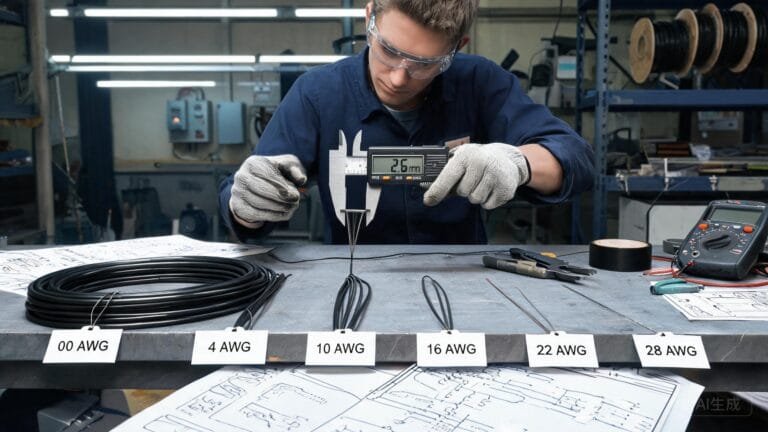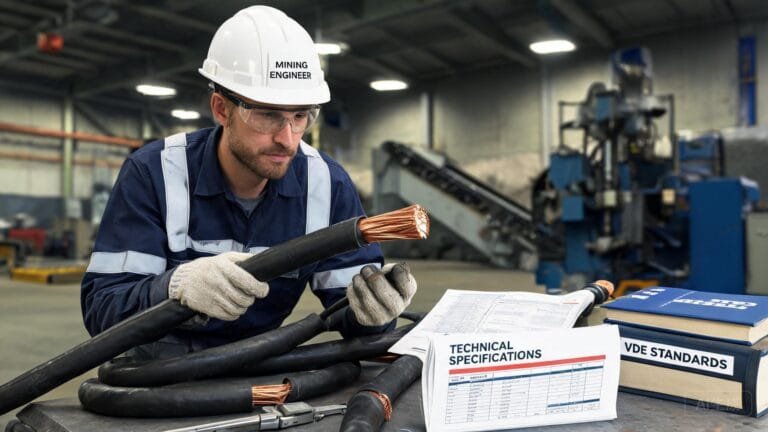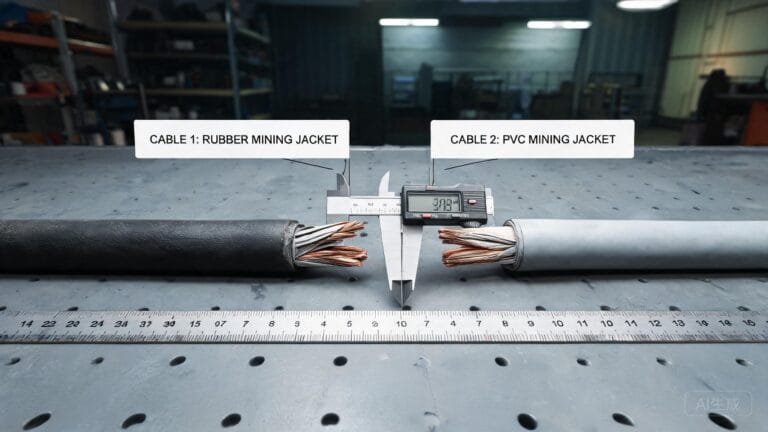

For oil and gas engineers, well-service supervisors, and procurement teams sourcing downhole cable solutions, understanding the mono conductor wireline cable is essential for specifying logging, intervention, and well-service equipment that performs reliably under extreme mechanical and environmental stress. Mono conductor wireline cables combine a single electrical conductor with dual galvanized steel armor layers to transmit power and data while supporting the full tensile load of downhole tool deployment.
This guide covers construction, available sizes, technical specifications, application scenarios, and selection criteria for mono conductor wireline cables, helping engineering and procurement teams match the right cable to the well depth, load, and operating conditions. For specific configurations, explore TEBAOFLEX’s 7.31 mm Mono Conductor Wireline Cable and the full wireline product range.
What Is a Mono Conductor Wireline Cable?
A mono conductor wireline cable is an armored downhole cable consisting of a single central electrical conductor surrounded by insulation and two layers of helically wound galvanized steel armor wires. The armor layers provide mechanical strength for suspending and retrieving downhole tools, while the central conductor carries electrical power and measurement signals between surface equipment and downhole instruments.
Unlike multi-conductor wireline cables that carry multiple signal pairs, mono conductor designs use a single conductor with the armor serving as the return path. This construction simplifies the cable structure, reduces overall diameter, and keeps the cable cost-effective for single-function logging and intervention work.
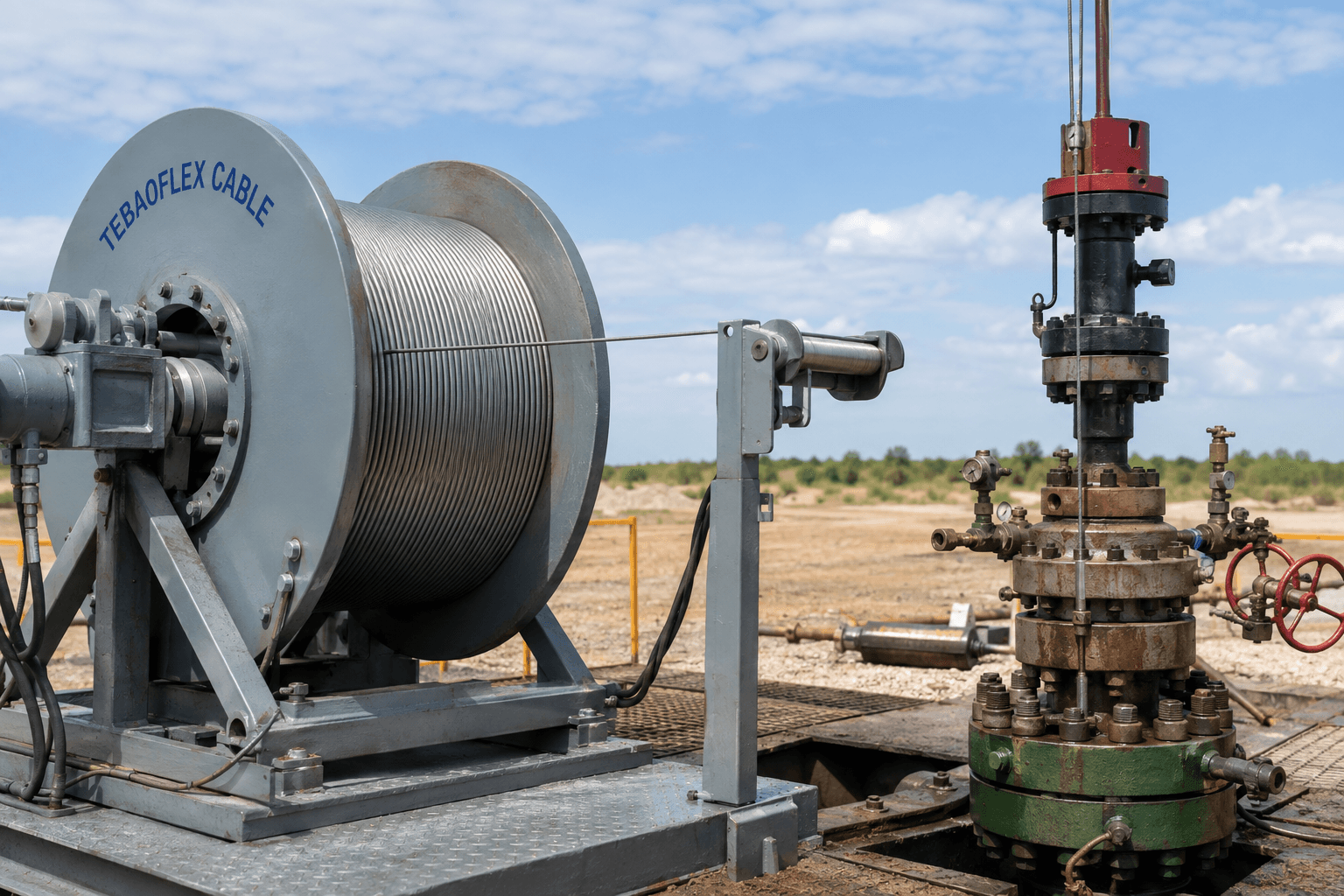
Key characteristics of mono conductor wireline cables:
- Single central conductor: Stranded copper construction for flexibility and electrical efficiency
- Insulation layer: Polymer insulation providing dielectric strength between conductor and armor
- Two armor layers: Inner and outer layers of galvanized steel wires wound in opposite directions for torque balance
- Dual function: Carries electrical signals/power and supports the mechanical load of downhole tools
- Torque-balanced design: Opposite lay directions of inner and outer armor prevent the cable from spinning under load
Cable Construction and Design
The construction of a mono conductor wireline cable follows a layered, concentric design that progresses from the electrical core outward to the protective armor:
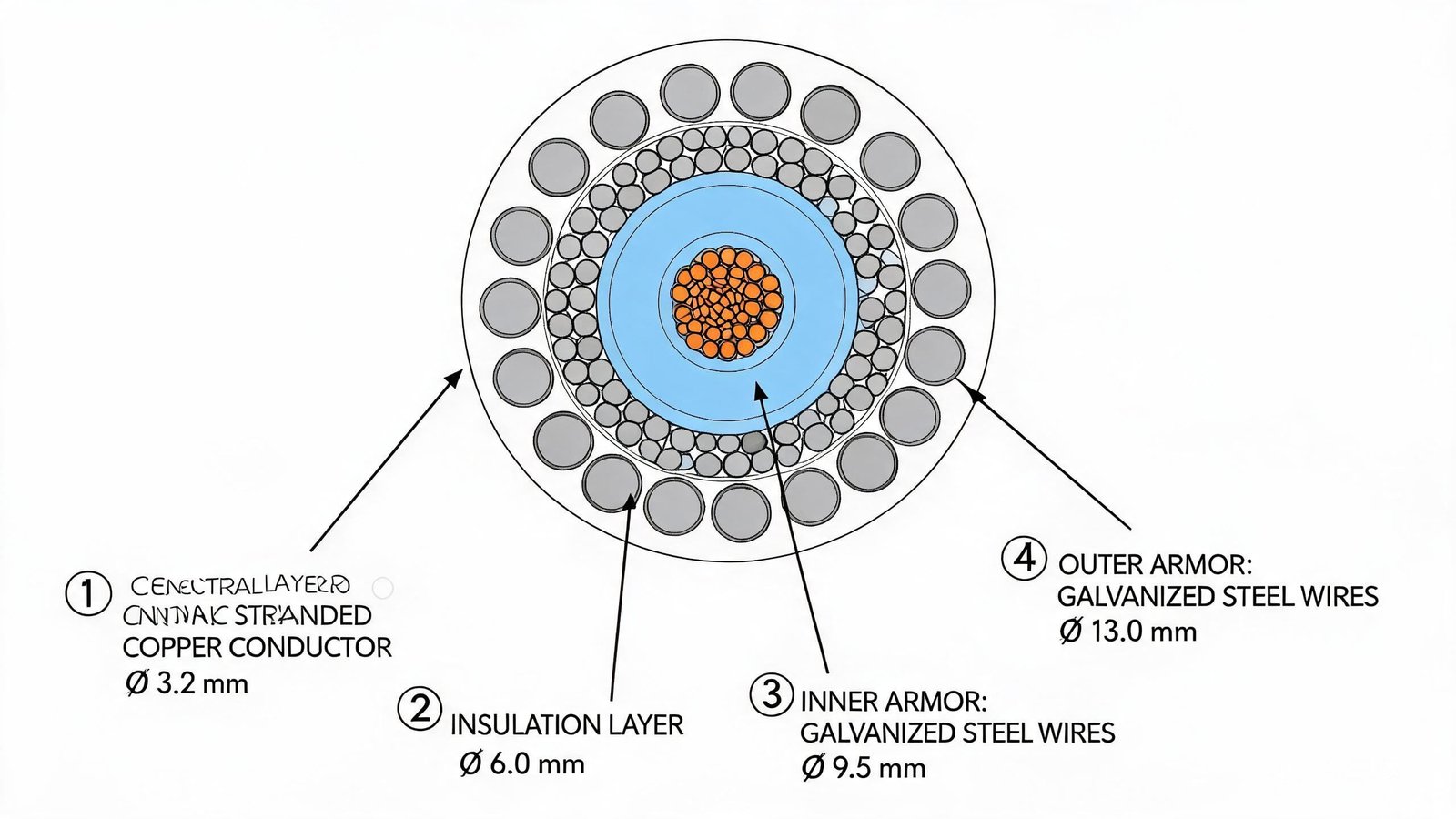
1. Central Conductor
The center conductor consists of multiple fine copper strands twisted together to achieve the required cross-sectional area while maintaining flexibility. Common configurations use 19 strands for a balance between flexibility and conductivity. The conductor carries the electrical signal or power from surface equipment down to the logging or intervention tool.
2. Insulation Layer
A polymer insulation layer surrounds the conductor, providing dielectric strength and preventing electrical contact between the conductor and the steel armor. The insulation material is selected based on the expected downhole temperature and fluid exposure conditions.
3. Inner Armor Layer
The inner armor consists of a single layer of galvanized steel wires helically wound around the insulated conductor. This layer provides the primary mechanical strength and contributes to the cable’s overall breaking strength and working load capacity.
4. Outer Armor Layer
The outer armor layer consists of larger or additional galvanized steel wires wound in the opposite direction to the inner layer. This counter-helical design balances the torque generated when the cable is under tension, preventing the cable from twisting or spinning as tools are run in and out of the well.
Mono Conductor Wireline Cable Sizes and Specifications
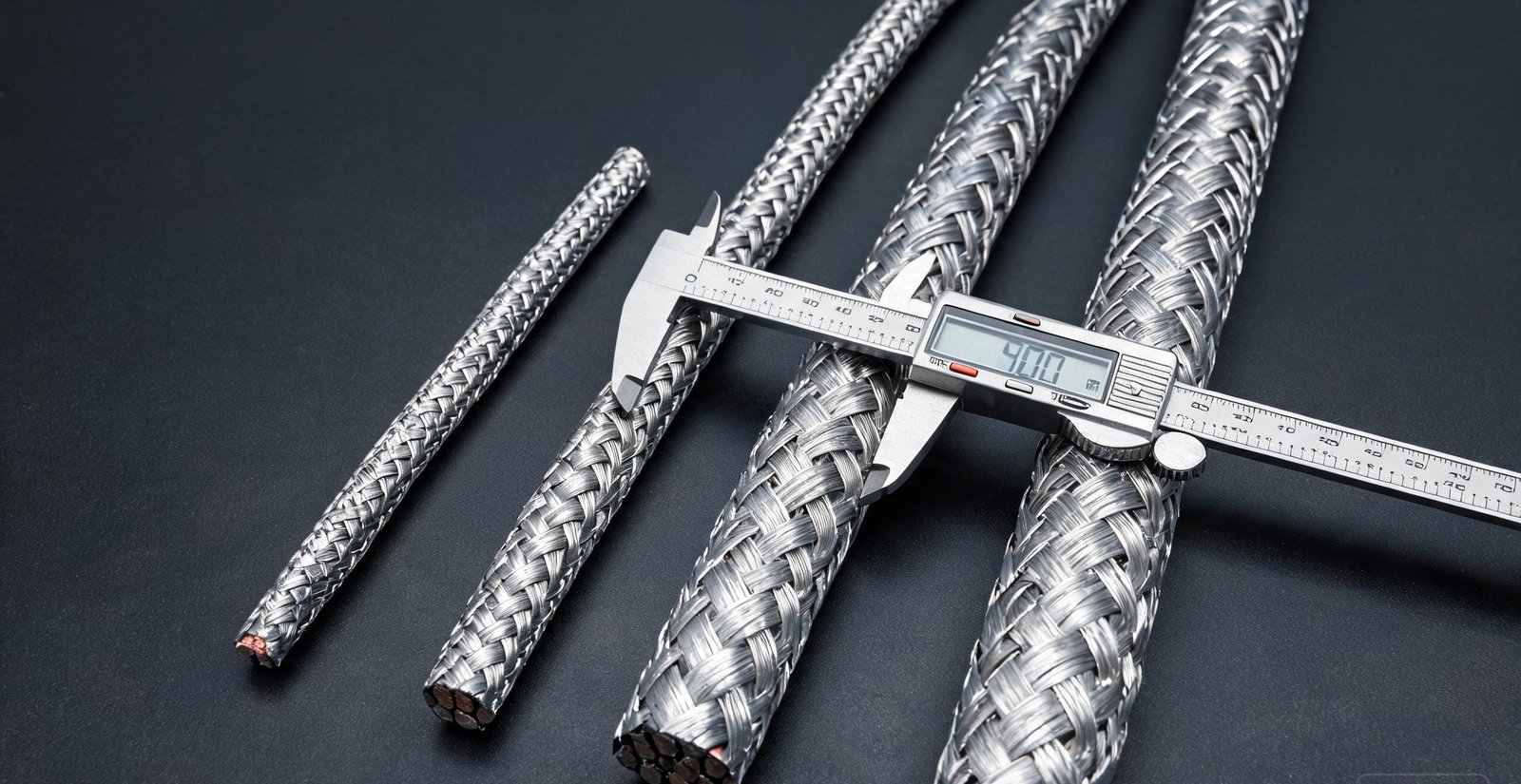
Mono conductor wireline cables are available in a range of outer diameters to match different depth, load, and well-size requirements. The following table summarizes common sizes and typical parameters for reference. Actual specifications should be confirmed with the manufacturer for each specific project.
| Cable OD (mm) | Conductor Size | Insulation OD (mm) | Approx. Breaking Strength (kg) | Max Working Load (kg) | Voltage Rating |
|---|---|---|---|---|---|
| 4.70 | Small gauge stranded copper | ~2.2 | ~1,800 | ~1,100 | 1000 VDC |
| 5.69 | Medium gauge stranded copper | ~2.7 | ~2,700 | ~1,600 | 1500 VDC |
| 6.55 | Medium gauge stranded copper | ~3.1 | ~3,600 | ~2,200 | 1500 VDC |
| 7.31 | 15 AWG / ~1.8 mm dia | ~3.5 | ~4,500 | ~2,700 | 1500 VDC |
| 8.18 | Larger gauge stranded copper | ~3.9 | ~5,600 | ~3,400 | 1500 VDC |
| 8.89 | Larger gauge stranded copper | ~4.2 | ~6,800 | ~4,100 | 2000 VDC |
| 9.65 | Large gauge stranded copper | ~4.6 | ~8,000 | ~4,800 | 2000 VDC |
Note: Values above are approximate reference ranges. Actual specifications for conductor resistance, insulation resistance, armor wire count, breaking strength, and working load vary by manufacturer and specific cable model. Always request a datasheet for the exact configuration you intend to use.
Key Technical Parameters
When specifying a mono conductor wireline cable, the following technical parameters are critical for proper selection:
Electrical Parameters
- Rated voltage: Typically 1000 VDC to 2000 VDC depending on cable size and design
- DC conductor resistance: Measured in ohms per kilometer or per thousand feet at 20°C
- DC armor resistance: Resistance of the steel armor layer, used as the return path
- Insulation resistance: Minimum resistance between conductor and armor, typically expressed in MΩ·km or MΩ·kft
Mechanical Parameters
- Breaking strength: The maximum tensile load the cable can withstand before failure, rated for fixed ends
- Maximum working load: The recommended safe operating tension, typically about 60% of breaking strength
- Minimum sheave diameter: The smallest drum or sheave diameter recommended for proper bending, affecting cable fatigue life
- Cable weight: Weight per unit length (kg/km or lb/kft), critical for calculating tension at depth
Physical Parameters
- Outside diameter: Overall diameter including outer armor, with specified tolerances
- Armor wire count and size: Number and diameter of steel wires in each armor layer
- Conductor stranding: Number of strands and individual strand diameter
Typical Industrial Applications
Mono conductor wireline cables serve a wide range of downhole operations in the oil, gas, and geothermal industries:
Well Logging
Wireline logging is the most common application, where logging tools are lowered into the wellbore on the cable to measure formation properties such as resistivity, porosity, density, and gamma radiation. The mono conductor design supports single-function logging tools where one signal path is sufficient.
Well Intervention
Intervention operations such as production logging, mechanical perforating, plug setting, and slickline-assist operations use mono conductor wireline cables to deploy tools and provide electrical control from the surface.
Well Service and Maintenance
Routine well-service tasks including bottom-hole pressure surveys, temperature surveys, and fluid level measurements rely on mono conductor wireline cables to deploy sensors and retrieve data.
Geothermal Wells
Geothermal well logging and monitoring use wireline cables rated for higher temperature environments, deploying sensors to measure temperature profiles and fluid conditions in geothermal reservoirs.
Underground Mining and Exploration
In underground mining operations, wireline cables are used for borehole surveying, geotechnical monitoring, and exploration drilling where depth and load requirements fall within mono conductor capacity ranges.
How to Select the Correct Mono Conductor Wireline Cable
Selecting the right mono conductor wireline cable requires careful evaluation of both the well conditions and the operational requirements:
- Determine the maximum depth: Deeper wells require larger diameter cables with higher breaking strength to support the combined weight of the cable and tool string
- Calculate the total load: Sum the cable weight at depth plus tool weight plus safety margin to determine the required working load and breaking strength
- Check voltage requirements: Ensure the cable’s voltage rating matches the logging tool or intervention equipment power requirements
- Evaluate temperature conditions: Downhole temperature affects insulation performance — verify that the insulation material is rated for the expected well temperature
- Confirm sheave and drum size: The cable’s minimum bend radius must be compatible with the winch drum and sheave diameters on the wireline unit
- Consider fluid exposure: Well fluids, drilling muds, and corrosive environments can affect both the armor wires and insulation over time
- Verify electrical resistance: Conductor resistance affects signal quality and power delivery — lower resistance is preferred for deeper wells
For custom configurations or unusual well conditions, working directly with the manufacturer to review load calculations and environmental factors is recommended. Browse the full range of mono conductor wireline cable options for available sizes and specifications.
Common Selection Mistakes
- Underestimating total load: Forgetting to include the weight of the cable itself at depth, which can be substantial for deep wells
- Ignoring safety factors: Using the breaking strength as the working load instead of applying a proper safety margin (typically working load should be about 60% of breaking strength)
- Overspecifying without cost review: Selecting a much larger cable than needed increases weight, cost, and transport requirements unnecessarily
- Neglecting sheave diameter: Using sheaves or drums smaller than the recommended minimum bend radius accelerates fatigue and reduces cable life
- Assuming all sizes are interchangeable: Different OD cables have different electrical and mechanical properties — direct substitution without recalculating load and resistance can cause failures
- Overlooking temperature rating: High-temperature wells can degrade insulation faster than expected, leading to insulation resistance failure
What Information to Provide When Requesting a Quotation
To receive an accurate quote and proper cable recommendation, provide the following information when contacting a supplier:
- Application type (logging, intervention, well service, geothermal, mining)
- Maximum well depth or cable length required
- Expected tool weight and total load requirements
- Voltage rating needed
- Maximum downhole temperature
- Wellbore diameter constraints
- Sheave and drum diameters on the wireline unit
- Required quantity and delivery schedule
- Any applicable standards or certification requirements
Conclusion
Selecting the right mono conductor wireline cable is critical for safe and reliable downhole operations in oil, gas, geothermal, and mining applications. The cable must provide sufficient electrical performance for signal and power transmission while maintaining the mechanical strength needed to support tool loads at depth. Understanding the construction layers, sizing options, and key technical parameters — including breaking strength, working load, conductor resistance, and minimum bend radius — helps engineering teams specify the correct cable for each well condition.
TEBAOFLEX CABLE offers a range of mono conductor wireline cables from 4.70 mm to 9.65 mm outer diameter, with dual galvanized steel armor layers and stranded copper conductors engineered for downhole logging and intervention service. Our engineering team can review your depth, load, temperature, and electrical requirements to recommend the appropriate cable size and configuration. Explore our 7.31 mm Mono Conductor Wireline Cable for a detailed specification example, or contact our team for custom configurations.
Frequently Asked Questions
What is a mono conductor wireline cable used for?
A mono conductor wireline cable is used for downhole well logging, intervention, and well-service operations in oil, gas, geothermal, and mining applications. It carries electrical power and signals to downhole tools while simultaneously providing the mechanical strength to lower and retrieve those tools from the wellbore.
How does a mono conductor wireline cable differ from multi-conductor wireline?
Mono conductor wireline has a single central electrical conductor with the armor serving as the return path, making it simpler, smaller in diameter, and more cost-effective for single-function operations. Multi-conductor wireline has multiple internal conductors for carrying several independent signals or power circuits simultaneously, used for more complex logging tools.
What does “breaking strength” mean for wireline cable?
Breaking strength is the maximum tensile load at which the cable will fail under tension, typically rated for fixed-end conditions. The maximum working load is the recommended safe operating tension, usually about 60% of the breaking strength, to maintain an adequate safety margin for dynamic loads and fatigue over the cable’s service life.
How do I choose the right wireline cable size for my well?
Start with the well depth and tool weight to calculate the total tension at depth. Then select a cable whose maximum working load exceeds the calculated total tension with an appropriate safety margin. Also verify that the cable OD fits the wellbore, the voltage rating matches your equipment, and the minimum sheave diameter requirement is compatible with your wireline unit.
What is the minimum sheave diameter for wireline cable?
The minimum sheave diameter depends on the cable size and construction — larger cables require larger sheaves. For typical mono conductor wireline cables, the recommended minimum sheave diameter is often about 50 to 60 times the cable outer diameter. Always check the manufacturer’s specification for the exact cable model you are using.
Can mono conductor wireline cable be used for deep wells?
Yes, but the cable size must be matched to the depth. Deeper wells require larger diameter cables with higher breaking strength to support the combined weight of the cable and tools at full depth. For very deep wells or heavy tool strings, a larger mono conductor size or a multi-conductor cable with higher strength may be required.
Need help selecting the right mono conductor wireline cable for your well operation? Contact us or Request a Quote.
Send us your application type, well depth, tool weight, voltage requirement, downhole temperature, sheave diameter, required quantity, and applicable standards — our engineering team can review the requirements and recommend a suitable wireline cable solution.