
Introduction to Heavy Duty Welding Cables
In industrial welding operations, the cable connecting the power source to the electrode holder or grounding clamp is the critical link that determines both safety and performance. Heavy duty welding cables are specifically engineered to carry high-amperage current while withstanding the harsh conditions of fabrication shops, shipyards, construction sites, and offshore platforms—where exposure to sparks, slag, oils, mechanical abrasion, and extreme temperatures is constant.
Unlike standard power cables, welding cables must combine exceptional flexibility (for operator maneuverability), high current-carrying capacity (for continuous arc welding), and robust mechanical protection (against welding spatter and physical damage). This guide covers construction, specifications, standards, and selection criteria for heavy duty welding cables across industrial applications.
What Are Heavy Duty Welding Cables?
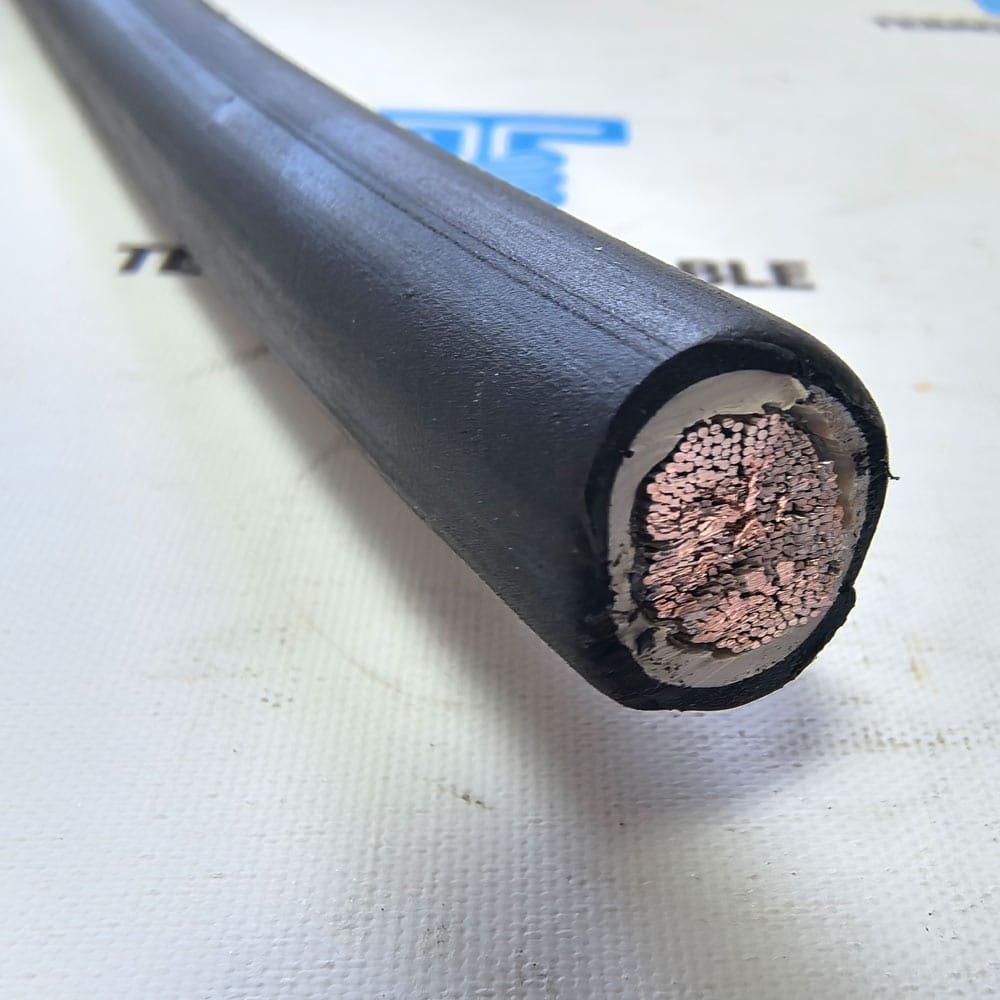
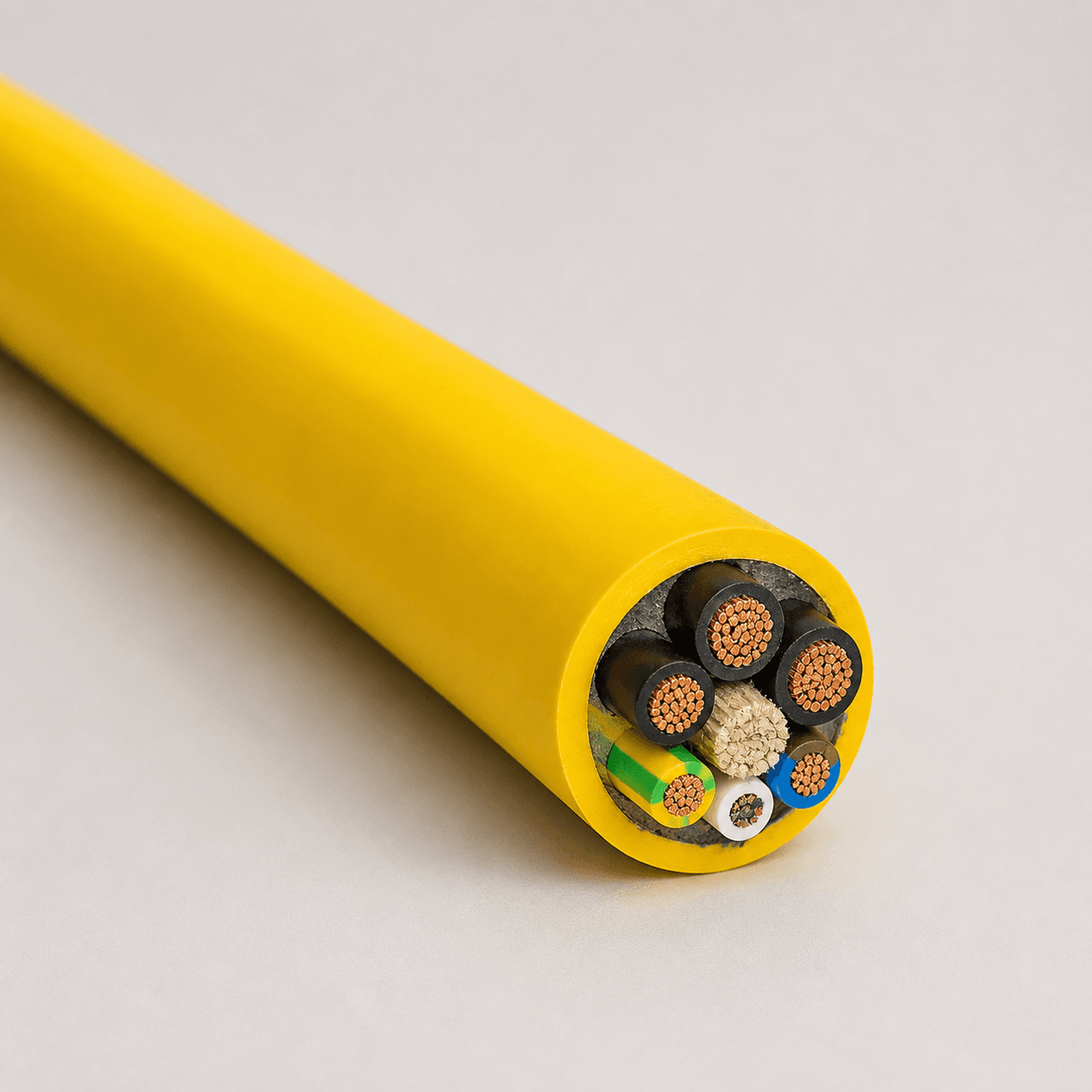
Welding cables are specialized flexible power cables designed to connect welding machines to electrode holders, ground clamps, and work pieces. The construction is optimized for maximum flexibility and current capacity:
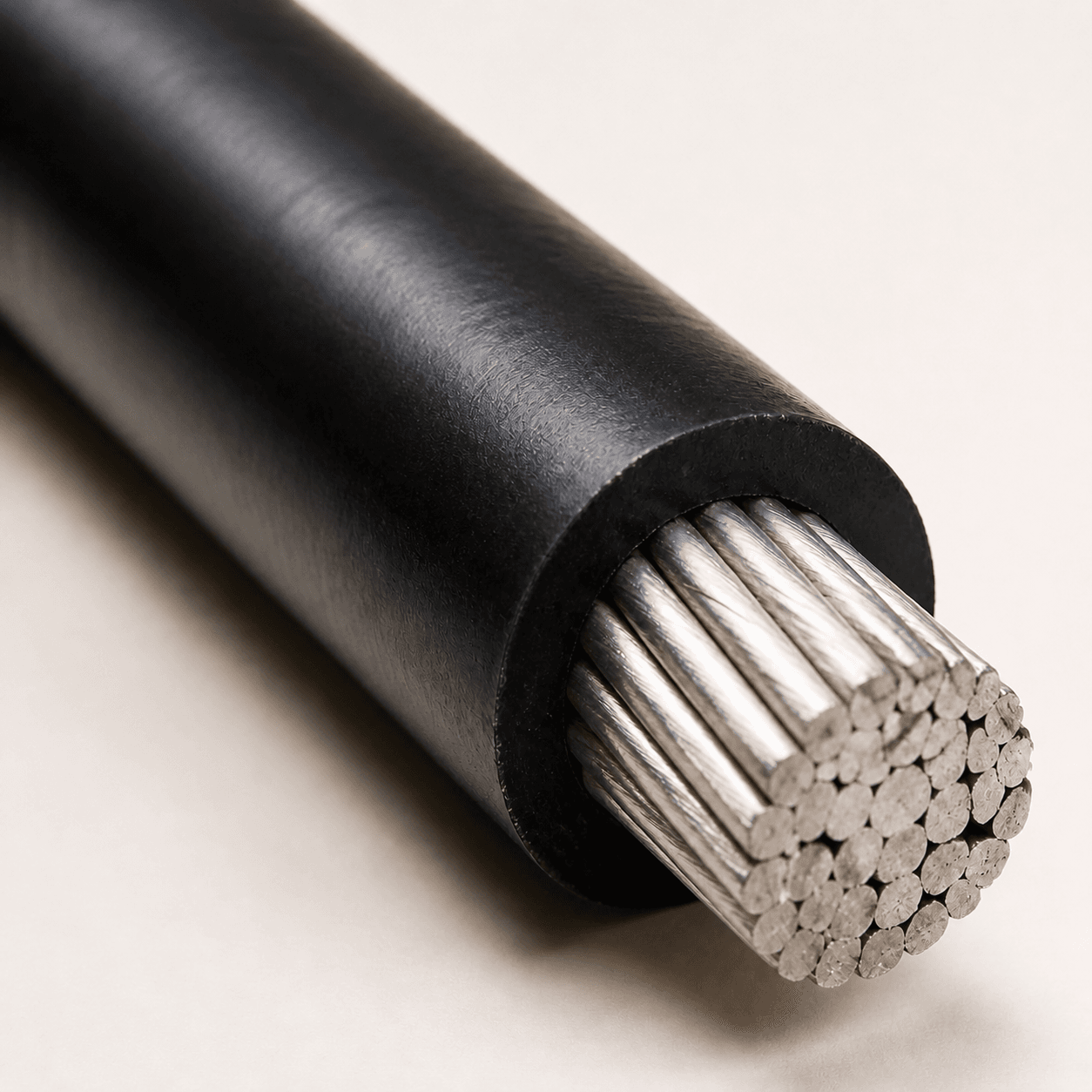
- Conductor: High-flexibility Class 6 bare or tinned copper per IEC 60228, with thousands of fine wires (0.07–0.12 mm diameter) bundled in rope-lay stranding for maximum flex life
- Insulation/Sheath: Single-layer or dual-layer rubber compounds—typically EPR (ethylene propylene rubber) insulation with PCP (neoprene) or CSP (chlorosulfonated polyethylene) outer sheath
- Standards: IEC 60281 (welding cable standard), EN 50525-2-81, MSHA (USA mining), CSA (Canada), and AS/NZS (Australia/New Zealand)
- Temperature range: −40°C to +85°C continuous, with short-term resistance to 220°C for spark and spatter exposure
The ultra-fine stranding of Class 6 conductors gives welding cables their characteristic soft, limber feel—essential for welders who need to move the electrode holder freely during welding operations. Explore our welding cable product range for available sizes and configurations.
Key Specifications and Ratings
Selecting the correct welding cable size requires understanding both ampacity and duty cycle:
Current Carrying Capacity (Ampacity)
Welding cable ampacity depends on conductor cross-section, insulation temperature rating, ambient temperature, and duty cycle. The following table shows typical ratings for EPR/neoprene-insulated welding cables:
| Conductor Size (AWG) | Cross-Section (mm²) | Ampacity at 60% Duty (A) | Ampacity at 100% Duty (A) |
|---|---|---|---|
| 2 AWG | 35 | 170 | 105 |
| 1 AWG | 50 | 220 | 135 |
| 1/0 AWG | 70 | 280 | 175 |
| 2/0 AWG | 95 | 350 | 215 |
| 3/0 AWG | 120 | 420 | 260 |
| 4/0 AWG | 150 | 500 | 310 |
Duty Cycle Explained
Duty cycle is the percentage of a 10-minute period that the cable can carry rated current without exceeding its temperature limit. A 60% duty cycle means the cable can weld for 6 minutes and must cool for 4 minutes. For continuous welding (100% duty), cable ampacity is reduced by approximately 40%. Always size cables for the maximum duty cycle expected in your application.
Welding Cable Types by Insulation
The choice of insulation material directly impacts cable performance in specific welding environments:
EPR/PCP Welding Cables (Standard Duty)
EPR insulation with neoprene (PCP) sheath is the most common combination, offering excellent flexibility, good oil resistance, and flame retardancy per IEC 60332-1. Suitable for general-purpose fabrication, construction, and ship repair. Designation: HO1N2-D or HO7N-D per DIN VDE.
CSP Welding Cables (Heavy Duty)
Chlorosulfonated polyethylene (CSP/Hypalon) provides superior oil, ozone, UV, and heat resistance compared to neoprene. CSP-sheathed welding cables are specified for steel mills, foundries, and chemical plants where oil and chemical exposure is severe. Operating temperature extends to 90°C continuous.
PUR Welding Cables (Premium Duty)
Polyurethane (PUR) sheaths offer the highest abrasion and tear resistance available in welding cable jackets—up to 3 times the cut-through resistance of neoprene. PUR cables are preferred for automated welding systems, robotic cells, and applications involving cable tracks or reeling. Refer to our cable types selection guide for compound comparisons.
Standards and Certifications
TEBAOFLEX welding cables comply with international standards required by industrial procurement specifications:
- IEC 60281: International standard for rubber-insulated welding cables
- EN 50525-2-81: European harmonized standard for welding cables
- VDE 0282-8: German standard, designated HO1N2-D
- MSHA: Mine Safety and Health Administration approval for underground mining applications
- CSA C22.2: Canadian Standards Association certification
- AS/NZS 1995: Australian/New Zealand welding cable standard
- RoHS & REACH: Environmental compliance for European and global markets
Full certification documents and test reports are available for all TEBAOFLEX welding cable products.
Applications and Industry Use Cases
Heavy duty welding cables serve diverse industrial welding applications:
Shipbuilding and Marine Repair
Shipyards require long cable runs (50–100m) that can be dragged across steel decks and exposed to saltwater. CSP-insulated cables with high oil and weather resistance are standard. See marine cable applications.
Construction and Infrastructure
On construction sites, welding cables must resist abrasion from concrete, rebar, and steel structures. Neoprene-sheathed cables provide adequate protection while maintaining flexibility for repositioning.
Oil and Gas Pipelines
Pipeline welding demands cables with oil-resistant sheaths that maintain performance in proximity to hydrocarbons. PUR-sheathed cables are often specified for their superior cut-through resistance in rough terrain.
Automated and Robotic Welding
Robotic welding systems require cables with extended flex life—PUR insulation is mandatory for cable tracks and robotic arms that undergo millions of bend cycles.
Mining
Underground mining welding operations require MSHA-approved cables with flame-retardant rubber compounds suitable for hazardous environments.
Selection Guide: How to Choose Heavy Duty Welding Cables
Use this step-by-step selection process to specify the correct welding cable:
- Determine maximum welding current: Check your welding machine’s rated output (typically 200–600A for industrial units)
- Calculate duty cycle: For intermittent welding use 60% duty ampacity; for continuous automated welding use 100% duty
- Size the conductor: Select AWG size from the ampacity table that exceeds your required current with a 15% safety margin
- Choose insulation material: Standard (EPR/PCP) for fabrication, CSP for oil exposure, PUR for abrasion/cable track use
- Determine cable length: Longer runs increase voltage drop; calculate voltage drop per IEC 60228 tables to ensure stable arc performance
- Check connector compatibility: Ensure cable diameter matches your lug and connector sizes (DINSE, Tweco, Cam-Lock)
- Verify certifications: Confirm MSHA, CSA, or EN compliance per destination market — view our certifications
- Request technical consultation: For complex applications, contact TEBAOFLEX for engineering support
Why Choose TEBAOFLEX Welding Cables
TEBAOFLEX manufactures heavy duty welding cables to international standards, supplying fabricators, shipyards, and mining operations worldwide. Our capabilities include:
- Full range from 2 AWG to 4/0 AWG in standard and custom lengths
- Multiple insulation options: EPR/PCP, CSP, and PUR for every welding environment
- MSHA, CSA, and EN 50525 certified products for global compliance
- Custom printing and branding for OEM and distributor partnerships
- Cut-to-length and pre-assembled cable solutions with connectors
For specifications, pricing, and delivery timelines, contact TEBAOFLEX or browse our complete product catalog.
Request a Quote
Need heavy duty welding cables for your project? Our engineering team responds within 24 hours with detailed specifications, competitive pricing, and delivery schedules. Submit your inquiry to TEBAOFLEX for a customized welding cable solution.