
In the world of large-scale material handling, NTSCGEWOU cable applications cover the most demanding power supply scenarios — from open-pit mining excavators to underground tunnel boring machines. These medium-voltage flexible trailing cables are the lifeline that connects mobile mining equipment to power sources, engineered to withstand the torsional stress, mechanical abuse, and environmental hazards that define mining and tunnelling operations.
This guide examines the primary NTSCGEWOU cable applications, helping engineers and project managers understand where this cable type excels and how it solves real-world power supply challenges in heavy industry.
Why NTSCGEWOU for Mining and Tunnelling
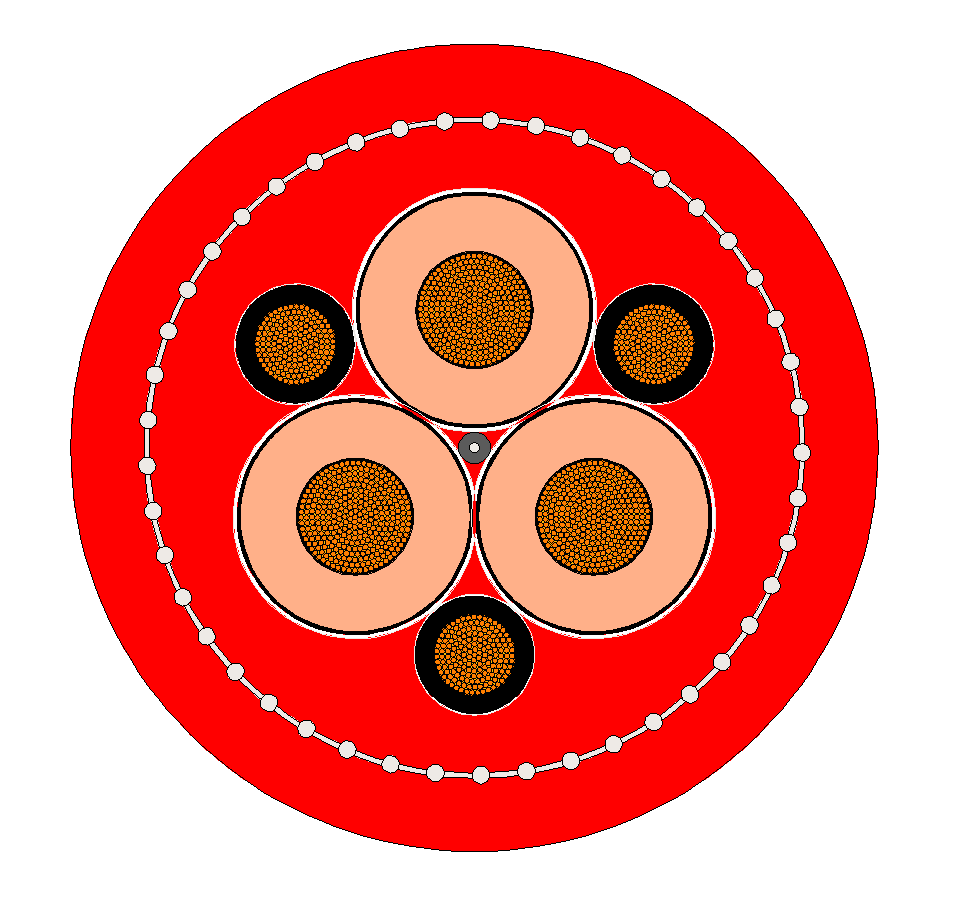
Mining and tunnelling operations subject power cables to conditions that would rapidly destroy standard industrial cabling. Cables are dragged across rough terrain, exposed to water and oil, twisted during equipment movement, and subjected to high ambient temperatures. The NTSCGEWOU cable’s construction directly addresses these challenges:
- Class 5 stranded tinned copper conductors provide flexibility for continuous equipment movement
- EPR rubber insulation maintains dielectric strength under mechanical stress
- Heavy-duty rubber jacket resists abrasion, oil, water, and UV exposure
- Torsional resistance of plus/minus 25 degrees per meter accommodates reeling and trailing
- Travel speed up to 120 m/min supports high-speed mining equipment
Primary NTSCGEWOU Cable Applications
Open-Pit Mining Excavators
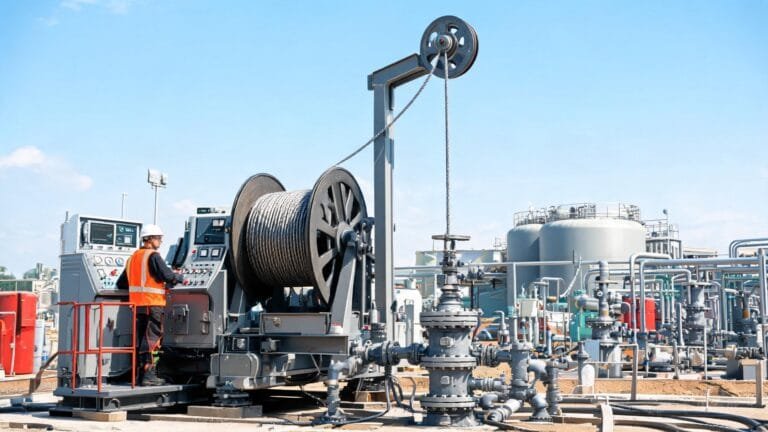
Large excavators in open-pit mines are the most common application for NTSCGEWOU trailing cables. These machines move continuously as they dig, requiring a power cable that flexes and trails without failure. The cable connects the excavator to a power distribution point or mobile substation, trailing behind the machine as it advances along the mining face.
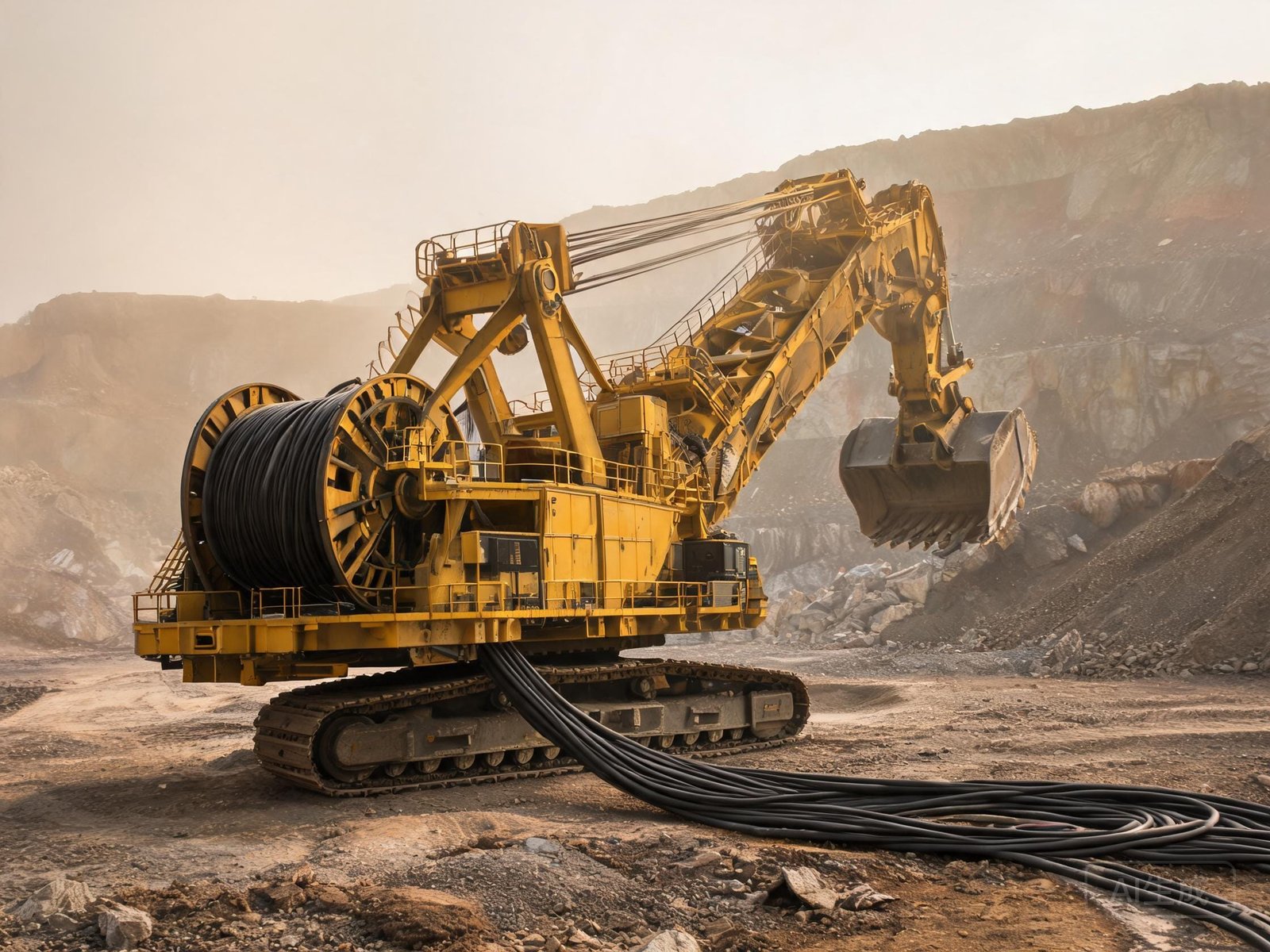
Key application requirements include:
- Cable must withstand continuous flexing and bending as the excavator slews and travels
- Resistance to abrasion from contact with ground surfaces and mining debris
- UV and weather resistance for outdoor exposure in all climate conditions
- Medium-voltage rating (typically 6kV to 20kV) to match excavator power requirements
Bucket-Wheel Excavators and Stackers
Bucket-wheel excavators and stacker-reclaimers in continuous mining operations use NTSCGEWOU cables for both power and control. These machines operate on rails or crawlers and require cables that can handle long trailing distances and frequent repositioning. The cable’s torsional resistance is particularly important for these applications, as the reeling systems impose rotational stress on the cable.
Underground Tunnelling and Tunnel Boring Machines
Tunnel boring machines (TBMs) represent one of the most challenging environments for power cables. Operating underground in confined spaces with high humidity, water ingress, and abrasive rock dust, TBMs require trailing cables that can withstand these conditions while delivering reliable medium-voltage power.
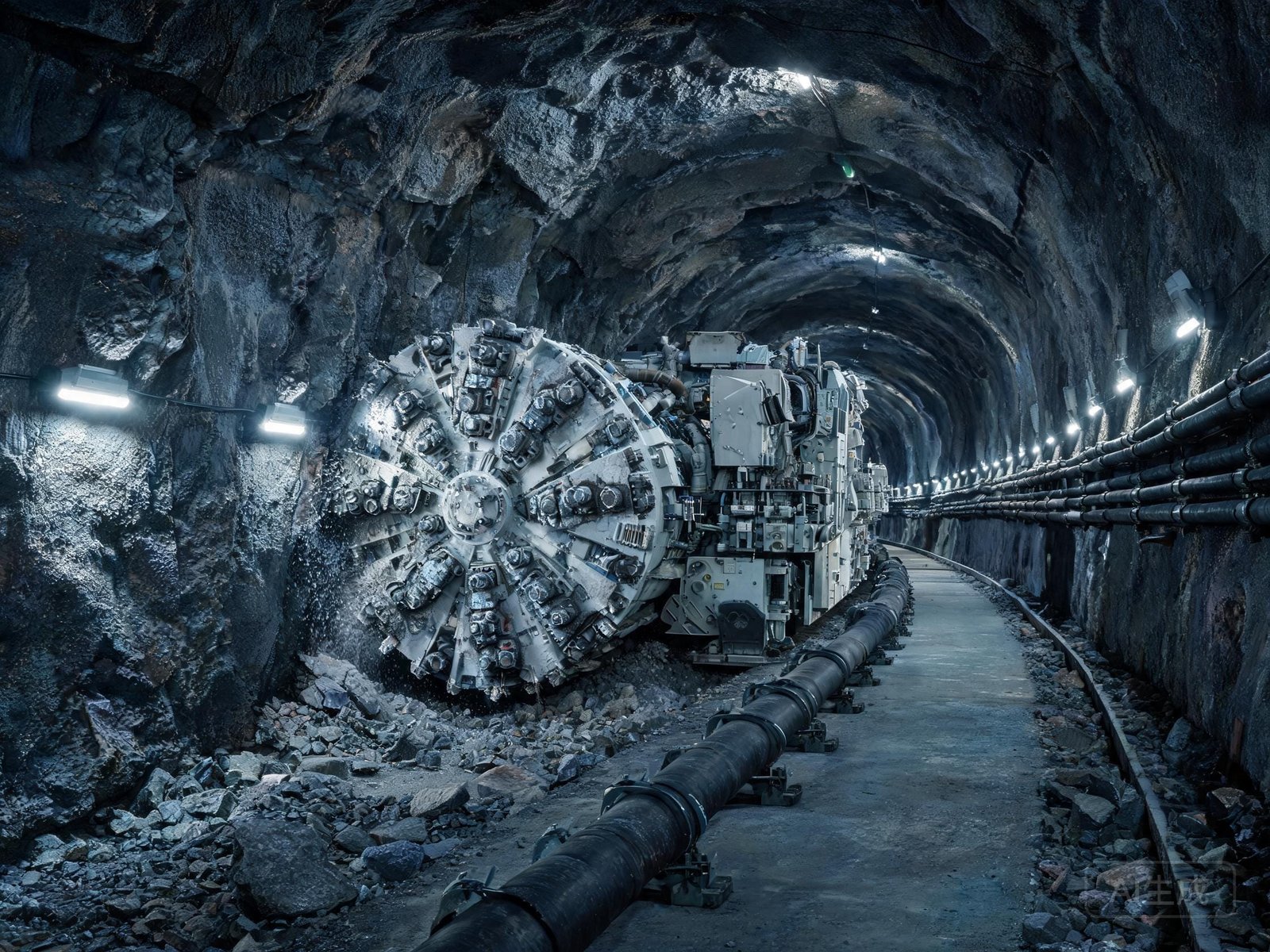
Tunnelling application requirements include:
- Water resistance for wet tunnel environments with active groundwater
- Flame retardancy per IEC/EN 60332-1-2 for underground fire safety
- Flexibility for cable routing through confined tunnel spaces
- Oil resistance from hydraulic equipment operating in proximity
Cranes and Material Handling Equipment
Heavy-duty cranes in mining ports, steel plants, and material handling facilities use NTSCGEWOU cables for power supply to moving equipment. The cable’s screened construction provides electromagnetic compatibility, preventing interference with control signals on adjacent cables — essential for crane applications where precise control is critical. Learn more about our industrial cable applications across various sectors.
Dumpers and Heavy-Haul Vehicles
Large mining dump trucks and haul vehicles with electric drive systems require trailing cables for charging and, in some configurations, for direct power supply during operation. The NTSCGEWOU’s resistance to mechanical damage from vehicle traffic and its ability to handle the voltage requirements of electric drive systems make it suitable for these applications.
Environmental Factors in Application Selection
When specifying NTSCGEWOU cable for a specific application, consider these environmental factors:
- Mechanical stress: The cable must withstand the specific flexing, bending, and torsional patterns of the equipment. Verify that the torsional resistance rating matches the application requirements.
- Ground conditions: In open-pit mining, cables may contact abrasive ground surfaces. The rubber jacket’s abrasion resistance is a critical specification.
- Water exposure: Both surface and underground mining involve water. The W designation in NTSCGEWOU confirms water resistance for wet environments.
- Chemical exposure: Mining equipment uses hydraulic oils and lubricants that can degrade cable jackets. The O designation ensures oil resistance.
- Temperature: Mining environments can range from arctic cold to tropical heat. The EPR insulation and rubber jacket maintain flexibility across a wide temperature range.
For specialized environments requiring additional protection, our custom cable engineering services can provide tailored solutions.
Installation Best Practices
- Use cable reels or cable management systems designed for the cable’s bending radius and travel speed
- Avoid sharp bends and edges that can damage the jacket during trailing
- Ensure proper tensioning on reeling systems to prevent cable slack and tangling
- Regularly inspect the cable jacket for cuts, abrasions, and signs of oil degradation
- Route cables away from vehicle traffic paths where possible, or use cable protection ramps
- Verify that cable terminations and connectors are rated for the medium-voltage application
Conclusion
NTSCGEWOU cable applications span the full spectrum of mining and tunnelling operations — from open-pit excavators and bucket-wheel systems to underground tunnel boring machines and heavy-duty cranes. The cable’s VDE 0250-813 construction, with Class 5 tinned copper conductors, EPR insulation, and heavy-duty rubber jacket, provides the combination of flexibility, voltage capability, and environmental resistance that these demanding applications require.
For mining and tunnelling projects requiring reliable trailing cable solutions, TEBAOFLEX NTSCGEWOU trailing cable offers VDE-certified manufacturing with full technical documentation and custom configurations.
Frequently Asked Questions
What equipment uses NTSCGEWOU trailing cable?
NTSCGEWOU cables are used on mining excavators, bucket-wheel excavators, stacker-reclaimers, tunnel boring machines, heavy-duty cranes, and mining dump trucks with electric drive systems. Any equipment that requires flexible medium-voltage power while moving can benefit from this cable type.
Can NTSCGEWOU cable be used underground?
Yes. NTSCGEWOU cables are suitable for underground mining and tunnelling applications. They are flame retardant to IEC/EN 60332-1-2, water resistant, and designed for the confined and harsh conditions of underground environments.
What is the maximum travel speed for NTSCGEWOU cable?
NTSCGEWOU cables are engineered for travel speeds up to 120 meters per minute, accommodating the operational demands of high-speed mining equipment. However, always verify the specific travel speed rating with the manufacturer for your cable size and configuration.
How does NTSCGEWOU handle water and oil exposure?
The WOU designation indicates resistance to water (W), oil (O), and UV/weather (U). The heavy-duty rubber jacket is formulated to resist degradation from water, hydraulic oils, lubricants, and UV exposure — all common in mining environments.
What voltage is required for mining excavator power supply?
Mining excavator voltage requirements vary by equipment size and manufacturer. NTSCGEWOU cables are available in ratings from 3.6/6kV to 20/35kV to cover the full range of mining equipment power needs. Always match the cable voltage rating to the equipment specifications.
Need help selecting the right NTSCGEWOU cable for your mining application? Contact us or Request a Quote.
Send us your application/equipment, voltage, conductor size, number of cores, cable movement, installation environment, required standards, and required quantity — our engineering team will review and recommend a suitable cable solution.