
This comprehensive SOOW SJOOW cable FAQ addresses the most common questions from electrical engineers, maintenance technicians, and procurement professionals who specify, install, and maintain portable cord systems in industrial environments. Whether you are selecting a cable for a new installation or troubleshooting an existing setup, these answers provide practical, engineering-focused guidance.
For detailed product specifications, visit our SOOW and SJOOW portable cord product page. For additional resources on industrial cable solutions, browse our complete product catalog.
Cable Selection FAQ
What is the difference between SOOW and SJOOW cable?
The primary difference is voltage rating. SOOW is rated for 600V and SJOOW for 300V. The “J” in SJOOW stands for “junior” service, indicating the lower voltage class. Both share the same oil-resistant insulation and jacket, water resistance (“W”), and -40°C to 90°C temperature range. Always match the cable’s voltage rating to your circuit voltage.
Can SOOW cable replace SJOOW cable?
Yes, in most cases. SOOW (600V) exceeds SJOOW’s (300V) rating and can be used on lower-voltage circuits. However, SOOW has a larger diameter for the same AWG size due to thicker insulation, which may affect connector fit. SJOOW cannot replace SOOW on circuits above 300V.
What does the “OO” in SOOW mean?
The two “O” letters indicate that both the insulation and the jacket are oil-resistant. This dual oil resistance makes SOOW and SJOOW suitable for industrial environments where lubricants, cutting fluids, fuels, and solvents are present. Cables with a single “O” designation have only oil-resistant jackets.
What conductor sizes are available for SOOW portable cord?
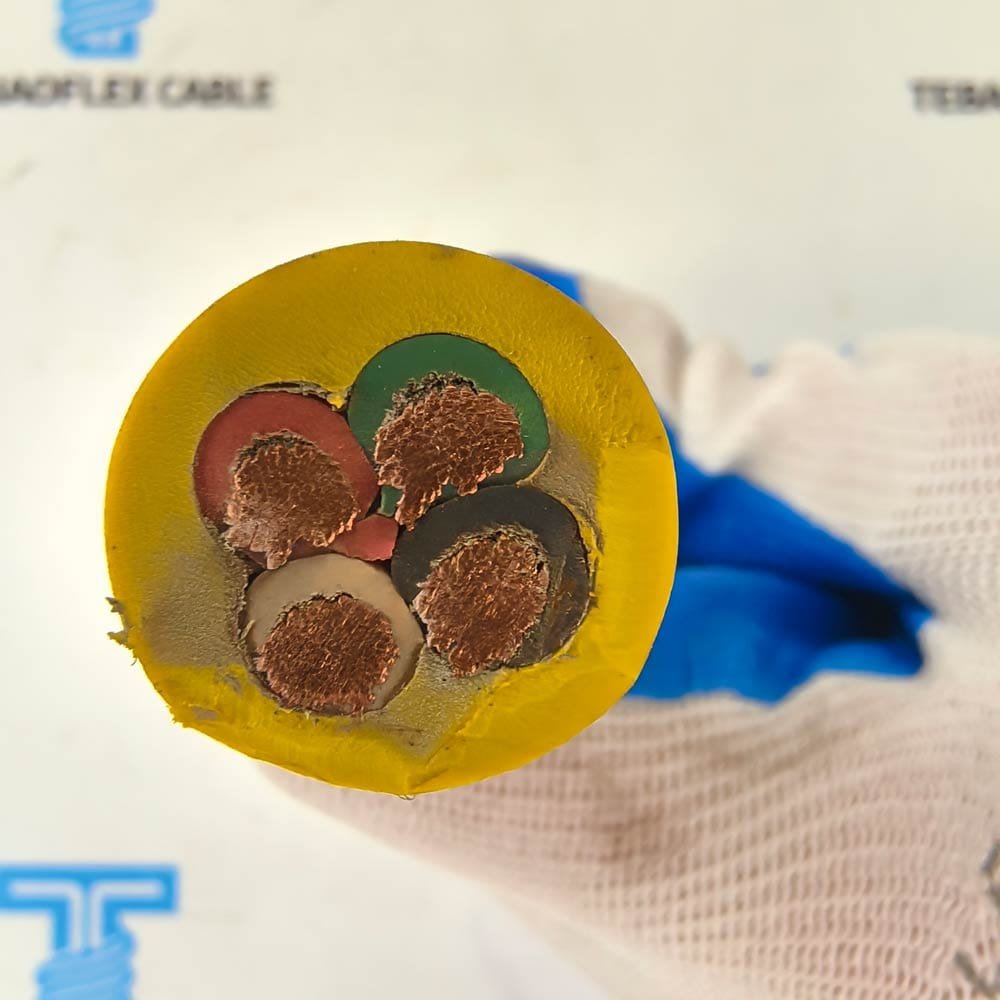
SOOW is commonly available from 18 AWG to 2 AWG with 2 to 5 conductors. SJOOW is available from 18 AWG to 10 AWG with 2 to 6 conductors. For configurations outside these ranges, custom manufacturing services may be available to meet specific project requirements.
Installation and Code FAQ
Is SOOW cable suitable for outdoor use?
Yes. The “W” designation in SOOW confirms water resistance, and the thermoset rubber jacket includes UV inhibitors for sunlight resistance. SOOW is suitable for outdoor and wet-location applications as defined by NEC Article 400. However, continuous submersion in water is not recommended.
Can SOOW cable be used as permanent building wiring?
No. NEC Article 400 specifically restricts the use of flexible cords to specific applications such as portable equipment connections, elevator wiring, and specific listed uses. Flexible cords like SOOW and SJOOW are not permitted as a substitute for permanent building wiring methods such as NM-B, THHN/THWN in conduit, or MC cable.
What is the minimum bending radius for SOOW cable?
The minimum bending radius for portable cords is typically 4 to 5 times the cable’s outside diameter. Exceeding this limit causes conductor fatigue and jacket damage. Always consult the manufacturer’s published specifications for the exact cable size, as bending radius values vary by construction.
Do I need to derate ampacity when using multi-conductor SOOW cable?
Yes. When multiple current-carrying conductors are bundled in a single cable, NEC ampacity derating tables apply. For cables with 4 to 6 current-carrying conductors, apply a derating factor; for 7 to 9 conductors, a larger derating factor is required. Always consult the current NEC tables for the specific installation conditions.
Troubleshooting and Maintenance FAQ
How do I inspect SOOW cable for damage?
Regular visual inspection should check for:
- Cuts and gouges: Any jacket damage that exposes the insulation or conductors requires immediate cable replacement
- Abrasion wear: Flattened or thin jacket areas indicate mechanical wear; monitor closely and replace if conductor insulation is visible
- Swelling or softening: Jacket swelling indicates chemical incompatibility — identify the chemical source and replace with a compatible cable type
- Hardening or cracking: Rubber hardening and surface cracking indicate UV or heat degradation; the cable should be replaced
- Connector damage: Inspect strain reliefs, plug bodies, and connector terminations for loose connections or heat damage
Why is my SOOW cable jacket cracking?
Jacket cracking typically results from one of three causes: UV degradation from prolonged sunlight exposure, thermal cycling beyond the rated temperature range, or chemical incompatibility with substances in the operating environment. If cracking is observed, replace the cable immediately and investigate the root cause to prevent recurrence with the replacement cable.
Storage and Handling FAQ
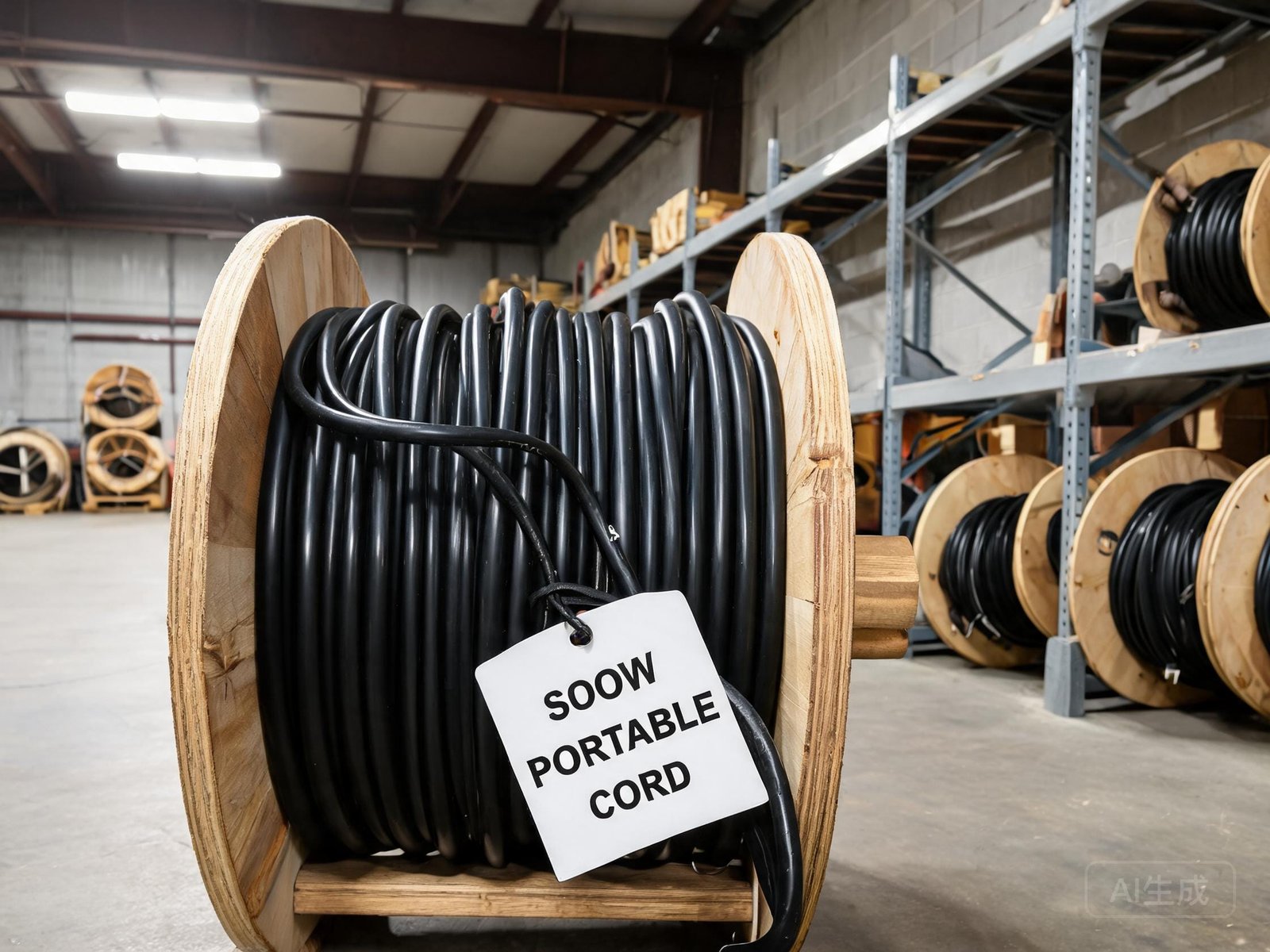
How should I store SOOW cable?
Store SOOW cable coiled on a reel or in a figure-8 pattern in a cool, dry location away from direct sunlight. Avoid storing cables in areas with temperature extremes or chemical exposure. When uncoiling for use, rotate the reel rather than pulling the cable off the side to prevent twisting and kinking.
What is the shelf life of SOOW cable?
When stored properly in a climate-controlled environment away from UV exposure, chemicals, and extreme temperatures, SOOW cable can maintain its properties for several years. However, the rubber compounds will gradually age over time. For critical applications, verify cable condition before installation regardless of storage duration.
Connector and Termination FAQ
What connectors are compatible with SOOW cable?
SOOW cable is compatible with a wide range of NEMA and IEC connectors, including NEMA L5, L6, L14, and L21 locking devices, as well as pin and sleeve devices for industrial environments. Always verify that the connector’s cable entry size accommodates the SOOW cable’s outer diameter for the specific AWG and core count. Check our application guides for connector selection recommendations.
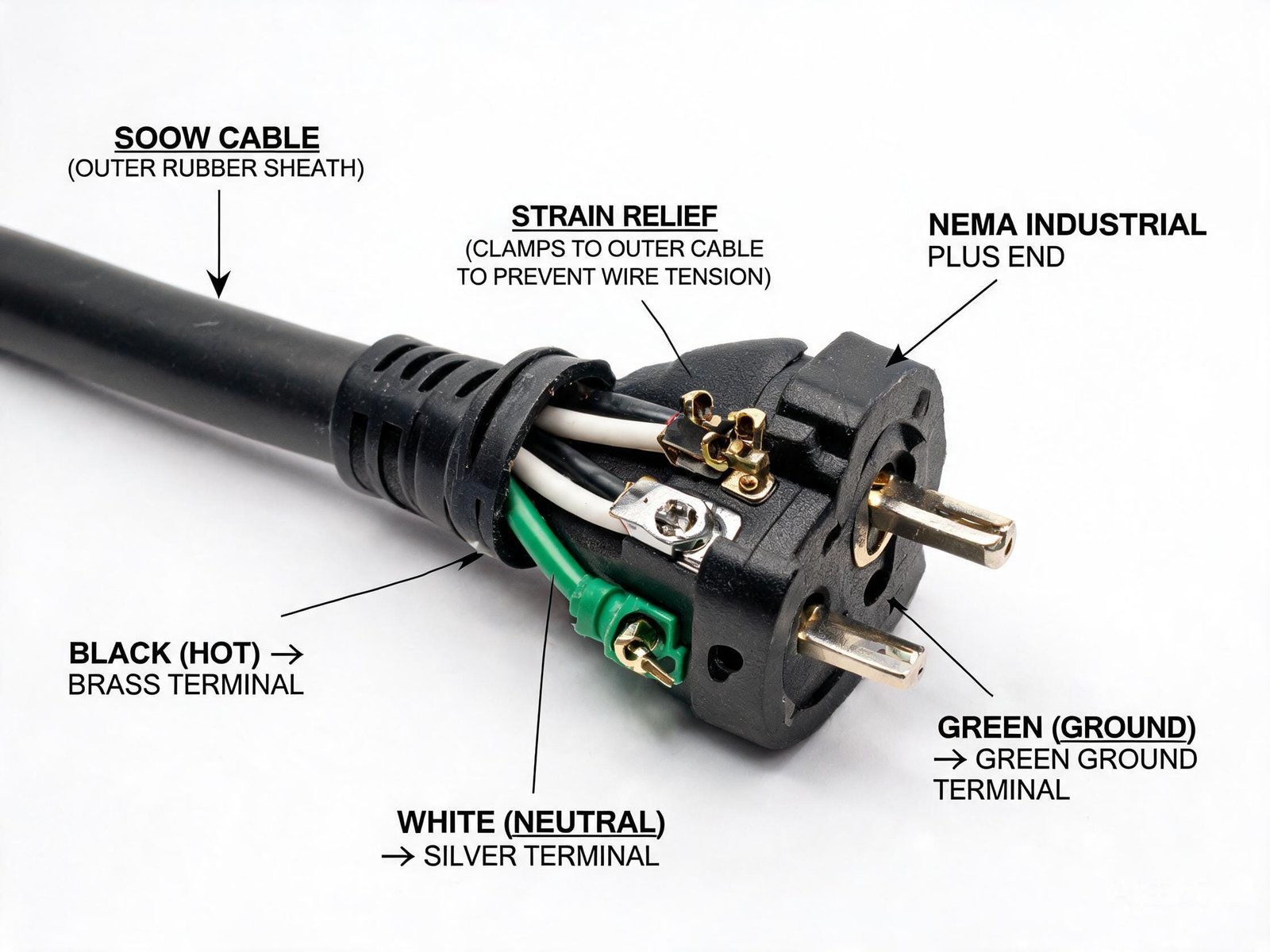
How do I provide strain relief for SOOW cable connections?
Use connector bodies with integrated strain relief, cable glands with strain relief features, or external strain relief fittings. The strain relief should grip the cable jacket firmly without deforming it, preventing mechanical stress from transferring to the conductor terminations. Proper strain relief is critical for applications where the cable may be pulled or moved during use.
Standards and Certification FAQ
What standards apply to SOOW and SJOOW cables?
SOOW and SJOOW portable cords are manufactured to UL 62 (Standard for Flexible Cords and Cables) and CSA C22.2 No. 49 for Canadian installations. The cables carry an FT-2 horizontal flame test rating. For international applications, equivalent standards may apply — review our certifications documentation for specific compliance information.
Are SOOW and SJOOW cables RoHS compliant?
SOOW and SJOOW cables manufactured by TEBAOFLEX CABLE are RoHS compliant, meaning they are free from hazardous substances as defined by EU Directive 2011/65/EU. Request RoHS compliance documentation from the manufacturer for your project records.
Conclusion
This SOOW SJOOW cable FAQ covers the most frequently encountered questions in selection, installation, troubleshooting, and maintenance of portable cord systems. The key takeaways: match voltage rating to circuit voltage (600V SOOW vs 300V SJOOW), follow NEC Article 400 for permitted uses, maintain proper bending radius and strain relief, and inspect cables regularly for mechanical and chemical damage.
For projects requiring SOOW or SJOOW portable cords with full UL 62 compliance, TEBAOFLEX CABLE provides standard and custom configurations for industrial B2B applications. Our engineering team is available to answer additional questions and provide cable recommendations for your specific requirements.
Have more questions about SOOW or SJOOW cable? Contact us or Request a Quote.
Send us your application/equipment, voltage, conductor size, number of cores, cable movement, installation environment, required standards, and required quantity — our engineering team will review and recommend a suitable cable solution.