
Introduction to Industrial Cable Selection
Selecting the right industrial cable is a critical decision that impacts safety, reliability, performance, and total cost of ownership. With hundreds of cable types, insulation materials, conductor sizes, and configurations available, making the wrong choice can lead to premature failure, safety hazards, downtime, and costly replacements. This complete industrial cable selection guide provides a systematic framework for engineers, project managers, and procurement professionals to specify the correct cable for any industrial application.
TEBAOFLEX manufactures a full range of industrial cables for power, control, instrumentation, and specialty applications. Use this guide to navigate the selection process, then contact our engineering team for project-specific recommendations.
Step 1: Define the Application Type
The first step in cable selection is understanding what the cable will be used for and where it will be installed:
Power Cables
Used for transmitting electrical power from source to load. Available in LV (0.6/1kV), MV (3.6/6kV to 18/30kV), and HV (above 30kV) ratings.
- Fixed installation: N2XY (XLPE/PVC), NYY (PVC/PVC), RG7H1OR (EPR/CSM) for permanent power distribution
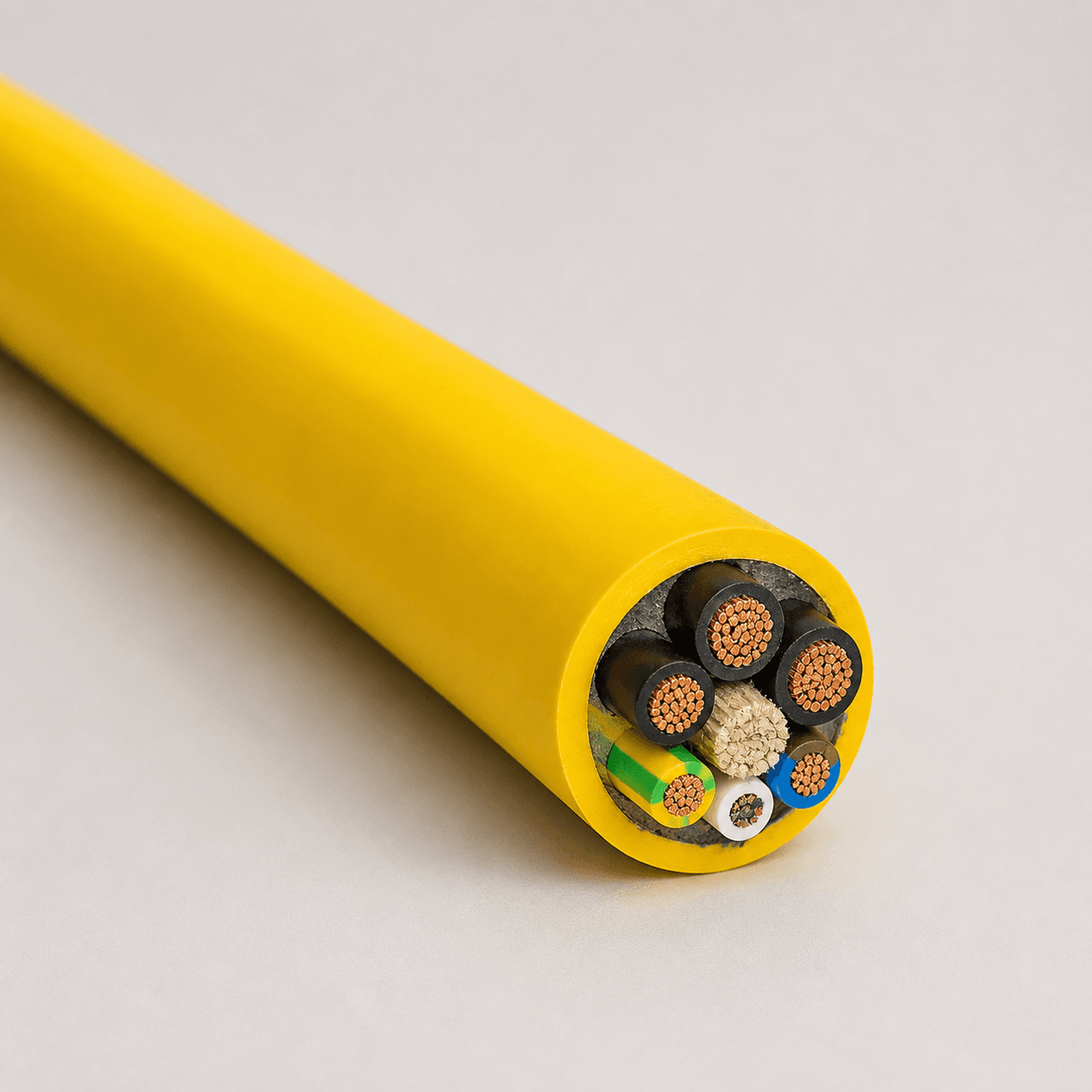
- Portable/flexible: H07RN-F (rubber), H07ZZ-F (LSZH), BUFLEX-M (PUR) for equipment power supply
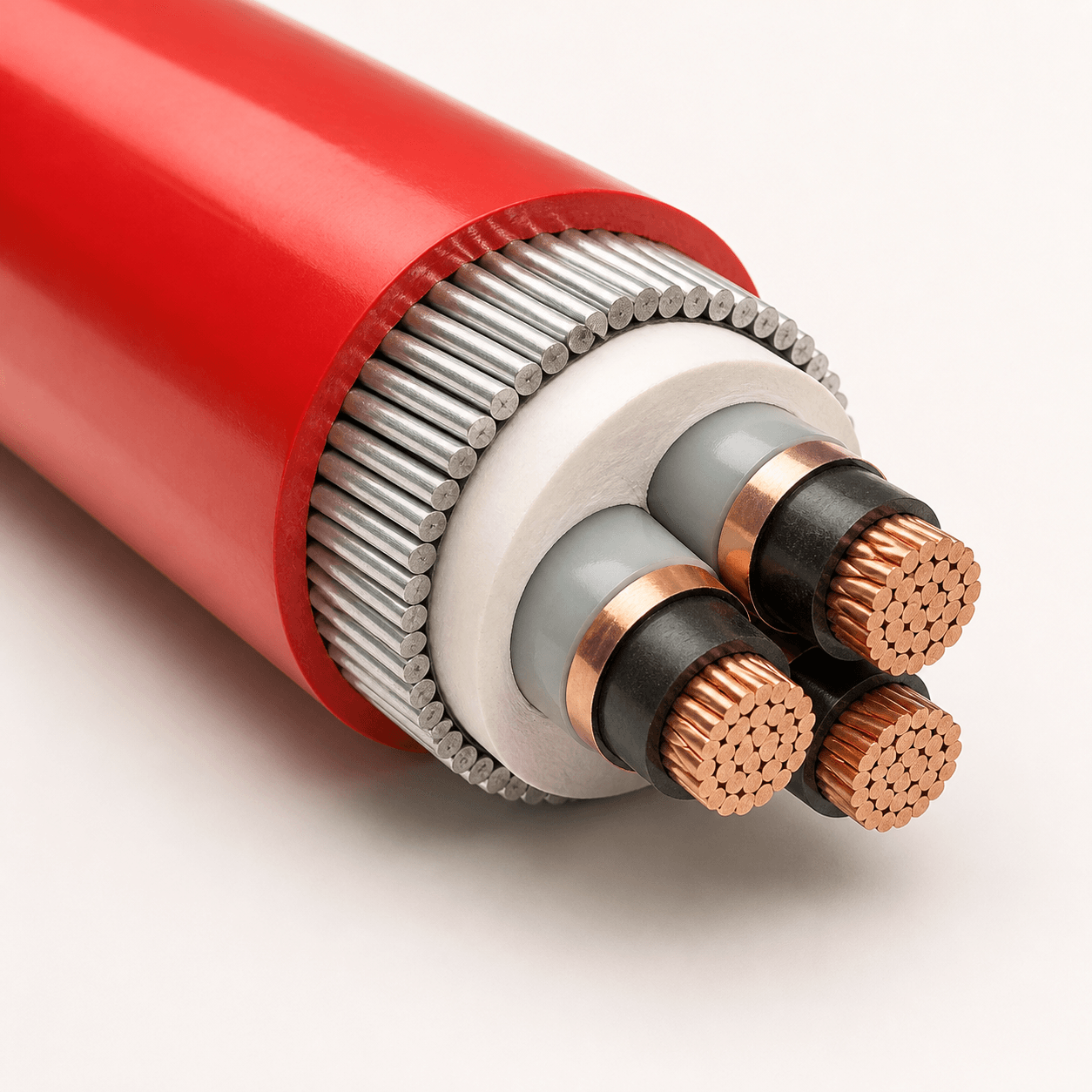
- Armored: N2XR-Y, RG7OZR for direct burial or mechanical protection
Control Cables
Used for signal transmission and control circuits in automation and machinery.
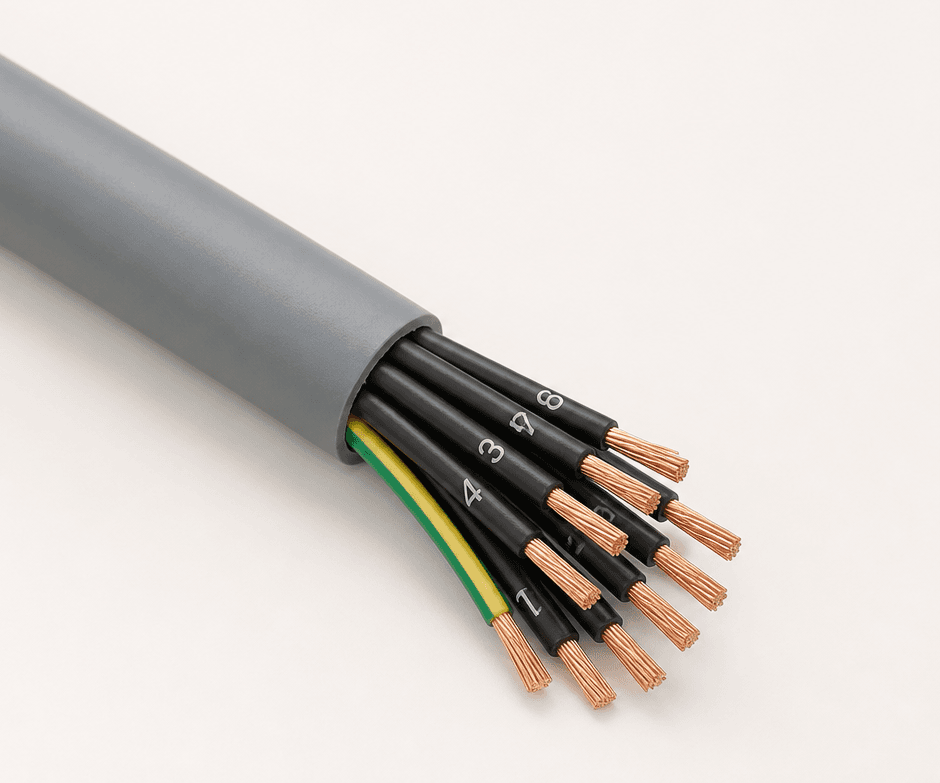
- PVC insulated: YY, YSLY, JZ-500 series for indoor control panels and machinery
- Rubber insulated: H05VV-F, flexible multi-core for moving equipment
- Shielded: YSLY-CY, SY for EMI-sensitive control signals
Instrumentation Cables
Used for low-level analog and digital signals in process control, measurement, and monitoring systems.
- Pair/triple cables: Twisted pairs with individual and overall screens for analog signals
- Thermocouple cables: Compensating cables with matching conductor alloys for temperature measurement
- Fieldbus cables: PROFIBUS, FOUNDATION Fieldbus, PROFINET types with characteristic impedance control
Specialty Cables
Designed for specific demanding environments.
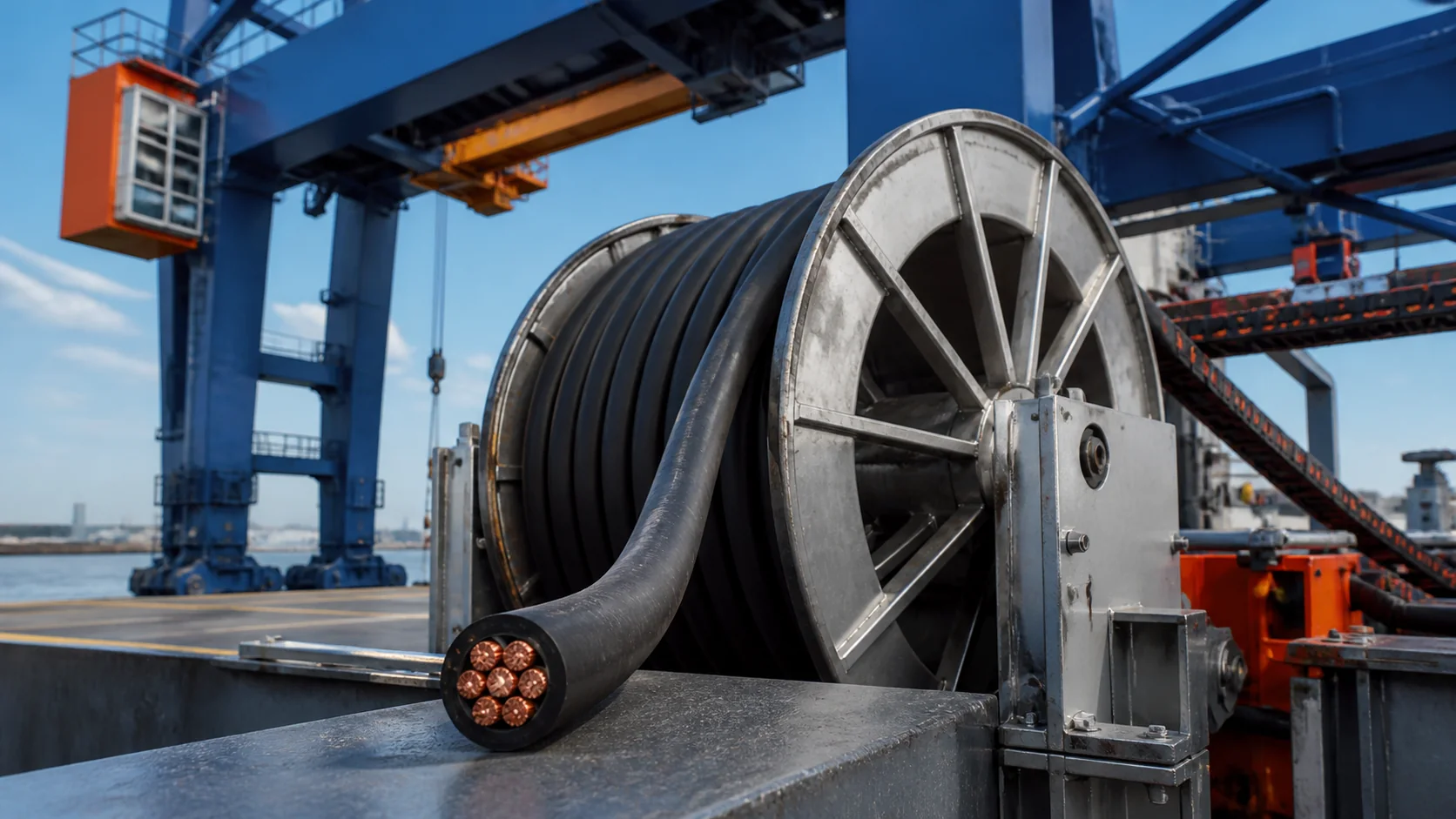
- Reeling and trailing cables: For cranes, mining, and mobile equipment
- Marine/offshore cables: Shipboard, platform, and subsea applications
- High temperature cables: Furnace, foundry, and glass industry
- Fire-resistant cables: Emergency circuits requiring circuit integrity
Step 2: Determine Voltage and Current Requirements
Voltage Rating
The cable voltage rating must meet or exceed the system voltage:
- Low Voltage (LV): 300/500V, 450/750V, 0.6/1kV (600/1000V) – most industrial power and control applications
- Medium Voltage (MV): 3.6/6kV, 6/10kV, 8.7/15kV, 12/20kV, 18/30kV – industrial distribution, large motors, mining
- High Voltage (HV): 36/66kV and above – utility transmission, large industrial plants
IEC uses the U0/U format (phase-to-earth / phase-to-phase). UL uses a single rating value. Always select a cable with a voltage rating at least equal to the system nominal voltage.
Current Carrying Capacity (Ampacity)
Determine the maximum continuous current the cable must carry, then select a conductor size with adequate ampacity under the actual installation conditions:
- Start with the full load current of the equipment
- Apply derating factors for installation method, ambient temperature, grouping, and altitude
- Consider voltage drop for long cable runs
- Add margin for future expansion (typically 20-30%)
- Verify short-circuit withstand capability
For detailed ampacity calculations, see our ampacity guide or contact TEBAOFLEX engineering.
Step 3: Select Conductor Material and Size
Copper vs Aluminum
The choice between copper and aluminum conductors depends on application type, size, and environmental factors:
- Copper: Higher conductivity (100% IACS), better mechanical properties, simpler terminations. Preferred for LV cables, flexible cables, and small sizes.
- Aluminum: Lower cost, lighter weight (3.3x lighter), higher coefficient of thermal expansion. Preferred for MV/HV cables and large feeders. Requires bi-metallic connectors.
As a general rule, copper is preferred for cables below 95mm² (4/0 AWG), while aluminum becomes more economical above 185mm² (500 kcmil). For a detailed comparison, see our copper vs aluminum guide.
Conductor Class (Flexibility)
IEC 60228 defines conductor classes based on flexibility:
- Class 1 (Solid): Single wire conductor. For fixed installations only. Not common in industrial cables.
- Class 2 (Stranded): Standard stranding for fixed power cables. Good balance of cost and flexibility.
- Class 5 (Flexible): Fine stranding for flexible cables, portable equipment, and limited flexing applications.
- Class 6 (Extra Flexible): Very fine stranding for highly flexible cables, continuous flexing, robotics, and reeling applications.
Select the conductor class based on the degree of flexing the cable will experience in service.
Step 4: Choose Insulation Material
The insulation material determines the cable’s temperature rating, electrical properties, and chemical resistance.
| Material | Temp Rating | Key Properties | Typical Applications |
|---|---|---|---|
| PVC | 70-90°C | Low cost, good electricals, limited oil resistance | Control cables, building wiring, indoor use |
| XLPE | 90°C | High dielectric strength, low loss, good mechanicals | MV power cables, fixed distribution |
| EPR | 90°C | Flexible, excellent water resistance, good chemical resistance | Mining, marine, flexible MV cables |
| Silicone | 180-200°C | Very high temp, flexible, low smoke | Furnace, foundry, high-heat areas |
| PUR | 90°C | Excellent abrasion resistance, flexible, oil resistant | Reeling, trailing, robotics, drag chains |
For a detailed comparison, see our XLPE vs EPR guide and PVC vs rubber guide.
Step 5: Evaluate Environmental Conditions
Temperature
- Ambient temperature: Derate cable ampacity for high ambient temperatures. Use correction factors from IEC 60364-5-52 or NEC Table 310.15(B)(1).
- Low temperature: PVC becomes brittle below -10°C. Use rubber (EPR, CR) or PUR for cold environments (-40°C).
- Conductor temperature: Ensure the insulation temperature rating exceeds the maximum conductor operating temperature.
Chemical Exposure
- Oils and fuels: CR (neoprene), PUR, and CSM (Hypalon) have excellent oil resistance. PVC has poor oil resistance.
- Acids and alkalis: EPR and FEP resist most chemicals. PVC has fair resistance.
- Solvents: PTFE/FEP resist most solvents. EPR and PVC are attacked by many solvents.
Mechanical Environment
- Abrasion: PUR offers the best abrasion resistance, followed by CSM and CR. PVC has the lowest.
- Impact and crush: Armored cables (SWA, STA) provide mechanical protection. Steel wire armor (SWA) for power cables, steel tape armor (STA) for control cables.
- Flexing: Class 5/6 conductors with rubber or PUR insulation for dynamic applications. Class 2 is fine for static.
- Tension: Support elements (steel wire or aramid yarn) for hanging cables (pendants, elevators).
Water and Moisture
- Dry conditions: PVC or XLPE are sufficient
- Occasional moisture: PVC with water-blocking tapes
- Continuous wet/submerged: EPR insulation with lead sheath or waterproof design. Submersible pump cables use special water-resistant constructions.
UV and Weather
- Outdoor exposure: Use UV-stabilized sheaths (CSM, CR, PE, or UV-stabilized PVC). Black PVC has carbon black for UV protection.
- Long-term outdoor: CSM (Hypalon) provides the best weathering resistance.
Step 6: Consider Fire Safety Requirements
Fire performance is critical for life safety and regulatory compliance:
- Flame retardancy: IEC 60332-1 (single cable) and IEC 60332-3 (bunched, categories A/B/C/D). UL VW-1 and FT-4 are equivalent North American tests.
- Low Smoke Zero Halogen (LSZH): Required in public buildings, transportation, data centers, and offshore platforms. LSZH cables emit minimal smoke and no toxic halogen gases during fire.
- Fire resistance: Cables that maintain circuit integrity during fire (IEC 60331, BS 6387). Used for emergency systems, fire pumps, and life safety circuits.
- CPR classification: European Construction Products Regulation requires fire performance ratings (Aca through Fca) for building cables.
TEBAOFLEX manufactures LSZH, flame retardant, and fire-resistant cables to meet all major fire safety standards. Contact us for fire performance specifications.
Step 7: Verify Standards and Certifications
Ensure the cable meets applicable standards for your region and industry:
- IEC standards: IEC 60227 (PVC), IEC 60245 (rubber), IEC 60502 (MV cables), IEC 60228 (conductors)
- UL/NEC standards: UL 44 (thermoset), UL 83 (thermoplastic), UL 1072 (MV), NEC Articles 310, 318, 400
- Industry-specific: IEC 60332 (fire), IEC 60079 (hazardous areas), IEC 60092 (marine), EN 50264 (railway)
- Certification marks: CE (EU), UL (USA), CSA (Canada), BASEC/LPCB (UK), VDE (Germany)
For more on standards, see our IEC vs NEC standards guide. View TEBAOFLEX certifications.
Step 8: Calculate Total Cost of Ownership
The cheapest cable is not always the lowest cost over the project lifecycle:
- Material cost: Upfront cable purchase price
- Installation cost: Labor, support structures, connectors, and terminations
- Maintenance cost: Inspection, testing, and preventive maintenance
- Replacement cost: Cable replacement frequency and associated downtime
- Downtime cost: Production loss from cable failure can far exceed the cable cost
- Energy cost: I²R losses over the cable lifetime (larger conductors reduce losses)
Selection Decision Matrix
- Identify application type: Power, control, instrumentation, or specialty
- Determine voltage: LV, MV, or HV based on system voltage
- Calculate current: Full load current with derating factors and expansion margin
- Select conductor: Copper or aluminum; conductor class (1, 2, 5, 6)
- Choose insulation: PVC, XLPE, EPR, silicone, or PUR based on temperature and environment
- Evaluate environment: Temperature, chemicals, water, mechanical stress, UV
- Assess fire safety: Flame retardant, LSZH, fire-resistant as required by codes
- Confirm standards: IEC, UL, or other applicable standards and certifications
- Select shielding/armor: Shielding for EMI; armor for mechanical protection
- Verify with manufacturer: Contact TEBAOFLEX for final confirmation and quotation
Why Choose TEBAOFLEX
TEBAOFLEX offers one of the broadest industrial cable product ranges in the market:
- LV power cables: PVC, rubber, XLPE, and LSZH types
- Medium voltage cables up to 30kV: XLPE and EPR insulated
- Control and instrumentation cables: PVC, rubber, PUR, shielded/unshielded
- Flexible and reeling cables: for mining, cranes, and automation
- Specialty cables: high temperature, fire-resistant, marine, offshore
- Custom engineered solutions for unique applications
Our engineering team provides free cable selection assistance and technical support. Browse our product catalog or request a consultation for your next project.
Request a Quote
Need help selecting the right cable? Our technical team will respond within 24 hours with specifications, recommendations, and pricing. Submit your cable inquiry to TEBAOFLEX.