
Introduction: The Evolving Cable Industry
The industrial cable industry is undergoing rapid transformation driven by electrification, digitalization, sustainability mandates, and the energy transition. What was once a mature, slow-moving sector is now at the forefront of materials science, smart manufacturing, and digital integration. From fiber-optic integrated power cables that monitor their own health in real-time, to LSZH compounds that eliminate toxic smoke in public infrastructure, to PUR cables designed for the demanding cycles of EV charging and automated manufacturing, the pace of innovation has never been higher.
TEBAOFLEX is actively investing in these emerging technologies across our product development programs. This article examines the key trends shaping industrial cable technology through 2026 and beyond.
1. Smart Cables with Embedded Sensing
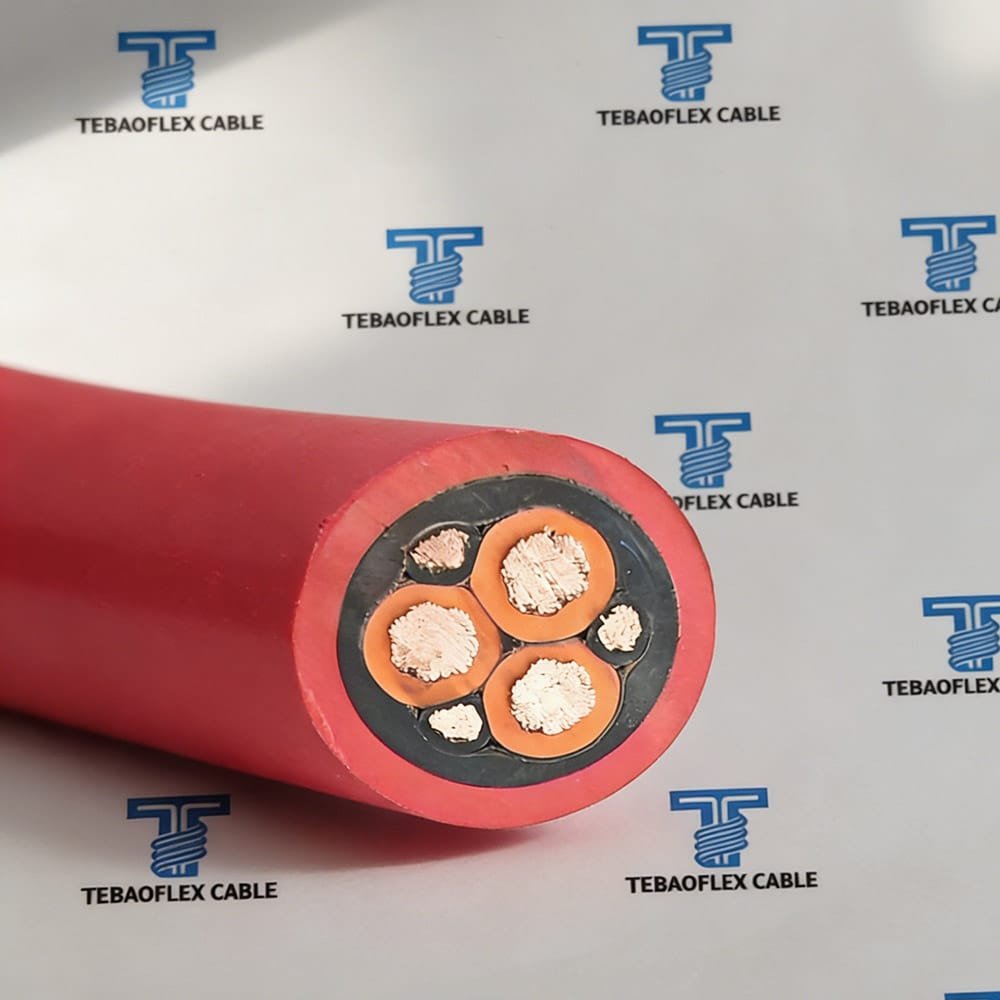
The integration of optical fibers into power cables represents one of the most significant advances in cable technology. Fiber-optic integrated cables enable:
- Real-time temperature monitoring: Distributed Temperature Sensing (DTS) using Rayleigh or Brillouin scattering can measure temperature along the entire cable length with 1-meter spatial resolution, detecting hot spots before they cause failure
- Strain and vibration monitoring: Acoustic sensing through embedded fibers detects mechanical stress, vibration, and physical impacts on cables in real-time
- Predictive maintenance: Continuous data from embedded sensors feeds into predictive maintenance algorithms, enabling condition-based maintenance instead of time-based schedules
- Circuit integrity verification: In critical installations (tunnels, offshore platforms, data centers), fiber-optic monitoring provides immediate detection of cable damage or fire exposure
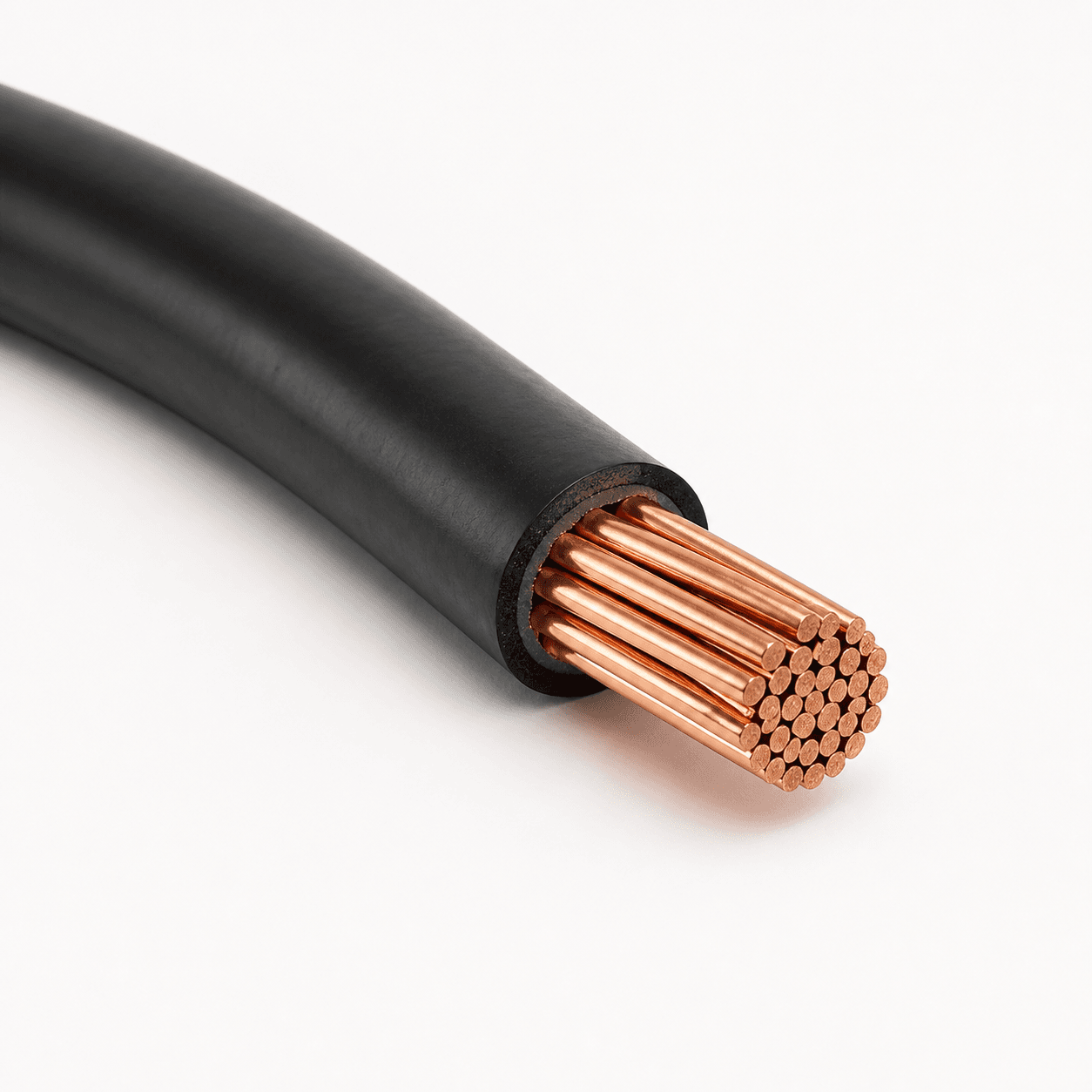
TEBAOFLEX manufactures fiber-optic integrated reeling cables for mining and port crane applications where equipment health monitoring is critical. The (N)TSCGEWOEU-SR FO series combines medium voltage power conductors with integrated optical fibers for simultaneous power transmission and condition monitoring. Explore our product range for available configurations.
2. Electric Vehicle Infrastructure Cables
The explosive growth of electric vehicles is driving demand for specialized cables:
- EV charging cables: PUR and TPU sheathed cables for DC fast charging (up to 500A, 1000V DC) requiring exceptional flexibility, abrasion resistance, and weatherability for thousands of daily flex cycles
- High-voltage DC interconnects: XLPE insulated HVDC cables for renewable energy transmission and grid interconnection, rated up to ±525kV DC
- Battery storage systems: LSZH-sheathed power cables for battery energy storage systems (BESS) requiring fire safety, chemical resistance, and high current capacity in compact installations
- Charging station infrastructure: Armored underground cables connecting charging stations to grid distribution points, with enhanced thermal performance for sustained high-current operation
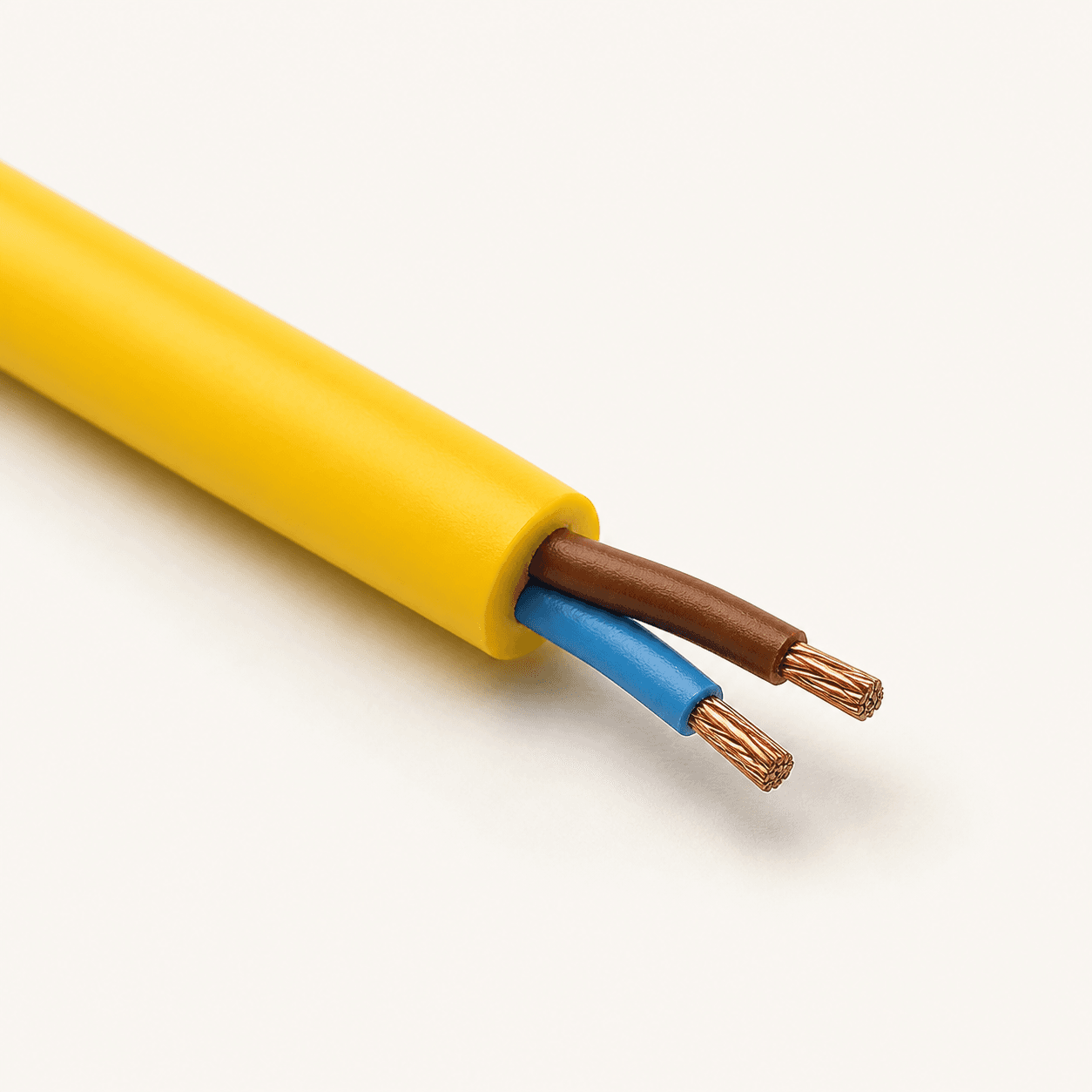
TEBAOFLEX manufactures H07BZ5-F PUR cables specifically designed for EV charging applications, meeting the demanding mechanical and environmental requirements of public charging infrastructure. Contact us for EV cable solutions.
3. Industry 4.0 and Automation Cables
The fourth industrial revolution demands cables that support high-speed data, continuous motion, and extreme reliability:
- Drag chain cables: Cables designed for millions of flex cycles in automated machinery drag chains, using PUR or special PVC compounds with optimized stranding (Class 5/6) and core structure
- Industrial Ethernet and Fieldbus cables: Cat 6A/7 shielded cables for PROFINET, EtherCAT, and other industrial protocols, with LSZH sheathing and CPR ratings (B2ca, Cca) for fire safety in automation environments
- AS-Interface cables: Flat and round AS-I cables for actuator-sensor interface networks, combining power and data on a single 2-core cable
- Hybrid cables: Combined power and control/signal cables in a single jacket, reducing installation complexity and improving cable management in robotic and automated systems
- Robotic cables: Ultra-flexible cables with high-flex-life stranding for industrial robots and cobots, rated for 10+ million flex cycles
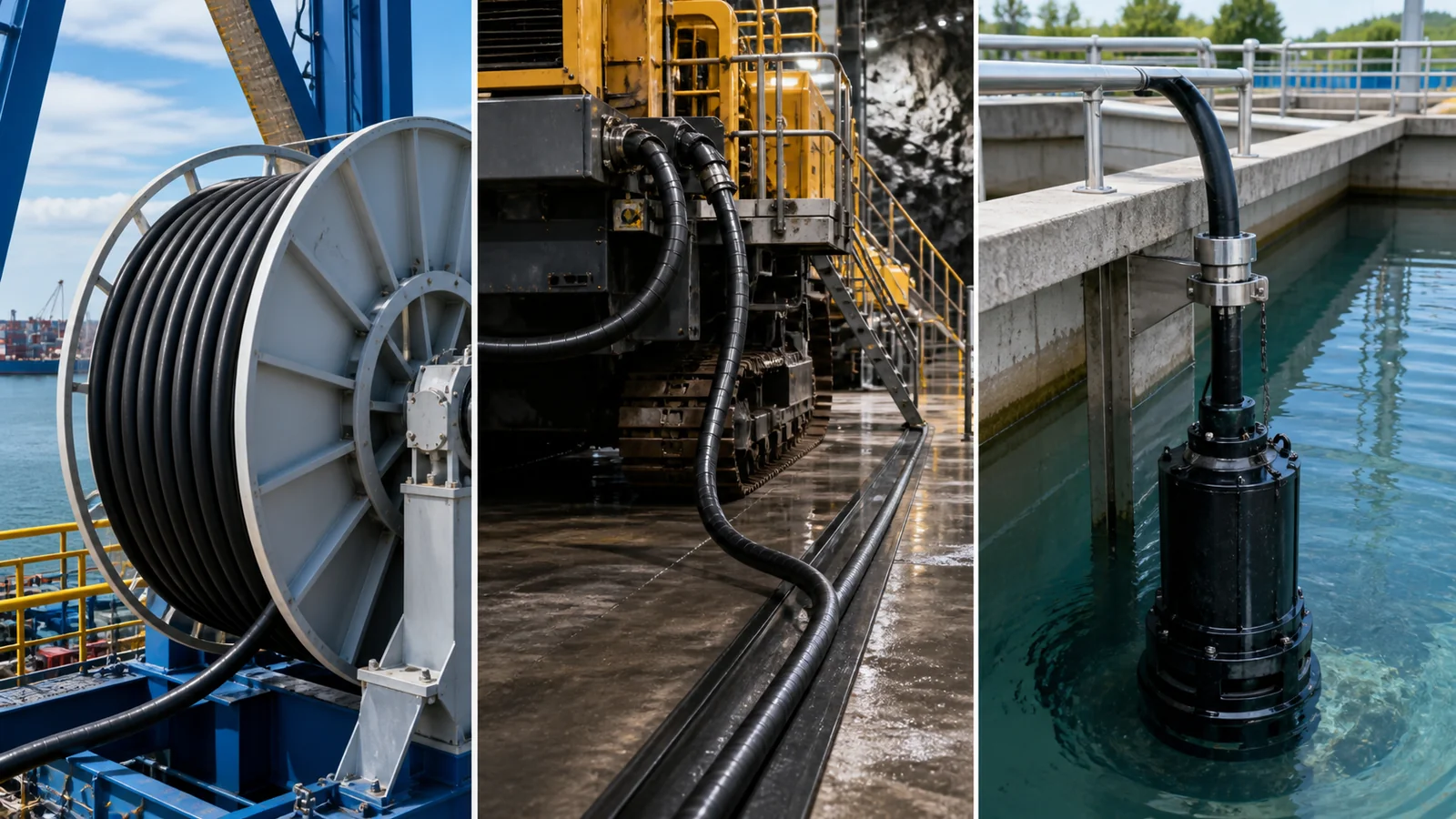
TEBAOFLEX produces automation and control cables including AS-Interface CPR B2ca cables for Industry 4.0 applications.
4. Sustainability and Environmental Innovation
Environmental regulations and corporate sustainability goals are driving material and manufacturing innovations:
- LSZH (Low Smoke Zero Halogen) compounds: Replacing PVC in public buildings, transportation, data centers, and offshore installations. LSZH cables emit no toxic halogen gases and minimal smoke during fire, improving life safety
- CPR (Construction Products Regulation) compliance: European regulation requiring fire performance classification (Aca through Fca) for cables installed in buildings. CPR-compliant cables must meet specific flame spread, heat release, and smoke production criteria
- Recyclable cable materials: Development of insulation and sheath compounds that can be separated and recycled at end of life, reducing landfill waste
- Reduced carbon footprint manufacturing: Cable manufacturers including TEBAOFLEX are investing in energy-efficient production processes, recycled copper content, and renewable energy for factory operations
- Bio-based polymers: Research into bio-derived insulation and sheath materials from renewable sources as alternatives to petroleum-based compounds
- RoHS and REACH compliance: Elimination of hazardous substances (lead, cadmium, phthalates) from cable compounds to meet EU environmental directives
5. Advanced Insulation Materials
Insulation material development continues to push performance boundaries:
- Nanocomposite insulation: Adding nanoscale fillers (silica, alumina, titania) to XLPE and EPR improves dielectric strength, thermal conductivity, and water treeing resistance. Research shows 20-40% improvement in breakdown strength
- HEPR (High-Grade EPR): Rated at 110°C (20°C above standard EPR), providing additional thermal margin for medium voltage cables in demanding applications. HEPR also offers improved dielectric properties over standard EPR
- Superior water treeing resistance: New XLPE formulations and tree-retardant (TR-XLPE) compounds extend cable life in wet environments, critical for underground and submarine installations
- Higher temperature XLPE: Cross-linking innovations are pushing XLPE continuous operating temperature from 90°C toward 105-110°C, increasing current carrying capacity for existing cable sizes
- Mica tape advancements: Improved mica tape formulations for fire-resistant cables maintain circuit integrity for 90+ minutes under direct fire exposure (IEC 60331, BS 8490)
6. Offshore and Marine Cable Innovation
Offshore wind, oil & gas, and subsea applications are driving specialized cable development:
- Dynamic submarine cables: Floating offshore wind turbines require dynamic cables that can withstand wave motion and tension while transmitting power. These cables use special armor designs and fatigue-resistant materials
- Higher voltage offshore wind cables: Moving from 33kV to 66kV inter-array cables and 132-220kV export cables to reduce losses and increase transmission capacity from larger offshore wind farms
- Subsea production systems: Integrated power, control, and signal umbilicals for subsea oil & gas processing equipment, requiring corrosion resistance and high-pressure capability
- Fiber-optic integrated subsea cables: Combining power conductors with optical fibers for subsea equipment monitoring and control, similar to the technology used in mining and port applications
TEBAOFLEX manufactures submersible medium voltage cables for subsea applications. Contact us for offshore cable solutions.
7. Digital Manufacturing and Industry 4.0 in Cable Production
Cable manufacturing itself is being transformed:
- Automated extrusion lines: Real-time diameter, eccentricity, and spark testing with AI-driven process control for consistent quality
- Digital twin technology: Virtual models of cable production lines enable optimization of formulations, stranding parameters, and quality control
- Blockchain traceability: Material sourcing, production parameters, and quality test results recorded on blockchain for end-to-end supply chain transparency
- Predictive quality: Machine learning algorithms analyzing production data to predict and prevent quality deviations before they occur
TEBAOFLEX operates ISO 9001 certified facilities with advanced quality control systems including real-time spark testing and dimensional monitoring.
8. Regulatory and Standards Evolution
Regulatory changes are shaping cable development:
- IEC 62932: New standards for stationary battery energy storage systems, including cable requirements
- IEC 63026: Power and data cables for DC railway traction systems
- EN 50575 / CPR: Mandatory fire performance classification for construction cables in EU
- NEC 2026 updates: Expected changes to NEC for energy storage, EV charging, and renewable energy installations
- IEC 62818: Photovoltaic DC cables for solar installations, with enhanced UV and thermal aging requirements
Market Outlook 2026-2030
The industrial cable market is projected to grow at 5-7% CAGR through 2030, driven by:
- Electrification of transportation: EV charging infrastructure, electrified public transit, and electric mining equipment
- Renewable energy expansion: Wind, solar, and energy storage installations requiring massive cabling
- Grid modernization: Replacement of aging infrastructure with smart grid cables and sensors
- Industrial automation: Industry 4.0 driving demand for high-performance control and data cables
- Data center construction: Cloud and AI infrastructure requiring massive power and data cabling
- Urbanization: Building and infrastructure construction in developing economies
How TEBAOFLEX Is Preparing for the Future
TEBAOFLEX is investing across multiple innovation areas:
- Fiber-optic integrated power cables for mining, port, and subsea applications
- EV charging cables with PUR/TPU sheathing for public infrastructure
- LSZH and CPR-rated cables (B2ca, Cca) for European building installations
- Nanocomposite insulation research for next-generation medium voltage cables
- Recyclable and bio-based compound development
- Automated production lines with AI-driven quality control
- TR-XLPE and HEPR insulation for extended cable life
Our engineering team works closely with customers on custom cable solutions for emerging applications. Browse our product catalog or contact TEBAOFLEX to discuss your future cable requirements.
Request a Quote
Planning a project with next-generation cable requirements? Our technical team will respond within 24 hours with specifications, material recommendations, and pricing. Submit your cable inquiry to TEBAOFLEX.