
WG and WG-D are medium-voltage rubber reeling-cable configurations for motor-driven reels, but the first selection question is whether the moving equipment needs power only or power plus data. Then verify voltage, reel geometry, travel speed, tensile duty and the exact conductor schedule.
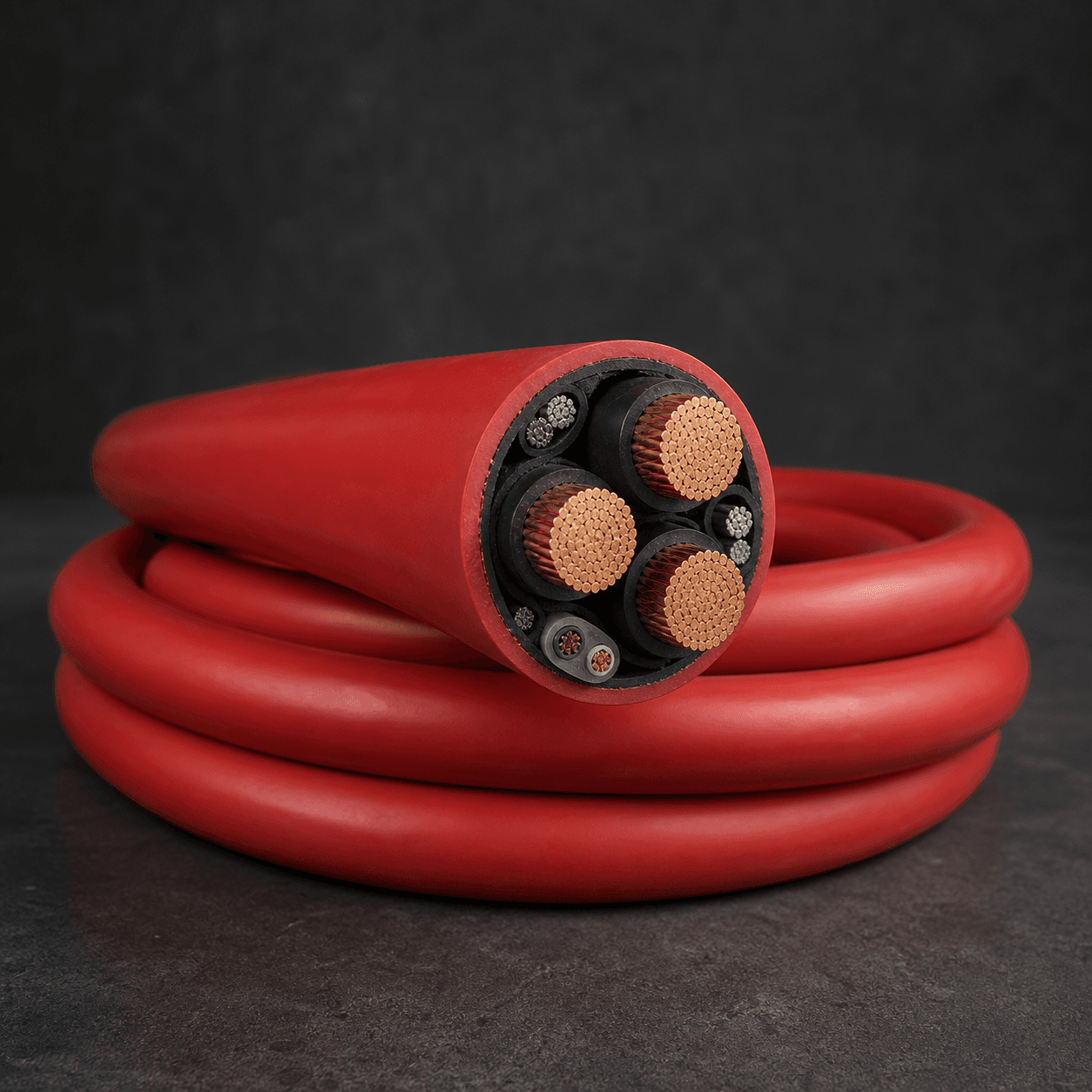
WG and WG-D serve different signal requirements
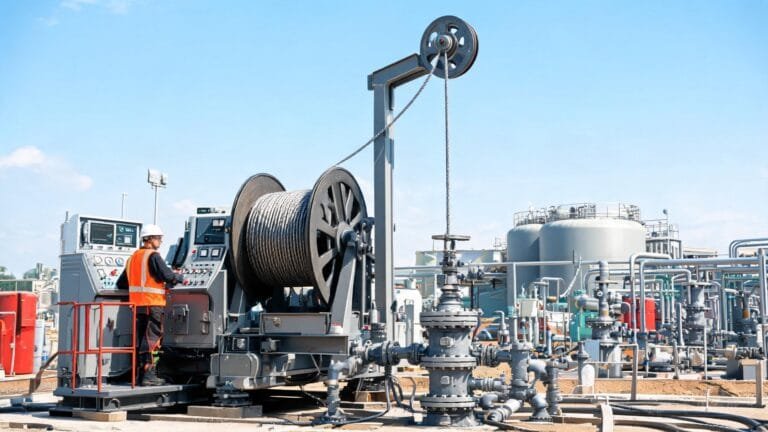
The TEBAOFLEX WG / WG-D Medium Voltage Rubber Reeling Cable family covers 3.6/6 kV through 12/20 kV systems. It is listed for container cranes with lower mounting heights, medium-duty equipment, stackers, reclaimers, ship unloaders and other motor-driven cable-reel applications.
WG is the listed standard power-cable configuration. WG-D is the listed power-and-data configuration. The presence of a data requirement—not simply a preference for a particular designation—should drive that choice. Specify the complete power, control and data schedule in the RFQ, including termination and communication requirements.
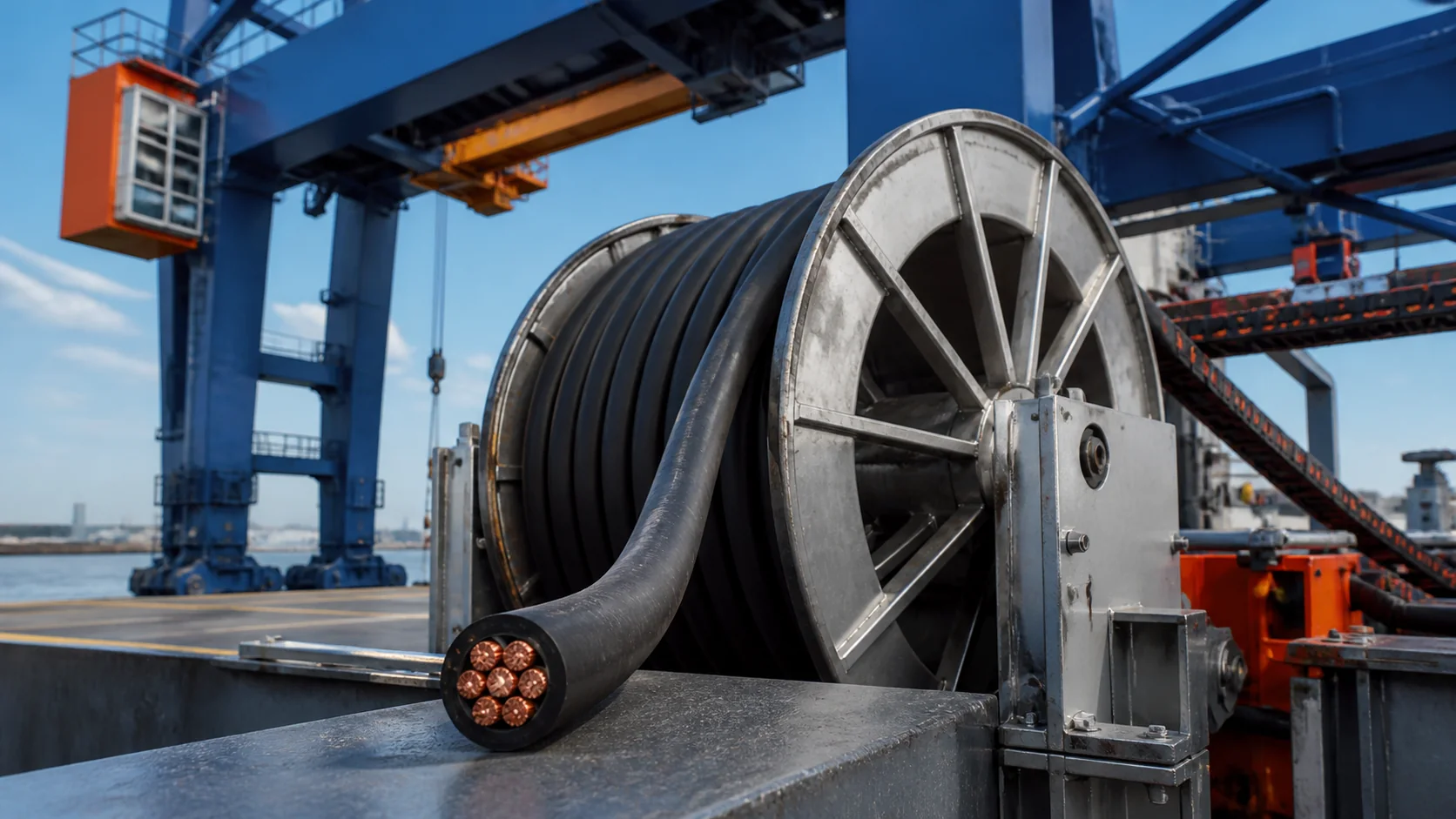
WG vs WG-D: what the listed configurations show
| Selection point | WG | WG-D |
|---|---|---|
| Listed purpose | Standard power-cable configuration | Power-and-data configuration |
| Family voltage range | WG / WG-D family: 3.6/6 kV to 12/20 kV | WG / WG-D family: 3.6/6 kV to 12/20 kV; confirm the required WG-D construction |
| Representative listed construction | At 3.6/6 kV: 3 × 25 + 3 × 25/3 | At 3.6/6 kV: 3 × 25 + 2 × 2.5/2 + 1F20 |
| Core schedule decision | Power conductors and the listed associated construction | Power conductors plus the specified data arrangement |
| Outer sheath | Red, wear-resistant PCP rubber compound | Red, wear-resistant PCP rubber compound |
| Flexible-use temperature | −35°C to +80°C | −35°C to +80°C |
| Route check | Confirm reel geometry, travel speed, bend path, tensile duty and the exact approved construction. | |
Compare the complete cable, not just the suffix
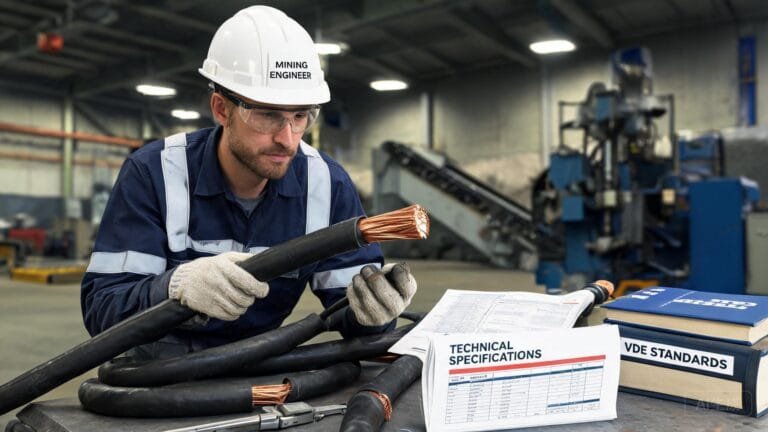
Both configurations are part of a flexible, round medium-voltage family with very fine stranded Class FS copper conductors, triple-extruded rubber insulation with inner and outer semiconducting layers, a double EPR inner sheath and a red PCP outer sheath. The family is listed as ozone-, oil-, UV- and moisture-resistant and flame-retardant to IEC 60332-1.
Those shared features do not make every construction interchangeable. The WG-D power-and-data layout must be selected against the actual communications architecture. Do not infer the meaning, number or type of additional components from the short construction notation alone; provide the required data protocol, connector arrangement and termination requirements for technical review.
Reel-duty checks that affect the final choice
- Voltage and load: confirm the required Uo/U class, maximum operating voltage, conductor size and duty cycle.
- Travel: the family listing gives a maximum horizontal travel speed of up to 120 m/min; confirm the actual equipment profile.
- Reel geometry: provide drum diameter, winding arrangement, guide system, turns, cable length and the bend-radius requirement.
- Tension: the family is listed with a tensile load-bearing capacity of 20 N/mm²; verify the permitted load for the requested construction.
- Data requirement: for WG-D, identify all required data or communication functions and their connection details.
- Environment: document temperature, oil, moisture, UV, ozone, abrasion and installation exposure.
How to prepare an accurate RFQ
Send the supply voltage, equipment type, reel arrangement, travel speed, cable length, conductor schedule and environmental conditions. State whether the equipment needs WG power-only service or the WG-D power-and-data configuration. Where data transmission is required, include the system architecture and interface requirements so the selected construction can be verified before production.
For lower-voltage reel applications, review the GMP PUR Reeling Cable. For a different medium-voltage reeling format, see the NTSFLCGEWOEU Medium Voltage Flat Reeling Cable.
Frequently asked questions
What is the main difference between WG and WG-D?
WG is the listed standard power configuration, while WG-D provides power-and-data configurations. The final construction must match the equipment’s actual power and data requirements.
What voltage range does the WG / WG-D family cover?
The published family range is 3.6/6 kV to 12/20 kV. Confirm the available conductor and data configuration for the project’s required voltage class.
Are WG / WG-D cables suitable for fixed installation?
The published page provides a fixed-installation ambient temperature range of −50°C to +80°C, but this cable family is designed for motor-driven reeling service. Confirm the application with the project requirements.
What information is needed for a WG-D quotation?
Provide voltage, power-conductor schedule, cable length, reel geometry, speed, tensile duty, environmental conditions and the required data or communication arrangement.
Request a WG / WG-D configuration review
Send your medium-voltage reeling-cable requirements to TEBAOFLEX. We can review the WG or WG-D construction against your reel and equipment details before quotation.