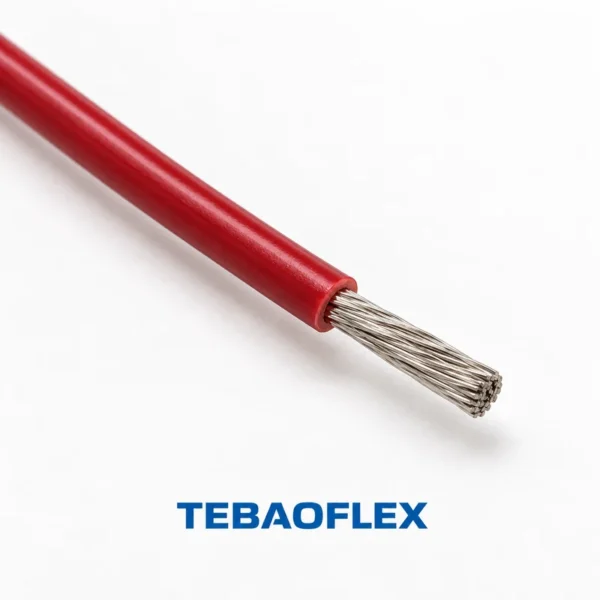
UL 1330 FEP wire is a single-conductor Appliance Wiring Material (AWM) style for protected internal wiring in appliances and equipment. The style reference specifies FEP insulation, a 200°C temperature rating and 600 V AC. For a production build, the conductor size, stranding, conductor finish, insulation color and required marking must be confirmed together; the style designation alone does not establish TEBAOFLEX inventory or approval for every possible construction.
UL 1330 FEP Wire at a Glance
| Selection item | UL AWM Style 1330 reference | What the buyer should confirm |
|---|---|---|
| Product type | Single-core high-temperature FEP hook-up wire | End-product wiring method and mechanical protection |
| Rated temperature | 200°C style reference | Hot-spot temperature, conductor finish and terminal rating |
| Rated voltage | 600 V AC style reference | Equipment circuit voltage and termination requirements |
| Insulation | FEP fluoropolymer | Color, identification and any special marking |
| Conductor | Solid or stranded | AWG, strand construction and conductor plating |
| UL style range | 30 AWG to 4/0 AWG | Actual TEBAOFLEX available sizes and dimensions |
| Referenced use | Internal wiring of appliances | Applicable end-product standard and installation limits |
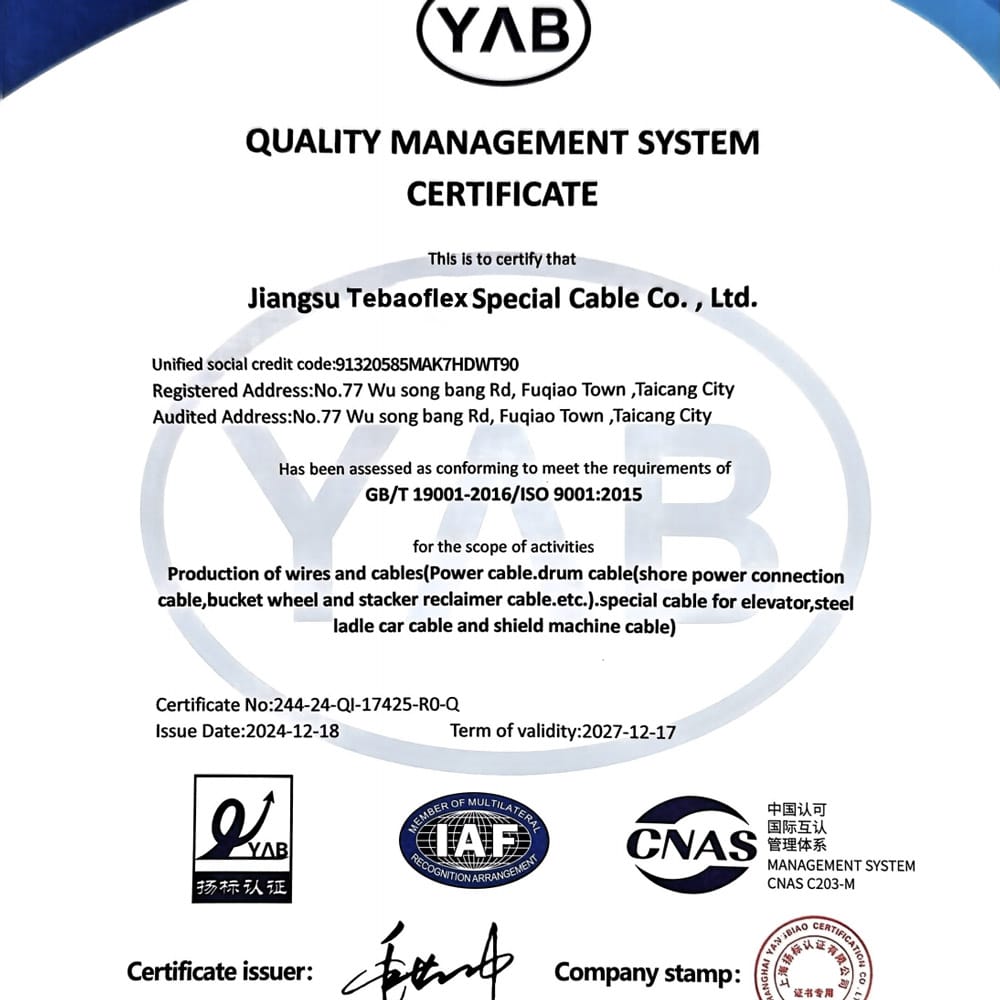
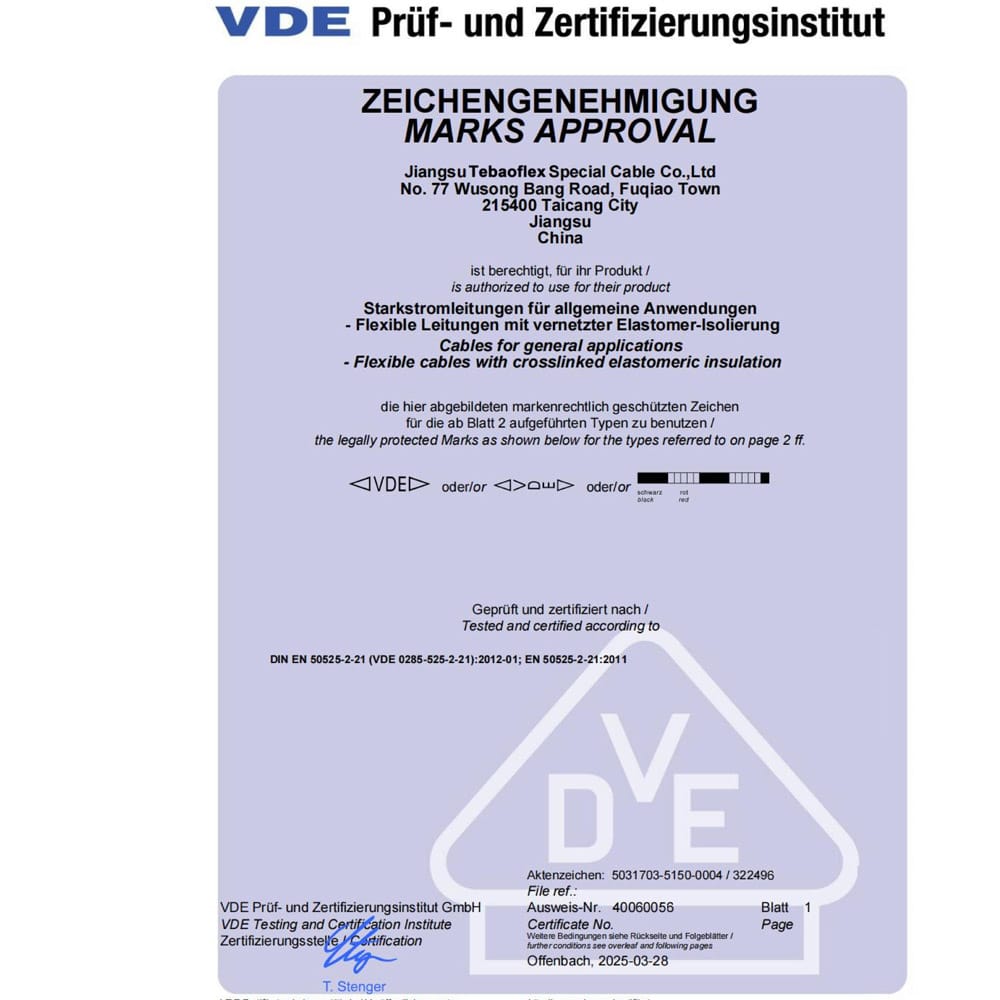
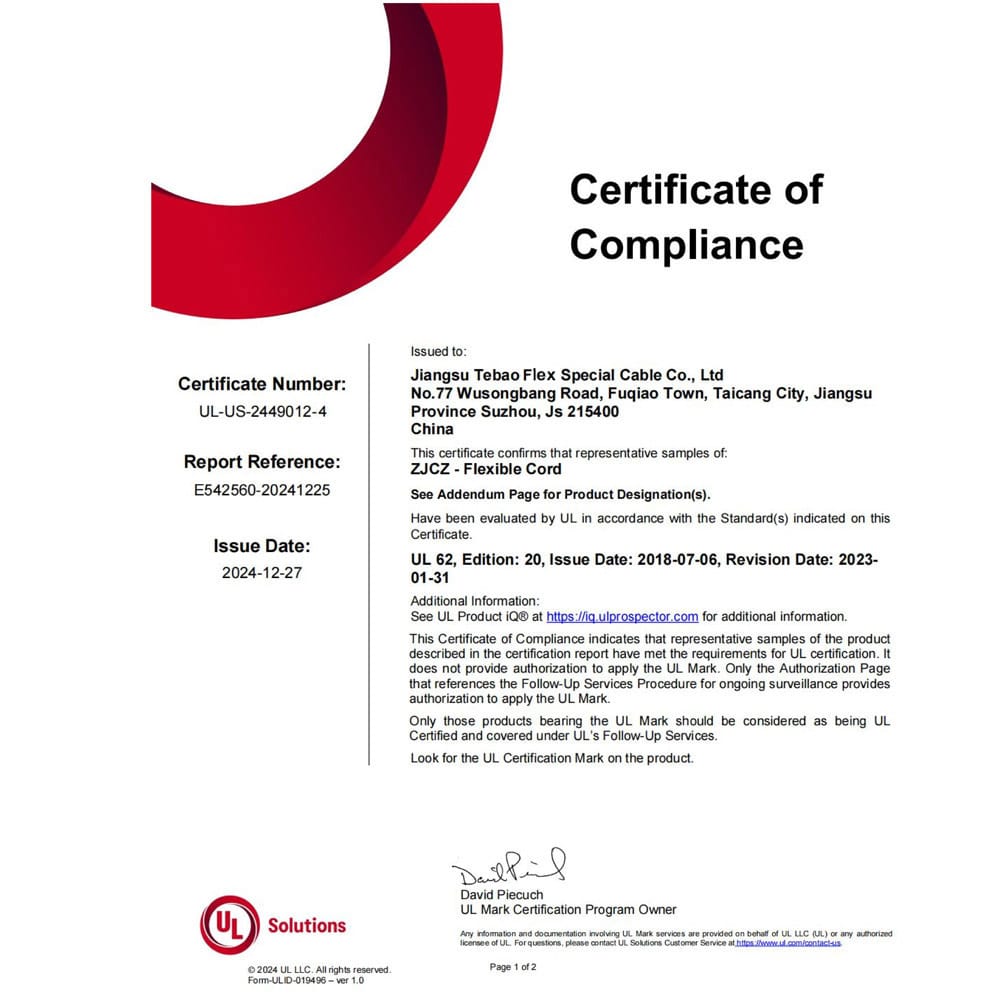
Compliance note: this page describes the UL 758 Style 1330 construction reference. Request construction-specific approval evidence and marking details for the exact AWG, conductor and insulation configuration before placing a purchase order.
What Is UL 1330 Wire Used For?
Engineers consider 200°C, 600V FEP hook-up wire for short protected connections near heat-generating components. Typical applications include electric heater leads, commercial oven wiring, appliance assemblies, ignition and burner controls, motor or electromagnetic-coil lead wires, lighting equipment, laboratory instruments and process-control equipment. These examples describe common engineering uses rather than blanket installation approvals.
The complete equipment design must account for conductor current, enclosure temperature, local hot spots, terminal materials, bend protection and the applicable end-product standard. FEP is the insulation specified by UL AWM Style 1330. If the equipment drawing calls for PTFE rather than FEP, do not treat the two material names as interchangeable. Compare the insulation requirement through the TEBAOFLEX fluoropolymer high-temperature wire overview or review the separate UL 1199 PTFE wire option.
Application Examples and Engineering Checks
| Application example | Why FEP wire may be considered | Check before selection |
|---|---|---|
| Electric heaters and ovens | Protected lead wiring near heat-generating components | Actual conductor temperature, terminal temperature and routing distance from the heat source |
| Ignition and burner equipment | Internal wiring exposed to heat cycling | Required voltage, chemical exposure, flame test and appliance approval |
| Motors and electromagnetic coils | Compact high-temperature lead-out connections | Current, starting duty, vibration, termination and conductor flexibility |
| Lighting and instruments | Protected internal wiring where FEP insulation is specified | Connector size, bend protection, color identification and equipment standard |
UL 1330 Construction and Insulation Requirements
The official historical style reference describes Style 1330 as FEP-insulated wire rated 200°C and 600 V AC, with solid or stranded conductors from 30 AWG through 4/0 AWG. It also identifies horizontal-flame performance. Optional oil- or gasoline-resistance claims apply only when the supplied construction carries the relevant marking and supporting evidence; they must not be assumed from the style number alone.
UL 1330 Insulation Thickness by AWG Group
The values below are style minimums. They are not measured TEBAOFLEX outside diameters, nominal wall values or a list of stocked sizes.
| Conductor size | Minimum average insulation | Minimum at any point |
|---|---|---|
| 30–10 AWG | 20 mil (0.51 mm) | 18 mil (0.46 mm) |
| 9–2 AWG | 30 mil (0.76 mm) | 27 mil (0.69 mm) |
| 1 AWG–4/0 AWG | 45 mil (1.14 mm) | 40 mil (1.02 mm) |
Source: UL AWM Style 1330 historical style page. UL states that this historical page is no longer updated, so current style information and the selected product’s approval evidence must be checked before ordering.
Available AWG Sizes and Dimensional Data
The published UL range of 30 AWG through 4/0 AWG describes what the style permits; it is not a statement that every size is stocked or available in every conductor finish. TEBAOFLEX provides a construction-specific data sheet for the selected wire. This avoids using a third-party manufacturer’s strand count, outside diameter or weight as TEBAOFLEX product data.
For an accurate size chart and quotation, specify the required AWG, solid or stranded conductor, preferred conductor plating, insulation color, printed marking, reel length and order quantity. If the wire must fit a connector, gland, automatic cutting tool or restricted routing space, include the maximum permitted outside diameter. TEBAOFLEX will then confirm the buildable strand construction, nominal insulation, finished diameter, approximate weight and packaging for that configuration.
How to Select Conductor Size and Finish
Begin with the equipment drawing and calculate conductor size from the circuit load, permitted temperature rise, grouping, enclosure conditions and terminal limitations. Do not select an AWG from the 600V rating alone. A style-wide conductor range also does not provide one universal ampacity value because current-carrying capacity depends on the complete installation.
Conductor finish is especially important for 200°C service. Specify the required temperature, conductor size and termination process, then confirm that the chosen finish and strand construction are compatible with the applicable approval and production marking. When repeated movement is expected, provide the bend frequency and movement type; standard FEP hook-up wire should not automatically be treated as a continuous-flex, robotic, reeling or torsion cable.
Installation Limits and Unsuitable Applications
- Use only as protected internal equipment wiring when permitted by the applicable end-product design and standard.
- Do not substitute UL 1330 hook-up wire for building wire, portable power cable or fixed outdoor installation cable.
- Do not specify it for direct burial, unprotected abrasion, reeling, festoon systems or continuous torsion without a separately engineered cable construction.
- Do not claim oil or gasoline resistance unless the exact supplied construction has the optional marking and supporting test evidence.
- Do not operate above the verified temperature rating of the conductor, insulation, terminals or complete assembly.
UL 1330 FEP Wire Questions
What is UL 1330 wire?
UL 1330 is an Appliance Wiring Material style reference for single-conductor FEP-insulated wire used in protected internal appliance wiring. The historical style page lists 200°C, 600 V AC and a 30 AWG to 4/0 AWG conductor range.
Is UL 1330 insulated with FEP or PTFE?
The UL 1330 style reference specifies FEP. If a drawing requires PTFE, select and verify an appropriate PTFE-insulated style instead of substituting the material name.
Which UL 1330 AWG sizes can TEBAOFLEX supply?
The style permits 30 AWG through 4/0 AWG, but actual TEBAOFLEX availability depends on conductor construction, finish, color, marking and order quantity. Send the required AWG for a verified dimensional sheet and supply confirmation.
Can UL 1330 wire be used as building wire?
Do not assume so. UL 1330 is an AWM style for protected internal appliance wiring, not a general building-wire designation. The equipment designer must verify the installation against the applicable electrical and end-product requirements.
Is UL 1330 suitable for continuous flexing?
A standard FEP hook-up wire construction should not be selected as a continuous-flex, robotic, festoon or reeling cable without specific dynamic test evidence. Provide the movement, bend radius and cycle requirement so a suitable flexible construction can be reviewed.
What information is required for a quotation?
Send the AWG size, preferred stranding and conductor finish, insulation color, required marking, application temperature, circuit voltage, target outside diameter, reel length, quantity and end-use equipment. A drawing or photograph of the existing printed marking is also helpful for cross-referencing.
Request a UL 1330 Wire Specification and Quote
TEBAOFLEX can review your equipment drawing and requested configuration, then confirm buildable dimensions, applicable documentation, marking and supply terms. Send your UL 1330 wire requirements for a construction-specific response, or explore the high-temperature and specialty cable range when another insulation system is required.
Technical content reviewed September 2026. The UL style reference and construction-specific approval scope should be reconfirmed for the ordered wire.