
Introduction to High Temperature Cables
Steel mills, foundries, cement plants, and glass manufacturing facilities operate at temperatures that destroy standard cables within hours. Furnace areas, continuous casting platforms, hot rolling mills, and ladle preheat stations expose electrical wiring to radiant heat from molten metal, ambient temperatures exceeding 200°C, and occasional splashes of slag or hot metal. High temperature cables are the specialized wiring solutions engineered to maintain electrical performance in these extreme thermal environments where conventional PVC and rubber cables cannot survive.
From thermocouple extension wires in furnace zones to power supply cables for electric arc furnace electrodes, high temperature cables use advanced insulation materials—silicone rubber, fiberglass, mica, fluoropolymers, and mineral compounds—to deliver reliable service at temperatures from 180°C to 1000°C. TEBAOFLEX manufactures a comprehensive range of high temperature cables for steel, foundry, and industrial heat processing applications.
What Are High Temperature Cables?
High temperature cables are power, control, and instrumentation cables with insulation and sheath materials specifically engineered for continuous operation above 90°C (the limit of standard EPR/XLPE insulation). Key material categories include:
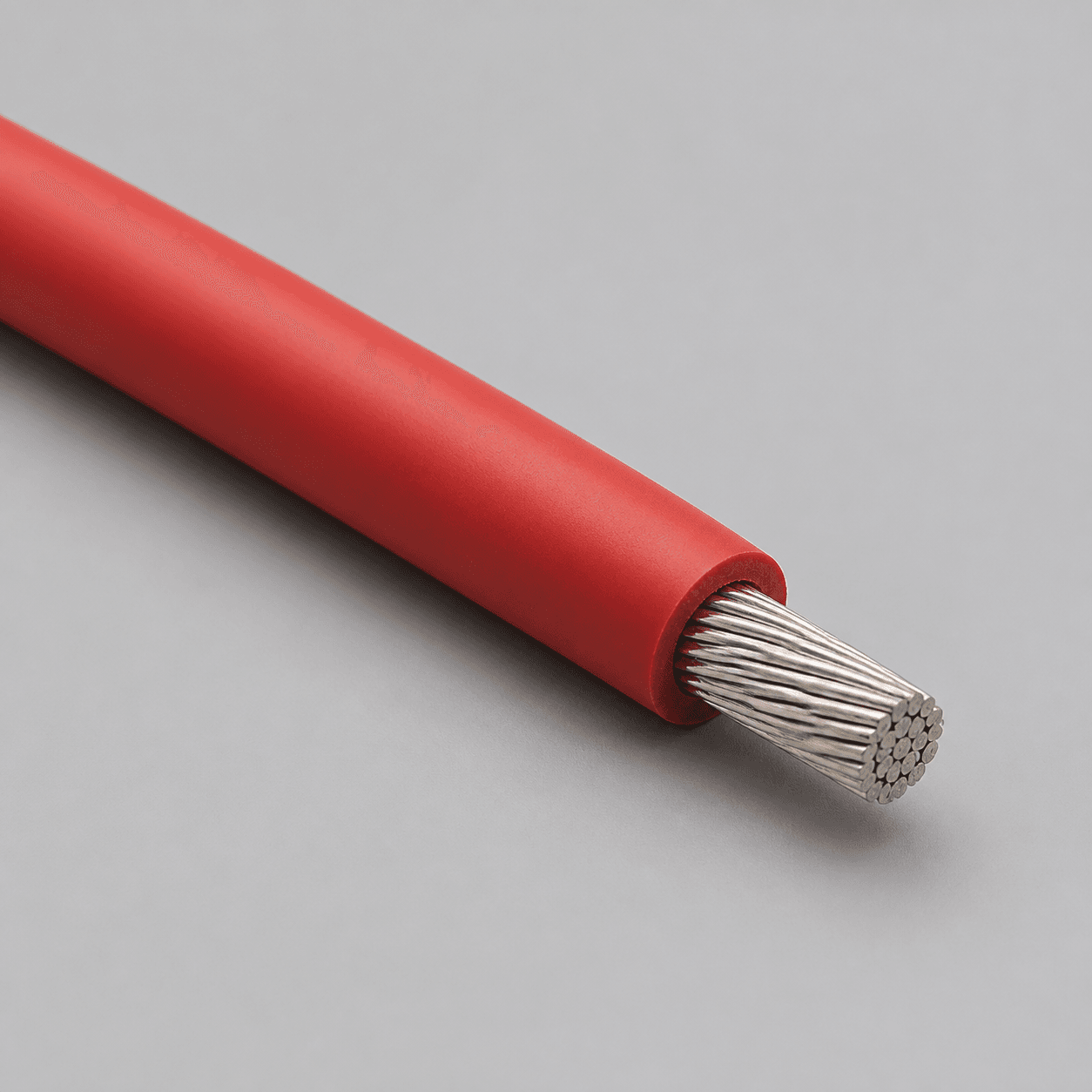
- Silicone rubber: Continuous rating 180°C, short-term to 250°C. Excellent flexibility, inherently flame retardant, low smoke. Used for furnace area wiring, steel mill power, and high-temperature equipment supply.
- Fiberglass (glass yarn/glass braid): Continuous rating 400°C+. Made from E-glass yarn impregnated with high-temperature resin. Used for thermocouple extension wires, furnace instrumentation, and high-heat area wiring.
- Fluoropolymer (PTFE, FEP, PFA): Continuous rating 200°C to 260°C. Excellent chemical resistance, low dielectric loss. Used for high-temperature instrumentation and signal cables.
- Mica tape: Withstands temperatures above 1000°C. Applied as a fire-resistant layer over conductors. Used in combination with other insulation materials for fire-survival cables.
- Mineral insulation (MI): Magnesium oxide insulation inside copper or alloy sheath, rated to 1000°C+. Used for furnace thermocouples, heater circuits, and life-safety fire circuits.
The selection of insulation material depends on the maximum ambient temperature, the type of heat exposure (radiant vs. conductive vs. convective), and the required cable flexibility. Explore our high temperature cable product range for available options.
Insulation Material Comparison
Choosing the correct insulation material is critical for long-term cable performance in high-temperature applications:
| Property | Silicone Rubber | Fiberglass | Fluoropolymer (PTFE) | Mineral (MI) |
|---|---|---|---|---|
| Max Continuous Temp | 180°C | 400°C+ | 260°C | 1000°C+ |
| Short-Term Temp | 250°C | 500°C | 300°C | 1200°C |
| Flexibility | Excellent | Fair (stiff) | Good | Poor (rigid) |
| Dielectric Strength | 20 kV/mm | 4 kV/mm | 60 kV/mm | N/A (solid) |
| Flame Retardant | Inherent | Inherent | Inherent | Inherent |
| Moisture Resistance | Good | Fair (treatments needed) | Excellent | Excellent (sealed) |
| Typical Voltage | up to 5 kV | up to 600V | up to 1 kV | up to 1 kV |
| Cost Index | Medium | Low-Medium | High | Very High |
Construction and Design Features
Silicone Rubber Cables
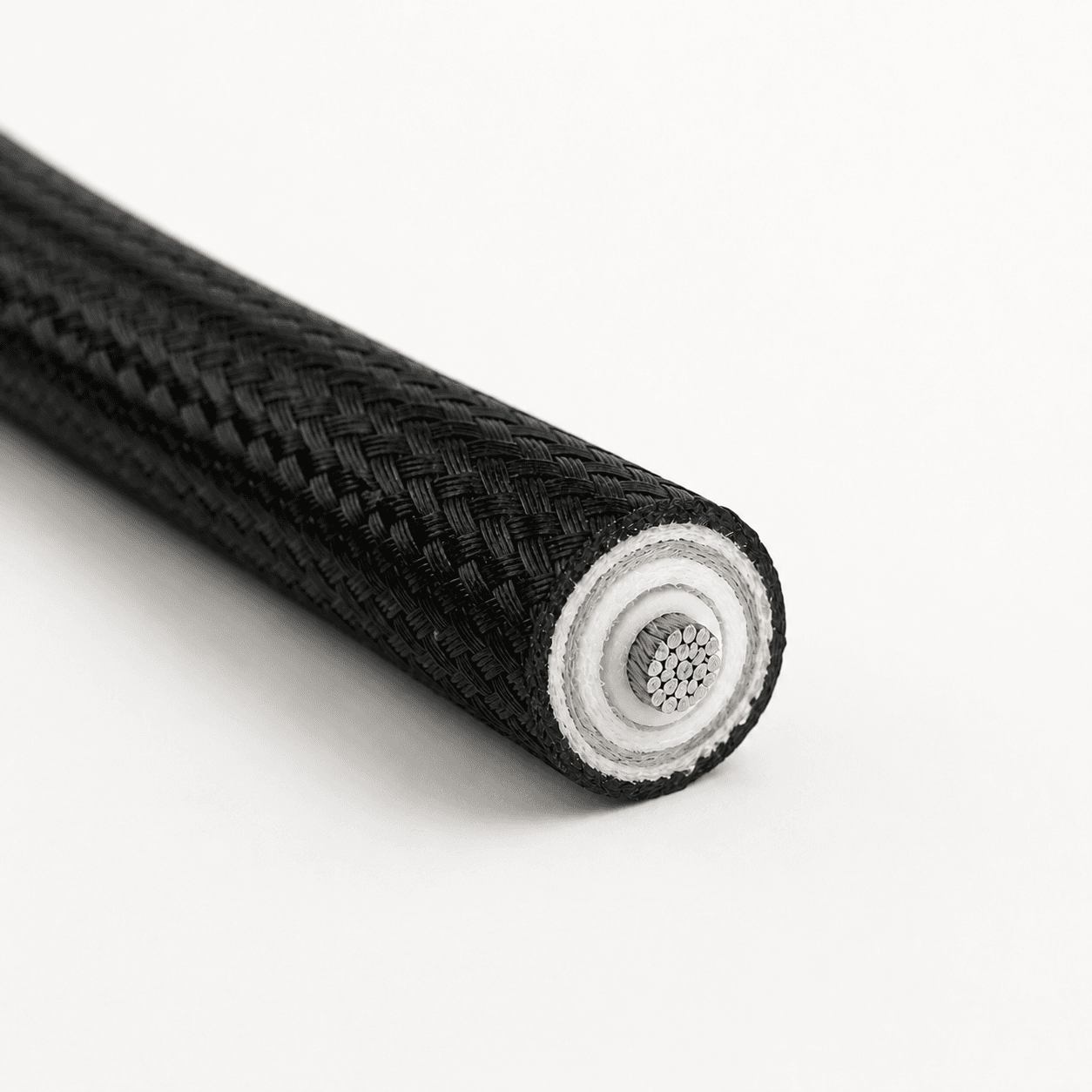
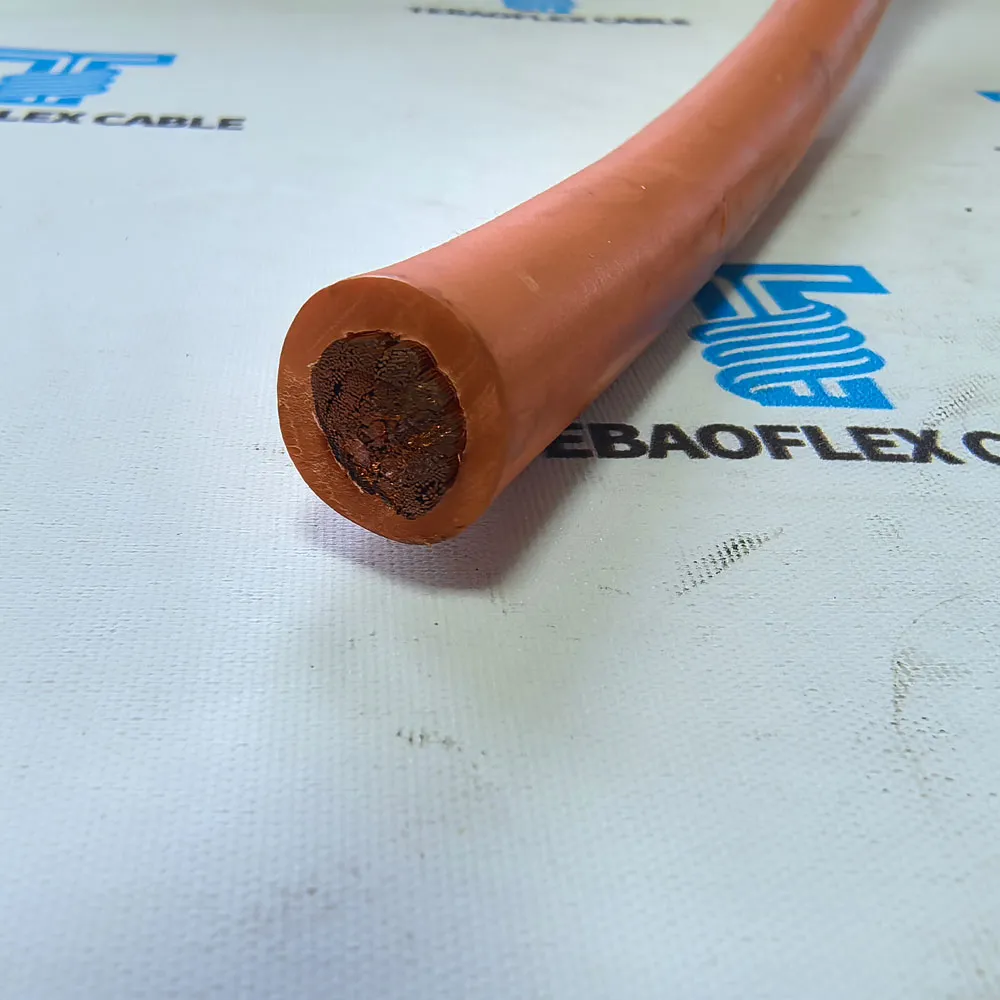
Silicone rubber insulation (designated as type in IEC 60245-8 / EN 50363-1) provides the best combination of high temperature performance and flexibility. TEBAOFLEX silicone cables feature:
- Class 5 tinned or nickel-plated copper conductors for heat-resistant termination
- Silicone rubber insulation rated to 180°C continuous
- Optional fiberglass braid overcoat for additional mechanical protection (rated to 200°C with overbraid)
- Voltage ratings from 300V to 5kV for instrumentation and power applications
- Flame retardant per IEC 60332-1, low smoke per IEC 61034
Fiberglass Insulated Cables
For temperatures beyond silicone’s 180°C limit, fiberglass yarn insulation provides protection to 400°C+. TEBAOFLEX fiberglass cables use:
- Nickel-plated copper conductors for high-temperature corrosion resistance
- E-glass yarn applied in multiple layers with high-temperature resin impregnation
- Optional stainless steel or nickel alloy braid for mechanical and thermal protection
- Commonly used for thermocouple extension wires (Type K, J, T, N) and furnace instrumentation
Steel and Furnace Industry Applications
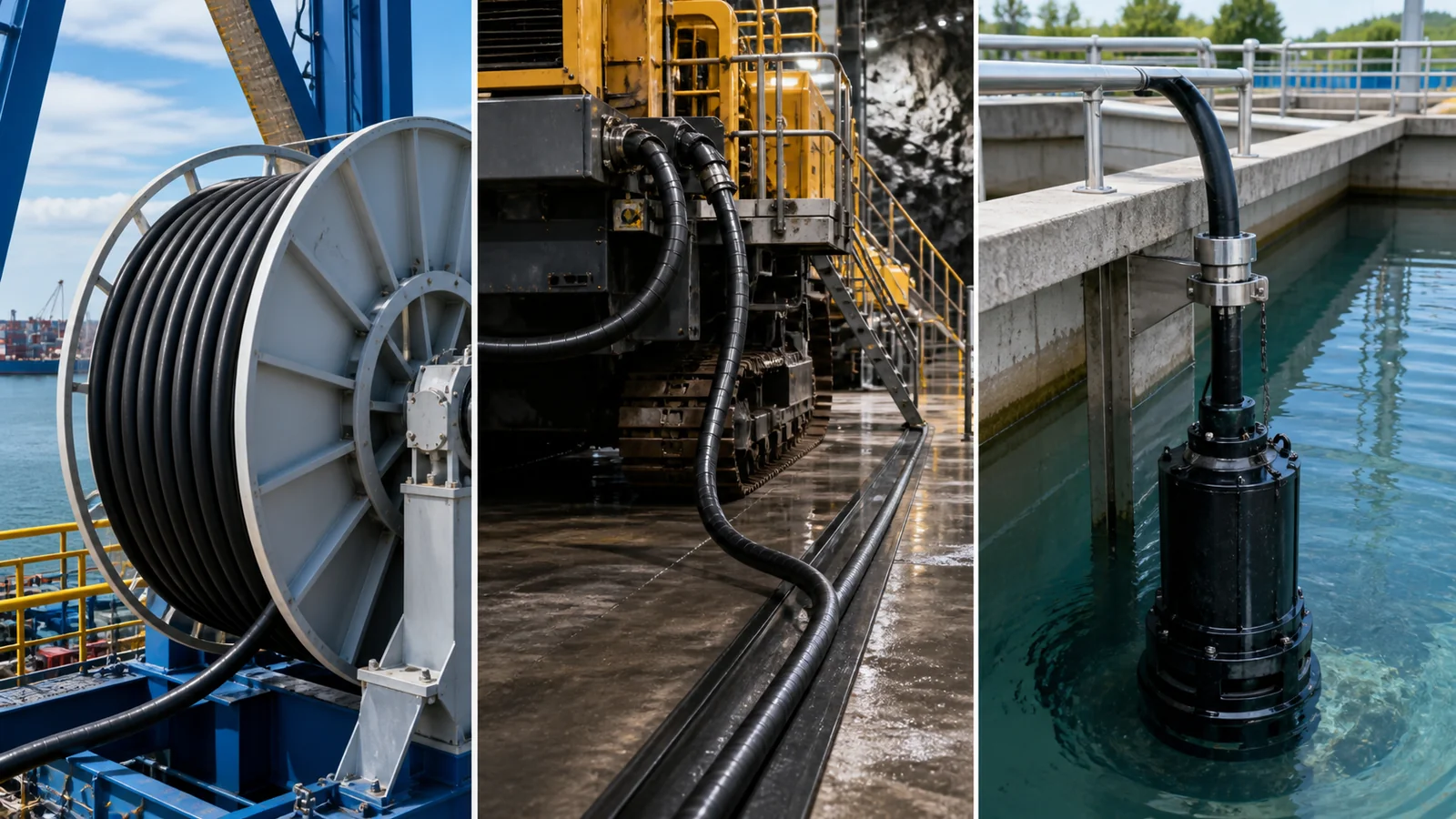
High temperature cables serve critical functions across steel and metallurgical operations:
Electric Arc Furnaces (EAF)
Power supply cables for EAF electrodes carry thousands of amperes at medium voltage in an environment of intense radiant heat. Water-cooled busbars are primary, but auxiliary circuits and electrode regulation systems require high-temperature cables rated for the furnace vault environment. See steel industry application cases.
Continuous Casting
Mould level sensors, break-out prediction systems, and strand cooling control instrumentation use high-temperature signal cables routed along the casting platform where ambient temperatures regularly exceed 150°C.
Hot Rolling Mills
Sensor cables for thickness gauges, temperature monitors, and position transducers along the rolling mill line are exposed to radiant heat from red-hot steel. Silicone-insulated cables provide the flexibility and temperature resistance needed for mill equipment.
Foundry and Induction Melting
Induction furnace coil leads and power supply cables require water-cooled designs or high-temperature silicone insulation for the areas near the furnace throat. Thermocouple wires for temperature measurement use fiberglass or mineral insulation.
Cement and Glass Industry
Kiln drive motors, burner control systems, and process instrumentation in cement and glass manufacturing operate in environments with sustained temperatures above 200°C. Mineral insulated cables are used for the hottest zones.
Technical Specifications
| Parameter | Silicone Power | Fiberglass TC Wire |
|---|---|---|
| Voltage Rating | 600V / 5kV | 300V |
| Conductor | Tinned/Ni Cu, Class 5 | Ni-plated Cu, solid |
| Insulation | Silicone rubber | Fiberglass yarn |
| Max Temperature | 180°C (200°C with braid) | 400°C (500°C short-term) |
| Outer Cover | Silicone / fiberglass braid | Stainless steel braid |
| Flame Standard | IEC 60332-1 | Inherent (non-combustible) |
| Min Bending Radius | 6 × D | 10 × D (rigid) |
| Standards | IEC 60245 / UL 62 | ASTM E230 / IEC 60584 |
Selection Guide for High Temperature Cables
- Determine maximum ambient temperature: Measure the hottest point the cable will be exposed to, including radiant heat from nearby equipment
- Select insulation material: Silicone (180°C), fiberglass (400°C+), fluoropolymer (260°C), or mineral (1000°C+) based on temperature
- Choose conductor type: Tinned copper for up to 200°C; nickel-plated copper for 200-400°C; nickel or stainless alloy for higher temperatures
- Determine voltage requirement: Low voltage for instrumentation and control, medium voltage (up to 5kV) for power applications
- Evaluate mechanical environment: Fiberglass braid or stainless steel armor for abrasion protection; flexible silicone for dynamic applications
- Consider moisture exposure: Silicone and fluoropolymer resist moisture; fiberglass needs treatment or sheath; mineral insulation must be sealed
- Verify certifications: Confirm IEC, UL, or ASTM compliance for the application — view our certifications
- Request engineering consultation: For extreme temperature zones, contact TEBAOFLEX for customized high-temperature cable solutions
Why Choose TEBAOFLEX High Temperature Cables
TEBAOFLEX manufactures high temperature cables for steel, foundry, cement, and glass industries worldwide:
- Silicone rubber cables rated 180°C (200°C with fiberglass overbraid) up to 5kV
- Fiberglass insulated thermocouple extension wires (Type K, J, T, N) rated to 400°C+
- Fluoropolymer (PTFE/PFA) signal cables for 260°C chemical and thermal environments
- Mineral insulated cables for ultra-high temperature furnace zones
- Custom designs with nickel-plated conductors, stainless steel armor, and multi-conductor configurations
Our custom manufacturing services support metallurgical projects from furnace design to commissioning. For specifications and high-temperature test data, contact TEBAOFLEX or browse our product catalog.
Request a Quote
Need high temperature cables for your furnace or steel mill? Our engineering team will respond within 24 hours with detailed specifications, temperature ratings, and pricing. Submit your high-temperature cable inquiry to TEBAOFLEX.