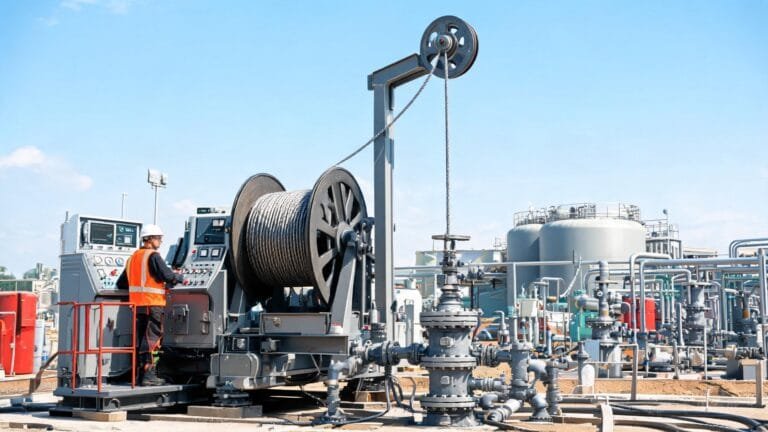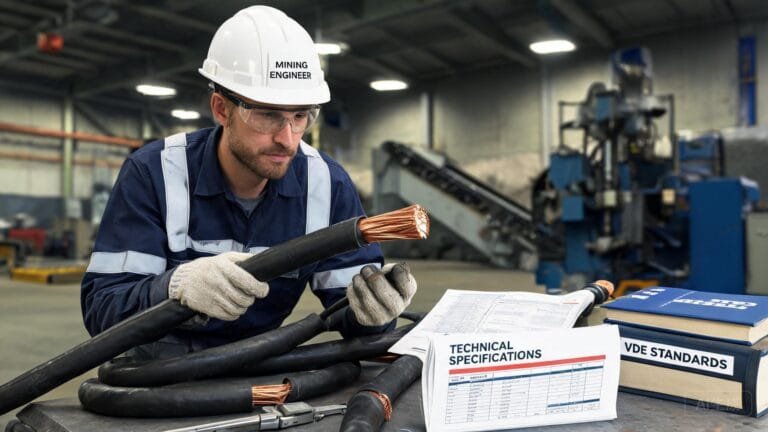

A port crane spreader basket cable is a flexible power, control or signal cable designed to travel vertically between crane equipment and the spreader, then coil freely into a collector basket. It must be selected as part of the whole motion system: cable construction, hanging route, basket geometry and terminations all affect service life.
For container-handling equipment, this is not simply a cable that happens to be flexible. Unlike a cable that winds on a powered reel or runs through a festoon system, a spreader basket cable repeatedly hangs, moves and returns into a gravity-feed basket. The selected design therefore needs to suit the movement pattern and the installation—not only the required number of cores.
At TEBAOFLEX special cable solutions, project discussions start with the actual crane route and duty cycle. That makes it possible to match the cable construction and support concept to the collector-basket arrangement before procurement or replacement work begins.
Why vertical basket operation needs a purpose-built cable
A spreader cable route is exposed to repeated vertical movement, suspended weight, acceleration and deceleration. As the spreader changes position, the cable must enter and leave the basket without being forced into an unsuitable bend or trapped at the basket edge. Wind can also disturb how the cable settles. These conditions are why container-crane guidance treats the cable, basket and installation method as one connected application.
The PEMA guidance on electrical cables for container cranes notes that spreader basket cables are manufactured for vertical hoisting and gravity coiling, and that basket design must suit the cable dimensions and installation arrangement. It also highlights the value of manufacturer installation guidance where routes and basket designs differ.
In practice, the specification conversation should cover more than conductor size. It should include:
- vertical travel, lifting speed and duty cycle;
- the cable’s hanging length, self-weight and permitted termination loads;
- basket entry, exit and free-coiling space;
- wind exposure, sway and any twisting tendency;
- power, control, communication and fibre requirements; and
- the planned inspection and replacement process.
What to inspect in a spreader basket cable cross-section
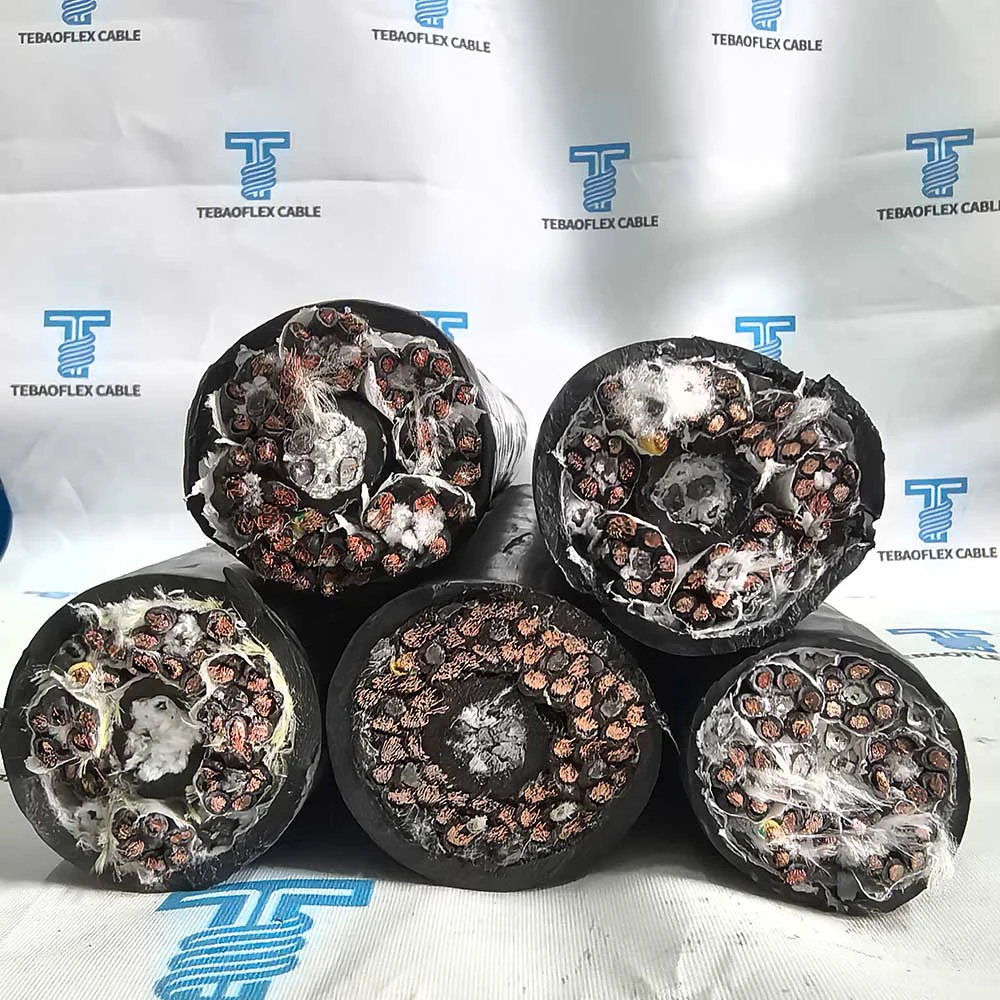
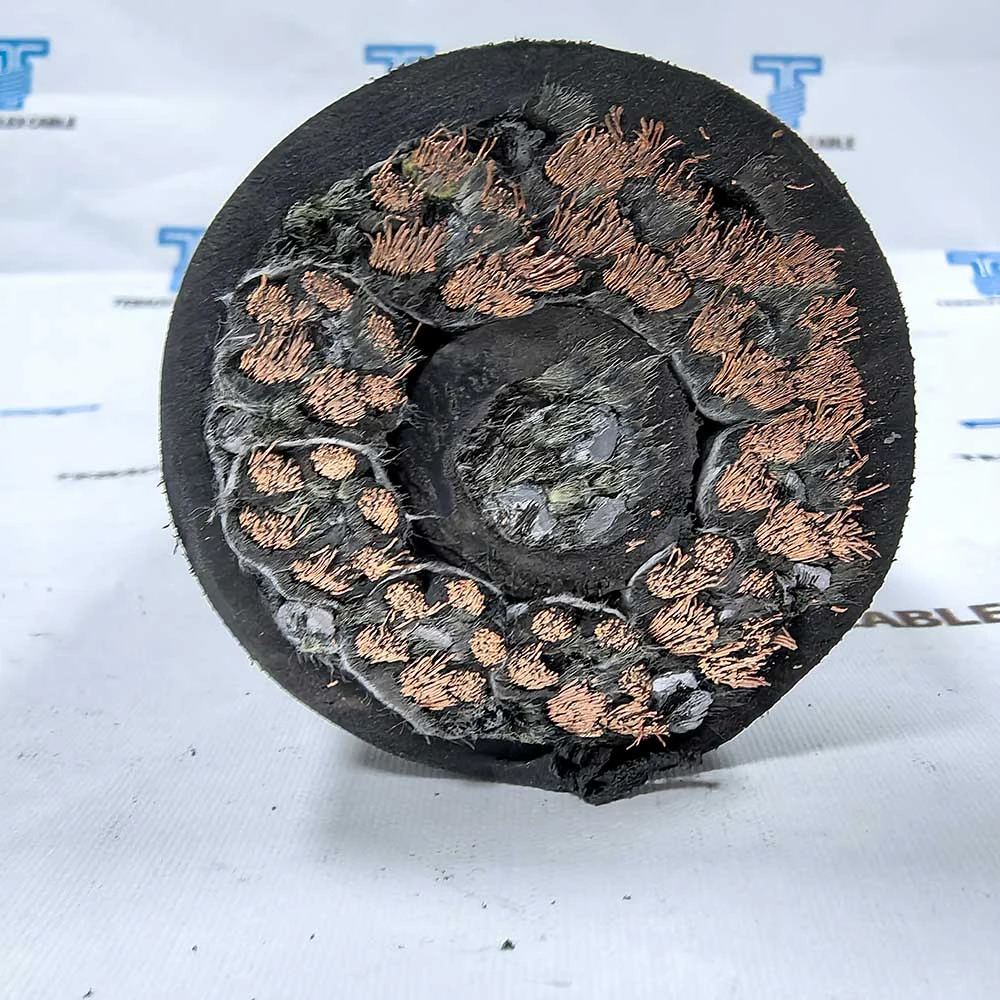
A cross-section is useful for checking whether the delivered cable visually matches the intended multicore arrangement. The supplied TEBAOFLEX images show many fine-stranded copper conductors, individually insulated cores and internal textile or filler areas. These features are relevant to flexibility and core organisation, but the image alone does not establish an exact material compound, voltage rating, tensile capability or final approval for a crane.
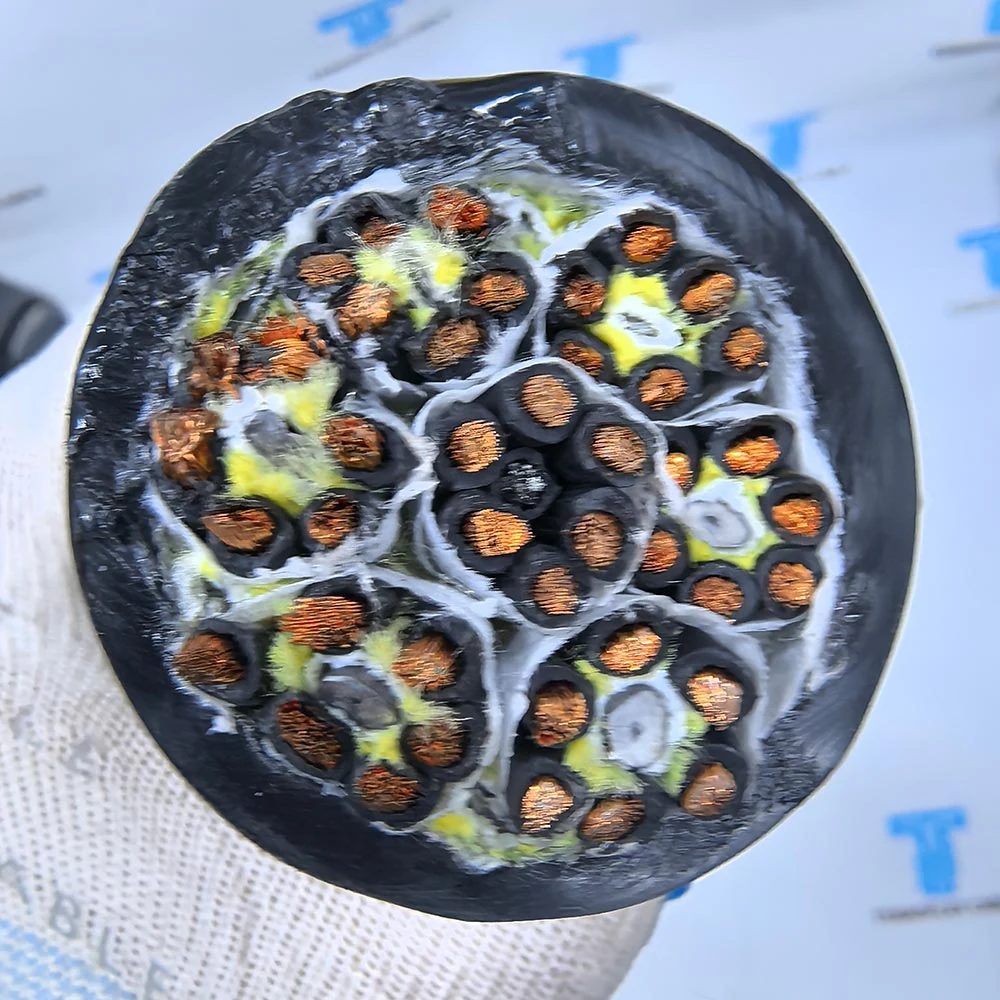
During incoming inspection or failure analysis, look for consistent conductor stranding, clear identification of the intended power and control groups, sound insulation around each core, and an undamaged outer sheath. Where the design includes a central support element, screened pairs, fibre or data components, these should be confirmed from the approved construction drawing rather than assumed from a cut face.
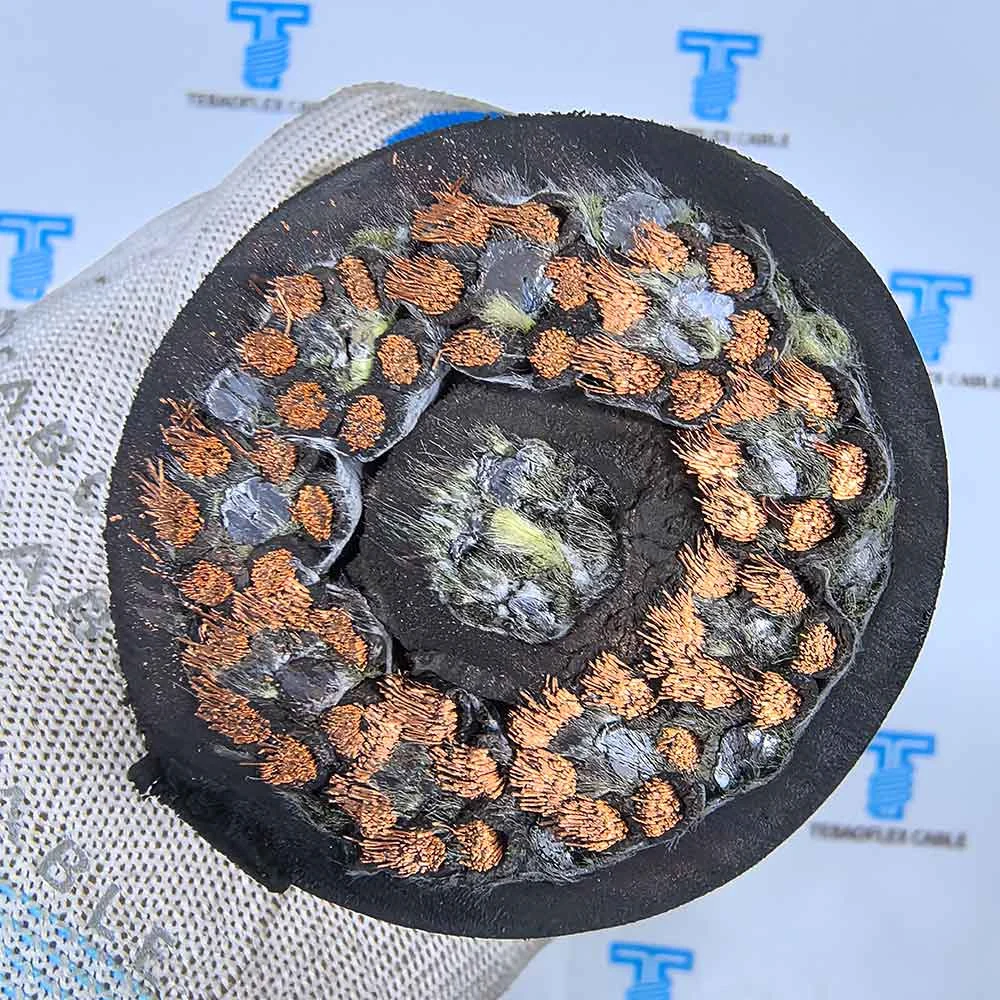
This distinction matters during replacement: two cables can look similar at a glance but differ in core allocation, support arrangement, signal compatibility or sheath design. Always check the project specification, cable marking and termination schedule before approving a substitute.
Four interfaces to check before selecting the cable
1. Cable construction
Define the functions to be carried—power, control, signal, data or fibre—and keep the core layout aligned with the terminal plan. For a documented product option, see the Port Crane Spreader Basket Cable range. If the application is a 300/500 V high-speed container-crane control route, the YSLTOE-J Spreader Basket Cable page provides a relevant starting point for discussion.
2. Vertical route and termination
The top and bottom terminations must manage the cable’s suspended load without transferring unplanned force into conductor connections. Confirm the clamp design, strain-relief method, available space and cable orientation. A cable should not be asked to correct a route that is already causing rubbing, pinching or torsional loading.
3. Collector basket
The basket must give the cable adequate room to coil and settle naturally. There is no responsible one-size-fits-all basket dimension: the required space depends on the cable outside diameter, construction, hanging length and operating conditions. Review the basket lip, entry path, drainage, accumulated debris and any points where the cable can snag.
4. Motion environment
Record wind exposure, salt-laden air, temperature, crane cycle rate and maintenance access. These are service inputs, not optional notes. They help the cable supplier and crane team agree the correct sheath, support approach and inspection intervals for the actual port environment.
Port crane spreader basket cable selection checklist
| Information to provide | What to record | Why it matters |
|---|---|---|
| Crane and spreader type | Equipment model, spreader arrangement and application | Sets the overall cable route and function. |
| Vertical travel | Maximum hanging length and travel path | Determines suspended length and basket capacity needs. |
| Motion duty | Speed, acceleration, cycles and operating hours | Defines the repetitive mechanical demand. |
| Basket details | Dimensions, entry/exit shape, mounting and drainage | Helps prevent forced bending, snagging and poor coiling. |
| Electrical functions | Power, control, signal, data and fibre requirements | Confirms core allocation and any special components. |
| Terminations | Top/bottom clamps, strain relief and connection schedule | Protects cores from unintended tensile load. |
| Operating environment | Wind, salt, temperature, contamination and access | Supports appropriate material and maintenance decisions. |
| Existing cable evidence | Marking, photos, cut sample and failure history | Helps compare the replacement with the installed system. |
For related movement-system decisions, read how to choose the right reeling cable for port and crane equipment. Reeling and basket applications are different, but both benefit from defining motion, termination and environmental conditions before selecting a cable.
Installation and maintenance checks
Before commissioning, confirm that the cable can hang without rubbing against sharp edges, enter the basket without being pinched, and settle without forced guidance. Check clamps and strain relief against the manufacturer’s installation instructions, then observe several normal operating cycles from a safe position. The cable should be monitored as a system: an otherwise suitable cable can suffer premature damage if the basket, route or anchoring point introduces the wrong mechanical stress.
During scheduled maintenance, inspect the outer sheath, basket contact points, clamps, cable markings and visible coiling behaviour. If a sample is cut for investigation, compare the observed core layout with the approved construction drawing and termination records. Do not make a replacement decision from appearance alone.
Frequently asked questions
Is a spreader basket cable the same as a reeling cable?
No. Both are designed for moving equipment, but a basket cable is selected for vertical hanging and gravity coiling in a collector basket. A reeling cable is selected around a powered reel and its own bending and tensile conditions.
Can any flexible multicore cable be used for a vertical basket route?
No. Flexibility alone does not confirm suitability. The route, suspended load, coiling behaviour, core functions and termination method must all be evaluated for the crane application.
Can the cable include data or fibre components?
Container-crane cable systems can be specified with power, control, signal and communication elements where the project requires them. Confirm the required functions and interface details before selecting the construction.
Why include cross-section photos in the RFQ?
Photos of the installed cable, marking and a properly prepared cut sample can help identify the existing arrangement and document a failure. They are supporting evidence; the approved data sheet remains the specification reference.
What should be sent for a replacement-cable quotation?
Send the existing cable marking, required core functions, outside diameter if known, vertical travel, basket dimensions, termination photos, duty details and the operating environment. You can send your port crane requirements to the TEBAOFLEX technical team for a project-specific review.
Specify the cable with the complete crane route in mind
A reliable port crane spreader basket cable is selected by looking beyond the conductor count. Verify the vertical route, basket behaviour, terminations, environment and electrical functions together. With clear operating data and cross-section evidence, TEBAOFLEX can help turn a replacement enquiry into a documented, application-focused cable proposal.
Last reviewed: August 2026. This article is technical guidance. Final cable suitability must be confirmed against the approved project specification and installation conditions.