
(N)TSCGEWOEU vs (N)TSCGEWOU: What’s the Difference?
Both (N)TSCGEWOEU and (N)TSCGEWOU are medium voltage reeling and trailing cables for mining applications, manufactured to VDE 0250-813. The key difference is in the insulation material: (N)TSCGEWOEU uses EPR (ethylene propylene rubber) with “E” designation, while (N)TSCGEWOU uses a different rubber compound with “O” designation. This difference affects voltage rating, temperature performance, and application suitability.
TEBAOFLEX manufactures both types. View (N)TSCGEWOEU product page and our comparison guide below.
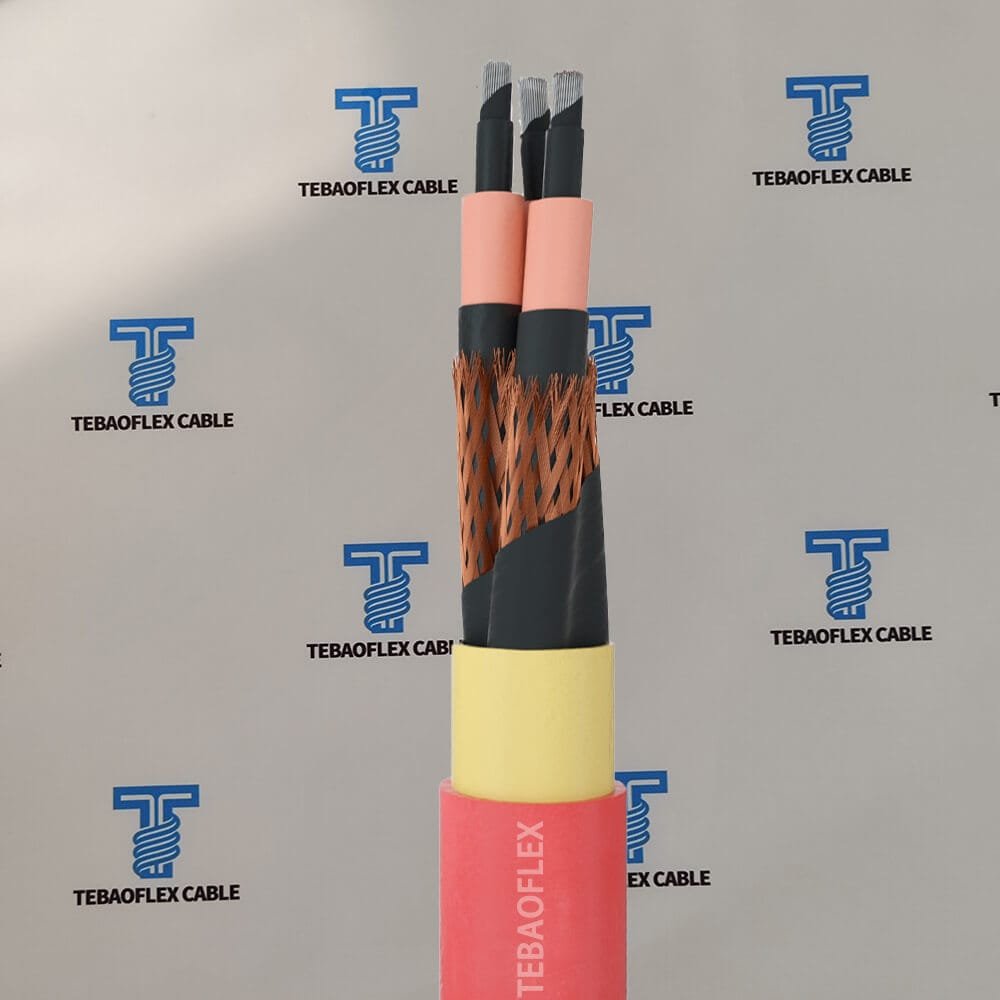
Designation Breakdown
| Element | (N)TSCGEWOEU | (N)TSCGEWOU |
|---|---|---|
| (N) | Neoprene (CR) rubber sheath | Neoprene (CR) rubber sheath |
| T | Mining cable type | Mining cable type |
| S | Screened construction | Screened construction |
| C | Copper wire screen | Copper wire screen |
| G | With earth conductor | With earth conductor |
| E vs O | E = EPR insulation | O = OTR rubber compound |
| W | Rubber sheath | Rubber sheath |
| EU vs U | EU = enhanced version | U = standard version |
| Standard | VDE 0250-813 | VDE 0250-813 |
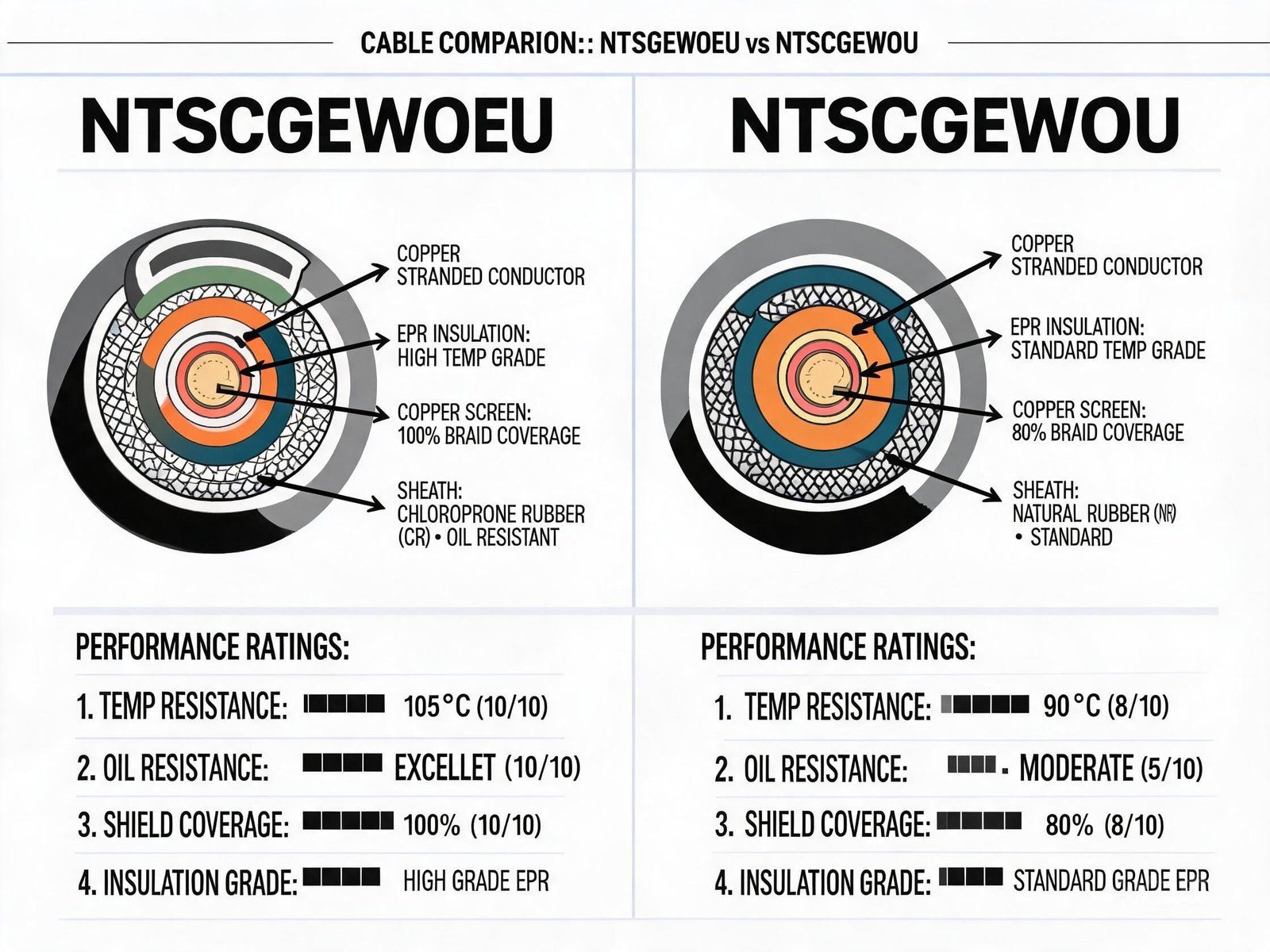
Performance Comparison
| Property | (N)TSCGEWOEU (EPR) | (N)TSCGEWOU (OTR) | Advantage |
|---|---|---|---|
| Max voltage | 18/30kV | 12/20kV | TSCGEWOEU |
| Max conductor temp | 90°C | 70°C | TSCGEWOEU |
| Insulation type | EPR | OTR rubber | TSCGEWOEU |
| Dielectric strength | Higher | Standard | TSCGEWOEU |
| Thermal aging | Excellent | Good | TSCGEWOEU |
| Flexibility | Very good | Very good | Tie |
| Abrasion resistance | Excellent | Excellent | Tie |
| Reeling flex life | Excellent | Excellent | Tie |
| Oil resistance | Good | Good | Tie |
| Cost | Higher | Lower | TSCGEWOU |
| Availability | Standard | Widely available | TSCGEWOU |
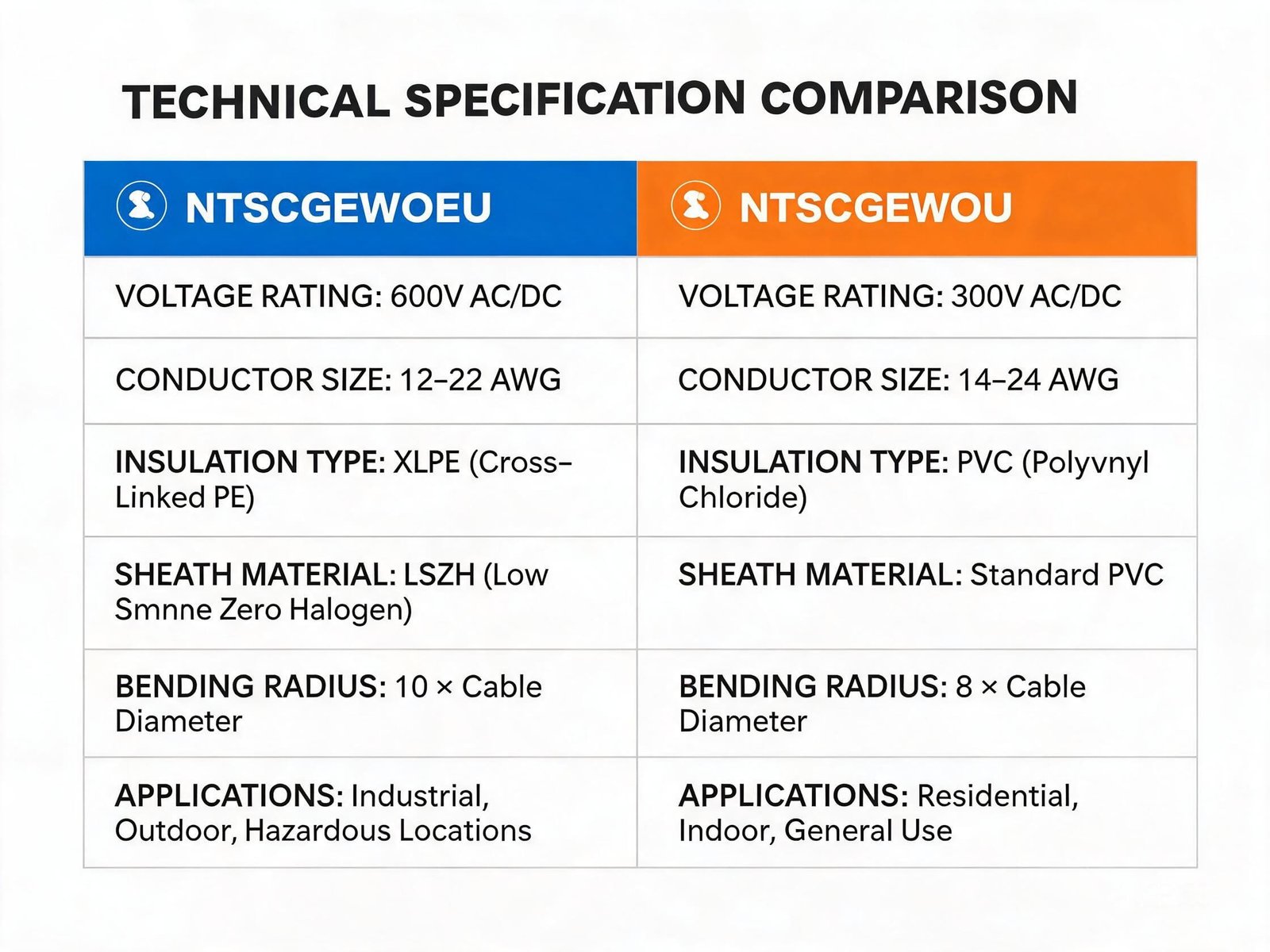
When to Choose (N)TSCGEWOEU
- High-voltage applications: Equipment rated above 12/20kV requires the EPR insulation of TSCGEWOEU
- High-temperature environments: EPR allows 90°C continuous operation vs 70°C for OTR
- VFD-driven equipment: EPR has superior dielectric properties for VFD switching transients
- Heavy-duty trailing: The TSCGEWOEU-TR variant is designed for the heaviest open-pit mining
- Long cable runs: Better dielectric strength supports longer runs at MV
- Future-proofing: Higher thermal rating provides margin for load increases
When to Choose (N)TSCGEWOU
- Standard voltage (up to 12/20kV): OTR insulation is sufficient for most mining MV applications
- Cost-sensitive projects: Lower material cost for standard-duty applications
- General reeling applications: Standard excavator and shovel power supply
- Submersible variants: The TSCGEWOU submersible version for underwater mining
- Underground mining: Standard underground equipment power supply at lower voltages
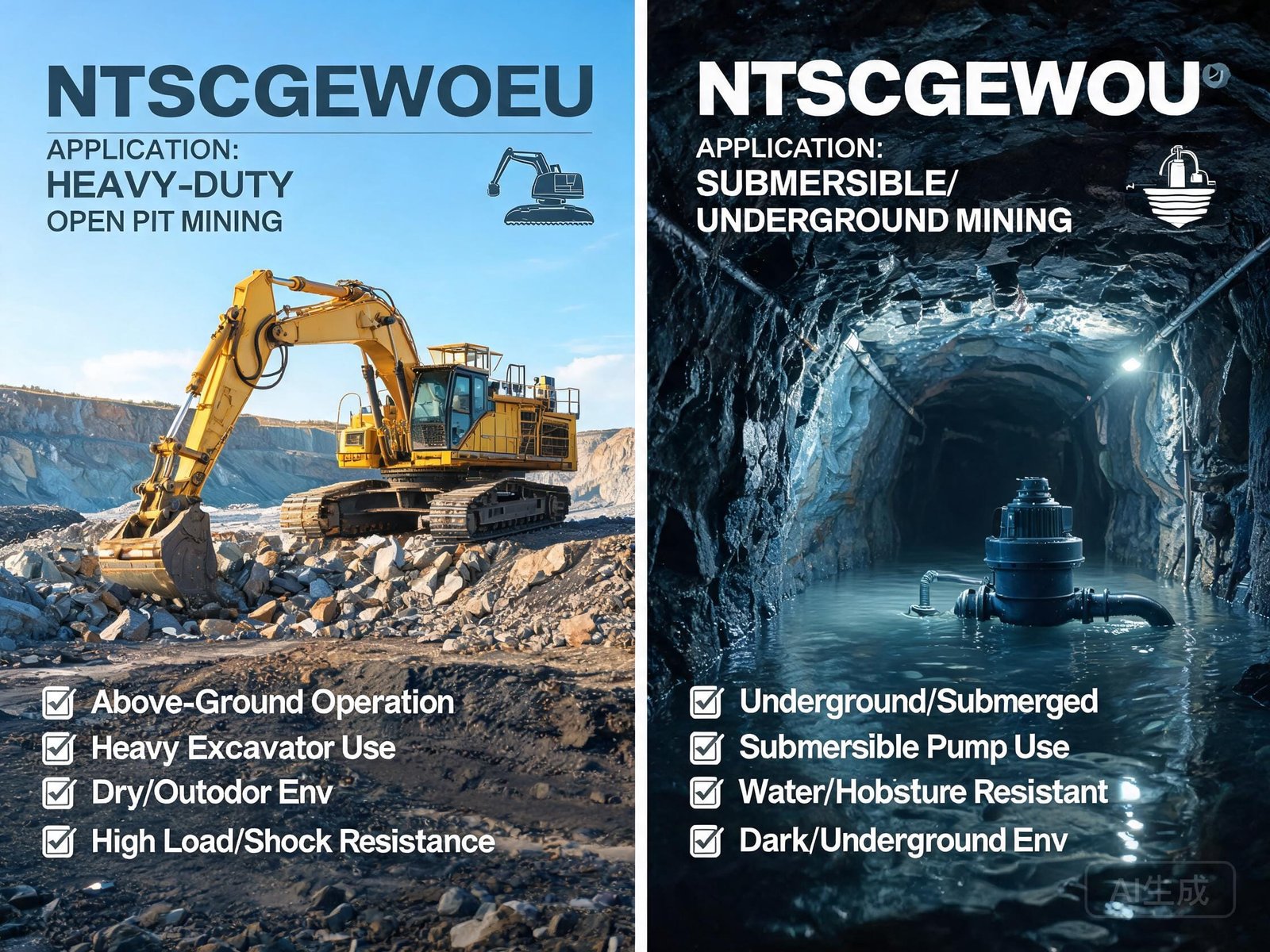
Submersible Applications
For underwater mining and dredging, (N)TSCGEWOU is available in a specialized submersible variant rated for depths up to 300m. The EPR-insulated (N)TSCGEWOEU is generally not the first choice for submersion because:
- Submersible applications typically operate at lower voltage (up to 12/20kV)
- The OTR compound provides better water blocking properties
- Submersible cables have specialized water-blocking construction features
However, for deep submersible applications requiring higher voltage, TEBAOFLEX can engineer (N)TSCGEWOEU submersible variants. Contact TEBAOFLEX for custom solutions.
Cost Comparison
(N)TSCGEWOEU typically costs 15-25% more than (N)TSCGEWOU due to:
- Higher cost of EPR insulation compound
- Higher voltage rating requires more stringent testing
- Enhanced construction for 18/30kV variants
For applications where both cables are suitable (up to 12/20kV), evaluate whether the thermal and dielectric advantages of EPR justify the cost premium. For standard-duty mining at 6/10kV, (N)TSCGEWOU provides excellent value.
Summary: Which Cable Should You Choose?
| If your application is… | Recommended cable |
|---|---|
| Voltage above 12/20kV (up to 18/30kV) | (N)TSCGEWOEU |
| High temperature operation (>70°C) | (N)TSCGEWOEU |
| VFD-driven equipment | (N)TSCGEWOEU EMV FC |
| Heavy-duty open-pit trailing | (N)TSCGEWOEU-TR |
| Standard 6/10kV mining equipment | (N)TSCGEWOU |
| Submersible applications | (N)TSCGEWOU submersible |
| Cost-sensitive standard duty | (N)TSCGEWOU |
Contact TEBAOFLEX engineering for expert cable selection and competitive pricing on both (N)TSCGEWOEU and (N)TSCGEWOU cables.