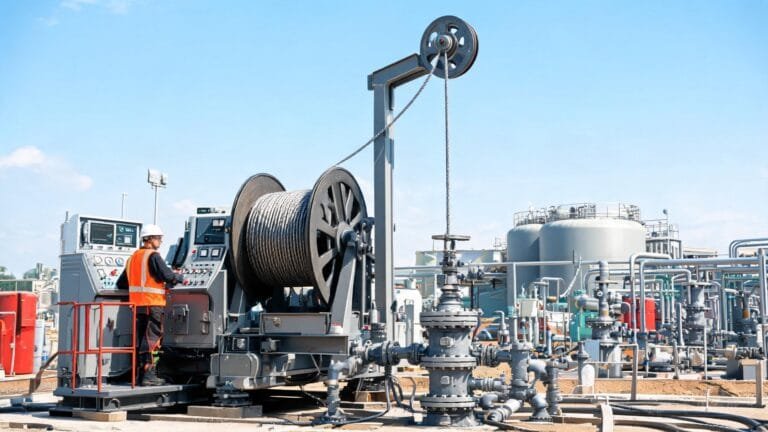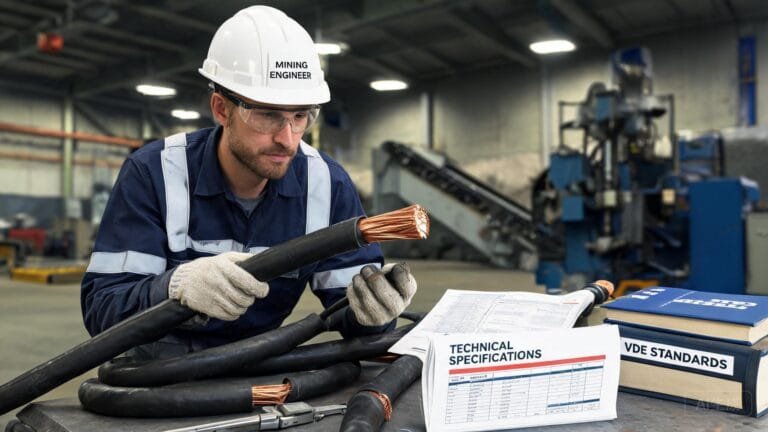

RG7H1R and RG7OZR are both EPR / rubber-insulated medium-voltage cable designations, but their listed TEBAOFLEX constructions serve different circuit roles. Start with the electrical system and installation route—not the common insulation family—when preparing a cable specification.
Start with the circuit role
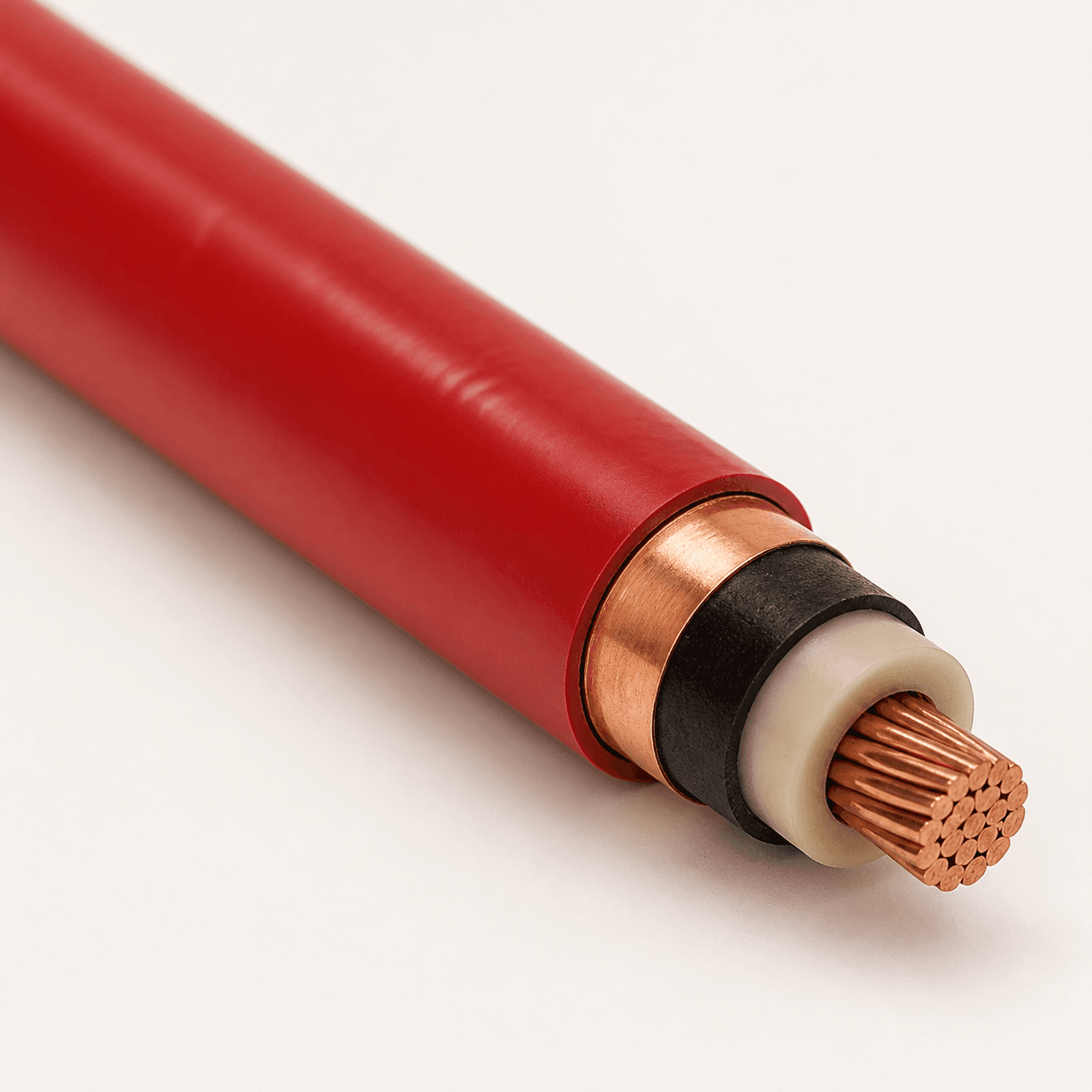
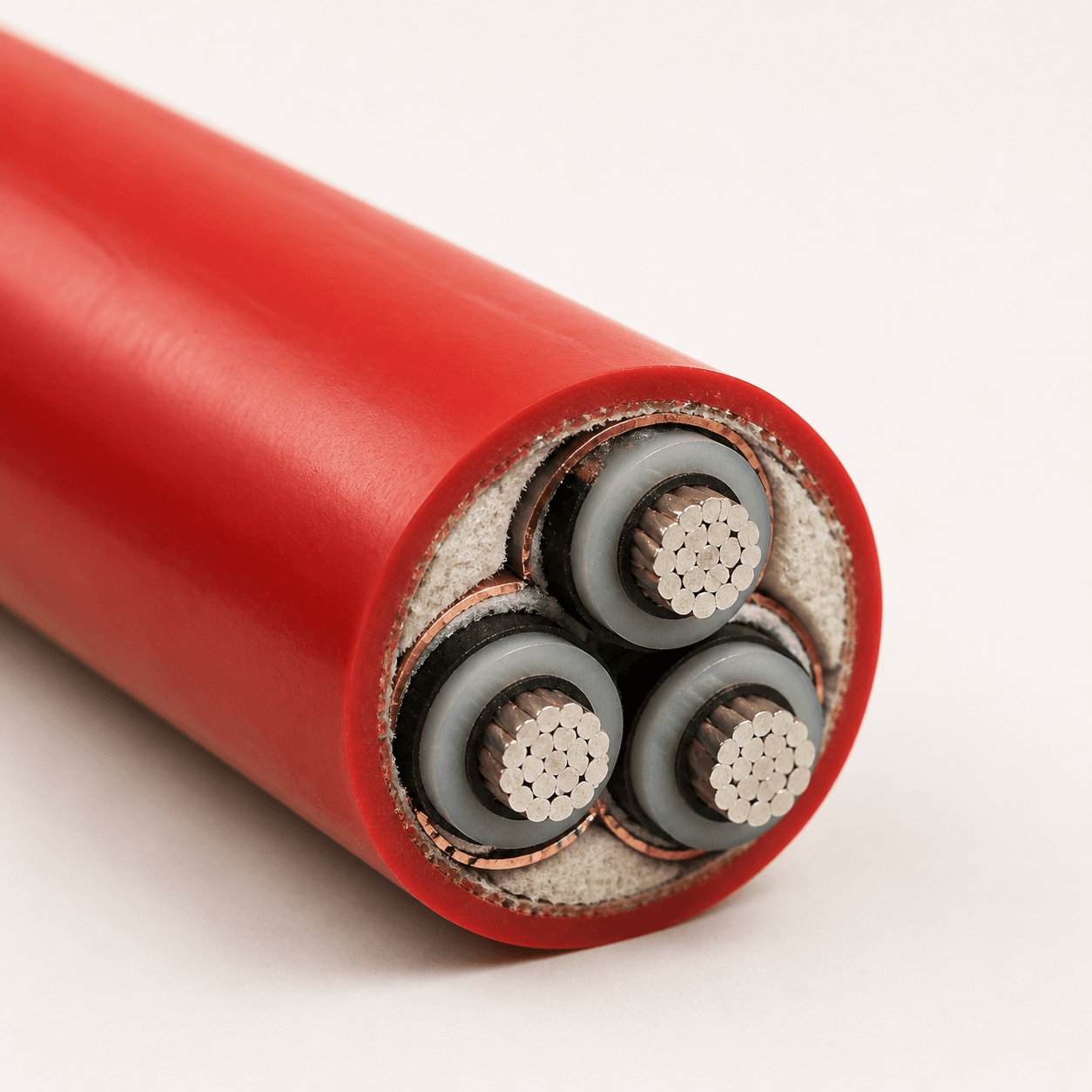
The listed RG7H1R 3.6/6 kV Airport Lighting Primary Cable is a single-core cable for airfield ground-lighting series circuits. Its stated application is the connection between a constant-current regulator and isolating transformers. The listed construction includes compact stranded bare copper, G7-type rubber insulation, extruded semi-conductive layers, bare copper tape shielding and a red PVC sheath.
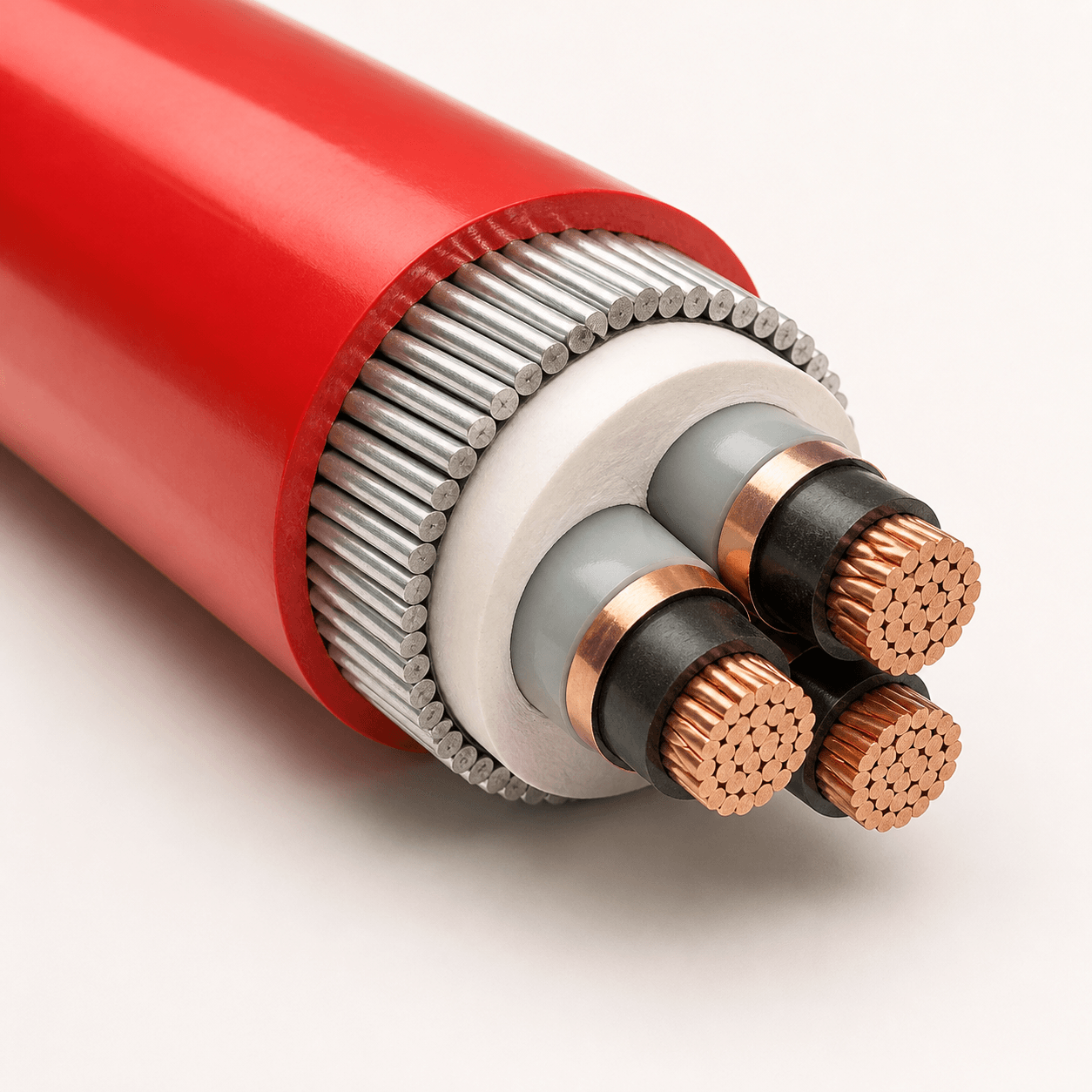
By contrast, the RG7OZR / RG7H1OZR Armoured EPR Medium Voltage Power Cable page describes a three-core, armoured cable for fixed energy-distribution installations. For the RG7OZR series, the stated voltage classes are 1.8/3 kV and 3.6/6 kV. The same product page separately identifies RG7H1OZR as the higher-voltage series, from 6/10 kV through 18/30 kV. Do not use the two designations interchangeably.
Verified construction comparison
| Selection point | RG7H1R | RG7OZR |
|---|---|---|
| Listed application | Airport lighting primary series circuits between constant-current regulators and isolating transformers | Fixed industrial and infrastructure energy-distribution installations |
| Listed voltage class | 3.6/6 kV | 1.8/3 kV and 3.6/6 kV |
| Core construction | Single core | Three cores |
| Conductor | Compact stranded bare copper | Class 2 compact stranded plain copper |
| Insulation | G7-type rubber compound | G7 HEPR rubber compound |
| Mechanical protection | No armour is listed in the published construction | Galvanized flat steel-wire armour with helically wound tape |
| Outer sheath | Red PVC | Red Rz-grade PVC |
| Listed minimum bend radius | 15 × overall diameter | 16 × cable diameter |
Match the route to the construction
For RG7H1R, first verify that the project is an airfield lighting primary circuit and that the 3.6/6 kV rating, conductor size and 15 × overall-diameter bend radius fit the design. The listed fixed-installation temperature range is −50°C to +90°C. The red PVC sheath and copper tape shield are part of that specific primary-cable construction.
For RG7OZR, confirm that the project calls for a three-core armoured fixed-distribution cable and then select the appropriate voltage class and conductor cross-section. The product page lists a 90°C maximum operating temperature, a minimum installation temperature of 0°C, and a recommended 16 × cable-diameter bend radius. Its steel-wire armour is an important construction feature, but it does not remove the need to assess the actual route, pulling conditions and protection requirements.
Four checks before you select either cable
- Define the circuit. State whether the cable connects airport-lighting equipment in a series circuit or distributes power to a fixed three-phase load.
- Confirm Uo/U and cores. A matching voltage class alone is not enough; the required core arrangement and circuit topology must also match.
- Document the route. Provide installation method, bend points, support spacing, pulling conditions and available mechanical protection.
- Submit the operating conditions. Include conductor size, length, ambient conditions, applicable standards and delivery location for the configuration review.
What the published ratings do—and do not—decide
The listed ratings provide a reliable starting point for the individual constructions. They do not replace an installation calculation or project approval. Current capacity, short-circuit duty and final cable selection depend on the applicable design documents and installation conditions. For the armoured RG7OZR family, the published page also notes that ambient temperature, grouping, soil thermal resistivity and route affect the final design calculation.
For a broader view of the product family, see the related RG7H1OR EPR Insulated Medium Voltage Power Cable. For compliance documentation, review TEBAOFLEX cable certifications, test reports and laboratory support.
Frequently asked questions
Can RG7H1R replace RG7OZR at the same voltage class?
Not automatically. RG7H1R is listed as a single-core airport-lighting primary cable, while RG7OZR is a three-core armoured fixed-distribution cable. The circuit function, core arrangement and route requirements must be confirmed.
Does the RG7OZR product page also cover higher-voltage designs?
The page covers RG7OZR / RG7H1OZR. It identifies RG7OZR with 1.8/3 kV and 3.6/6 kV classes, and RG7H1OZR with the higher classes from 6/10 kV to 18/30 kV.
Which cable includes steel-wire armour?
The published RG7OZR / RG7H1OZR construction includes galvanized flat steel-wire armour with helically wound tape. Armour is not listed in the published RG7H1R construction.
What should an RFQ include?
Send the circuit purpose, voltage class, conductor size, core count, required length, installation method, bend limits, environmental conditions and requested documentation.
Request a configuration review
TEBAOFLEX can review the circuit information and route details before quotation. Send your EPR medium voltage cable requirements to match the RG7H1R or RG7OZR construction to the intended installation.