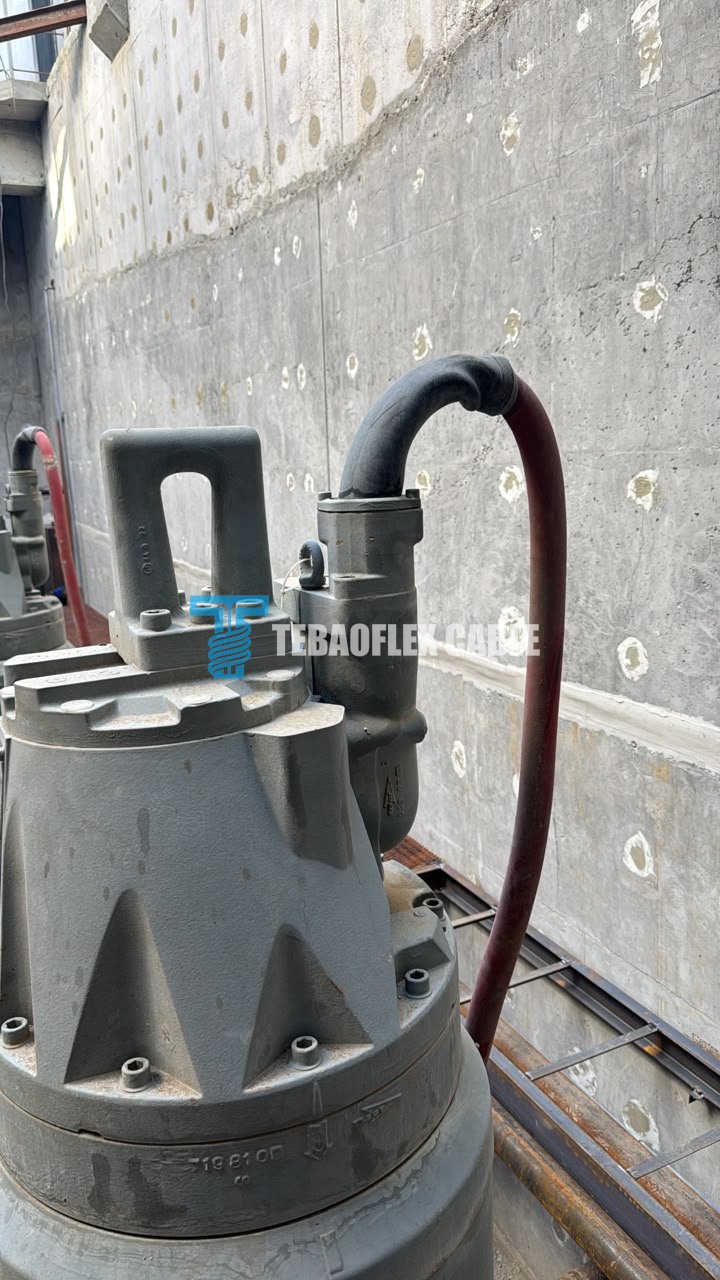

Project summary. A Hai Phong, Vietnam port project called for replacing an existing moving power cable with a 6.6 kV, three-core, 50 mm² 3PNCT-family configuration. The customer-supplied site photographs show a cable reel and guide rollers; the project file also includes export-reel packing photographs. They establish the application context, but they do not by themselves verify the final cable dimensions, commissioning result or service life. Those details must be checked against the approved drawing, test record and installation report.
Why was a 6.6 kV 3PNCT cable considered for the Hai Phong port project?
The brief describes a replacement rather than a new installation. That changes the engineering question: matching the nominal voltage and conductor area is necessary, but it is not enough. The replacement must also fit the existing reel, cable path, guide rollers and terminations. The customer identified the required configuration as 6.6 kV 3PNCT 3 × 50 mm² for a moving port application.
“3PNCT” should be treated as a construction-family designation, not as a complete substitute for an approved cable drawing. The source material also uses “F-3PNCT” for a flat reeling-cable reference. Before ordering or installing a replacement, the purchaser and engineering team should reconcile the exact model marking, finished profile, three-core arrangement, screen construction and applicable voltage designation on the final project documents. For a broader explanation of the family, see the PNCT, 2PNCT and 3PNCT cable guide.
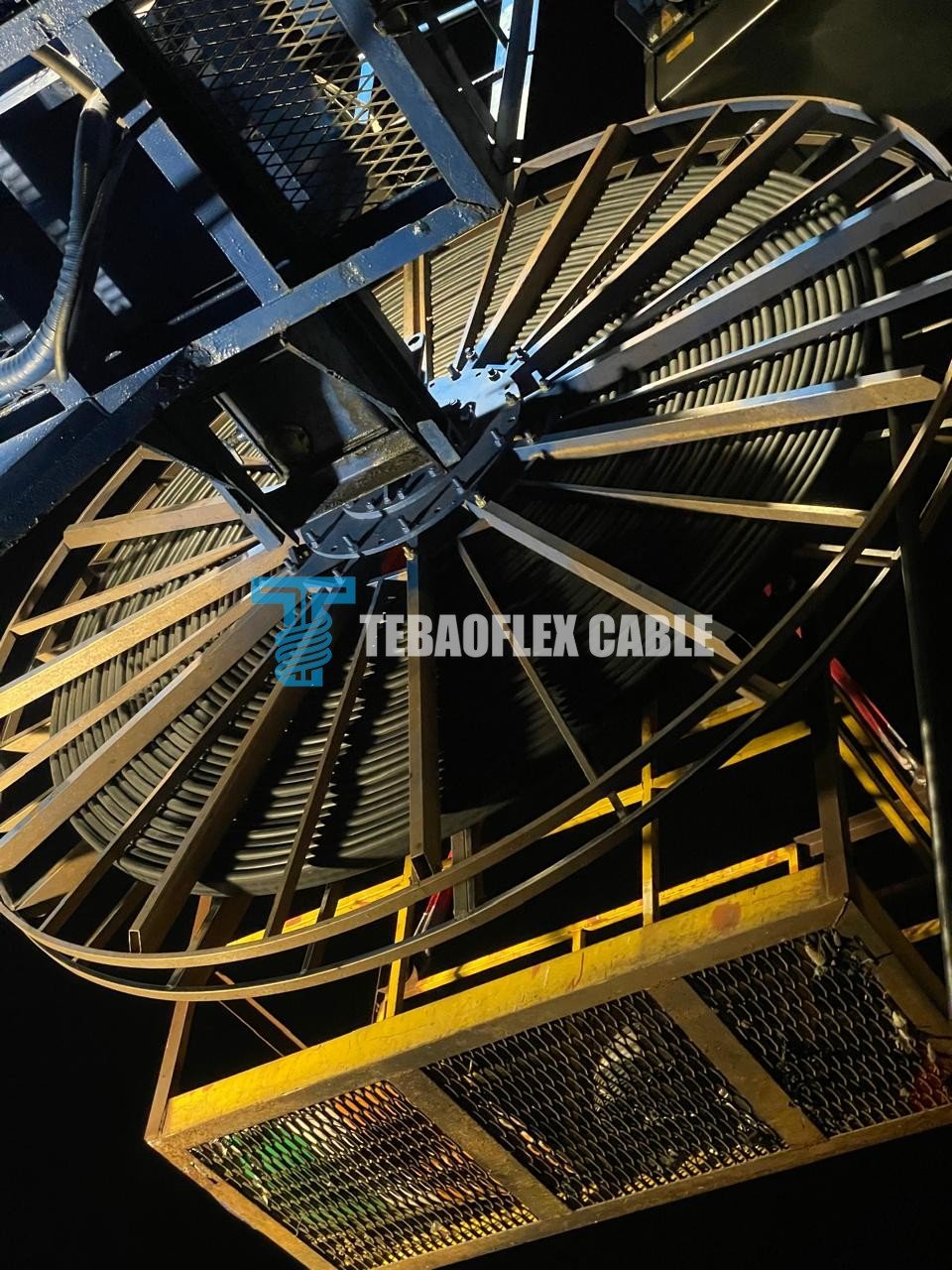
What did the site photographs reveal about the replacement route?
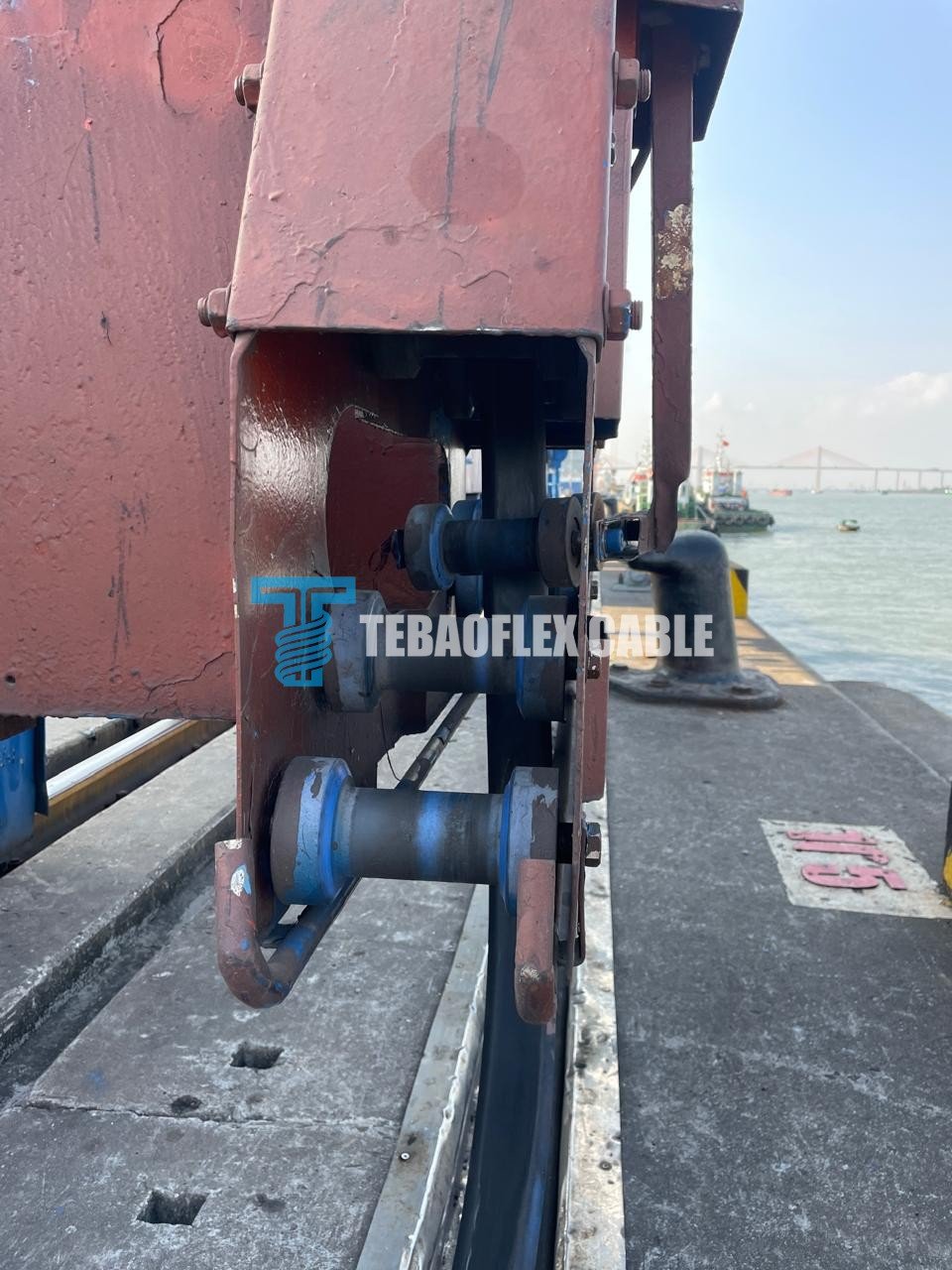
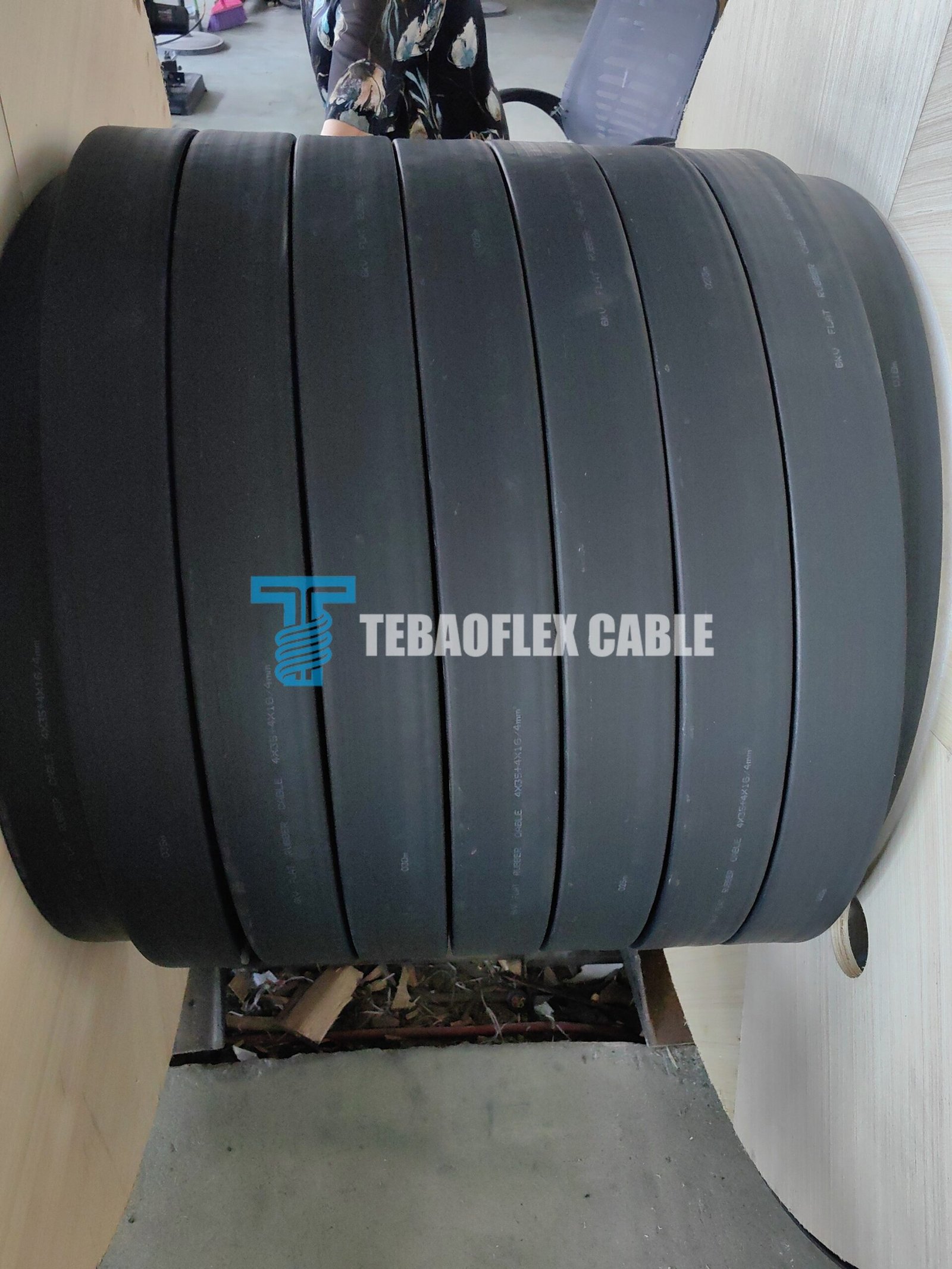
The reel photograph makes the winding arrangement visible. A separate close-up shows guide rollers at the route. These are useful inputs for a replacement review because the cable repeatedly changes direction and contacts equipment surfaces. However, a photograph cannot determine the actual reel diameter, travel speed, acceleration, cable tension or number of operating cycles. Those values need to come from the equipment owner or maintenance team.
For a moving medium-voltage cable, the engineering review should trace the full path from reel to termination: minimum bend location, entry and exit angles, roller contact, any point where the cable may twist, and the winding direction. The approved finished cable dimensions then need to be checked against that route. An apparently suitable nominal cross-section cannot correct a bend or side-pressure mismatch in the installed system. The port crane reeling cable selection guide explains these application checks in more detail.
Which specifications are established, and which still need confirmation?
The project documents identify a 6.6 kV, three-core 50 mm² requirement. The accompanying English reference describes a flat rubber cable intended for reeling systems, but its published size table does not include a 3 × 50 mm² row. Accordingly, the dimensions and mechanical limits of the adjacent listed sizes cannot be assigned to this order. The table below deliberately separates the stated requirement from the evidence needed for a final installation decision.
| Item | Project-file information | Check before specification or installation |
|---|---|---|
| Application | Replacement cable for a moving port cable-reel system in Hai Phong, Vietnam | Equipment type, actual route, reel type and movement duty |
| Voltage and conductors | 6.6 kV; three power cores at 50 mm² each, as stated in the project brief | System voltage designation, conductor identification and approved 3 × 50 mm² drawing |
| Cable construction | 3PNCT in the brief; F-3PNCT flat-cable reference in the English material | Final model marking, cable profile, insulation, screens, sheath and terminations |
| Mechanical fit | Reel and guide-roller photographs are available | Finished dimensions, minimum bend path, roller geometry, tension and side pressure for the approved size |
| Delivery evidence | Photographs of wooden reels secured in a freight container | Reel labels, lengths, quantity, dispatch record and corresponding inspection report |
This is a project-evidence table, not a certified 3 × 50 mm² datasheet. In particular, the source file does not establish this order’s outside dimensions, mass, conductor resistance, continuous current rating or factory-test results. Those figures should be published only when they can be traced to the approved TEBAOFLEX drawing and the relevant batch record.
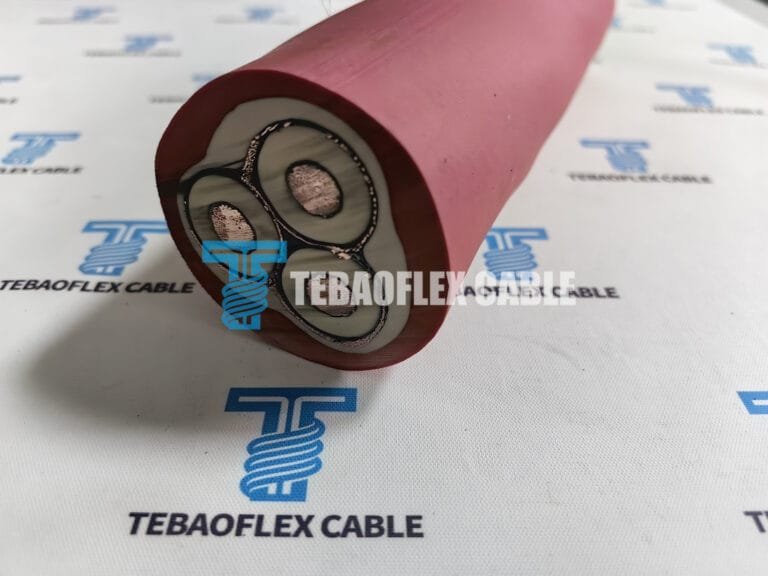
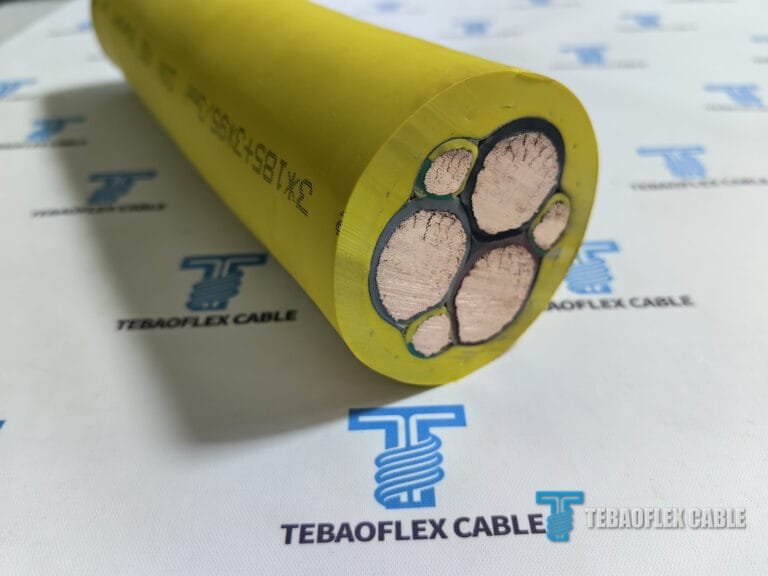
What does a comparable flat reeling-cable sample look like?
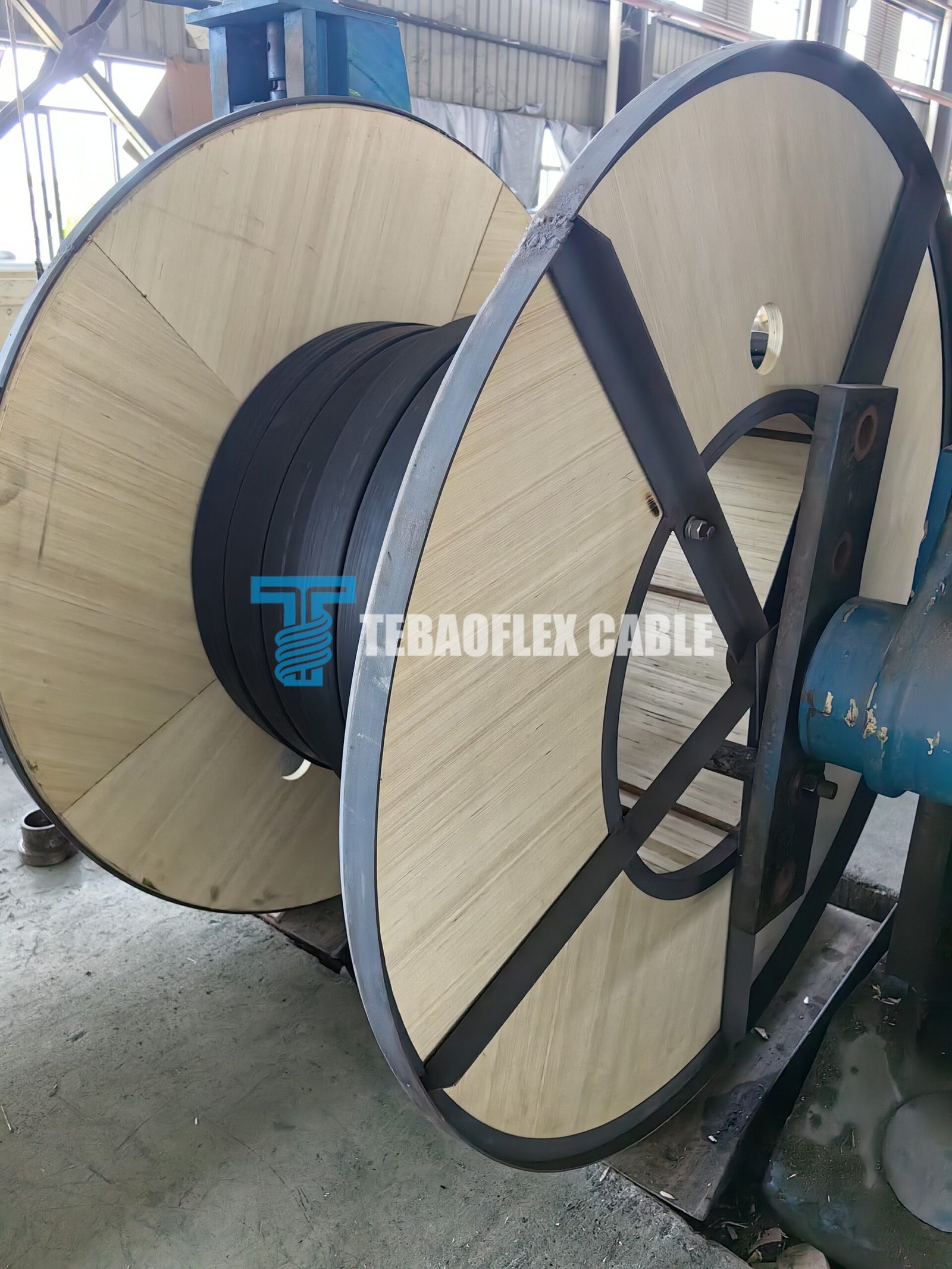
The following two photographs come from the supplied similar-model folder. They illustrate the flat profile and reel presentation only; neither image identifies the cable shipped for the Hai Phong project, its conductor count or its approved 3 × 50 mm² dimensions.
How should export packing and handover be checked?
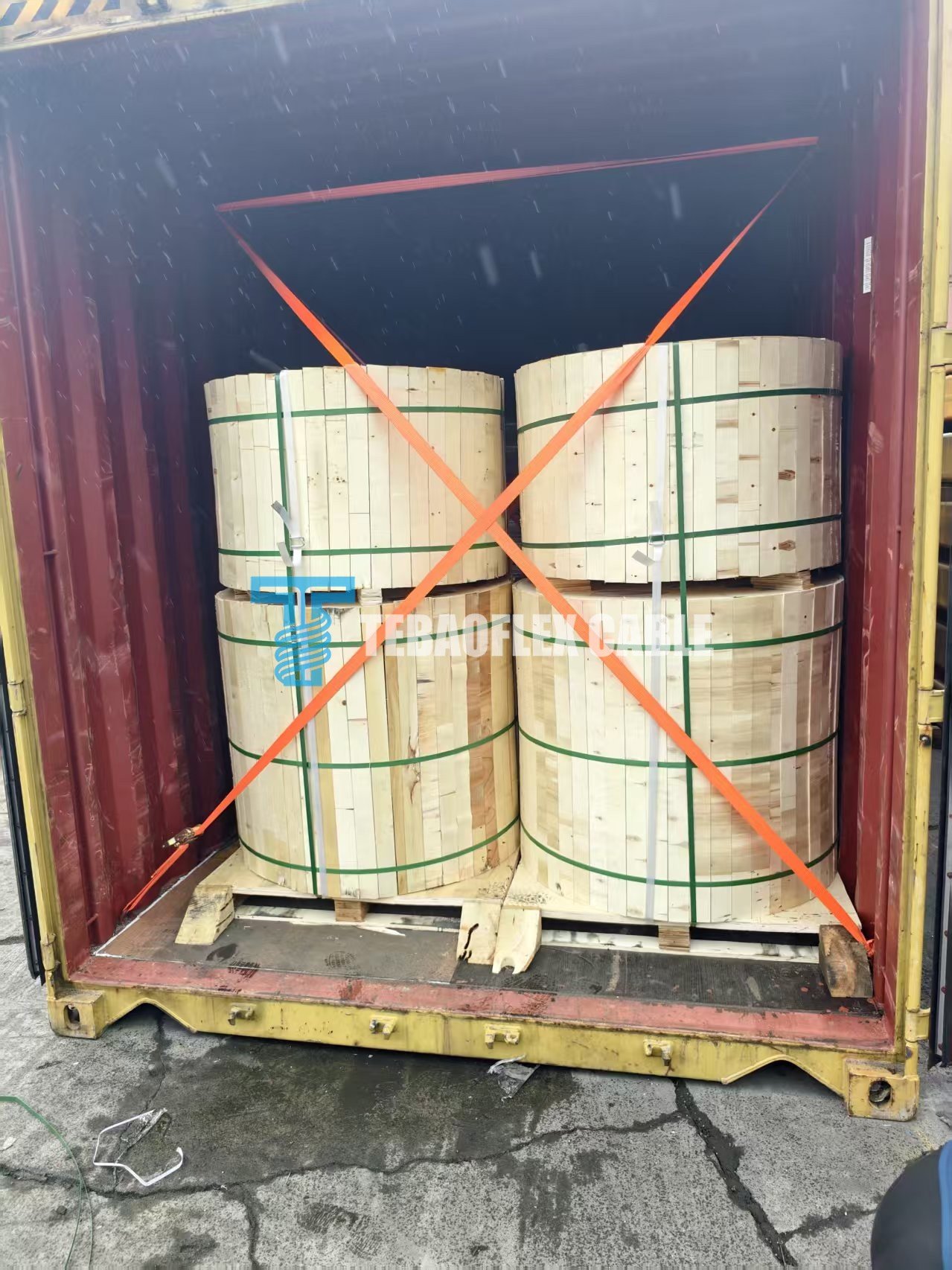
The supplied loading photographs show wooden cable reels restrained inside a shipping container. For a replacement project, the useful handover question is not simply whether a reel was loaded; it is whether its marking and documents correspond to the cable expected at the site. The receiving team should match each reel’s model, voltage, core configuration, length and identification number to the packing list and approved drawing. Before pulling the cable, it should also inspect the reel, flange protection and cable ends for transport damage.
Project-specific factory checks may include conductor and insulation measurements, dimensional inspection and an agreed electrical withstand test. The available files describe potential checks, but they do not contain a signed inspection report for this shipment. We therefore make no claim here that a particular test was passed or that the cable has been commissioned.
Short site video: port operating context
The customer also supplied the following short video of container-handling equipment. It helps show the outdoor operating environment, but it does not show this replacement cable being installed or tested.
What should another port buyer send for a comparable cable review?
A useful inquiry starts with the old cable’s legible sheath marking and its approved drawing if available. Add the electrical system voltage, required power-core and screen arrangement, the measured reel and roller geometry, travel distance, speed, duty cycle, ambient conditions and desired continuous length per reel. Photographs of the existing route are valuable, but dimensions and loading data still need written confirmation. If the replacement must connect to existing medium-voltage accessories, specify the termination and earthing arrangement as well.
TEBAOFLEX can review those inputs against a proposed construction and provide a project-specific drawing and quotation. Explore the port, crane and festoon cable range, then send your cable requirements for a technical review. A 6.6 kV cable should not be substituted with a lower-voltage PNCT product merely because its nominal conductor size appears similar.
Frequently asked questions
Is 6.6 kV 3PNCT the same as a low-voltage flat PNCT cable?
No. PNCT-family wording alone does not establish the voltage class or the finished construction. Confirm the voltage designation, insulation and screen system, core layout and approved model before considering a replacement.
Can the 3 × 50 mm² cable diameter be taken from a nearby catalogue size?
No. The reference size table supplied for this project omits 3 × 50 mm². The finished dimensions and permissible mechanical conditions must come from the approved drawing for that exact configuration.
Do the site photos prove that this cable is operating at Hai Phong port?
No. They document the customer’s site context and the route elements discussed during selection. Installation, commissioning and service results would require separate records.
Source and review note: This case is based on the supplied project brief, customer site media and export-packing photos. Technical statements are intentionally limited to the information they establish. The final 3 × 50 mm² design, test results and delivery quantities remain subject to the approved project documents. Prepared by the TEBAOFLEX Cable Team; reviewed October 2026.