
Type W / DLO Cable FAQ: Most Common Questions
Type W and DLO cables are the standard heavy-duty portable power cables for mining and industrial applications. This FAQ addresses the most frequently asked questions from TEBAOFLEX mining and industrial customers.
For complete specifications, see our DLO product page, Type G-GC product page, and specifications guide.
General FAQ
Q1: What does DLO stand for?
A: DLO stands for Diesel Locomotive cable. It was originally designed for diesel-electric locomotive power connections but is now widely used for welding, battery banks, equipment jumpers, and any application requiring ultra-flexible single-conductor 2kV cable.
Q2: What is the difference between Type W and DLO?
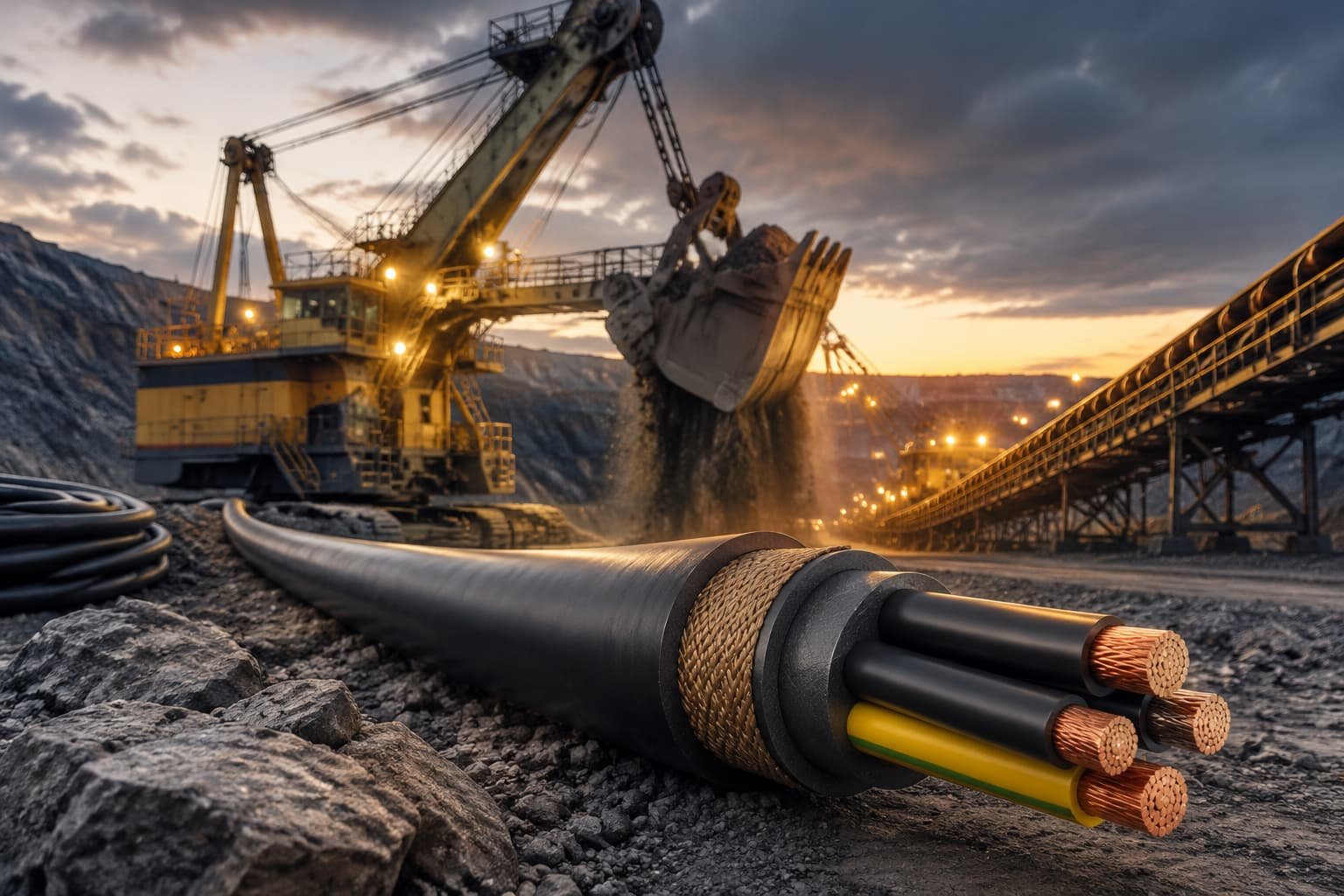
A: Type W is multi-conductor (3-5 cores + ground) for trailing power to mobile equipment. DLO is single-conductor for jumpers, welding, and equipment connections. Both are 2kV rated with EPR insulation and chloroprene rubber jackets. See our Type W vs DLO comparison for details.
Installation FAQ
Q3: What is the minimum bending radius for Type W / DLO?
A: Minimum bending radius is 6 × overall diameter (6D) for both Type W and DLO. For example, DLO 4/0 AWG with 23.5mm OD requires minimum 141mm bending radius.
Q4: What cable lugs should I use with DLO cable?
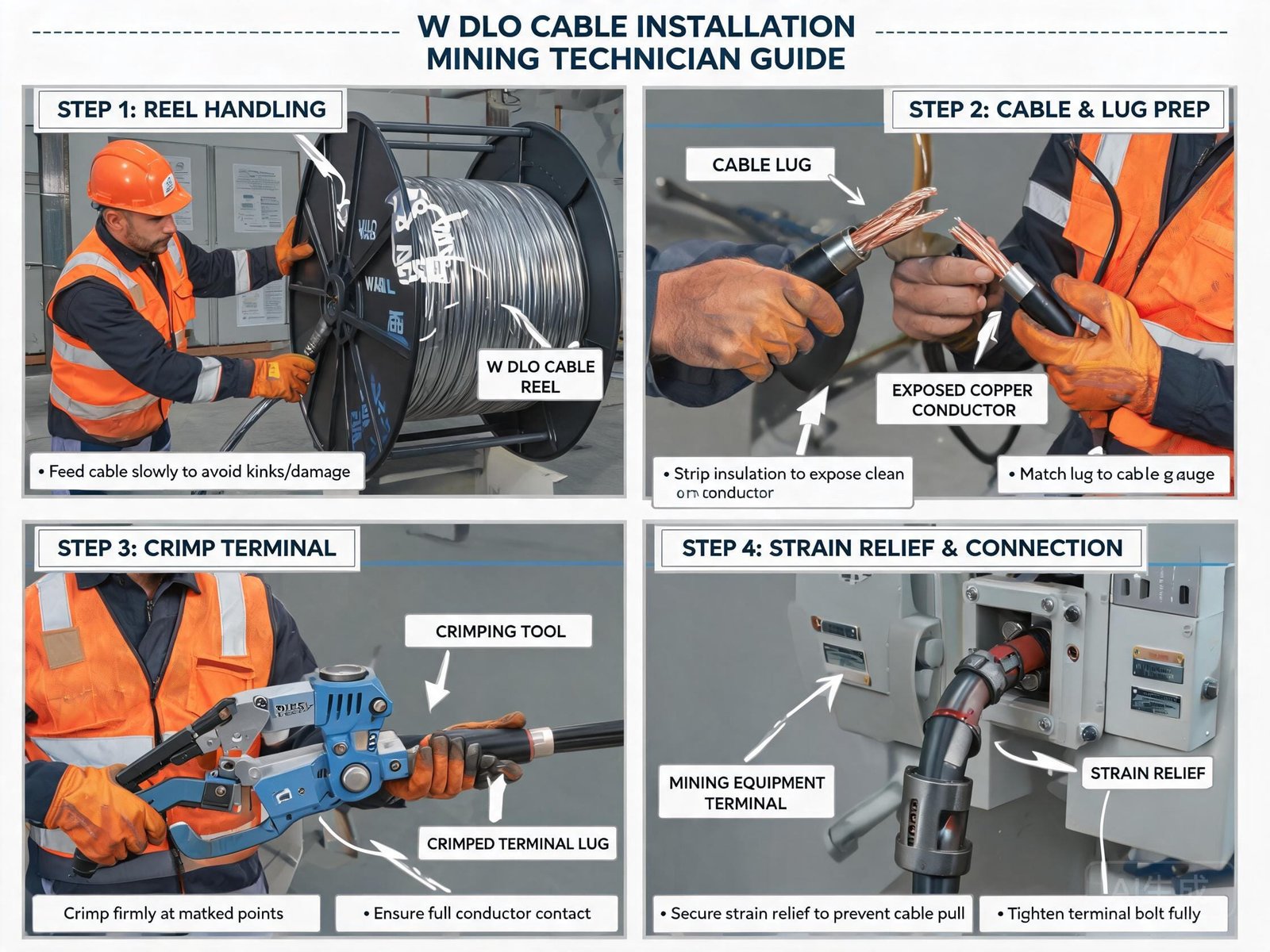
A: Use UL-listed compression lugs:
- Material: Tinned copper tube barrel
- Type: Long barrel or short barrel depending on space
- Sizing: Match AWG size — 4/0 AWG requires 4/0 AWG lug
- Crimping: Hex compression crimping with proper die and tool
- Inspection: Verify crimp gap measurement after crimping
- Sealing: Use heat shrink tubing over lug-cable junction for moisture protection
Q5: Can Type W cable be used underground?
A: Yes, with MSHA approval. For underground mining, Type W cables must:
- Have MSHA P-number approval
- Be listed for the specific mining environment (coal, metal/nonmetal)
- Meet MSHA flame test requirements
- Be installed per MSHA 30 CFR regulations
Q6: How do I splice Type W / DLO cable?
A: Use UL-listed cable splice kits:
- Mining splices: Use MSHA-approved splice kits with heat shrink
- Conductor connection: Compression splice connector with proper crimping
- Insulation restoration: High-voltage heat shrink tubing rated 2kV
- Jacket restoration: Chloroprene rubber heat shrink or self-amalgamating tape
- Testing: Insulation resistance test after splicing before re-energizing
Do not use electrical tape alone — this does not maintain the 2kV insulation rating.
Maintenance and Troubleshooting FAQ
Q7: How often should I test Type W / DLO cable insulation?
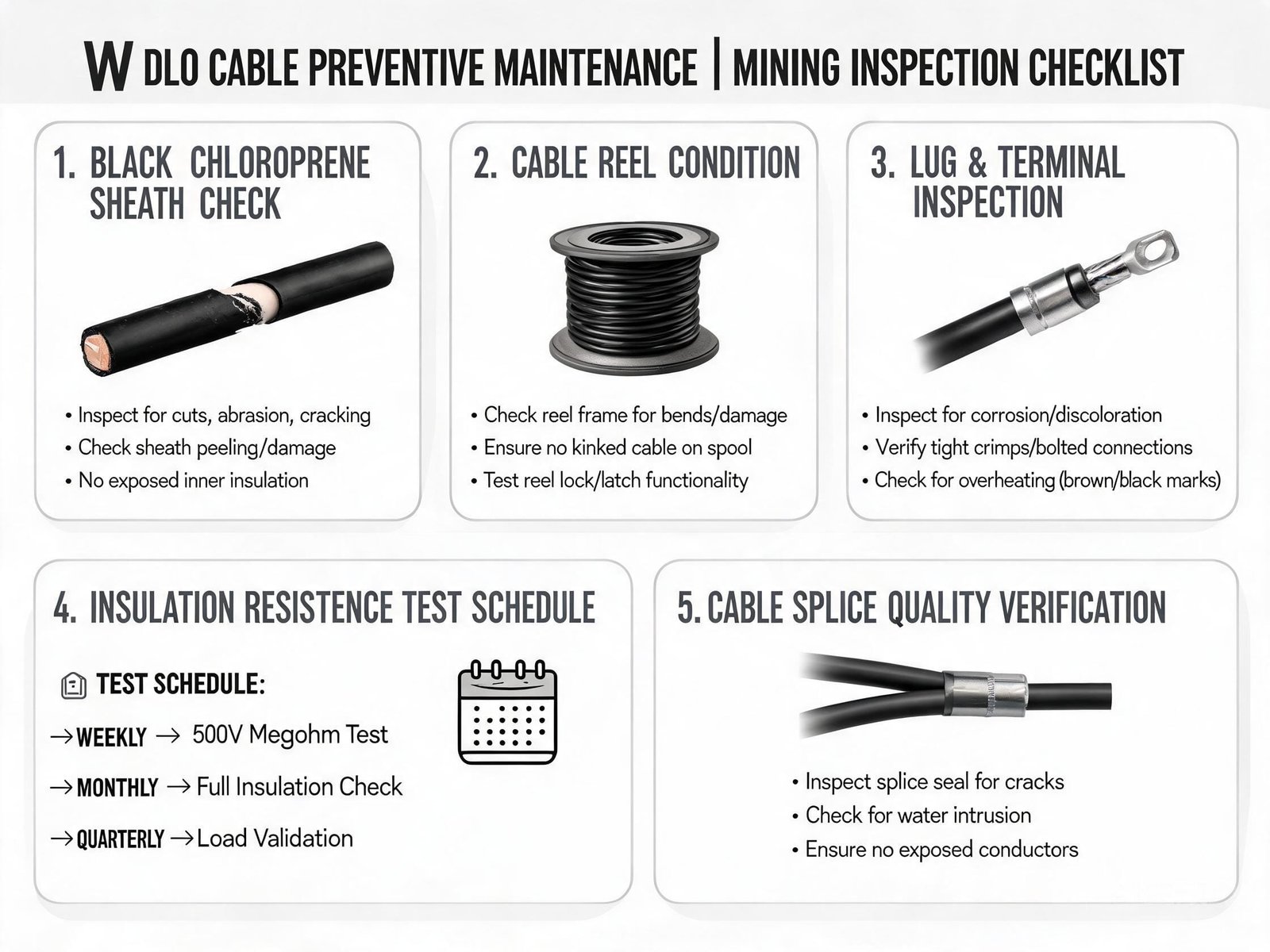
A: Recommended testing:
- New installation: 1kV Megger before energizing
- Daily visual (mining): Check for cuts, abrasion, and jacket damage before each shift
- Monthly insulation test: 1kV between conductors and to ground
- After splice repair: Test before re-energizing
- After fault: Test and inspect before returning to service
Minimum acceptable: >100 MΩ new, >1 MΩ in-service for portable mining cable.
Q8: What are common causes of Type W / DLO cable failure?
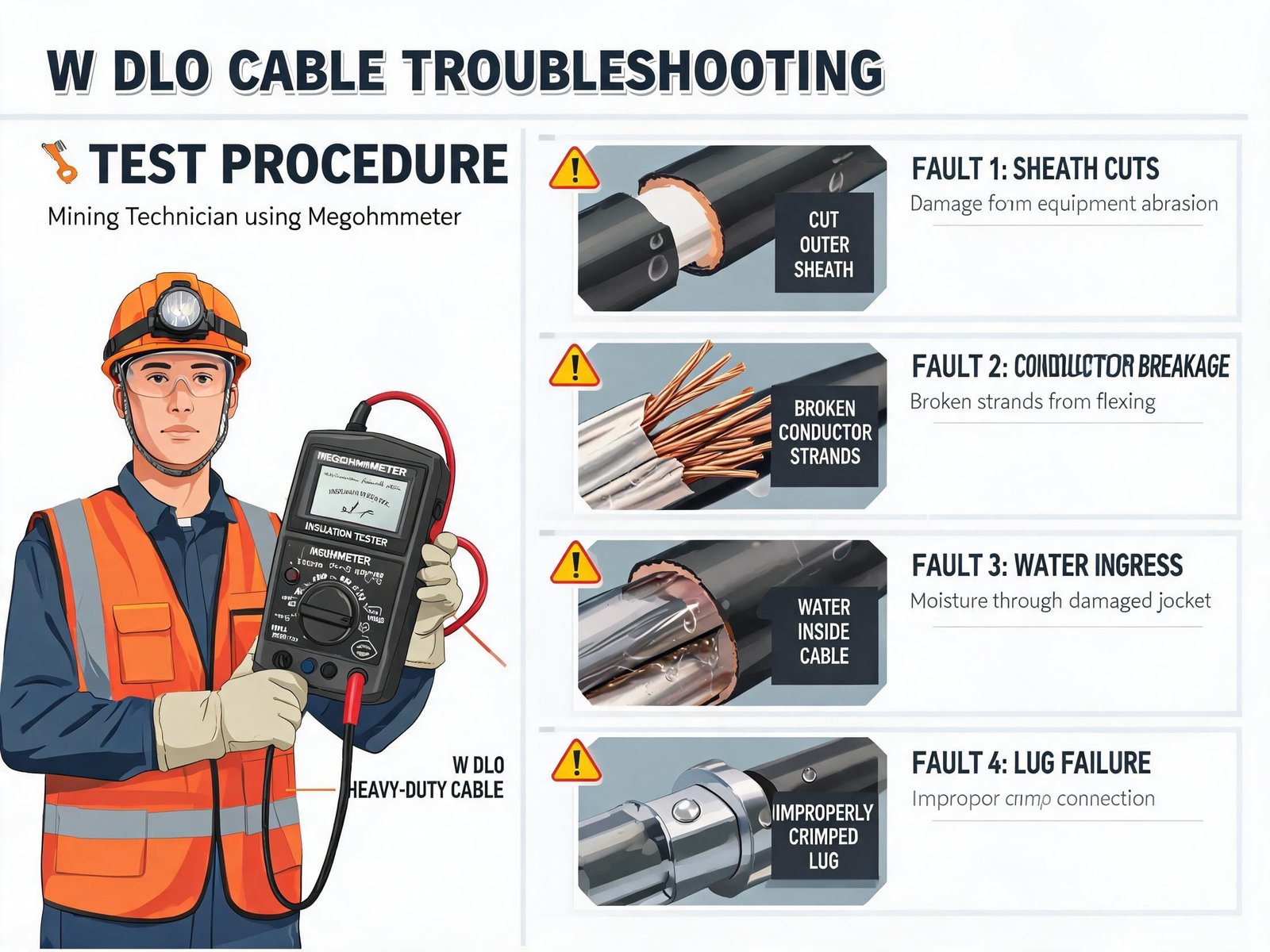
A: Common failure modes:
- Jacket abrasion: Dragging across rough surfaces — most common failure in mining
- Cuts and punctures: Equipment running over cable or sharp rocks cutting jacket
- Lug failure: Improper crimping causing overheating at termination
- Conductor strand breakage: Excessive flexing at tight bends and equipment entry
- Water ingress: Through jacket cuts or damaged lug seals
- UV degradation: Long-term outdoor exposure (rare with chloroprene rubber)
Q9: Can Type W / DLO cable be repaired?
A: Yes, but use proper procedures:
- Minor jacket cut: Self-amalgamating rubber tape + PVC overwrap (temporary)
- Jacket + insulation damage: Cable splice kit with heat shrink
- Conductor damage: Compression splice connector + insulation and jacket restoration
- Severe damage: Replace cable — do not attempt multiple field repairs
- Mining applications: All repairs must use MSHA-approved methods and materials
Q10: What is the service life of Type W / DLO cable?
A: Expected service life varies greatly by application:
- Mining trailing (severe service): 1-3 years (constant dragging, abrasion)
- Industrial (moderate service): 5-10 years
- Welding leads (light duty): 5-15 years
- Stationary (no flexing): 10-20+ years
Mining trailing cables have the shortest life due to constant mechanical stress and abrasion.
Q11: How do I identify genuine Type W / DLO cable?
A: Check for:
- Cable marking: “Type W” or “DLO” with AWG size, 2kV, UL mark, manufacturer name
- Jacket color: Black chloroprene rubber (both Type W and DLO)
- Conductor: Tinned copper (silver appearance when cut)
- Insulation: EPR rubber (visible as colored insulation under jacket)
- UL listing: Verify on UL Product iQ database
- MSHA: P-number on cable for mining applications
Still Have Questions?
TEBAOFLEX technical support is available for:
- Type W / DLO cable sizing for mining and industrial applications
- MSHA approval requirements and documentation
- Cable lug and termination selection
- Splice and repair procedures
- Quotation and delivery timeline
Contact TEBAOFLEX engineering for expert assistance and competitive pricing on Type W / DLO heavy-duty portable power cables.